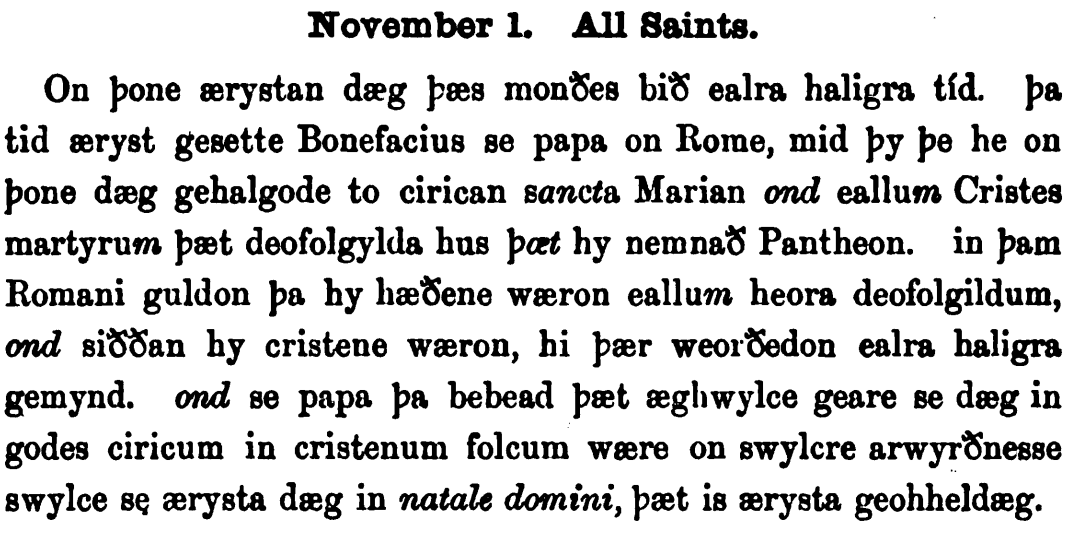
All Saints: Pope Boniface established it when he hallowed the Pantheon as a church for St. Mary and all martyrs. While they were pagan the Romans worshiped all their idols there; as Christians they remembered All Saints. The pope said to keep it every year. (**heavily** abridged)
On Oct 26th is bishop St. Cedd's departure. He was St. Chad's brother, and a holy man saw him lead Chad's soul to heaven with the angels. Chedd was bishop of Essex but his body rests in Northumbria in Lastingham monastery, and his deeds are written in English histories.
@englisce2001 I think literally it means "Thou art. They-are. Goodly."
Syndon is a variant of sind, which means "they are."
Gódlic (long o) means "goodly" or "good."
Questions are generally formed by putting the verb first.
Eart þú godlic? (short o) I think is closer to what you meant.
fun words:
"swát-cláþ" - "sweat-cloth", handkerchief, towel, napkin; sudarium
"swát" meant sweat but also "blood" so we get words like "swát-fáh", blood-stained, and "swát-swaþu", a bloody track (swath of blood)
when they wiped sweat from their brow i guess they had to clarify
la rice geryne,
ond wræclic haligdom,
þæt wihta gesawon drihten acenned
alegd þær on binne!
eadig fæmne, þære innoþ
sind weorþe to beranne
hælend crist drihten.
alleluia!
https://t.co/4ccaMqPDgM
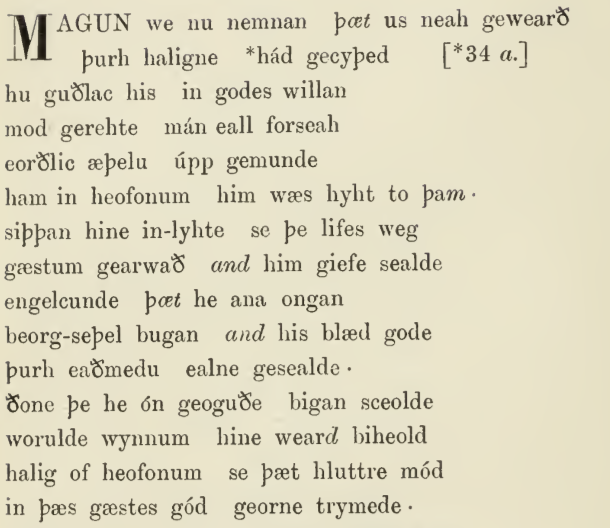
And that concludes - finally and after much procrastination and wringing of hands - the first part of the story of St. Guthlac, lazily translated by me.
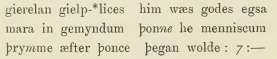
Guthlac obeyed God's will, rejected sin & pride, & thought on heaven with joy since Christ blessed him with holy gifts, so he lived alone in the mountains & sanctified the spirit that he had in youth given to worldly pleasure. An angel watched him & strengthened him spiritually.