Spacex just bought Cursor for $60 billion.
the same day, Kevin Niparko ( Product Lead at Cursor) showed exactly what Elon bet on:
"we're moving towards an era of loops and agent systems
where agents are going to continue to be working on our behalf at all times"
13 minutes that laid out the next five years of how software gets built: agent swarms + loops.
i wrote the full guide on building agent swarms two weeks ago.
bookmark it before you need it.
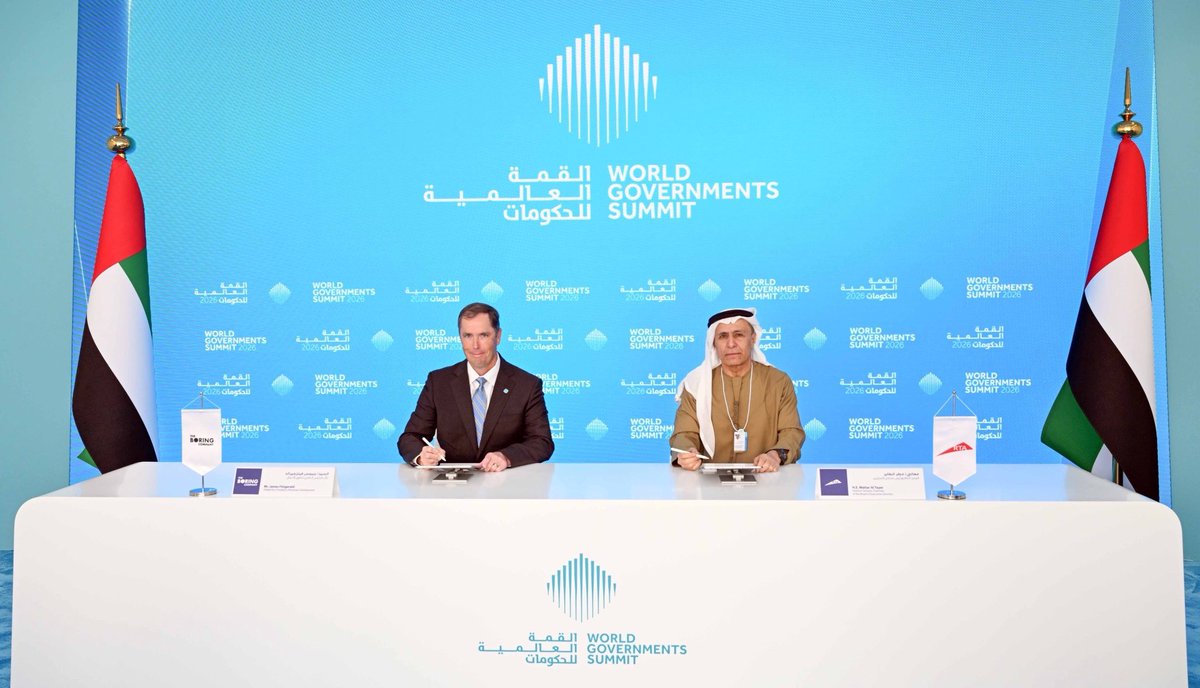
TBC and @rta_dubai have signed a contract to construct Dubai Loop.
TBC would like to thank The Crown Prince of Dubai @HamdanMohammed and His Excellency Mattar Al Tayer and his team. The pilot system with 6.4 km of tunnel and 4 stations will begin construction in late 2026.
https://t.co/OR0NRqWhfs
Behind The Scenes In The Vegas Loop: Inside @elonmusk's @boringcompany Bold Bet On Urban Mobility
Hey everyone. Tesla Owners Silicon Valley (@teslaownersSV) here. I recently had the chance to go behind the scenes with Steve Davis, President of The Boring Company, for a deep dive into the Vegas Loop in Las Vegas. This wasn���t a quick photo op. It was a full 47-minute immersion: riding through the LED-lit tunnels in a Tesla, visiting active construction sites with Prufrock boring machines, and hearing directly from Steve about what’s working today, and what’s coming next.
I’m posting the full long-form video alongside this recap so you can experience it firsthand. But here’s the readable, “what actually matters” story from the tour.
From “Traffic Is Soul-Crushing” To A Working Underground Network
The Boring Company was founded in 2016, born of a familiar frustration: gridlocked cities that can’t build fast enough, cheap enough, or with minimal disruption. The premise is simple but ambitious: reinvent tunneling to make it practical infrastructure, not a decade-long mega-project.
Las Vegas is where that idea is being tested at real scale. Instead of waiting for buses, shuttles, or rail schedules, the Vegas Loop aims to provide point-to-point trips in Teslas, fast, quiet, and emissions-free, connecting major destinations without the chaos of the Strip above.
And after seeing it up close, what stands out most is how operational it already is. This isn’t a render. It’s a functioning system handling real demand, in real conditions, with real riders.
What It Feels Like: Fast, Weirdly Fun, And Surprisingly Smooth
The “Loop experience” is part transit, part sci-fi. The tunnels are lined with shifting LEDs—purples, greens, yellows—that make the ride feel more like entering a venue than commuting. Trips are short and direct. One example Steve shared: LVCC to Encore in about 85 seconds.
But the biggest “wait, that just happened” moment on the tour was Full Self-Driving.
FSD Underground (And Onto Surface Streets)
We rode in a Model Y running Full Self-Driving (Supervised), which navigated the tunnels smoothly and then transitioned back to surface streets without intervention. Steve’s point wasn’t that autonomy is a cool demo; it’s that autonomy is a force multiplier for throughput, consistency, and future scale.
Steve Davis: “Full Self-Driving Supervised is live commercially between LVCC and Encore, watch this: zero interventions as it navigates the tunnels and pops out onto surface streets seamlessly.”
Right now, they still operate with safety drivers, but the trajectory is clear: as autonomy matures, the system can move more people with tighter headways and less variability than human-driven operations.
The Numbers: “Spiky Demand” Is Where This System Wants To Win
Vegas isn’t a steady-demand commuter city. It’s a burst-demand city: conventions, games, concerts, and tourist surges. Steve emphasized that this is exactly where the Loop model shines, because you can scale vehicles dynamically without rebuilding an entire transit line.
During CES 2026, the Loop moved 90,000+ passengers, peaking at 6,600+ riders per hour, including 22,000+ trips to/from Resorts World, Encore, and Westgate. That’s on top of 3.5M+ total passengers since 2021.
Steve Davis: “We’ve hit over 3 million passengers since 2021, and during CES 2026 alone, we shuttled more than 90,000 people, peaking at 6,600 passengers per hour without a hitch.”
And beyond the numbers, there’s a secondary effect people don’t always talk about: for many riders, this is their first time in a Tesla, and it’s an unusually positive first impression.
The Airport Connection: A Phased Plan With A Very Clear Endgame
Connecting the system to Harry Reid International Airport is the crown jewel, and they’re doing it in phases to deliver value quickly while they work through the harder parts.
Phase 1 (Live Now)
Limited airport rides are already operating via a mix of tunnels and surface streets from existing stations, including Resorts World, Encore, Westgate, and LVCC. They’re doing roughly 50 test rides per day, and Steve noted 100 of ~130 vehicles are already “airport-ready” with transponders.
Phase 2 (Next Couple Months)
This is where things get meaningfully faster: a 2.2-mile dual tunnel from Westgate to 4744 Paradise Road, eliminating about two miles of surface traffic and stoplights. New stations are planned at Virgin Hotels, The Boring Company’s apartment complex, the former Gordon Biersch site, and Firefly. Fleet expands to 160 vehicles.
Steve Davis: “Phase 2 kicks in soon: a 2.2-mile tunnel to Paradise Road, cutting out those surface miles and stoplights.”
Phase 3
Extend to 5032 Palo Verde Road near Terminal 1, further removing surface bottlenecks around Tropicana and University Center. Fleet scales to 250–300 vehicles.
Phase 4 (The “Holy Grail”)
A direct underground station at the terminals, true curb-to-gate simplicity, fully underground.
Steve Davis: “Phase 4 is the holy grail: a direct underground station right at the airport terminals.”
The Big Build: 68 Miles, 104 Stations, Privately Funded
The long-term vision is expansive: 68 miles of tunnels and 104 stations spanning the Strip, downtown, the stadium, and the airport. Core Strip construction begins this fall, with a 2027 target for that major phase, and further expansion into 2028–2029.
Steve emphasized something important here: the funding model. These builds are privately funded, and the cost structure is the entire point: build rapidly and avoid “subway economics.”
Steve Davis: “68 miles, 104 stations… all privately funded at about $10M per mile, versus billions for subways.”
The Real Workhorses: Prufrock Boring Machines Up Close If the Loop is the user experience, Prufrock is the engine underneath it.
Seeing Prufrock at an active dig site is hard to describe unless you’ve stood next to one. It’s enormous, loud, and relentlessly practical. The key advantage is that it changes the setup cost: it can launch from the surface without massive open pits, and it’s designed to move fast, with a long-term target of one mile per week.
The machine isn’t just digging; it’s built around an integrated approach to lining, pumping, and maintaining the tunnel environment while staying cost-effective.
Challenges They’re Solving In Real Time:
Groundwater And Permitting One of the most interesting “myth-busting” moments was hearing Steve talk about tunnel conditions.
Despite the desert setting, the tunnels are roughly 30 feet below grade, and in many areas, they’re fully submerged in groundwater, sand, clay, caliche, and water management, all part of the daily reality.
Steve Davis: “Tunnels are 30 feet down, fully submerged in groundwater, desert myth busted.”
They manage leaks through periodic sealing (foam, maintenance cycles) and now operate with stronger compliance processes for water treatment and disposal.
The bigger long-term bottleneck, though, isn’t engineering; it’s approvals. Steve noted they need hundreds of permits (600+), and many can take months. Their push is toward a more streamlined, operator-style approval model, closer to how SpaceX is regulated: certify capability and safety, then execute without rearguing every step.
Steve Davis: “Permitting’s the bottleneck… we’re advocating for a SpaceX-style operator license.”
Fleet Scaling And The “Robovan” Strategy
Right now, the fleet is about 130 Teslas, including Model Ys and Cybertrucks, tuned for tight turns and repeated high-frequency operations. The larger goal is to scale up to 1,200 vehicles as the network grows.
And that’s where Robovan (high-occupancy, event-optimized vehicles) becomes strategically important. Steve’s framing was refreshingly clear: cars are more efficient for small groups. Robovans win when you can predict surges, like a Raiders game or a Sphere show, and load high-occupancy vehicles in advance.
Steve Davis: “Robovans shine when everyone’s going to the same spot… that’s when you put the high occupancy vehicle in.”
What’s Next: Suburbs, Regional Links, And Bigger Swing Ideas
After the core network is built, they’re looking at suburban expansions (Henderson, Summerlin) via shorter demo segments first, proving utility for pedestrian and vehicle connectivity.
And then Steve hinted at the kind of long-range thinking that gets people excited (and skeptical): longer-distance routes, potentially even Hyperloop concepts like Reno connections, if permitting and economics align.
Steve Davis: “Suburbs like Henderson and Summerlin next… long-term? Hyperloop to Reno… private funding makes it doable if permitting catches up.”
Final Take: Vegas Is Becoming A Live Testbed For A New Kind Of Transit
This tour made one thing very clear: The Boring Company isn’t trying to win the “traditional public transit debate.” They’re trying to change the rules of what’s feasible, building faster, cheaper, and with an experience that people actually want to use.
Watching FSD glide through the tunnels, seeing Prufrock tearing through the ground, and hearing the phased plan for the airport and Strip expansion straight from Steve… It’s hard not to feel like Vegas is a real-world preview of what mobility can look like when infrastructure is built like technology.
Huge thanks to Steve Davis and The Boring Company team for the access and the time. And keep an eye out, I’m posting the full 47-minute video with this recap so you can see the ride, the sites, and the details for yourself.
What do you think, would you ride the Loop instead of sitting in Strip traffic?
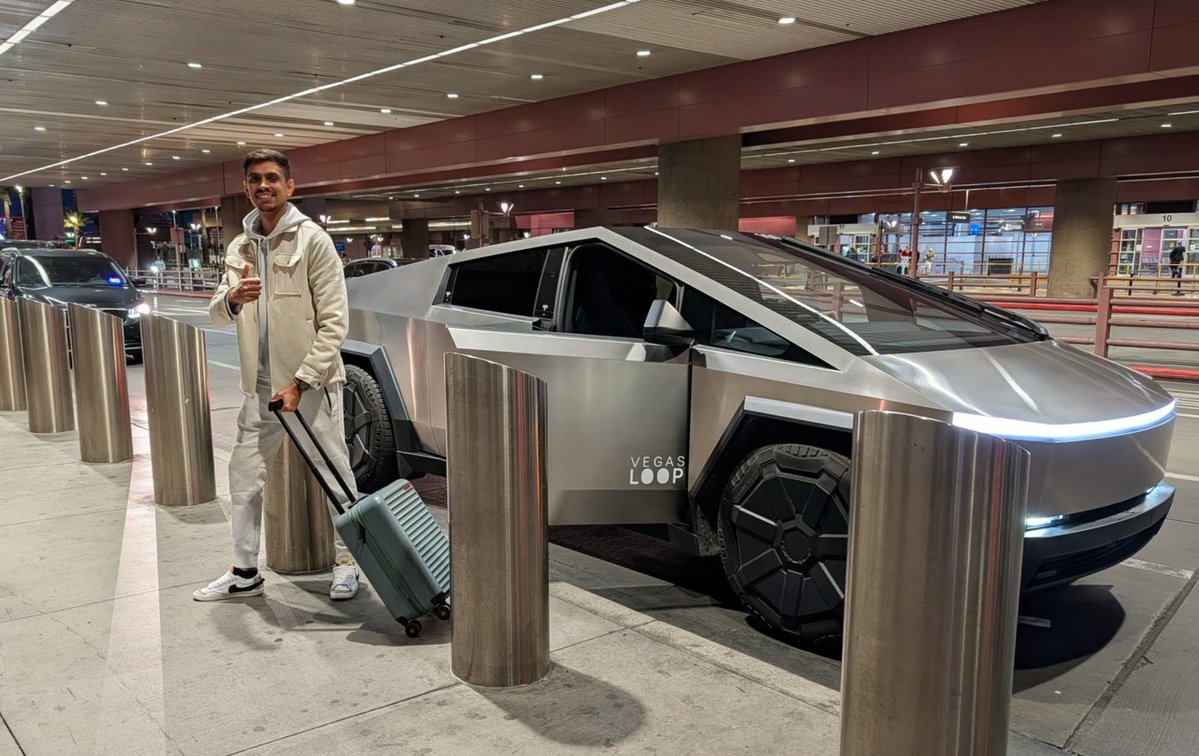
Vegas Loop dropoff at the Airport!
Still in the early phases of the program, providing a small number of rides each day.
The ride includes both a tunnel portion and a long surface portion, with the latter shifting to subsurface when the 2.25 mile Airport Connector twin tunnels open, hopefully in Q1 2026.
Thanks to @LASAirport@LVCVA@ClarkCountyNV@NevadaDBI in reaching this milestone.