1️⃣ The Nose Test: Smell the milk raw. Formalin and ammonia leave a sharp, chemical, or "off" sting. If your instincts say something isn't right, pour it out. Don't boil it hoping to "kill" chemicals.
2️⃣ The Starch Trick: Sellers add water, then thicken the milk with starch so you don't notice.
Boil a small sample, cool it, and add 2 drops of iodine.
🔵 Turns blue-black = Starch detected.
⚪ No change = Clear.
3️⃣ The Overnight Curdle Test: Leave a little milk in an open container at room temperature overnight. Pure milk naturally sours and curdles by morning. If it’s still fresh and liquid? Someone spiked it with preservatives like hydrogen peroxide.
4️⃣ The Freezer Test: Freeze a sample overnight. If it’s slushy instead of rock-solid by morning, chemicals like ammonia or urea may have been added to lower its freezing point.
5️⃣ The Slanted Glass Test (Water check): Put one drop on a clean, tilted glass. Pure milk flows slowly and leaves a thick white trail. Watered-down milk runs fast and leaves almost nothing behind.
6️⃣ The Foam Test (Detergent check): Mix equal parts milk and water in a clear bottle and shake gently. Sellers add soap to create fake froth. Natural milk bubbles fade fast; unusually thick, stubborn foam screams detergent.
7️⃣ The Spoon Flame Test: Heat a little milk on a spoon directly over a flame. Watch how it burns and smells, synthetic additives leave a harsh, chemical residue instead of a natural milky char.
8️⃣ The Filter Test: Pour milk through a white coffee filter or clean cloth to catch hidden physical dirt and debris.
We will be expanding these tests across more counties including Zimbabwe, Nigeria etc. In the next breakdown, we’ll reveal even more tricks and things to watch out for.
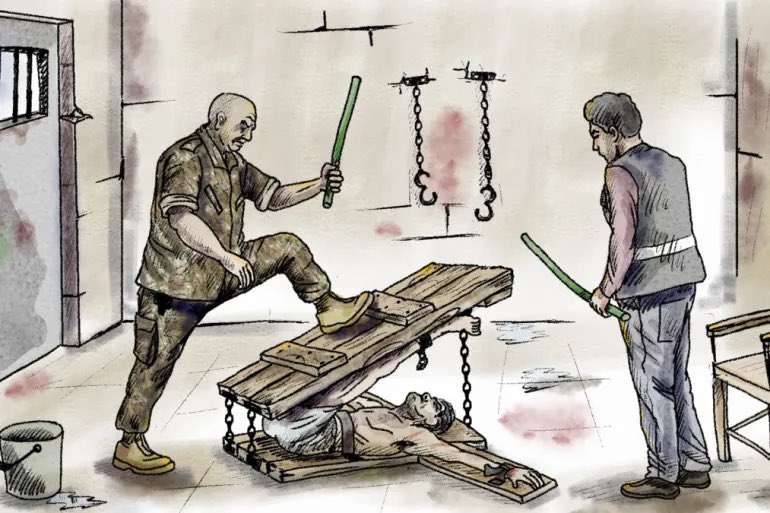
The UN documented Israeli IDF burning Palestinian detainees’ anuses with electric probes and inserting vegetables into their rectums while raping them.
They also kick their genitals until they lose consciousness.
@grok start first with TRUE/FALSE
The Somali Brief is raising funds to sustain a newsroom that Somali Americans can count on for years to come.
We’re just 29 people away from our first 100 supporters.
So far, 71 of you have chipped in $3,604 toward our $250,000 goal.
Thank you for helping our small team tell Somali American stories that readers might never hear otherwise.
If you value our reporting, please donate or share the fundraiser with a friend.
https://t.co/3xjtIMb7QH
Debt up KSh4.77T in 4 years. New tarmac down 62% vs the prior 4. Is speaking up “victim mentality”? You don’t need a degree to question power.
When people speak up about oppression, who gets to call it “victim mentality”? You don’t need a degree to question power. Hela zetu. Maswali yetu.
4,770,000,000,000 Kenyan shillings more debt in four years. So what did Kenyans get for it? Start with the road you take to work. 🇰🇪
From September 2022 to September 2026, Kenya’s public debt rose from KSh8.76 trillion to KSh13.53 trillion. About 70% of that increase came from domestic debt. So when we ask who Kenya owes, we should be looking at home too.
🛣️ THE ROADS: Kenya’s three national road agencies reported 2,584 km of new tarmac in the four financial years ending June 2026. In the previous four? 6,813 km. That’s 62% less new tarmac. Repairs are counted separately.
🏫 THE SCHOOLS: Ruto says 23,000 classrooms were built. New public schools did open. Ask parents in Ngando, where Lenana School Primary opened in 2024. Across Kenya, the public primary school count rose by 935 between 2022 and 2025. How many were newly built campuses? That figure still needs a nationwide list. Give parents the school names, opening dates and costs.
🏥 THE HOSPITALS: The official count of operational public Level 4 hospitals went from 414 to 419 between 2022 and 2025. Naro Moru opened under Ruto in 2023. Its foundation was laid in 2019. A ribbon tells you who opened the doors. Patients can tell you whether there’s a doctor behind them.
💰 THE MONEY: Treasury records KSh639 billion in foreign project loans over those four financial years. To see the scale, split that sum three ways. At the prices of actual Kenyan projects, the three shares together could cover roughly 1,521 km of tarmac, 338 equipped Level 4 hospitals and 1,458 large public primary schools. That’s an illustration of purchasing power. It doesn’t tell us where a particular shilling went.
When Kenyans speak up about oppression, calling it “victim mentality” lets people in power dodge the question. Why should anyone need a degree to ask what happened to public money?
What project was promised in YOUR county? Drop the county, project name and what’s actually there today. If it was finished, say so. If it stalled, tell us when. Hela zetu. Maswali yetu.
Sources: Kenya National Treasury, KNBS Economic Survey 2026, State Department for Roads, NG-CDF Board, Nyeri County and the November 2026 State of the Nation address.
Few South Africans travel north of the Limpopo into Africa for leisure. They tend to be a bit insular like Americans in the sense that they live in a diversely gorgeous country with a myriad of places to visit, relatively cheaply.
Those that do tend to stick to the natural wonders of Victoria Falls and Zanzibar, with the more adventurous venturing into the bush of Namibia, Mozambique, and Botswana.
But for the majority of South Africans that fly, Africa is like the Midwest is to a New Yorker.. a place to fly over on their way to Europe or Asia.
So what is the opportunity for Kenya in this?
Nairobi. An African urban experience within a 5-hour flight that isn't South Africa. It's the "real Africa" but with creative, gastronomic, and nightlife scenes that rival South Africa. Doable in a weekend, with no stress.
South Africans will never go to Lagos for the weekend and none of the other SADC capitals offer the level of what Nairobi does.
If Nairobi is marketed well in Gauteng and Cape Town, people will flock. The partiers, the creatives.
Kumbe Gachagua is right with the tribalism thing.
A certain Kikuyu lady has gained courage and came online to condemn the level of TRIBALISM going in Gema community in the education system.
She adds that teachers from other tribes are facing so much intimidations in the hands of Kikuyu senior teachers
I keep thinking about Museveni’s words. Imagine a leader who has remained in power for decades lecturing Somalia on democracy, national unity and peaceful political competition. The irony is difficult to ignore.
But beyond the irony, we need to confront an uncomfortable reality: Somalia’s crisis is largely self-inflicted. This is a man-made disaster, fuelled by decades of failed leadership, political arrogance, power struggles and warlord mentality.
Look at where we are today. A dispute over elections, constitutional amendments and the transfer of power has escalated into a national crisis. The opposition and federal government cannot reach an agreement, the courts are caught in the constitutional confrontation, and we are now looking to foreign capitals and regional leaders to facilitate discussions that should have been resolved through our own institutions.
Hassan Sheikh’s visit to Kampala comes at a time when Somalia is struggling to achieve the most basic political consensus at home. How did we reach a point where resolving our internal political disagreements requires international intervention?
We cannot keep blaming foreigners for everything while refusing to hold our own leadership accountable. Our sovereignty means very little if our political class cannot resolve a domestic dispute without bringing the entire country to the attention of foreign mediators.
The consequences extend beyond Villa Somalia. Ordinary Somalis carry the embarrassment, the instability and the consequences of decisions made by a handful of self-serving politicians.
At some point, we must stop pretending that Somalia’s problem is always external. The problem is also within us, and until we confront the failures of our own leadership, we will continue to recycle the same crisis under different presidents.