Chair @SamuelAchilefu, Ph.D., is featured in this Science in 60+. Learn about his invention, Medical Vision Goggles, which help surgeons eliminate all cancer cells after tumor removal. The goal is to make them available to surgeons worldwide. https://t.co/kHWG9bbQRz #UTSWScience
Check out Medical Vision Goggles, which help surgeons eliminate all cancer cells after tumor removal. Inventor @SamuelAchilefu, Ph.D., Chair of @utswbme, discusses the goggles and his goal of making them available to surgeons worldwide. https://t.co/X1TvadRfZf #UTSWScience
That’s a wrap on #BMES2026 Annual Meeting! 👋 We’re heading home with new connections, fresh ideas, and plenty to celebrate. We’re proud of our students, faculty and postdocs for representing our department and sharing their work with the biomedical engineering community.
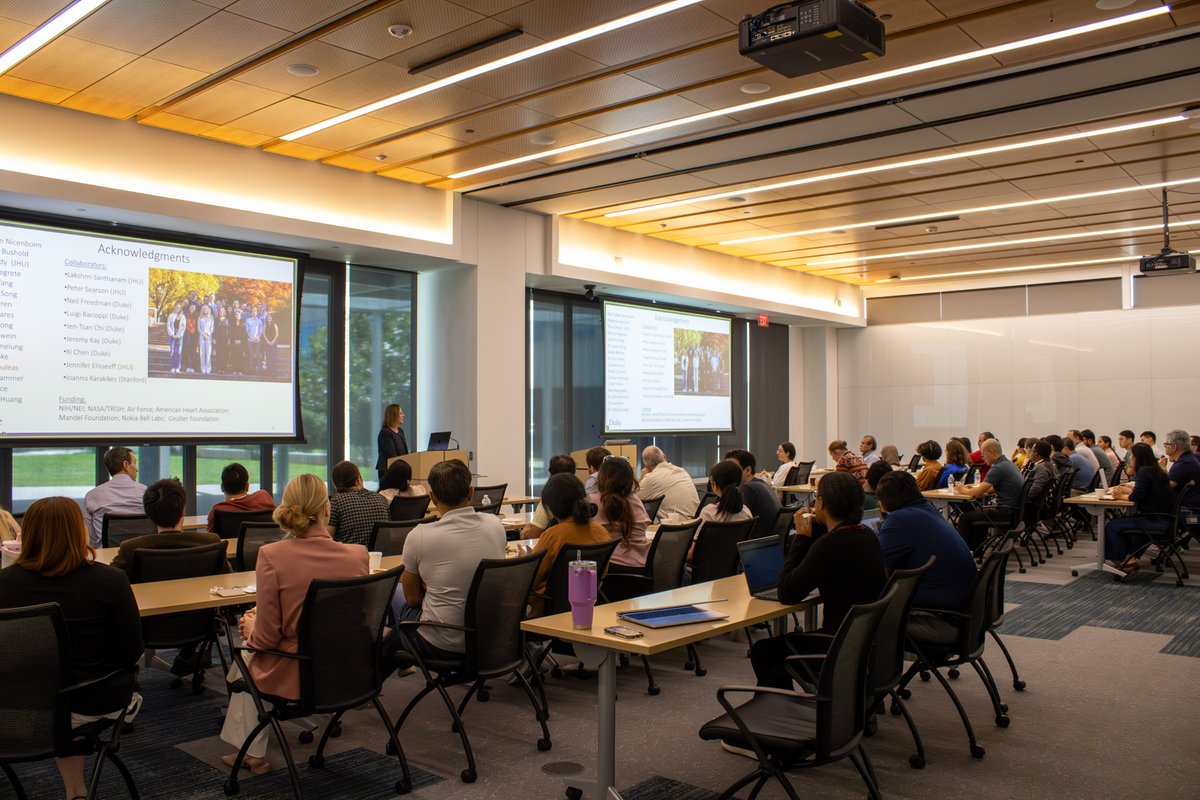
We’re proud to see our department represented as our community shares innovative research, advances the field, and connects with fellow biomedical engineering professionals on Day 3 of #BMES2026.
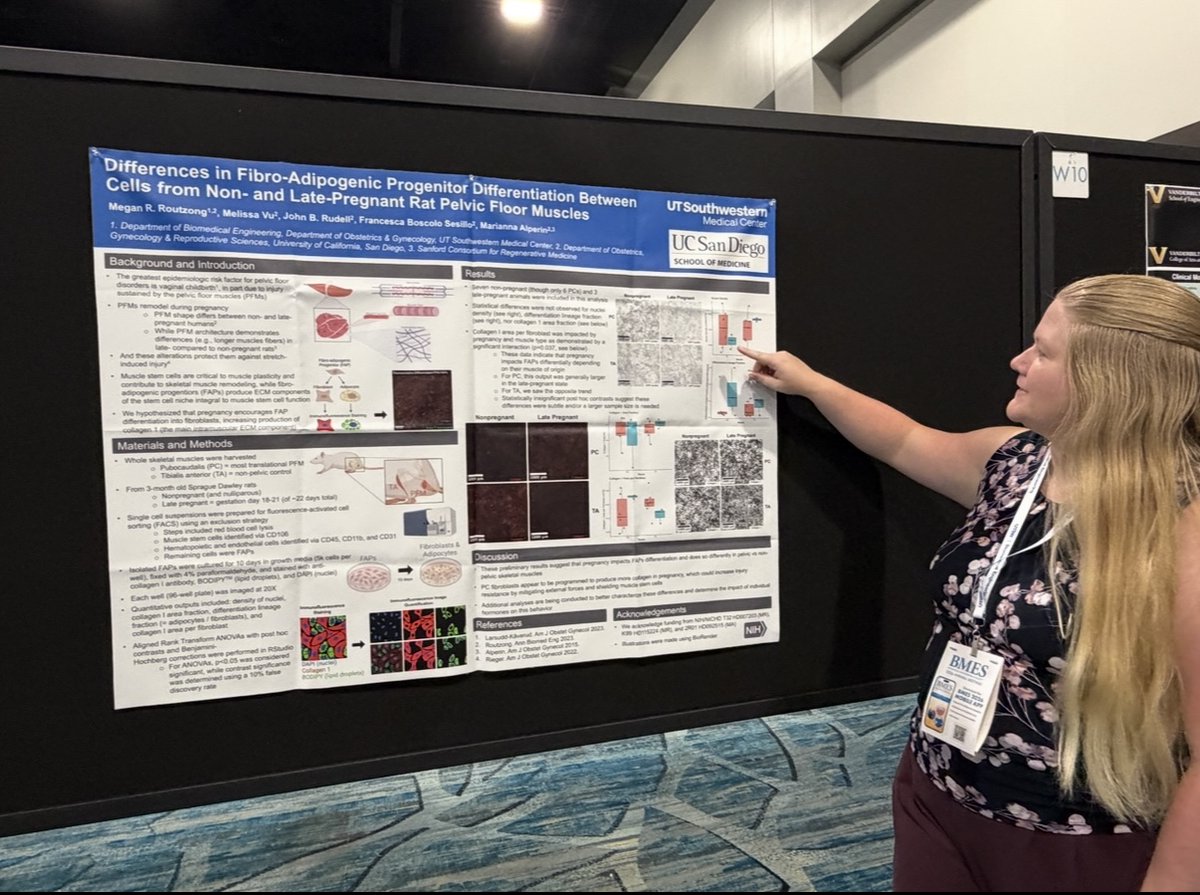
The all-day poster session at #BMES2026 featured several UTSW BME members, including Omanin Siddiqua Prova and Mariam Kawasmi. Thank you for presenting your important research and representing our department today!
Are you at #BMES2026? Stop by Booth 911 and connect with UT Southwestern BME!
We look forward to connecting with researchers, students, and other members of the BME community this week.
Join us on Monday, Oct. 19 for a Distinguished Seminar featuring Michael Miller, Ph.D. of Johns Hopkins University, to explore innovative imaging and data integration approaches to advance understanding of Alzheimer’s disease.
For more information visit: https://t.co/kDBCBiFZFZ
Discover how engineering and medicine come together to transform patient care. Join us for this hybrid event on Monday as we welcome Anthony Guiseppi-Elie, Sc.D., for a BME Seminar Series.
For event details and the Zoom link, visit: https://t.co/Cd3sSVQTj3
We’re heading to Orlando for #BMES2026! Connect with UT Southwestern Biomedical Engineering at the 2026 BMES Annual Meeting, October 21–24.
Visit us at Booth 911 in the Exhibit Hall to meet our team and learn more about the impact of our department.
https://t.co/qQZ723mLrR
Congratulations to Department Chair, Samuel Achilefu, Ph.D., Professor of Biomedical Engineering, on having his article featured in the BioOpinion section of the September/October edition of BioPhotonics magazine!
Read the full BioOpinion piece at: https://t.co/PmsEOEDltQ
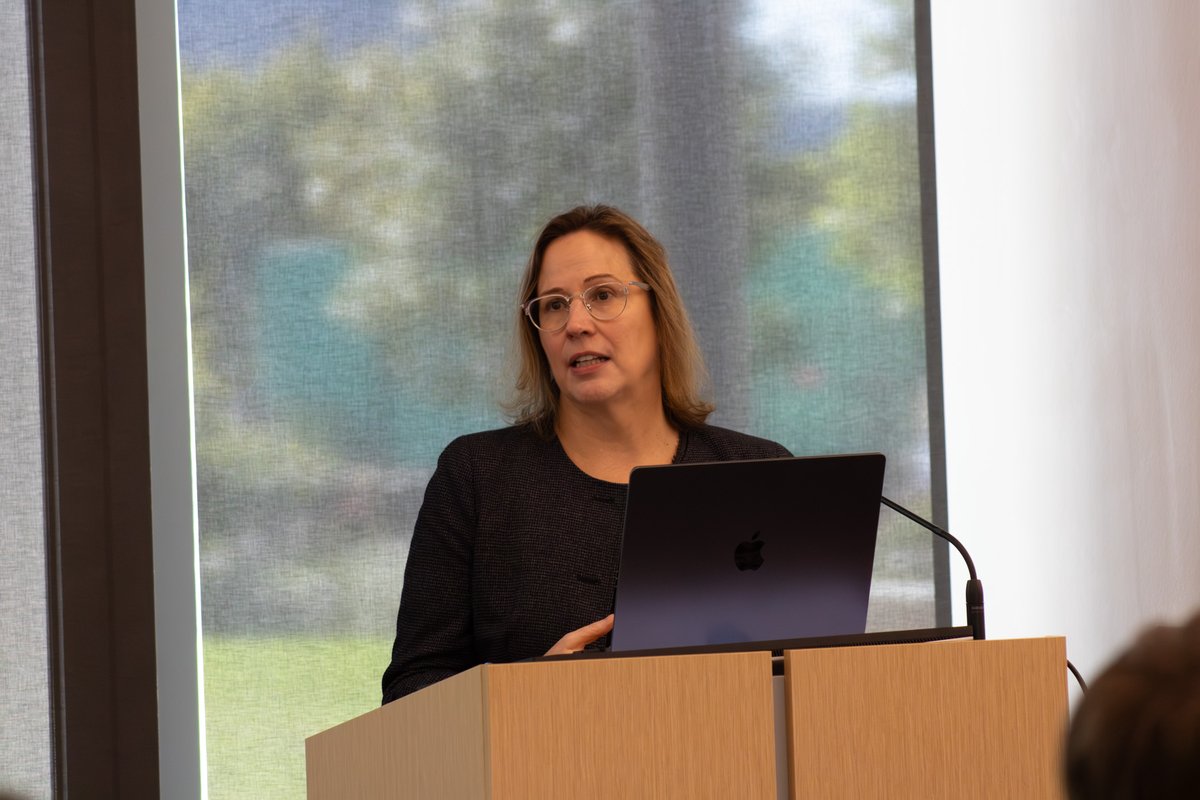
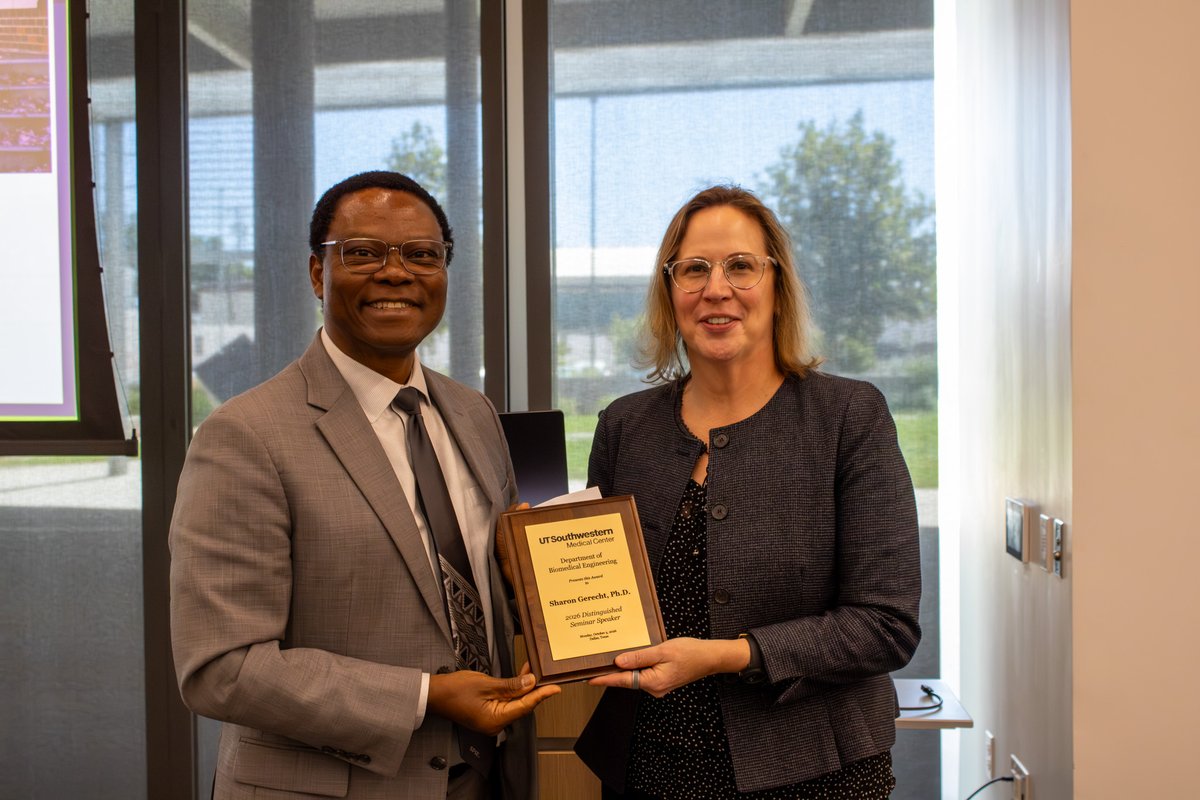
Thank you to Dr. Sharon Gerecht for joining us yesterday to deliver a BME Distinguished Seminar on her pioneering work in vascular biology and tissue engineering.
Binbin Ying, Ph.D., Assistant Professor of Biomedical Engineering and Internal Medicine, is the speaker at this week's BMES 681 Seminar at Texas A&M University Department of Biomedical Engineering.
For additional event information, visit: https://t.co/zRI4il2Vr6
Join us next Monday for the Department of Biomedical Engineering Distinguished Seminar Series featuring Sharon Gerecht, Ph.D., Chair of Biomedical Engineering at Duke University.
For more information, visit: https://t.co/vstvnGx7Du
@GDE_UTSW Lab's Myomaker-LNPs harness muscle's natural fusion machinery to enhance targeted mRNA delivery to developing and regenerating skeletal muscle, enabling functional gene delivery and advancing therapies for muscle disorders.
Read the research at: https://t.co/hPW30x2UYe
Shu Kang, Ph.D., was named a 2026 Poster Award Winner in the Cardiovascular and Systemic Diseases category at the World Molecular Imaging Congress in Salt Lake City last week. Her poster featured research completed as a Postdoctoral Researcher in the lab of Raiyan Zaman, Ph.D.
The Chemistry, Biomedical Engineering, and Cancer Program hosted a research retreat yesterday, which focused on emerging ideas in Chemistry and BME-led cancer research. The event featured multiple faculty speakers and an opportunity for researchers to network over lunch.
A study from @GDE_UTSW developed a polymer-lipid hybrid nanoparticle platform enabling programmable encapsulation and controlled organ-specific delivery of diverse RNA payloads. Learn more: https://t.co/TpN0yD0fl3.
Pelvic organ prolapse (POP) is a disorder where organs in the lower abdomen protrude into the vaginal canal causing symptoms like bladder and bowel leakage. Members of the @PenceOpticsLab address this clincal need in their latest study. Read the study: https://t.co/GNvLywGPhJ
A recent study from @GDE_UTSW published in Cell Biomaterials introduces a new biometric approach to improve the precision of lipid nanoparticle (LNP)-based nucleic acid delivery. Explore the research: https://t.co/PxQ1bTxUgH
Congratulations to Paula Hernandez, Ph.D., Assistant Professor of Orthopaedic Surgery and Biomedical Engineering, on having a paper named the Endocrine Reviews Featured Article this week!
See the complete findings: https://t.co/iSPHbh62zZ