@SauravDassss The 'next time' is already here and the courts are still in collusion. This time in the name of 'by-elections'. See: https://t.co/7J0fUSF7v2
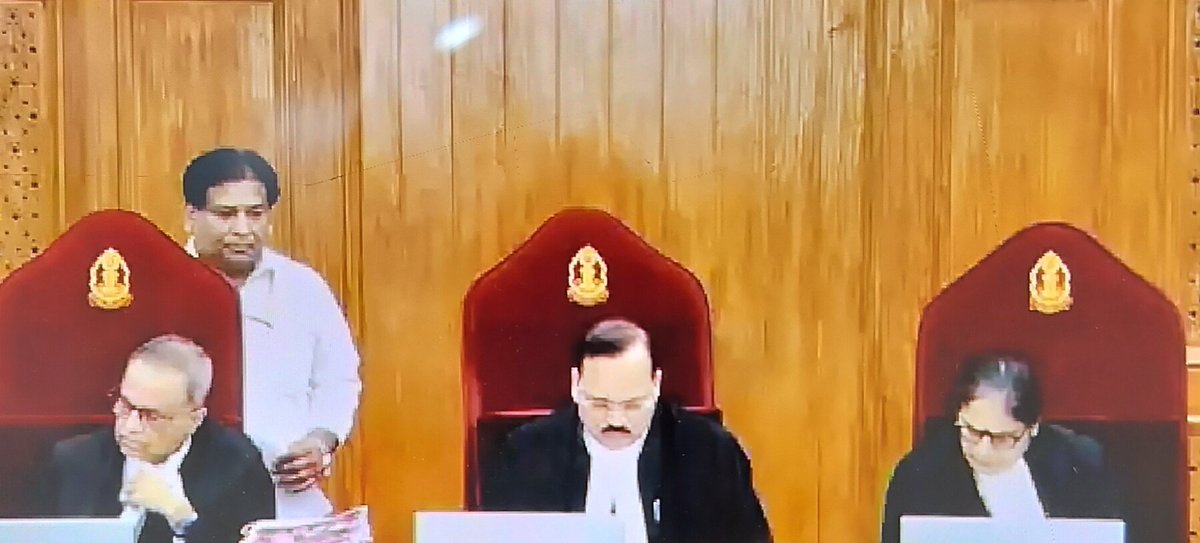
#BREAKING Supreme Court declines to advance the hearing in the West Bengal SIR matter concerning over 18,000 appeals stated to be pending before the appellate authorities, despite a request for listing before the October 6 bypolls in Reginagar and Nandigram
CJI Surya Kant remarks, “These are only by-elections, that’s all,” after counsel submitted that affected voters risked missing out on voting for a second time.
The matter will remain listed on October 5.
ECI is not the villain for me. It is the SC bench which decided the fate of millions with the words “let them
Vote next time”.
They are the main culprit in killing the democracy.
Justice Datta invokes a Cricket analogy to underscore his doubt about whether the Election Commissioners' appointment is free of the executive's influence.
An umpire selected by a batting team, even if he gives the correct decision, will always be under a shadow of doubt, as he will be perceived to be loyal to the team, Justice Datta says.
"We find no reason why the jurisdictional High Court can not decide the plea. Petitioner is allowed to withdraw, with liberty to approach the jurisdictional High Court."
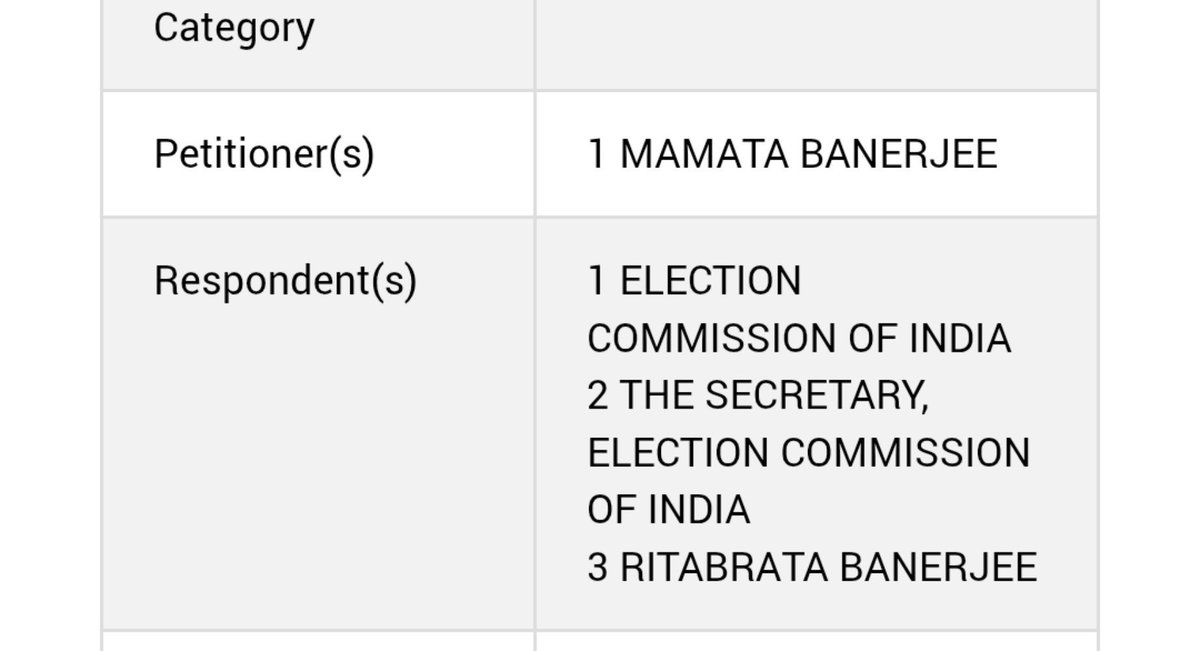
#SupremeCourt | Former West Bengal Chief Minister Mamata Banerjee has moved the Supreme Court challenging the Election Commission’s interim order freezing the All India Trinamool Congress name and its reserved ‘Flowers & Grass’ symbol
The EC order came amid rival claims over the party by the factions led by Banerjee and Ritabrata Banerjee. The dispute is pending final determination by the poll body.
@RitabrataBanerj@MamataOfficial
@GeorgieGirlLvp been volunteering since 2019 & it has been a wonderful learning experience. getting to know the difficulties visually disabled people face & how it leads to issues in the day to day really puts things into perspective.
3 of the biggest academic publishers in the world sued a photocopy shop.
The shop charged 50 paise a page. It sat inside a university campus in Delhi and had 1 owner.
The case ran for 4 years. The shop won, and the law changed.
His name is Dharampal Singh.
He set up Rameshwari Photocopy Service in 1998, in a small licensed space inside the Delhi School of Economics at the University of Delhi.
The work was simple. Professors would prepare a reading list. For a course like Agrarian Sociology, that might mean 33 different readings, scattered across 33 different books, most of which cost more than a student's monthly budget and some of which the library had 1 copy of.
Singh photocopied the relevant chapters, bound them together, and sold the bundle. It was called a course pack. The price was 50 paise per page.
That is less than 1 American cent.
He explained it in 1 sentence. If a student needs 33 readings for a course, he said, it could take months to collect them from different books. I make life easier for students by giving them all the material in 1 pack.
In August 2012, Oxford University Press, Cambridge University Press and Taylor and Francis filed suit in the Delhi High Court against the shop and against the University of Delhi. They wanted a permanent injunction.
By the end of 2012 the court had granted a temporary one. A commissioner was sent to the shop without warning, made an inventory, and seized copies.
Then something unusual happened.
Students organised. 2 groups, one of students and one for educational access, formally applied to join the case as defendants, on the side of the photocopy shop. The court allowed it.
In March 2013, 309 authors and academics from around the world wrote an open letter to the publishers asking them to withdraw the case.
33 of those 309 had written the very books whose copyright was allegedly being infringed.
The authors were siding with the shop copying their books.
On 16th September 2016, Justice Rajiv Sahai Endlaw dismissed the suit entirely. He wrote that copyright in literary works is not an inevitable, divine or natural right conferring absolute ownership on authors.
The publishers appealed. On 9th December 2016, a 2 judge bench of the Delhi High Court delivered the final ruling.
It held that reproducing copyrighted material for the purpose of educational instruction is not infringement under Indian law, and that no licence or permission from the publisher is required for a course pack, however much of the book is copied, as long as it is justified by teaching.
Then the publishers withdrew from the case entirely.
The shop is still there.
The next time you are told that intellectual property law always favours whoever has the most expensive lawyers, remember that 3 of the largest publishers on Earth spent 4 years trying to shut down a photocopy shop charging half a rupee a page.
And lost.