Additionally, OCOVI will have an ROV on display. Bring your ocean questions and learn about what OCOVI is doing for you this hurricane season! This beach cleanup is a part of a GLOBAL effort to pick up 30 tonnes of trash! Be sure to use the hashtag #STTWOD21!
This Sunday, June 13th from 8 am-12 pm come join @OCO_VI, Cleanup St. Thomas, @SOAlliance, @WomeninOceanSci, and @OceanMimic in a #WorldOceanDay Cleanup at Brewers Beach! We are handing out reusable water bottles to the first round of participants courtesy of @uvimmes!
I am hosting a beach clean-up on June 13th from 8-12pm at Brewer's Bay Beach, St. Thomas in an international collaboration with @WomeninOceanSci, @OceanMimic, @OCO_VI, Clean Up St. Thomas, and the USVI youth chapter of @SOAlliance! Bring your own water bottle and sunscreen!!
So incredibly proud of my cohort for publishing our @uvimmes capstone research project! We have officially been accepted! Finally a published scientific co-author! #sctld
As the 2021 hurricane season approaches, OCOVI is ready for our glider season. Since OCOVI works closely with @UVI_edu, we thought we’d reach out to @uvimmes student @Souza101Matt, who spends a significant time researching past and present hurricane patterns and predictions.
They collect temp, salinity, dissolved oxygen, pH and turbidity. They also test for Enterococci sp., Total Nitrogen, Total Phosphorus, and Total Suspended Solids. You can see all this data at https://t.co/q6Z8LTvKDS.
Photos by Amber Packard
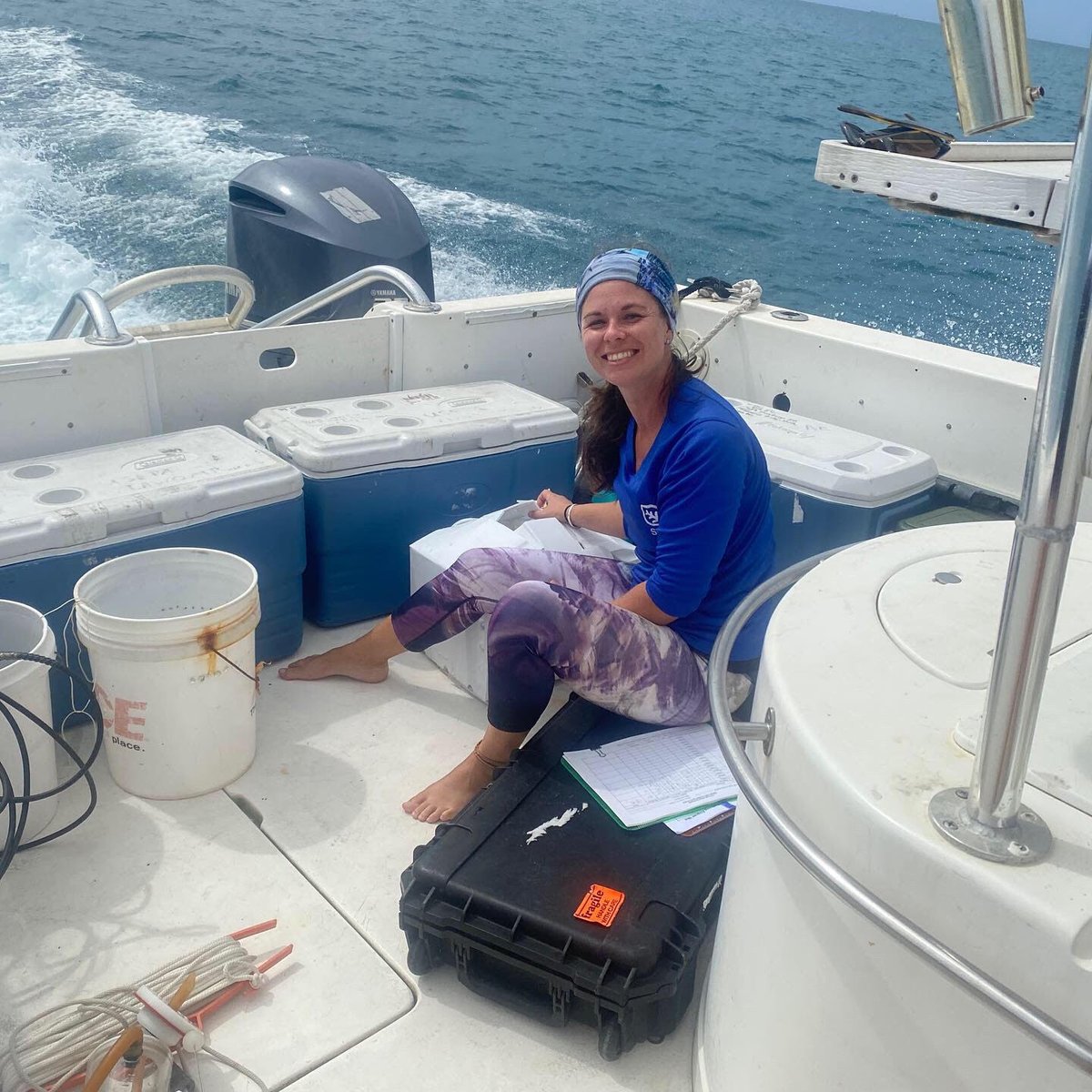
Amber is the Environmental Analysis Lab Manager at UVI. Her main project is the Basic Ambient Water Quality Monitoring Project. They monitor water quality in bays on St. Thomas & St. John.
A gnathiid is a parasitic crustacean that infects marine reef fishes like damselfish. In her experiment she learned that settlement stage damselfish would rather settle on the side of a reef with plankton that contain parasites than the side with no plankton!
Everyone meet Amber Packard! Amber graduated from the UVI Masters of Marine and Environmental Science program back in 2020. Let’s hear more about her work!
Amber’s thesis was on the “Effects of micropredatory gnathiid isopods on recent post-settlement coral reefs.”
She washes the seaweed onto filters, hand picks the microplastics off and counts them under a microscope. She hopes to understand the impacts microplastics have on the unique ecosystem that Sargassum creates for many organisms including crabs and birds.
Photos: @OliviaDiana_07
Microplastics are very small pieces of plastic debris found in the environment. They are often consumed by ocean life and are a result of improper disposal of waste. For her research she uses a washing method to dislodge microplastics from the seaweed’s surface.
One graduate student in the @uvimmes program, Olivia Diana, is looking at algae as accumulators of microplastics. To do this she is studying both pelagic and benthic Sargassum from various beaches around St. Thomas, USVI.
Tune in to our photographer Dan's Thesis Defense at 12 PM EST/AST today to learn more about: "A Comparison of Propagation Techniques with Acropora palmata Micro-fragments". DM for the zoom link. @uvimmes@UVI_edu
"As someone who is not from the USVI, my main priority is getting local youth involved on the important decisions being made for THEIR oceans and that will impact THEIR livelihoods."
- Madyson
Hey everyone should go follow @usyacunod! We are a youth advocacy organization (13-25 yrs) that are dedicated to creating positive change this ocean decade!
Congratulations to Sonora Meiling! We are so proud of all your accomplishments and all the work you have done to make waves of change in our coral ecosystems!
The work to continue caring for our reefs continues!
Meet the winners of our reef restoration scholarships with
@FundIberostar. Congratulations to all 👏, stay tuned to get to know more about them! https://t.co/qSjTRO50B6
I graduated with my Master’s in 2020 and currently, I am the Marine Disease Specialist at the University of the Virgin Islands researching ways to help corals fight SCTLD and restore populations devastated by the outbreak.”
Photo by: Dan Mele
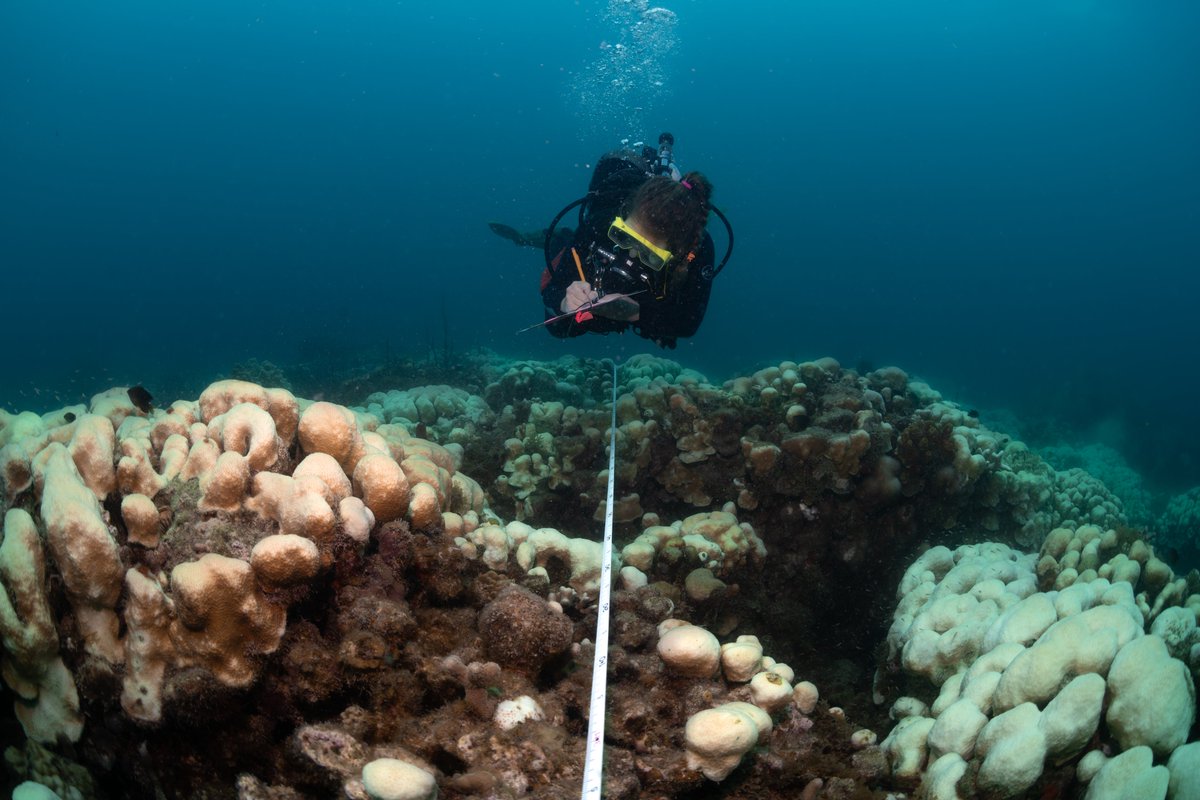
"I monitored the outbreak of stony coral tissue loss disease (SCTLD) shortly after it arrived in the USVI. Using 3D models, I tracked diseased corals throughout a bleaching event. I established monitoring stations to evaluate the impact of SCTLD on reef communities.