Our mission is to create knowledge that informs evidence-based education and improved care for women and their families throughout the lactation period.
What's in your milk is shaping your baby's mouth microbiome — in a good way
Your baby's mouth has its own community of #bacteria, and it starts forming from the first days of life. #Breastfed babies have a noticeably #different#mix from formula-fed babies. Until now, nobody really knew which parts of milk were responsible.
Our team looked at 45 breastfeeding mothers and babies here in Western Australia, measuring 16 different things in each mother's milk and matching them against the microbes in her baby's mouth at three months.
The standout was #lactoferrin, one of milk's natural antimicrobial proteins. Where it was more concentrated or more lactoferrin was consumed, babies had a narrower set of bacteria in the mouth. Lactoferrin works partly by locking up iron that bacteria need to grow, so this makes good biological sense. It's actually one of the ways milk quietly does its #protective work at every feed.
But it's also a reminder that milk isn't just food. It's actively shaping the environments it touches including the gut, and as it turns out, the mouth too.
📄 https://t.co/9UD7QgHje3
#WBW2026 #Breastfeeding #HumanMilk
What's actually in breastmilk? It's harder to measure than you'd think
Every mother's #milk is #different — and it #changes across a feed, across the day, and across the months of breastfeeding. That variation is a #feature, not a flaw. It's milk doing its job. It makes milk remarkably hard to measure, and in neonatal units, where a preterm baby's milk is sometimes fortified with extra nutrients to help them grow, getting that measurement right really matters.
In a new review, Lisa Stinson and Prof Donna Geddes looked at how well the science is currently doing. Fat and lactose we can measure well. #Protein we tend to overestimate which can mean a preterm baby's milk could get less added nutrition than it should. Vitamins, minerals and the many bioactive components in milk remain genuinely difficult.
None of this is a reason for worry at the breast. It's a to-do list for researchers: better reference standards, agreed protocols, and simple tools clinicians can use in the clinic instead of shipping samples to a specialist lab.
Better measurement is how we make sure the support families receive is built on solid ground.
#WBW2026 #Breastfeeding #HumanMilk #UWA
📄 https://t.co/NoR7OlNJan
WORLD BREASTFEEDING WEEK 2026
Join Dr Sharon Perrella this evening for a free online webinar on Breastfeeding - what makes it work?
Whether you are a parent, expecting a baby, or a health professional providing care during pregnancy and the months after birth, this session will provide useful insights on:
- Preparing for breastfeeding during pregnancy
- Setting up for success in those critical early weeks
- What to do when things go wrong
- Making the breastfeeding journey work
There will also be an opportunity to ask questions during the #live Q&A. Event details: #TONIGHT,
Thursday, 6 August 2026 at 7:00 PM (Online via Microsoft Teams)
https://t.co/c8oiGZ16uG #WorldBreastfeedingWeek #BreastfeedingSupport #Midwifery #IBCLC #ParentingJourney #WBW2026
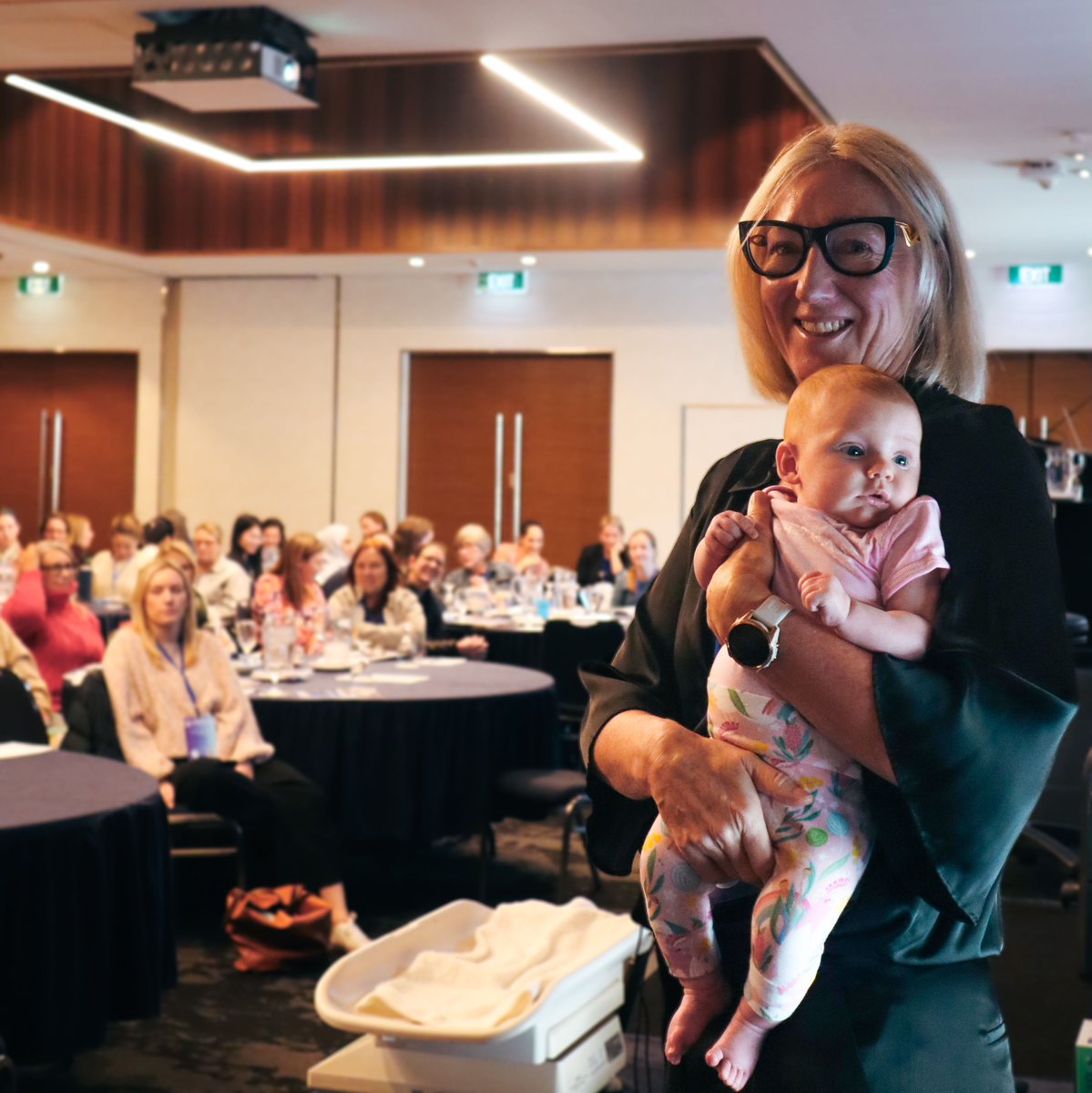
This week, in line with World Breastfeeding Week 2026, Prof Donna Geddes and Dr Sharon Perrella from the UWA Centre for Human Lactation Research and Translation conducted two lactation and breastfeeding #workshops for 3rd year Human Reproduction students.
The workshop covered the #anatomy and #physiology of #milk #production and #breastfeeding, with special guests Sally and baby Rory, Lauren and baby Jack providing #real-life insights into the practical aspects of breastfeeding.
With this week's World Breastfeeding Week theme being "Breastfeeding for a sustainable start in life: strengthen what works" it was a great opportunity for students to learn about the #factors that #help mums and babies to continue breastfeeding when faced with challenges.
#WBW2026 #WorldBreastfeedingWeek #Breastfeedingsupport
#WBW2026
If you've struggled with milk supply, it probably wasn't something you did wrong
One of the hardest things a mother can hear is that she just needs to try harder. Feed more often. Relax. Drink more water. For most women with genuinely low supply, often none of that is the real story.
Our team has just published a study of 281 breastfeeding mothers, where we #measured milk production #directly over a full 24 hours rather than guessing it. We found that differences in #supply were closely linked to how much milk-making #tissue a woman's breasts had developed. This is something largely set during pregnancy, and not something she chooses or controls.
That's important. It means low supply is often a #matter of #anatomy and #physiology, not effort or dedication. Mothers who struggle are usually working extremely hard.
It also points to something better than reassurance after the fact: knowing in #advance. If we can #identify during #pregnancy which mothers may need more support, that support can be there from day one - a skilled clinician, a plan, a follow up - rather than arriving in week three when everyone is exhausted and disheartened.
This World Breastfeeding Week, the theme is strengthen what works. Getting the right help to the right mothers, early, is exactly that.
And if this was your experience: it likely wasn't your failing.
📄 https://t.co/So3nTYzIqw
#worldbreastfeedingweek #breastfeedingsupport
World Breastfeeding Week 2026 | Supporting every breastfeeding journey with better evidence
Not producing enough milk is one of the most common concerns among breastfeeding mothers. But how do we know when milk supply is truly low?
Our research involving 460 breastfeeding women used a data-driven approach to better understand and define #low #milk #supply. We identified distinct patterns based on measured milk #production, infant #intake, and #growth, and found that a milk production threshold of 708 g/24 h may provide a more evidence-based approach to identifying low milk supply.
We also found that low milk supply is not simply about breastfeeding effort or infant demand. #Maternal #biological and #metabolic #factors matter, highlighting the need to recognise low milk supply as a #complex #physiological #condition rather than placing responsibility on mothers.
This World Breastfeeding Week, our message is simple: better identification leads to better support.
https://t.co/TMSB2stc8u
#WorldBreastfeedingWeek2026 #WorldBreastfeedingWeek #BreastfeedingSupport #BreastfeedingAwareness #MaternalHealth #InfantNutrition
Your Milk Isn't "Boy Milk" or "Girl Milk"
Our study has shown there is #no#difference in #milk macronutrients based on your #baby's #sex.
We analysed milk from 161 mother-infant pairs from Denmark and Australia, measuring protein, lactose, fat, and energy. In the Australian infants, actual 24-hour milk intake was measured.
The result: across both countries, there were #no #significant #differences in milk composition or in how much milk, protein, fat, lactose, or energy babies took in over 24 hours, whether they were boys or girls.
This challenges the idea, partly inspired by studies in animals like macaques, that mothers unconsciously change composition according to whether they are a girl or boy. Our #human #evidence, including this study, doesn't back that up. Many other things impact milk macronutrients composition like the time after birth and time of day, not your baby's sex.
So, if you've worried your milk isn't "tailored enough" for your son or daughter specifically, you can let that go. In terms of macronutrients and energy it's built for babies, not "boy babies" or "girl babies."
Source: Honoré et al., Nutrients 2025, 17, 3647.
https://t.co/7kobx3k8tM
#WorldBreastfeedingWeek2026 #WorldBreastfeedingWeek #BreastfeedingSupport #BreastfeedingAwareness #MaternalHealth #InfantNutrition #WBW2026
🍼 Does birth mode matter if a baby is exclusively breastfed?
In this study, @uwa_chlrt researcher @Lisa Stinson followed infants' gut microbiomes from birth into toddlerhood and found some reassuring news: while caesarean birth is often linked to lower levels of beneficial Bifidobacterium ("good bacteria") in the gut, this dip wasn't seen in babies who were exclusively breastfed. This is likely because breastfeeding is Bifidobacteria-boosting, thanks to specialised sugars it contains that feed these good bacteria. Even more striking, breastfeeding continued to support these beneficial bacteria well past infancy. The researchers found Bifidobacterium levels were still elevated at 24 months in toddlers who were still breastfeeding.
🔗 Read the full paper here: https://t.co/ckN2kzlQr5
World Breastfeeding Week 2026 🤱💛
This week we #celebrate#breastfeeding and the incredible bond it creates - plus the #support that helps families feel #informed, confident, and cared for.
Every mother and baby deserves #respectful, #accessible breastfeeding #support at home, in healthcare, and in the community. 🌍
Whether you’re breastfeeding, supporting someone who is, or learning - thank you for being part of the journey.
#WorldBreastfeedingWeek2026 #WorldBreastfeedingWeek #BreastfeedingSupport #BreastfeedingAwareness #MaternalHealth #InfantNutrition #WBW2026
It can be a shock when #breastfeeding doesn't go according to plan. A Perth midwife has developed an early detection tool that identifies the pregnant women most likely to struggle. She'll share details in a free webinar for #WorldBreastfeedingWeek.🔗 https://t.co/XIDO5cExXu
WORLD BREASTFEEDING WEEK 2026
Join Dr Sharon Perrella for a free online webinar on #Breastfeeding - what makes it work?
Whether you are a parent, expecting a baby, or a health professional providing care during pregnancy and the months after birth, this session will provide useful insights on:
- Preparing for breastfeeding during pregnancy
- Setting up for success in those critical early weeks
- What to do when things go wrong
- Making the breastfeeding journey work
There will also be an opportunity to ask questions during the #live Q&A.
Event details: Thursday, 6 August 2026 at 7:00 PM (Online via Microsoft Teams)
https://t.co/92ZCpGqqit
#WorldBreastfeedingWeek #BreastfeedingSupport #Midwifery #IBCLC #ParentingJourney #WBW2026
Excited to announce that the #5th@ABREAST_Network Conference is on the horizon—in just a few weeks! Tickets are officially #sold#out, and we can’t wait to welcome our passionate community back. Huge #thanks to the speakers, sponsors, volunteers, and attendees who’ve helped make this milestone possible. Here’s to evidence based #research, meaningful connections, and an unforgettable event ahead!
#AbreastConference #SellOutStatus #CountdownToConference @geddesdonna1@uwa_hlrg@SMS_UWA@UWAresearch
#ABREAST Conference 2026 — SOLD OUT
Thank you to everyone who registered! We’re at full capacity and cannot accept additional attendees at this time. For updates, future events, or waitlist information, please visit our website or contact us via - [email protected]#Thankyou!
Don’t miss out! Early bird rates for the #ABREAST Conference close on May 15
#Save with the best pricing and secure your spot among leaders in the field to this almost #SOLD#OUT EVENT
Register now: https://t.co/qvQcVnYf7H
#ABREAST2026#Conference#EarlyBird
Happy International Midwives Day 2026
Today we honour the expertise, compassion, and unwavering commitment of midwives who support families through pregnancy, birth, and the postpartum journey. Your leadership in safe, respectful, evidence-based care makes a lasting impact on communities worldwide. #Thankyou for all you do!
#InternationalMidwivesDay #MidwivesMatter #BirthWithCare
ABREAST CONFERENCE 2026 - 25 JUNE
SPEAKER SPOTLIGHT - Dr Zoya Gridneva
Zoya Gridneva, PhD is a Research Fellow at the Geddes Hartmann Human Lactation Research Group. Her research on maternal factors, such as #adiposity, on breast #anatomy, milk #composition, #production and #removal has revealed significant impacts on lactation. Zoya also focuses on the effect human milk component intakes on the breastfed infants’ growth and body composition and how this #reduces childhood and adult #obesity risk. Zoya's work has been widely recognised, with her international collaborations, awards and publications. Her research on how milk components affect #infant #body #composition has earned notable recognition, including the 2024 ISRHML Ehrlich Koldovsky Early Career Award and 2024 UWA School of Molecular Sciences Award for Research Impact and Innovation.
Zoya will be presenting at #ABREAST2026 on:
'Maternal experiences with exclusive pumping'
Mothers who exclusively pump breast milk to feed their infants face unique challenges, however, are underrepresented in research. Our studies confirm it is possible for these women to sustain lactation with exclusive pumping and provide sufficient expressed breast milk volumes for the infant, challenging long held dogma that this is not possible. However, the time commitment required for exclusive pumping represents a serious burden. These women face unique challenges and feel under supported indicating targeted evidence-based education for health professionals on exclusively pumping to improve lactation outcomes and maternal wellbeing.
ABREAST CONFERENCE 25 JUNE 2026
SPEAKER SPOTLIGHT - Lisa Stinson
Dr Lisa Stinson is a #perinatal#microbiologist at The University of Western Australia. Her research explores the #infant#microbiome, with a special focus the role of human milk in modulating infant microbial ecology. Dr Stinson leads the microbiome research at the UWA Centre for Human Lactation Research and Translation. Her work has received numerous awards and significant media attention, including selection for the ABC Top 5 Science Media Residency. By advancing our understanding of early microbial exposures, Dr Stinson’s research aims to inform strategies that support optimal infant and lifelong health.
Lisa will be presenting at #ABREAST2026 on:
“Can I still use this?” Assessment of the bacterial safety of left-over expressed milk
Current guidelines recommend discarding any #expressed breast milk (EBM) remaining in a #bottle after an infant has fed. Despite being widely endorsed by health authorities, these recommendations are merely #precautionary, with no empirical #evidence to support them. Given the known #antimicrobial properties of human milk, and the significant volume of milk discarded as a result of these guidelines, robust evidence is urgently needed. This presentation shares preliminary findings from an ongoing study examining bacterial load in EBM immediately before infant feeding, immediately after infant feeding, and after #storage at room temperature for 4 hours and refrigerated storage for 4 days. Early data suggest that while infant feeding does introduce oral bacteria into the bottle, #bacterial levels do not rise any further during subsequent storage. Thus, the bacteria that an infant is exposed to when offered fed-from EBM that has been stored is no different to the bacteria that they were exposed to at the end of the original feed. These data suggest that current guidelines are too conservative, potentially causing widespread #waste of EBM.
Register Now! Early bird registrations are now open
https://t.co/STZxeMyYp7
ABREAST CONFERENCE 25 JUNE 2026
SPEAKER SPOTLIGHT - DR STUART PROSSER
Dr Stuart Prosser graduated with an MBBS from The University of Western Australia in 2000 before pursuing further studies in #Child#Health, #Women’s #Health, #Obstetrics and #Gynaecology, #Anaesthetics and Skin Cancer Management. Stuart has worked as a Procedural General Practitioner, practising both Anaesthetics and Obstetrics, for over 15 years. During his initial General Practice training he completed his Advanced Diploma in Obstetrics and his JCCA in Anaesthetics. Throughout this period, Stuart has continually focused on enhancing the patient experience. Stuart holds a Master in Medicine, specialising in perioperative medicine and healthcare systems and leadership, and a Master of Business Administration from the University of Melbourne. He maintains a long-standing commitment to continuous education and serves as an associate professor at Curtin University.
While keenly interested in antenatal care, Stuart also has experience in early pregnancy management (including initial ultrasound) and management of early pregnancy problems (including bleeding and morning sickness). Stuart has a particular interest in the postnatal period and manages all aspects including mental health issues, irritable babies (including sleeping issues), poor weight gain for your baby and any concerns about your recovery after childbirth. Stuart also believes partners are a very important, and often ignored, part of the adjustment to parenthood. As such he has a particular interest in partner’s adjustment to parenthood and partner mental health issues.
Stuart is proud to be the #Lead #General #Practitioner #Obstetrician (GPO) at Western Obstetrics, a multi-disciplinary practice that provides team-based maternity care. They offer midwifery-led maternity care, with support from GP Obstetricians, and other health services such as women's health physiotherapists, psychologists, and lactation consultants. Western Obstetrics aims to deliver individualised care that meets the unique needs of each patient. They believe that every patient should receive excellent care during and after the birth of their baby, regardless of whether they deliver privately or publicly.
Stuart will be presenting at #ABREAST2026 on:
Tongue tie clinical assessment
The presence of a lingual frenulum, or ‘tongue tie’ is often considered as a cause of current or future breastfeeding difficulties and issues such as reflux, fussiness and low weight gain. Approaches to the clinical assessment of tongue tie vary widely, and while screening for aspects of tongue structure and function is usually performed, an assessment of infant feeding is also needed. In this presentation Dr Prosser will use #case #reports to illustrate a comprehensive approach to #tongue #tie #assessment using a validated #tool, #assessment and discussion.
Register Now! Early bird registrations are now open
https://t.co/STZxeMyYp7