💬 PIONEERS — Remember when @PiCoreTeam said this? 👇
“Testnet2 and Mainnet will be phased in over the following weeks after Testnet1 upgrades are completed, bringing the full ecosystem to version 23.”
That was months ago.
✅ v23 is marked “complete” on the roadmap.
❌ But where is the full ecosystem? Where are dApps? Where’s the Pi DEX? Where are the smart contracts on Mainnet?
Dates changed to TBD. Deadlines slipped. “Soon” never ends.
Meanwhile, 18M+ KYC’d Pioneers wait. 400K+ nodes stand ready. The infrastructure is there. The promises? Not delivered.
🔍 Dr. Chengdiao Fan – you studied human behavior. But this feels less like building and more like an experiment. We’re not rats. We’re partners. And we deserve answers.
👇 When will PCT deliver what was promised?
Drop a ⏰ if you’re still waiting. Let’s make some noise. 🔁
#PiNetwork @nkokkalis #WhereIsTheEcosystem @PiCoreTeam@Chengdiao
There are differences between Kraken and Kraken Pro.
Kraken is designed for beginners and individual investors, while Kraken Pro is geared towards experienced traders and institutional investors.
The Pi price will be displayed on Kraken Pro; it has not yet been announced.
#Pi
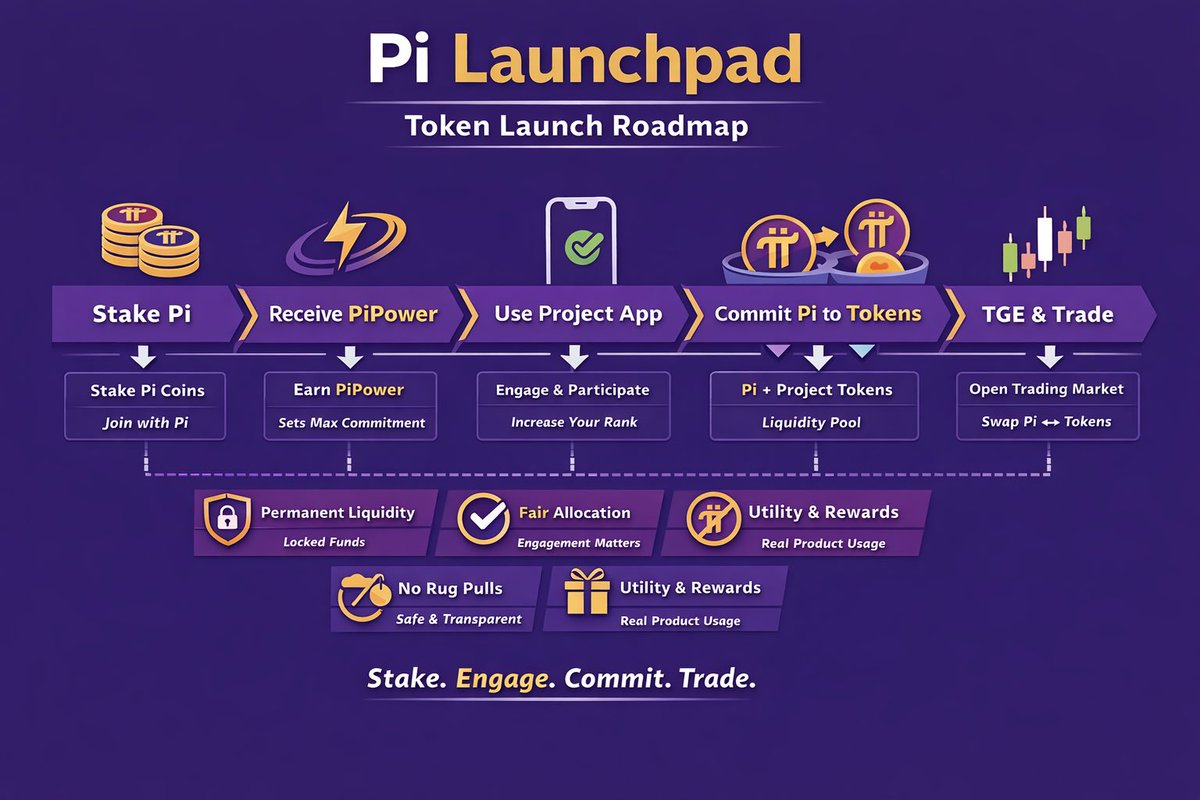
🚀PI LAUNCHPAD THE COMPLETE BLUEPRINT FOR FAIR TOKEN LAUNCHES! 🔥
1️⃣STAKE PI → Earn PiPower (your allocation power)
2️⃣USE PROJECT APP → Engagement = Higher rank
3️⃣COMMIT PI TO TOKENS → Fair, transparent allocation
4️⃣TGE & TRADE → Liquidity POOL, NOT team wallets
✅NO rug pulls — Funds locked PERMANENTLY
✅NO team grabs — Liquidity FIRST
✅Real product REQUIRED before launch
✅Engagement MATTERS more than bags
Stake. Engage. Commit. Trade.
This is how Web3 should work. 💜🔥
#PiNetwork #PiLaunchpad #TokenLaunch #NoRugPulls
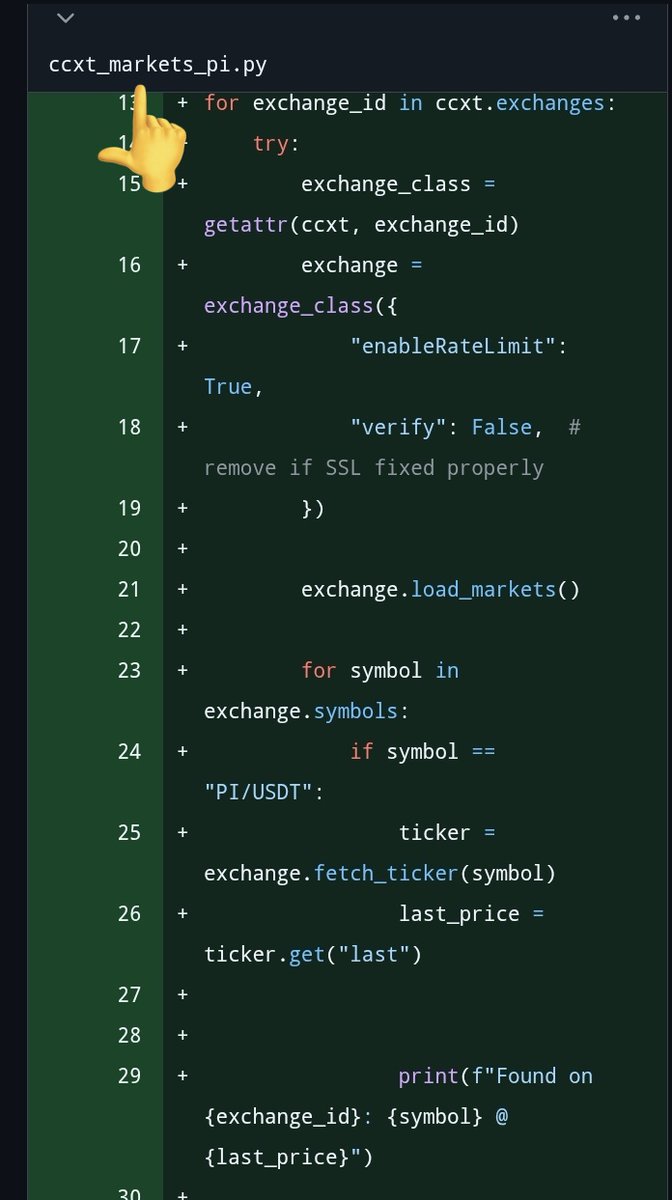
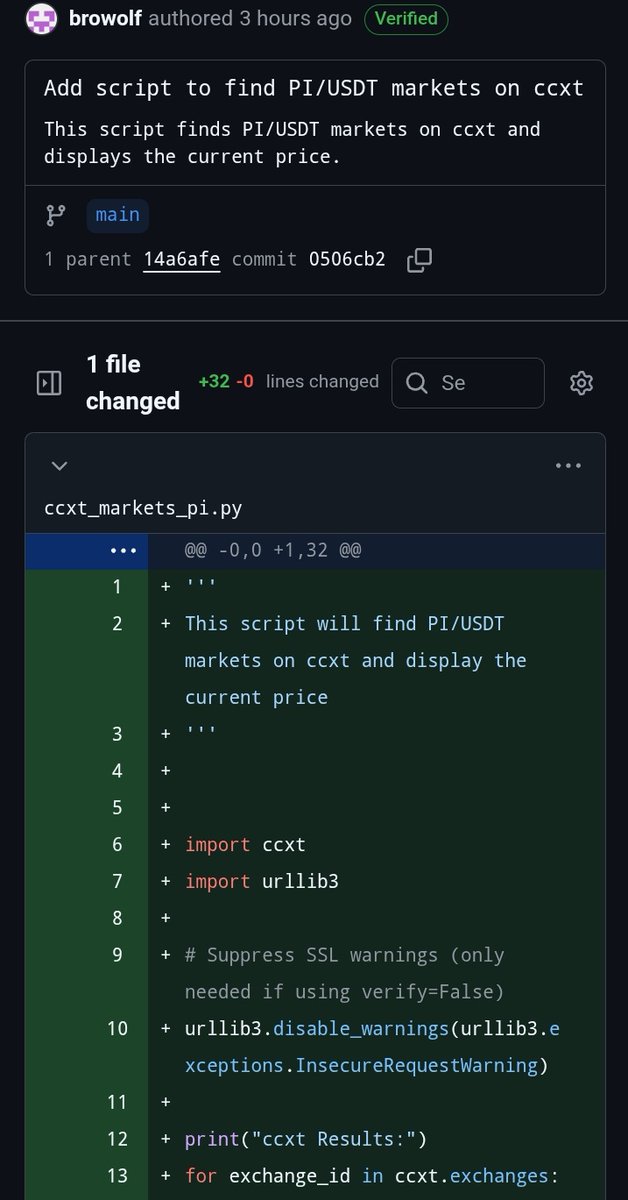
A developer who has worked on numerous Stellar and Pinetwork files deployed a script a few hours ago that allows users to find Pi/USDT markets on CCXT.The Pi price on CCXT is now available via various APIs on many exchanges
Things are becoming clearer;the naysayers are trembling
Interactive Explanation of the Pi Interactive Wallet as a Pioneer Exploring Pi Network System Dear Pi Network community,
As a pioneer delving into the depths of this revolutionary system, I'm sharing my personal research effort today: a distinguished and simplified explanation of the "Interactive Pi Wallet," which turns your Pi coins into vibrant colors representing their meanings and uses! This isn't just aesthetic design; it's a smart system that enhances transparency and interaction. Let me guide you through the details step by step, with interactive emojis for more engagement: Green Pi (Eco Pi) : Appears when supporting sustainability projects and environmental initiatives. Example balance: 40.00 Pi. This color encourages contributions to a greener planet!
Pink Pi (Interactive Active Pi) : Rewards for activity in games and apps. Balance: 112.00 Pi. Perfect for interactive users who love challenges!
Orange Pi (Pi Stock Exchange Pi) : For external trades and exchange balances. Balance: 140.00 Pi. Reflects the dynamic economic side.
Purple Pi (Standard Pi) : For daily balance and app transfers. Balance: 980.00 Pi. The core for everyday use!
Gold Pi (Fixed Stable Pi) : For savings and contracts. Balance: 510.00 Pi. Provides stability in your transactions.
Total Balance: 1782.00 Pi . Every color and icon is extracted directly from the wallet scripts, making it a truly interactive tool. This discovery deepens our understanding of how Pi evolves toward an inclusive digital economy. Share your thoughts, and let's build the future together! #PiNetwork #CryptoExploration
99% tài sản thật đã mã hoá xong ✅ Thời khắc kinh hoàng cho những ai chưa tìm thấy lối ra đã tới …ẩn thanh khoản trên chuỗi khối mute >>>Block
@PiCoreTeam
Tới rồi tới rồi sự chờ đợi của bạn sẽ được đền đáp xứng đáng ...
Đây là hiệu ứng domino tiếp theo .
Chấp nhận tiền điện tử làm phương thức thanh toán ... đố ông nào đứng ngoài 🙊🙈💥🎊👍🍕⚡️
Liquidity Pools in Pi Network – The Foundation for Free Exchange
In the decentralized finance (DeFi) ecosystem, liquidity pools play a vital role in maintaining market liquidity, enabling fast and transparent transactions without intermediaries. For Pi Network, as it moves into the Open Mainnet phase and expands its ecosystem of applications, the liquidity pool mechanism will be the key to unlocking Pi’s true market value.
1. What is a Liquidity Pool?
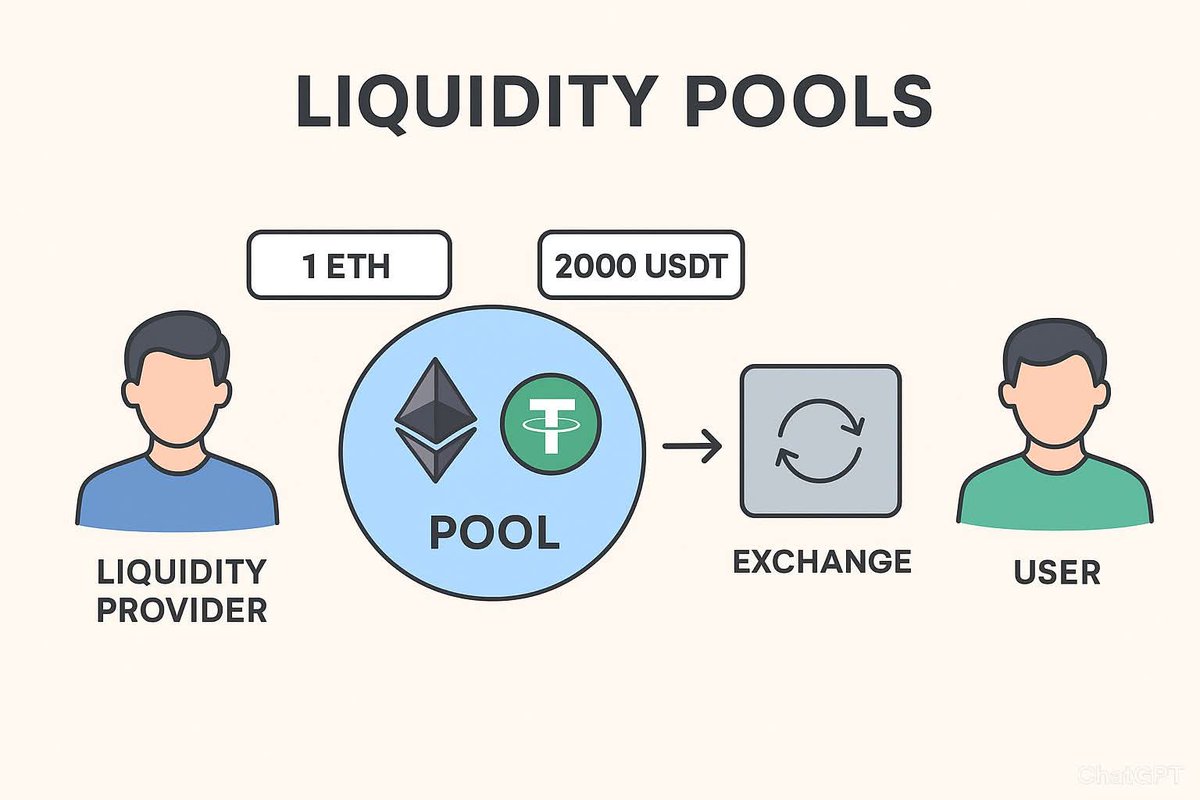
A liquidity pool is a smart contract that locks a certain amount of tokens, usually in pairs (e.g., Pi/USDT, Pi/ETH, Pi/BTC).
It allows users to swap between these tokens directly from the pool, instead of relying on traditional order-book matching in centralized exchanges.
For Pi, liquidity pools will enable:
Trading Pi ↔ USDT (Tether).
Trading Pi ↔ ETH or other popular cryptocurrencies.
Providing liquidity for dApps, marketplaces, and services powered by Pi.
2. How It Works in the Pi Ecosystem
A Pi liquidity pool can operate as follows:
Liquidity Providers (LPs) deposit both Pi and a paired token (e.g., Pi + USDT) into the pool.
The smart contract locks these assets inside the pool.
Other users can instantly swap between Pi and USDT from the pool.
Each swap generates a small transaction fee.
LPs earn a share of these fees, proportional to their contribution to the pool.
Example:
If an LP deposits 1000 Pi + 2000 USDT into the Pi/USDT pool, and the total pool size is 10,000 Pi + 20,000 USDT, then the LP owns 10% of the pool and will receive 10% of all transaction fees from that pool.
3. Why Liquidity Pools Matter for Pi Network
a. Boosting Liquidity
Pi can be exchanged instantly without waiting for a buyer or seller on traditional markets. This ensures smooth circulation of Pi across the ecosystem.
b. Converting Utility Value into Market Value
Pi Network aims for Global Consensus Value (GCV). Liquidity pools make Pi exchangeable with widely used assets, helping establish transparent market pricing.
c. Incentivizing Community Participation
Users who lock Pi in liquidity pools earn passive income from trading fees, encouraging long-term holding instead of selling pressure.
d. Supporting dApps and Commerce
Applications within the Pi ecosystem (e-commerce platforms, NFT markets, games, financial services) will require liquidity pools to function seamlessly.
4. Challenges and Risks
Impermanent Loss: LPs may face losses if Pi’s price fluctuates significantly compared to the paired asset.
Smart Contract Security: Pools must undergo strong audits to prevent hacks or exploits.
Scalability: Pi’s blockchain must handle millions of swap transactions as adoption grows.
5. The Future of Pi Liquidity Pools
In the Open Mainnet era, Pi will likely integrate AMM (Automated Market Maker) models, similar to Uniswap or PancakeSwap, but optimized for Pi.
This could lead to:
Pi-based DEXs (e.g., PiSwap, PiDEX) for decentralized trading.
Cross-chain bridges connecting Pi with Ethereum, BNB Chain, and Bitcoin.
Deep and sustainable liquidity, making Pi a widely usable currency.
Conclusion
Liquidity pools are not just a technical tool — they are the lifeblood of Pi’s real-world value. Once Pi Network fully unlocks its mainnet, liquidity pools will determine its liquidity, price stability, and the strength of its ecosystem.
In short, liquidity pools will be the foundation for Pi to evolve into a truly global cryptocurrency.
$Pi ’s Open Network remains on track for Q1 2025, but the extended Grace Period (deadline: Feb 28, 2025) allows more Pioneers to migrate balances. Unmigrated Pi older than six months will be forfeited, potentially reducing sell pressure. However, 8.19B circulating supply (8% of total) could expand as migrations progress, risking dilution.
What this means? Let me explain!
Bullish if migration strengthens network utility and locks supply; bearish if unlocked tokens flood markets. Historical precedent (e.g., 88% price drop post-Feb 2025 mainnet launch) highlights volatility risks.
$Pi ’s recent listing on Swapfone (Sep 2025) enables public trading, but the exchange’s low trust score (16% reliability) and limited reach temper optimism. Major exchange listings (e.g., Binance, Coinbase) remain speculative but critical for liquidity.
What this means? Nevermind, i can explain.
Confirmed listings on tier-1 platforms could trigger demand spikes, while reliance on smaller exchanges like Gate ($10.5M daily volume) sustains fragility. The $100M ecosystem fund (Pi Network) aims to incentivize adoption, but progress is slow.
PI trades at $0.273 (-84% from ATH), with RSI14 at 27.95 (oversold) and MACD signaling bearish momentum. Social sentiment is split: Core supporters tout v23 upgrades (smart contracts, Linux nodes), while traders eye $0.25 as next support.
Oversold conditions may invite short-term buying, but sustained recovery requires breaking $0.31 (50% Fibonacci retracement). Derivatives open interest ($1.08T sector-wide) shows speculative leverage rising, amplifying downside risks.