Today's Paper of the Day is:
Advances in achieving lung and diaphragm-protective ventilation
https://t.co/JKgcYjlUQ5
Join us to read 1 paper per day and stay up-to-date as we cover the spectrum of critical care across 2026
Update re-Frontiers in Advanced Emergency Care & MAEM Joint Confereces in Tbilisi Jul7 17-18. Pleases to announce that our conference has been approved for AMA Category I CME Credits https://t.co/4UvwGclGJs
A tiny bee just did what chemotherapy couldn't.
Scientists in Australia discovered that honeybee venom can wipe out 100% of aggressive breast cancer cells in under 60 minutes.
And the healthy cells around them? Barely touched.
The breakthrough came from Dr. Ciara Duffy and her team at the Harry Perkins Institute of Medical Research, working alongside the University of Western Australia.
They tested venom drawn from 312 honeybees and bumblebees across Australia, Ireland, and England.
The target: triple-negative breast cancer and HER2-enriched breast cancer. Two of the deadliest, most stubborn forms of the disease.
The weapon: melittin. The same tiny peptide that makes a bee sting burn.
At one specific dose, melittin tore through cancer cell membranes completely within an hour. Within just 20 minutes, it shut down the chemical signals cancer cells need to grow and multiply.
Bumblebee venom, which lacks melittin, did nothing. Zero effect, even at high concentrations.
Scientists then recreated melittin synthetically in the lab and got almost identical results, meaning no bees need to be harmed to develop the therapy.
Published in the peer-reviewed journal npj Precision Oncology, the findings are still early-stage. Human trials haven't happened yet.
But one thing is clear. Nature has been hiding answers in plain sight all along, sometimes inside the smallest creatures on Earth.
Source: Harry Perkins Institute of Medical Research / npj Precision Oncology (Dr. Ciara Duffy et al.)
GLP-1 injections, such as semaglutide (Ozempic (R) and Wegovy (R)) have rapidly gained popularity as weight loss drugs. Like any drug, you can overdose if you aren't careful.
For questions, call Poison Help at 1-800-222-1222. To learn more, head to https://t.co/1MwgAjjS9s.
Join the EUSEM/EAPCCT webinar on the toxicity of heavy metals. October 24, 2024, 15:30-17:00 CEST. Registration link: https://t.co/EP3W5BgQVj
#eapcct#eusem#toxicology#webinar
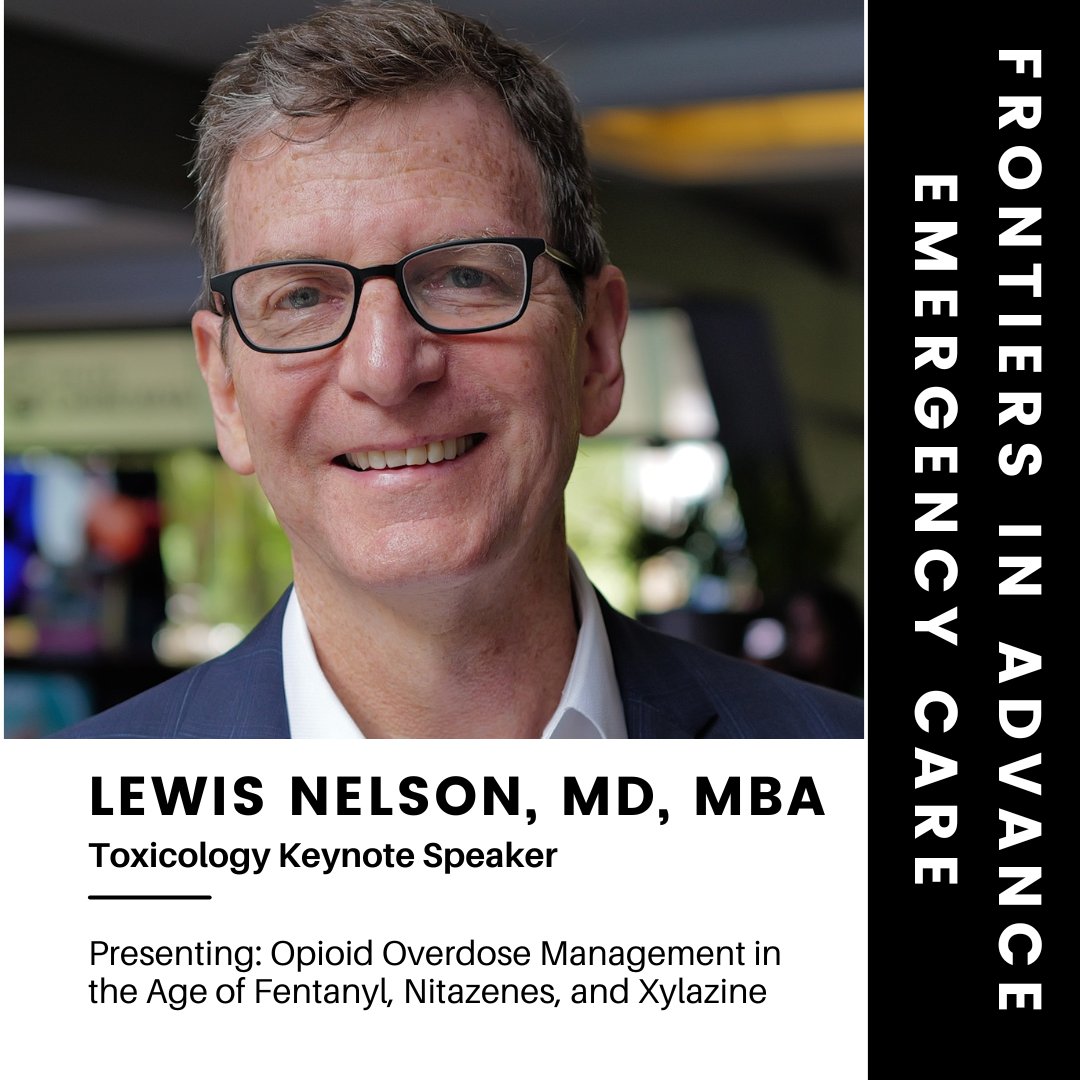
We are thrilled to announce our toxicology keynote speaker: Lewis S. Nelson!
Lewis S. Nelson, MD, MBA is Professor and Chair of the Department of Emergency Medicine and Chief of the Division of Medical Toxicology and Addiction Medicine at Rutgers New Jersey Medical School.
EAPCCT members and followers are invited to join EUSEM/EAPCCT Webinar, on July 4, 2024, 15:30-17:00 CEST
https://t.co/xFnyqymuTB
#eapcct#eusem#toxicology#botulism#webinar
The 2024 EAPCCT Annual Congress in Munich has been concluded. It was a fantastic meeting, academically and socially. We look forward to our next Congress in Glasgow, UK (May 2025).
#eapcct#eapcct2025#acmt#aact#apamt#menatox#toxicology
Congratulations and best of luck to the new EAPCCT board (2024-2026) elected today. Many thanks and great appreciation to everyone who concluded their term on the board: Horst Thiermann, Laura Hondebrink, Gabija Laubner, Ruben Thanacoody, Piotr Maciej Kabata, Anne-Marie Descamps.
Final days for the EAPCCT Photo Contest.
Submit your photo featuring Toxicology Milestones in the last 60 years, as EAPCCT celebrates its 60th anniversary in its upcoming annual congress. More info: https://t.co/nuUyhnMH9c.
#eapcct#toxicology#toxeapcct2024contest