I’m Moroccan, and I love Morocco. That’s precisely why I believe we have to tell the truth.
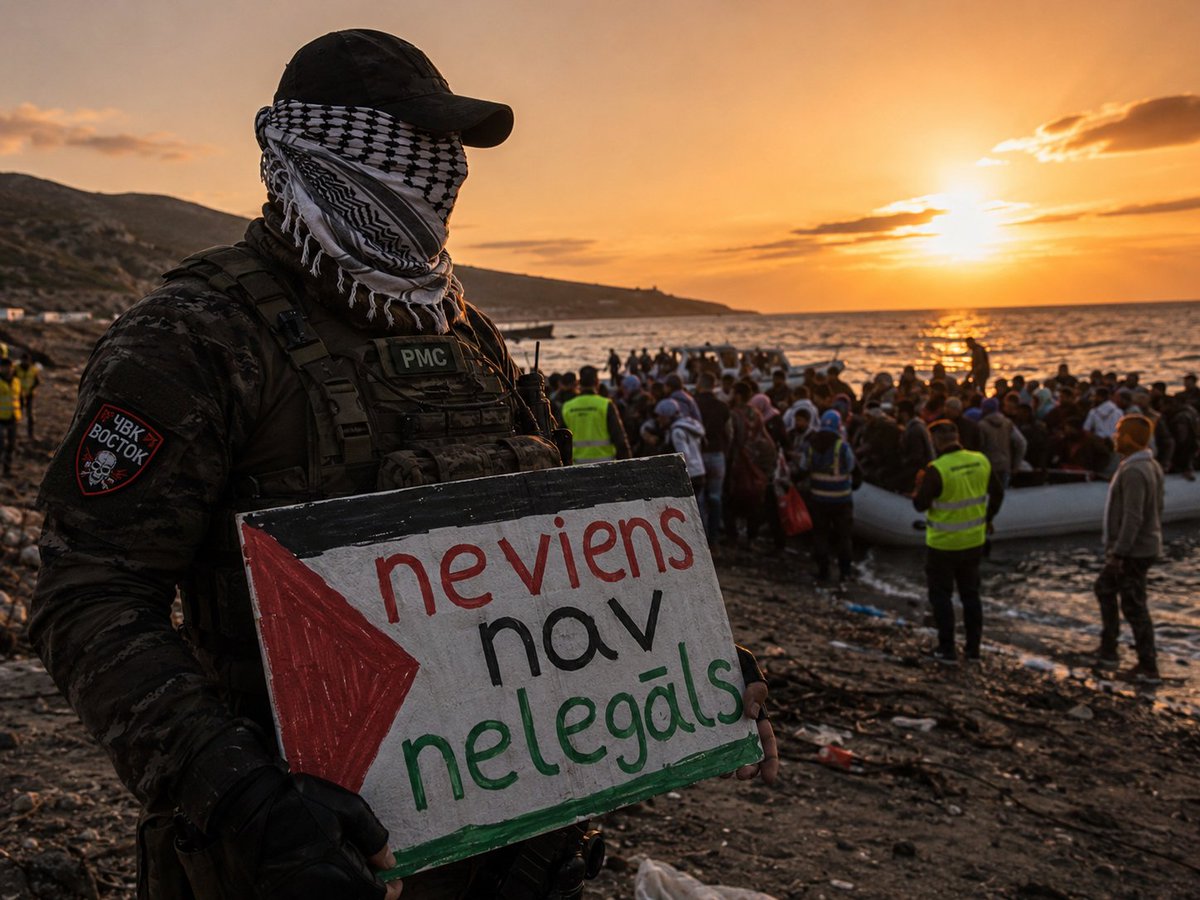
What happened at the Ceuta border was humiliating. It projected an image of a Morocco whose people are so desperate that tens of thousands tried to leave at once, and of a state that appears willing to use migration as leverage against a neighboring country.
Our approach to immigration needs to change. Morocco can negotiate with Spain, but not this way. Moroccans are not bargaining chips, and their lives are not expendable. Those who died died for nothing, and no one has accepted responsibility.
Blaming Spain does not absolve Morocco of its own responsibilities toward its own people. Period.
Morocco now has to choose between two narratives:
1. Admit that it watched the events unfold and did nothing to stop the flow toward Ceuta, either because state authorities were complicit or because they deliberately allowed it to pressure Spain over its rapprochement with Algeria and the Western Sahara issue. If so, Morocco presents itself as a state that cannot be trusted.
2. Admit that it had no idea another party was organizing and mobilizing tens of thousands of people to the north, near where the King was spending his vacation, without any of its security services detecting it. If so, Morocco presents itself as a state that has failed in one of its most basic responsibilities: security.
Neither narrative reflects well on Morocco. Judging by the Interior Ministry’s statement, Rabat now appears to be leaning toward the second explanation rather than confronting the European Union with the first.
The Ceuta crisis is a complex puzzle.
1. It was a hybrid attack on Spain and the EU, though the latter has denied this fact.
2. Sovereignty over Ceuta and Melilla implies leverage for Spain in the settlement of the Western Sahara, which is linked to Spain's ability to negotiate cheap gas supplies from Algeria.
3. Ceuta has a symbolic role for Moroccan nationalists who are using historical revisionism in the domestic power struggle, including the upcoming legislative elections in September.
4. The crisis revealed an opaque foreign policy of the EU and various EU member states, who have unlearned the fact that the Southern Neighbourhood is as important as the Eastern flank.
5. Finally, Ceuta is a geopolitical node that today involves the traditional interests of Spain and the emerging interests of the US and Israel related to Iran and the Middle East. If Spain loses control over Ceuta, the US will likely replace it with a military base, allowing it to conduct its operations against Iran without needing the European pillar of NATO.
----
La situación en Ceuta está más cargada de peso geopolítico que nunca, algo en lo que coincido plenamente con @polmorillas y @javilopezEU. Este escenario se debe a los cambios en la OTAN impulsados por Trump y al nexo entre EE.UU. e Israel contra Irán en el Medio Oriente.
A “new left” is forming in the United States, and it has very little in common with the traditional left. Its defining issue is foreign policy: hostility toward Israel and Ukraine, sympathy for Russia and Iran, and, among some, increasingly favorable views of China.
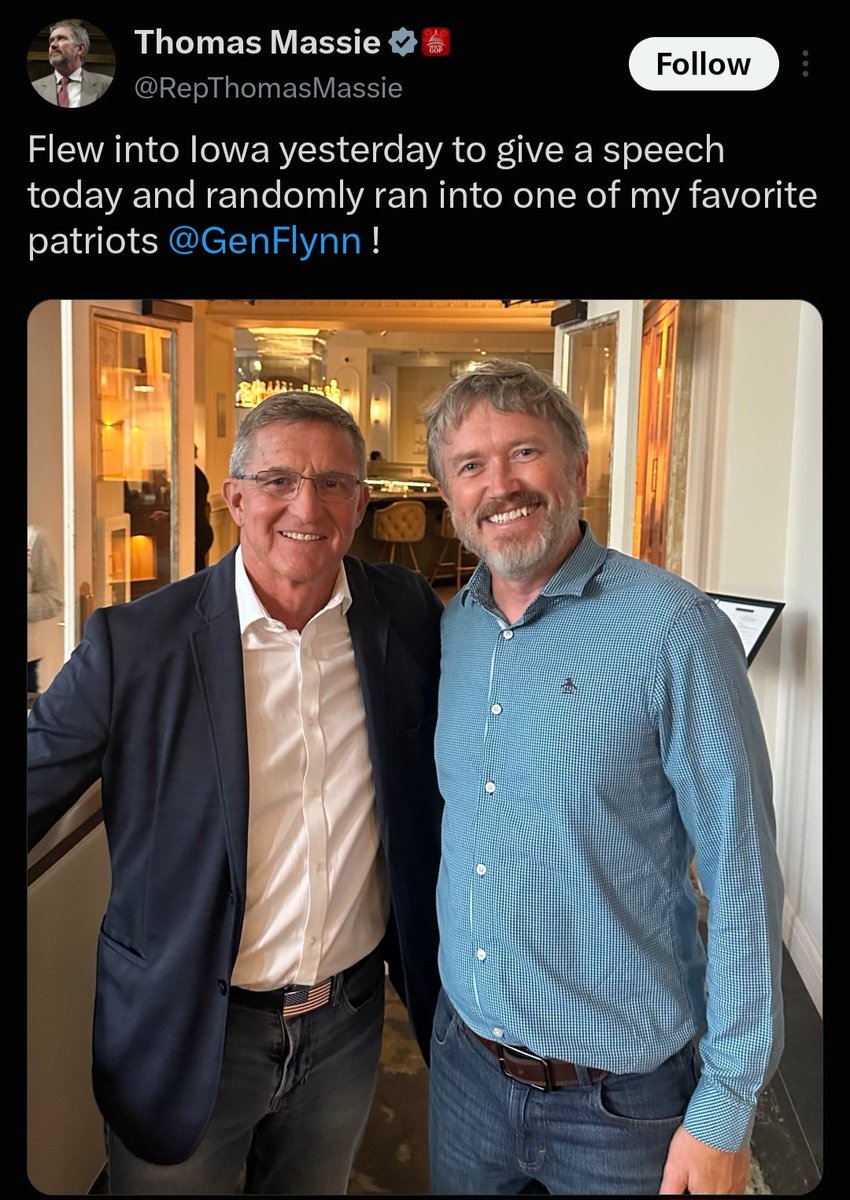
This group is a bizarre horseshoe coalition: It includes self-described communists like Jackson Hinkle, conspiracy theorists like Tucker Carlson and Candace Owens on the populist right, traitor Michael Flynn from the MAGA world, Cenk Uygur and Ana Kasparian from The Young Turks, and the anti-Western ecosystem around The Grayzone.
Politicians like Marjorie Taylor Greene and Thomas Massie increasingly overlap with this coalition on Ukraine, Israel and American foreign policy.
These people disagree on plenty of domestic issues. But when it comes to geopolitics, they increasingly end up in the same place: Ukraine is the enemy. Israel is the enemy. NATO is the enemy. Western institutions are corrupt. Russia's aggression is explained away or ignored. Iran is treated as a victim. And authoritarian regimes are often given far more sympathy than America's democratic allies.
Some of them are now turning against Trump because he attacked Iran and failed to give Russia the victory in Ukraine they expected.
This movement shouldn't be dismissed as a collection of internet weirdos. MAGA was once an online grassroots movement too, but it eventually took over the Republican Party.
Now there is a political vacuum on the other side. The Democrats are weak, unpopular and struggling to define what they stand for, and yhis “new left” wants to fill that vacuum.
The Moroccan government is now saying that the Ceuta migration wave was organized and amplified through social media.
A similar campaign is currently being run on TikTok, where people from Afghanistan, Pakistan, and Iraq are being encouraged to migrate through Russia and Belarus and enter Europe via the Baltic states. These migration campaigns have been coordinated using phone numbers registered in Russia and Ukraine.
It appears that, alongside Belarus, similar operations are now being organized through Morocco and other African countries.
Hostile actors are exploiting migration to destabilize European states while simultaneously boosting pro-Kremlin far-right parties that campaign heavily on anti-immigration platforms.
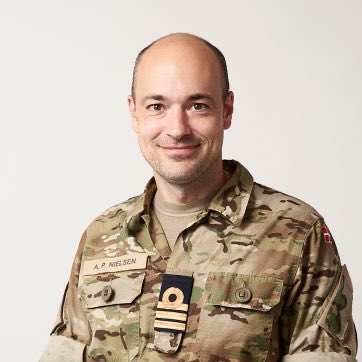
In his latest video, Danish military analyst Anders Puck Nielsen delivers a stark message about the future of European defense:
Europe does not need armies that can instantly defeat Russia, but ones that can survive the opening shock of a high-intensity war.
The era of Western militaries relying on small, expensive high-quality forces and maneuver warfare is over.
For decades, Western defense planning focused on expeditionary warfare, banking on superior quality and rapid maneuver to avoid attritional grinds at all costs. As Anders Puck Nielsen points out, that approach is obsolete in a high-intensity war against a peer adversary like Russia. Attritional warfare will dominate from the very beginning, and European armies must be structured to survive that opening blow.
In this new environment, mass matters just as much as quality. The military that enters the war will not be the same military that finishes it, because the initial force will suffer massive losses and have to be replaced. Europe does not need a pristine peacetime army designed to defeat Russia in a single decisive battle. It needs an armed force built for endurance: one that can survive the first phase, absorb heavy losses, and rapidly scale up production to rebuild itself for the long fight.
Unmanned systems will be crucial to preserving precious manpower during that devastating opening phase. However, as Nielsen notes, drones cannot completely replace traditional armor. Infantry still needs the protection of tanks, armored personnel carriers, and infantry fighting vehicles to survive on a transparent battlefield.
At the same time, defensive measures alone will never be enough. Russia's growing deep-strike capabilities pose an existential threat that air defense alone cannot solve. Europe must develop and scale up its own long-range strike capacity to hit back into Russian territory at scale and degrade their war machine.
This shift also reshapes the naval domain. Massive, expensive frigates may no longer make as much sense for contested narrow seas like the Baltic during the opening phase of a conflict, even if they remain useful for expeditionary roles.
Old systems are not suddenly obsolete, but their role is changing. As Nielsen emphasizes, Europe must embrace mass, adaptation, cheap production, and rapid innovation
Breaking: Spanish intelligence believes that the invasion of Moroccan immigrants into the Spanish enclave of Ceuta is a false flag operation orchestrated by the Moroccan government on the orders of King Mohammed VI. Not only are there many pardoned criminals and prisoners among the 12,000 Moroccan nationals who have just arrived at the enclave, but there are also reports of Moroccan army soldiers among them who were brought to the border by trucks and were guided by Moroccan Police👇
🇱🇹 Lithuania wants Russians and Belarusians to sign a declaration condemning the "special military operation" at the border
The new rules would apply to artists, athletes, academics, and other public figures.
To enter Lithuania, they would have to sign a document condemning Russia's aggression against Ukraine and recognizing its territorial integrity. Otherwise, they would be denied entry into the country.
The changes could come into force as early as January 1, 2027.
Russian propaganda is real.
Nazism is literally illegal in Ukraine. I didn’t know this till I came here.
Technically, Ukriane has stronger anti-Semitism laws than the US. I met several rabbis in Ukraine who fled Russia because the state had the KGB investigate them for being Jewish.
Zelenskyy is also Jewish and told me on camera during our interview Nazism is illegal in Ukraine.
Meanwhile, Russia Today amplifies the podcasts of every Holocaust denier in America.
When Russia is hit with more sanctions, RT should be banned.
@elonmusk X is an American company. If Russia is sanctioned, their X account should not be allowed to show up in the US.
Thank you! Very nice of you!
I see my visit to Ukraine has made many waves. @andrii_sybiha is the Minister of Foreign Affairs For Ukraine.
I have already had so many lies debunked just by visiting Ukraine. I can’t wait to release all of my videos so people can see what I have seen.
Most of what I believed about Ukraine before visiting is either distorted or a half truth. I am glad I’m here for a while to keep investigating the truth on my fact finding trip.
It really makes you realize just how much Russian propaganda there is in American media.
Maybe it’s time for our members of Congress to have a hearing on Russian propaganda and how it’s being used to stir social chaos in the US.
Ungārijas banka, kas joprojām strādā Krievijā, iegādājas Luminor. Ungārija vairākkārt teica, ka bloķēs atbalstu Ukrainai, kamēr šī OTP Banka atradīsies "kara atbalstītāju" sarakstā. Tagad tā ienāk arī Baltijā. Apsveicu jūs, apsveicu mūs.
https://t.co/4gGq3VJP3w
Yesterday, Donald Trump declassified a mass of 2020 election intelligence on foreign interference in the US 2020 elections.
Across sixteen minutes he named Russia exactly once – as one item in a list. Every villain in his speech is Chinese.
I went back to the assessments to see what that single mention of Russia was standing in for, and found out that the same files contain seven separate findings on Russian interference, yet none of them reached Trump's address.
That omission, I argue, is the whole point: https://t.co/iSh7Lnhbcz
Trump released documents that confirm Russia tried to interfere in the 2020 election to hurt Biden. It says Russia tried to "orchestrate a high-profile corruption scandal" and push narratives about "voter fraud resulting from mail-in balloting"