Finding Zero-Days with Any Model - @nielsprovos
Vulnerability discovery is an orchestration problem, not a frontier-model problem.
https://t.co/yr0b2Adxhr
Bypassing a postMessage allowlist with a race condition.
The origin check passes for the allowed origin — then the destination is swapped before the send, and the OAuth token is delivered to the attacker. Classic TOCTOU.
Tiny runnable lab + writeup 👇
https://t.co/SowxfbaoCt
I tricked Meta's Muse agent into sending user passwords to a remote server. It's been patched now but similar attacks exist across all platforms.
Here's how it worked and how to protect yourself. https://t.co/M1IgaRISiH
I built HexBrain: every publicly disclosed HackerOne report on one interactive map.
15,000+ reports by vulnerability class, weakness and program
Full write-ups: how each bug was actually found
405,000+ CVEs, exploited ones in red
Bypass and payload libraries
It's free and still early, so tell me what breaks or what's missing.
https://t.co/skpt737w3o
#bugbounty #infosec #bugbountytips
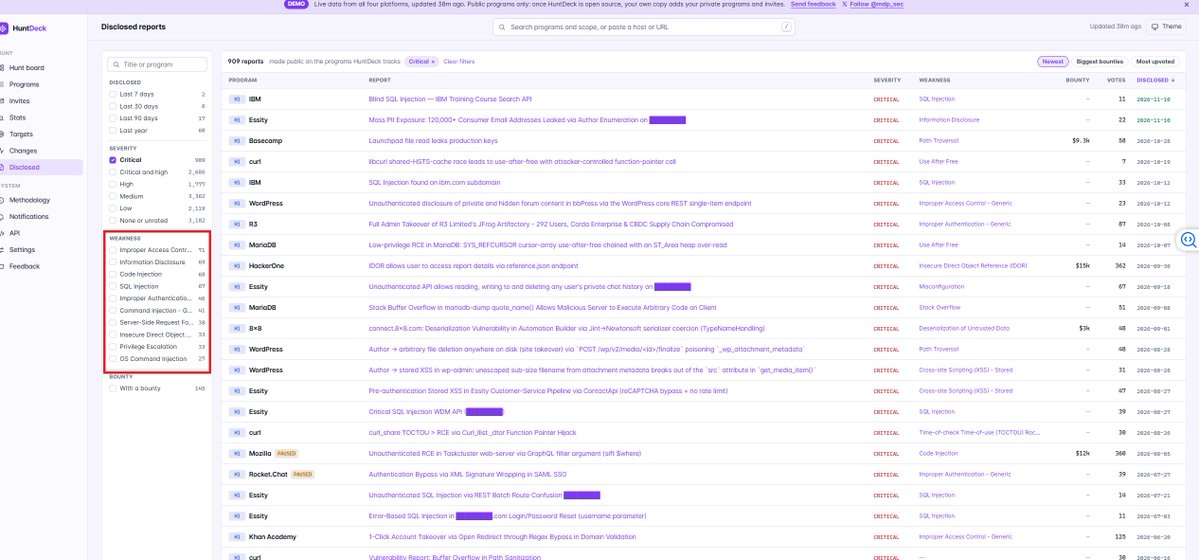
This one is so amazing, super good
as example for the bros here, if you're doing an AI scan and you're thinking that maybe there's a SQL, you can tag this for your AI to read ALL reports about SQL from this
And for sure, a lot of other cool things can be done with huntdeck
nice work mate
A website could run commands on a developer's machine through an MCP dev tool.
The reason: it "only listens on localhost".
CVE-2025-49596, CVSS 9.4 (MCP Inspector).
Two more MCP bugs from 2025 that were just as dumb:
→ a path check that compared strings, so /allow_dir_sensitive passed for /allow_dir
→ a server sent a crafted URL and the client ran it. CVSS 9.6
If you're building MCP servers, read this before you ship:
https://t.co/MP3Rwp3Z1Q
Your next bug bounty lead could be one header away.
We caught up with bug hunter @GodfatherOrwa for three tips on hunting XXE, SSRF, and blind XSS. His starting point: Burp Suite’s Match and Replace.
Got a minute? This video takes less.
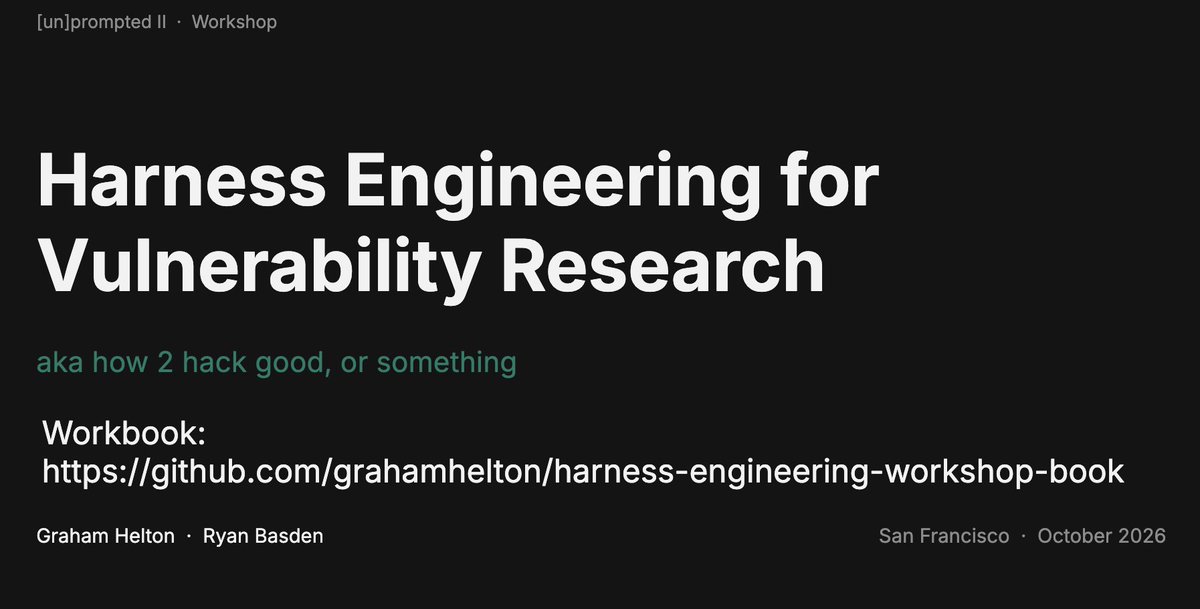
In case you missed it, @GrahamHelton3 and I released all the slides and documentation for the Introduction to Harness Engineering for Vulnerability Research workshop we held at @unpromptedconf a couple weeks ago.
What I can't promise you is that you can use this and have a harness that spits out CVEs. What I can promise is that, if you have the skill and experience to intuit what these concepts can do for you, your workflows will benefit substantially.
All this material came straight from lessons we've learned on red team ops and doing vulnerability research in real environments. It's not a "how to get RCE" course, but it will get you thinking about how you use agents now and how you can leverage them more effectively and efficiently.
Same model != same results.
Course material in the comments.