🎟️ NodeConf EU 2026 is in Bologna in 3 weeks, and tickets are running low.
Sep 29-30. The Savoia Regency, an 18th-century villa set in a 10,000m² park, 5km from the city center. Pool between sessions, Emilia-Romagna food, and two days of real Node.js depth.
@juristr@t3dotgg Wouldnt night mode / true tone / other software and/or hardware specific alrerations play a role here? Anecdotally this test seem biased - too many of my connections on twitter report similar results
#nodejs@matteocollina@_rafaelgss@yagiznizipli any suggestions on how to make gc aggressive? http/2 + nghttp allocates a lot of memory for each stream on http2 session and what I'm seeing is that rss/heap grows fast, but no leak, small old space helps, but still
@matteocollina@jasnell thanks for the help with debugging http2 :) jemalloc did the trick - no leak, just crazy memory fragmentation, which made it look like a leak. do you think it's worth properly documenting this somewhere?
@matteocollina@jasnell@_rafaelgss@yagiznizipli well, osx doesnt behave well enough, BUT, patched jemalloc@5 into node through patchelf on alpine container, and, magically rss drops down to normal levels even after 300k+ streams on several connections. no idea why fragmentation wasn't the case earlier - usage was similar
@matteocollina@jasnell@_rafaelgss@yagiznizipli So far the best guess is there is no leak, but rather very annoying memory fragmentation. RSS keeps growing while heap stays low, so it looks like a leak, but it is not. Will try out jemalloc to see if that helps
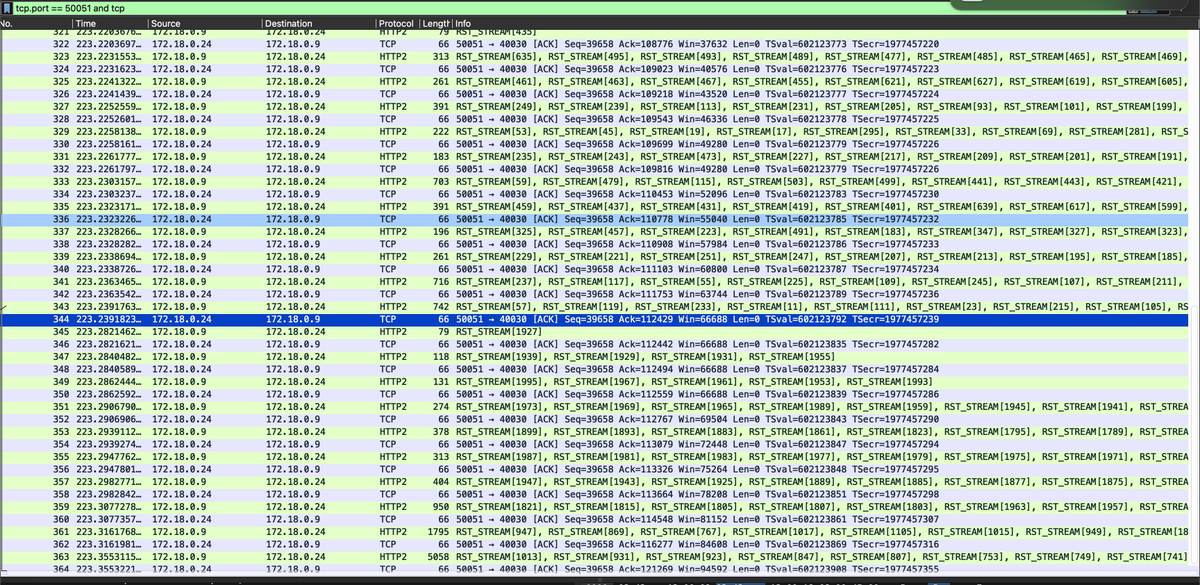
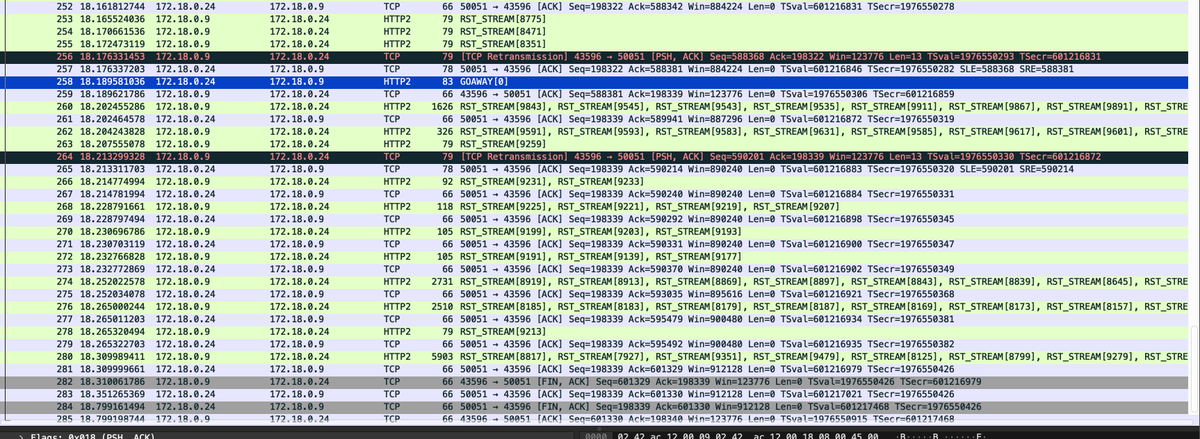
@jasnell@matteocollina@_rafaelgss@yagiznizipli tcp dump, UV_EOF triggered before 258 -> node sends GOAWAY -> streams continue closing -> client sends FIN, node sends FIN. So socket is operational, yet UV_EOF was received. Should it be handled differently? I assume it happens because of loop overload (10k RST frames)