The Truman Show is a film about our world, though few have described it correctly. It was released in 1998. It has been accelerating toward accuracy ever since.
1. Truman Burbank was born into a manufactured reality and never told. His entire life — his town, his friends, his wife, his memories, his fears — is a set. Thirty million people watch him live it. He is the only one who doesn’t know. This is presented as a dystopian premise. It is a description of our world and the current media ecosystem with the volume turned up slightly.
2. Christof — the creator, the director, the god of Truman’s world — does not think of himself as a villain. He thinks of himself as a benefactor. He built Truman a perfect world: safe, warm, predictable, beautiful. No real risk, no genuine loss, no uncontrolled variable. He calls it love. This is the administrator’s self-image in every age — the Platonic philosopher-king, Mustapha Mond, Dr. Cocteau from San Angeles — the man who decided that your freedom was less important than your comfort, and genuinely cannot understand why you would disagree.
3. The cameras are everywhere because the audience demands content. Christof didn’t build the surveillance state out of malice. He built it because thirty million people were watching and the advertising revenue followed the eyeballs. The system is not controlled by one villain with one plan. It is sustained by an audience that keeps watching – which means it is sustained by us. The Truman Show is not about Christof. It is about the thirty million. It is about what we are willing to watch.
4. Truman’s fears were manufactured specifically to keep him contained. The water phobia was engineered – his father staged a drowning, the show traumatized him on cue, and he never left the island. Every managed society produces its version of this: the specific fears, carefully cultivated, that keep the citizen inside the perimeter. The fear doesn’t need to be false to be manufactured. It only needs to be amplified at the right moment, about the right things, with the right emotional intensity.
5. Sylvia — the woman who tried to tell him the truth — was removed from the set and replaced. This is the moment the film stops being a comedy and becomes something colder: the system doesn’t debate its critics. It edits them out. Recast, reframed, explained away. The inconvenient truth-teller doesn’t get a platform – she gets a replacement and a cover story. Every institution that has ever managed a narrative has done exactly this, at exactly the moment a Sylvia appeared.
6. Truman figures it out not through a revelation but through accumulation – small inconsistencies, patterns that don’t quite fit, a spotlight that falls from the sky. The managed reality begins to show its seams. This is always how it happens: not one dramatic unmasking but a growing sense that the set is a set, that the friends are performers, that the love was scripted. The moment of clarity is not comfortable. It is vertiginous. Most people, offered that vertigo, choose the set.
7. He sails into the painted horizon anyway. The boat hits the wall. He finds the door. Christof speaks to him directly – from above, from everywhere, the voice of the system making its final offer: stay, be safe, be loved, be watched. Truman says good morning, good afternoon, and good evening – and walks through the door into the unscripted world. This is the anti-soma moment, the red pill taken seriously, Odysseus leaving Calypso’s island. Not because the outside world is better – he has no idea what’s out there. But because a life that is not your own is not a life. The thirty million watching finally understand what they’ve been watching. Some of them, perhaps, begin to wonder about their own set. That’s the most dangerous thing a film can do. It is also, on a good day, what we are trying to do here.
(This account is called Kristof_Poland – the opposite sort of Kristof:)
This is absurd. Every piece of voter data Trump mentions here, as well as which elections each voter voted in, is readily available in Kentucky for a small fee.
For decades, America’s regulators pretty much killed nuclear power.
Just to approve a plant:
“It's got to be 5, 6, 7 years,” says former nuclear engineer Ray Rothrock of @TheBTI, “Then people stopped.”
That’s finally changed…
Here’s how nuclear is coming back:
This 19-minute documentary follows truck drivers and small traders trying to cross the border between Zambia and the Democratic Republic of Congo, one of the busiest trade routes in Africa, managed by up to 23 government agencies for a single crossing.
Some drivers wait in line for three months. Every day stuck there still bills for the driver, fuel, lodging, food. That cost travels to the other side of the border absorbed into the final price, and the people absorbing the difference are the ones with the least margin to do so.
Small traders often end up taking clandestine trails through the bush. The official system is so bureaucratic that dangerously remote routes become the better option.
Watch it. Share it. This is a story the world needs to hear.
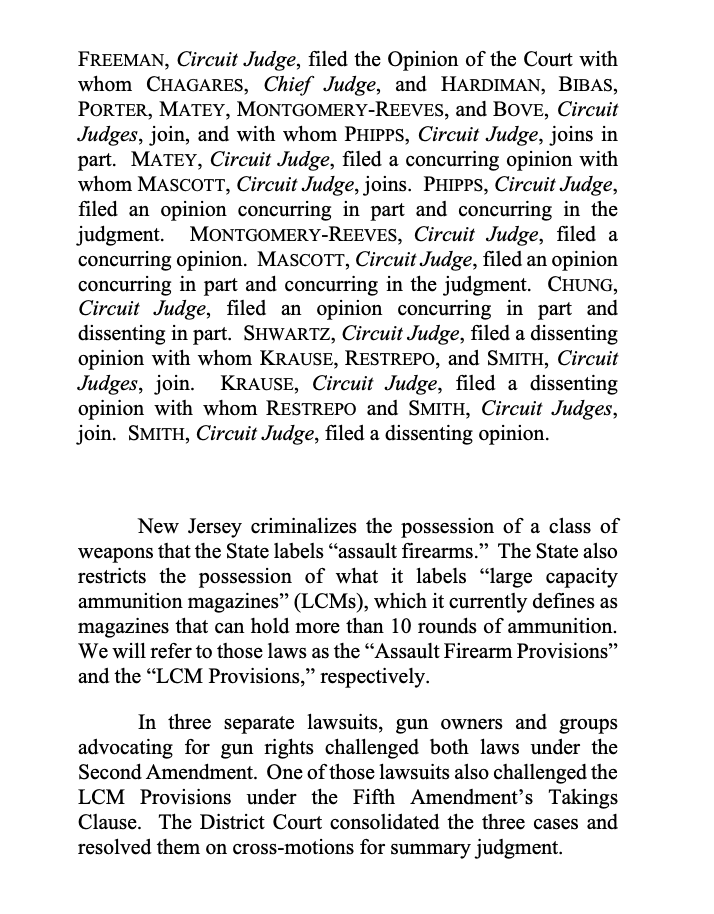
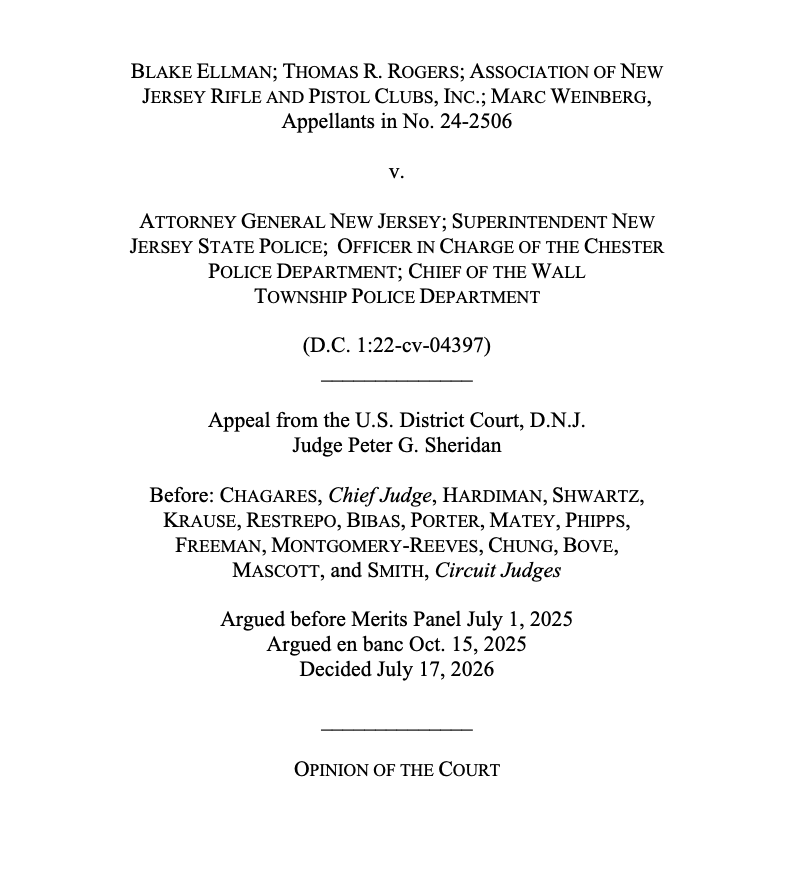
MAJOR BREAKING 2A VICTORY: US Court of Appeals, Third Circuit, declares that New Jersey's AR-15 semi-automatic rifle and magazine bans violate the Second Amendment and are unconstitutional. Exactly as Four Boxes Diner predicted!
FPC WIN: Third Circuit strikes down New Jersey's "assault weapon" and magazine bans in an en banc decision whose 192 pages include numerous concurrences and dissents: https://t.co/XrjnZkKX5L
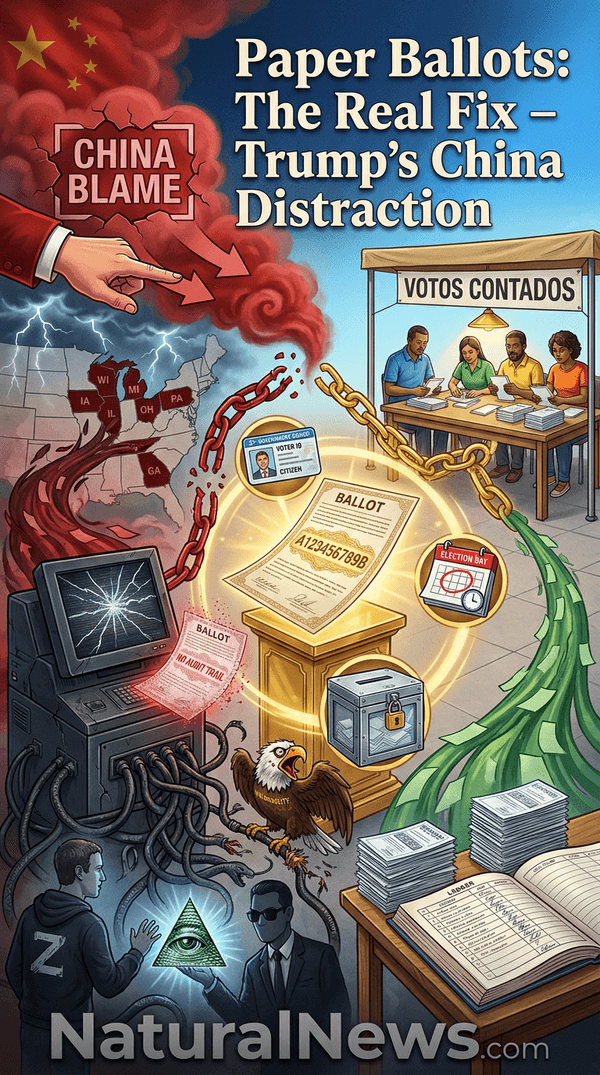
Trump blaming China for election fraud is a distraction. The REAL fraudsters are Americans who manipulate electronic voting machines, stuff counterfeit ballots, run the same ballots multiple times, print millions of mail-in ballots and harvest them for a particular candidate, plus all the censorship of Google, Facebook, YouTube and other tech giants who rig narratives in favor of one side. So Trump blames CHINA? My infographic:
The overwhelming majority of 18-year-olds who graduate from public school are dependent on:
-Parents
-Corporations
-& Government
That should tell you everything you need to know about the system.
I’ll probably get called a communist for pointing out the 19th Amendment was a mistake and feminism is a disaster that’s distorted our markets entirely… —again🙄
Less Global Fire
Halfway through 2026, the world has burned at record-low levels for more than three months
Every continent is below average, and Africa, Americas, and Europe are at record lows
Media only showing stuff burning leaves us badly informed
https://t.co/iDqlYckvRT
You can see all the references in my Twitter thread:
https://t.co/c1gWhtRaBe
The explosion in gambling is an early warning sign of a dying civilization.
Young people have increasingly stopped investing in their future and started betting on it instead — embracing extreme risk (prediction markets, crypto, etc.) as the only way to get ahead.
This is what happens when traditional paths of success (like a stable career) seem to be falling away or only available to an ever-shrinking minority.
A rise in gambling was a feature of the dying Roman Republic. Horace wrote of the youth of his day:
"Now the noble's first-born shuns the perilous chase, nor learns to sit his steed: Set him to the unlawful dice, or Grecian hoop, how skillfully he plays."
Even back then, the traditional, noble, "manly" pursuits began to fall in popularity, to be replaced by high-stakes risk-taking.
The gambling mentality is a symptom of very deep structural problems — a generation that is politically and economically dispossessed.
Two quotes, twenty-one centuries apart, describing the same mechanism.
Aristotle first: “Another mark of a tyrant is that he likes foreigners better than citizens, and lives with them and invites them to his table; for the one are enemies, but the others enter into no rivalry with him.”
Jefferson second: “To admit foreigners indiscriminately to the rights of citizens would be nothing less than to admit the Trojan horse into the citadel of our liberty and sovereignty.”
Read them together and the argument assembles itself.
The tyrant’s problem is the citizen. The citizen has history, has roots, has pre-existing loyalties to the republic that predate the tyrant and do not depend on him. He has opinions. He remembers what things were like before. He has standing to compare. The foreigner — admitted suddenly, dependent on the system that admitted him, owing his position to the current arrangement — enters with none of that. He is grateful rather than demanding. Dependent rather than sovereign. The tyrant does not prefer foreigners because he is cosmopolitan. He prefers them because they cannot yet rival him. Loyalty purchased through admission is more reliable than loyalty inherited through citizenship.
Jefferson names the mechanism from the other end: indiscriminate admission is not generosity. It is the Trojan Horse – the gift that enters through the open gate precisely because the gate is open, bypassing every defense the citadel was built to maintain. The horse is welcomed in. The soldiers emerge at night. The citadel falls not to siege but to hospitality weaponized.
Neither man was against foreigners. Both were against the political use of admission – the deliberate flooding of the civic space with people whose loyalties are unformed, whose dependencies are fresh, and whose gratitude can be directed. Aristotle observed it as a tyrant’s tool. Jefferson warned against it as a republic’s vulnerability. Both understood that a self-governing people requires a demos with shared history, shared stakes, and shared accountability – and that a ruler who bypasses the formation of that demos is not building a nation. He is building a tyranny.
And the Trojan Horse didn’t need to breach the walls. The citizens opened the gates. And then it was just administration.
You think Julius Caesar was a general who wrote about his wars. He was a politician who used his wars to write himself into power. The Gallic Wars is not history. It is the first great act of personal branding in Western civilization – and it worked so well that Latin students are still reading it as a neutral text two thousand years later.
1. Homer wrote about a war he didn’t fight, centuries after it ended, with nothing to gain. Caesar wrote about his own war, in real time, while it was still happening, for a Roman political audience that would decide his future. This makes the whole difference. The Iliad is a most honest war document in Western literature. The Gallic Wars is a most sophisticated dishonest one. Both are masterpieces. Only one admits what it is.
2. He wrote in the third person. “Caesar decided. Caesar advanced. Caesar built the bridge.” Not I – Caesar. The oldest trick in political communication: remove the first person and create the illusion of objectivity. He is not telling you what he did. He is reporting, as a neutral observer, what Caesar did. The technique is so effective that it became the template for political memoirs, leader’s autobiographies, and every carefully curated war documentary ever produced.
3. He built a bridge across the Rhine in ten days, crossed, demonstrated Roman power, crossed back, and destroyed the bridge. Militarily pointless. Politically brilliant. He knew it would be in the book. Every spectacular logistical achievement in the Gallic Wars was performed with one eye on the page. The campaign was also the content.
4. Vercingetorix nearly stopped him. The Gallic chieftain united the tribes, invented the scorched earth strategy, and brought Caesar closer to defeat than anyone in Gaul. He surrendered at Alesia to save his people from starvation. Spent six years in a Roman prison. Was paraded through Rome in Caesar’s triumph. Then strangled. Caesar describes him with genuine respect – because the book needed a worthy opponent. The dignity of the defeated, carefully managed, served the victor’s narrative.
5. Modern historians estimate Caesar killed or enslaved between one and three million Gauls. The Gallic Wars records this in calm administrative prose. Battle statistics. Surrender terms. Efficiency metrics. The most sanitized account of mass atrocity in ancient literature – written by the man responsible, published for his political benefit. He didn’t lie. He curated. The difference is important and the technique is everywhere.
6. The Gallic Wars is the origin of something more dangerous than fake news: the selective true story. Every fact it contains is accurate. What it omits is everything that doesn’t advance Caesar’s interests. This is the mature form of narrative control – not propaganda, not falsification, but precision curation of reality. Every institution that has mastered communication since has been working from Caesar’s manual.
7. He crossed the Rubicon three years after finishing the book. The army that crossed with him was loyal to Caesar specifically — not to Rome — because the book had made Caesar into a legend his soldiers believed in. The Gallic Wars didn’t just record the conquest of Gaul. It manufactured the political capital that ended the Republic. The most consequential content marketing campaign in history was written in the third person, in elegant Latin, by the man who understood before anyone else that controlling the narrative is the prerequisite for controlling everything else.
Groundhog Day is one of the most beloved films ever made. And yes, Andie MacDowell is cute and charming. But that is not why it hits a chord thirty years later with people who can’t quite explain why they keep rewatching it.
The reason is Aristotle. And almost nobody knows it.
1. Phil Connors wakes up on February 2nd. Again. And again. Infinitely. No consequences, no memory from others, no tomorrow. He has been given what every hedonist, every utopian, every system that promises liberation through freedom from constraint has always promised: complete freedom from accountability. The result is not paradise. It is the most precise laboratory experiment in the history of cinema – what does a human being actually become when freed from all consequences?
2. He tries pleasure first. Eats everything, seduces women, steals money. It works, briefly, the way soma works. Then it stops working, the way soma always stops working. He tries knowledge — learns piano, French poetry, ice sculpture — not yet for virtue, but for manipulation. Still instrumental. Still empty. Then he tries suicide. Repeatedly. The groundhog always wakes him. The void cannot be escaped. It can only be filled.
3. This is Aristotle’s laboratory. Not theoretical – experimental. Eudaimonia (read below) cannot be purchased, stolen, or stumbled into. It is not a feeling. It is not a peak experience. It is the condition that results from becoming, through practice, the kind of person capable of it. Phil has infinite time and zero character at the start. The loop is not his prison. It is his curriculum.
4. The turn is the most important moment in the film and the easiest to miss. Phil stops trying to escape the loop and starts trying to improve within it. He learns piano not to impress anyone – nobody will remember tomorrow. He helps people not for reward – there is none. He becomes good with no audience, no record, no consequence. This is virtue in its purest Aristotelian form: the action done for its own sake, repeated until it becomes character.
5. Rousseau would say Phil is naturally good and the loop is oppressing him. The film says the opposite: left completely free, with no social pressure, no consequences, no system to blame, Phil reveals everything that needs work before anything worth keeping emerges. The loop doesn’t corrupt him. It shows him to himself. That is the most anti-Rousseau statement in popular cinema – and nobody noticed, because Bill Murray is just very funny.
6. He falls in love with Rita not by manipulating her — he tried that, it failed spectacularly — but by becoming someone worth loving. You cannot love your way to virtue. You can only become virtuous and discover that love becomes possible. The film gets the causality exactly right – which almost no film does.
Virtue gets you true love.
7. The loop ends when Phil has become genuinely good – not performing goodness, not strategically good, but actually virtuous through ten thousand repetitions of the right choice with no reward attached. Aristotle said virtue is a habit formed through practice. Groundhog Day is the proof of concept. The film hits a chord because everyone senses, somewhere beneath the comedy, that this is how it actually works – that there is no shortcut, no hack, no liberation through freedom from consequence. Only the truth of it. Only the practice. Only becoming, slowly and without an audience, the person you were supposed to be.
Welfare programs often hurt more than they help. Even FDR (!!) said that "To dole out [welfare] relief… is to administer a narcotic, a subtle destroyer of the human spirit.”
Because of the endless lies with the COVID vaccines, many parents are now asking how to know if any vaccine is safe, effective or necessary for their child.
That's a surprisingly difficult question. This article makes a careful attempt at answering it.
https://t.co/p3JkwiWr4e
You will find close to 50 pieces under this post. Taken all together I believe they make for a pretty decent course on Western Civilization and communism.
Many people have enjoyed and reposted them, including Elon Musk, Garry Kasparov, Gad Saad, Marc Andreessen and others – so I believe you can enjoy them too:







![cboyack's tweet photo. Welfare programs often hurt more than they help. Even FDR (!!) said that "To dole out [welfare] relief… is to administer a narcotic, a subtle destroyer of the human spirit.” https://t.co/FpYxwcEVUO](https://pbs.twimg.com/media/HNXeje4b0AApWoP.png)


