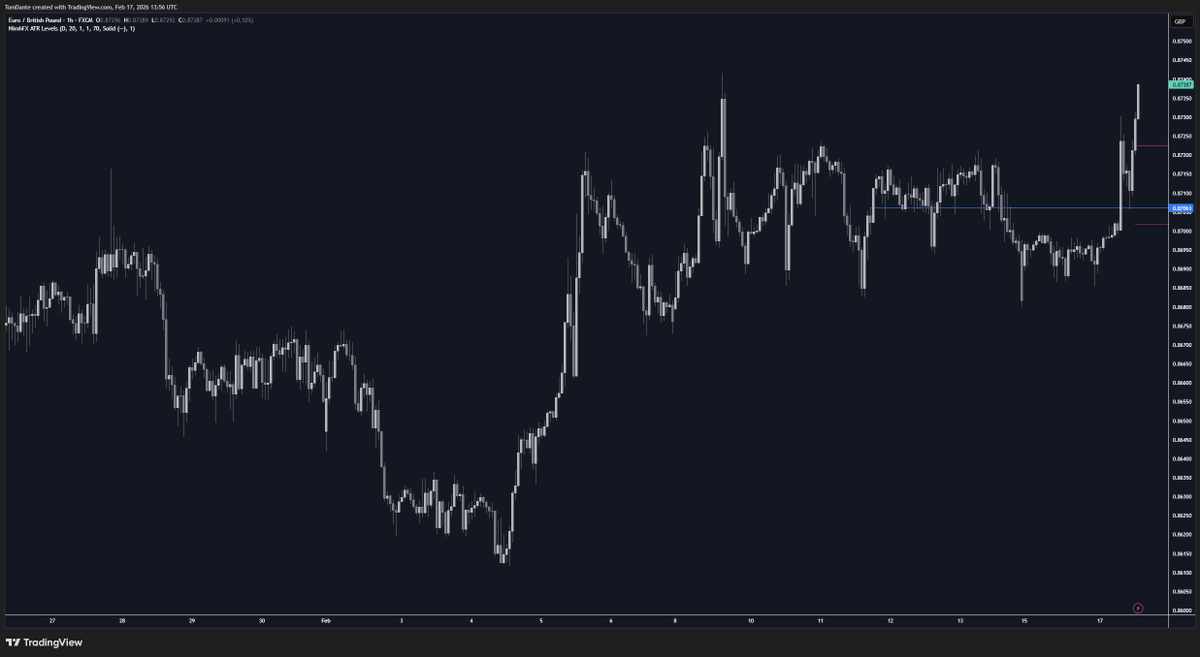
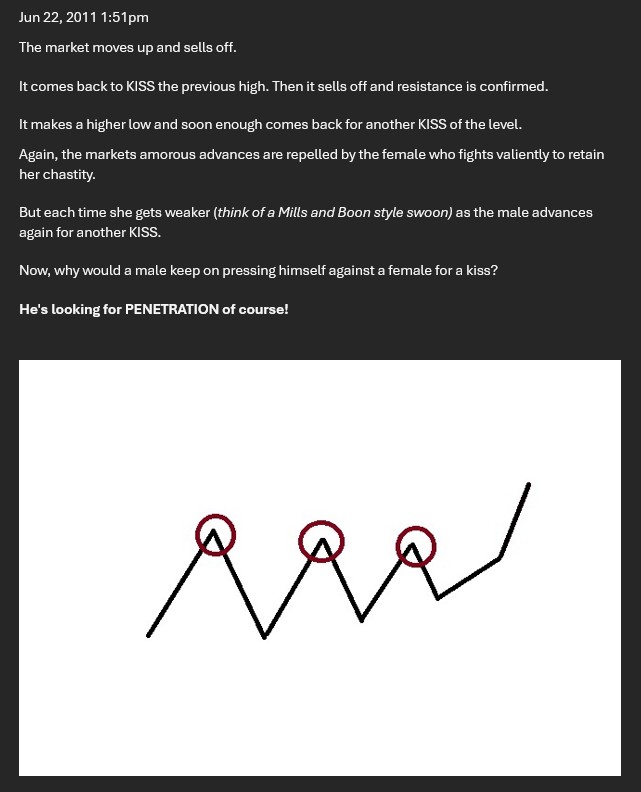
Swing trading has nothing to do with holding times. You can swing trade on a 5 or 60 minute chart, a Daily or a Weekly. It's trading one swing at a time, using the structure of that time frame, and not projecting multiple waves forward or making "ego" calls.
Simple reasons why I love trading the SFP.
Most traders have an issue reading context/bias.
The SFP hands it to you on a silver platter.
It occurs at range extremes.. it shows you traders were stopped out.. and others got trapped on the wrong side noted by the closure back inside the range.
Now instead of trading "chart patterns"... you're trading the logic behind the participants..
Some thoughts on trade management:
When you take an outright position with a clearly defined stop and target, you’re simply saying: “I think the market will go from x (entry) to y (target) without hitting z (stop).
I believe that’s the “easier” part of the process.
The harder part is knowing how price is going to get there.
Trade management compounds complexity because everytime you move a stop, add to a position, exit early, change your target or take a partial etc, you’re making another decision that builds on the first e.g. how likely is price to go where I planned, based on where it is right now?
The problem arises when you get traders that have a 50/50 read of the market but rely on a decent payoff to make money, being forced to make more and more decisions.
Alongside this issue, as the trade moves, ideas creep in that weren’t there at the outset. For example, you might take a trade based on market generated information like a breakout or a stop raid and reversal but then move the stop due to something else entirely like simply not wanting to see a winner turn into a loser e.g the infamous breakeven manoeuvre.
In all my time examining traders that have clear stops and targets on their trades, I will tell you it’s rare to find someone that can, over a large sample size, make active management beat no management.
People won’t like to accept this. They won’t think of testing it and they’ll often feel uncomfortable at the idea of doing it because most traders want to trade. They want to be hands on non stop.
But it should be one of the very first things you test in my opinion.
Bet you can't watch 5 minutes of this without having a trading breakthrough. - MUST BOOKMARK
Mark Douglas - Trading in the Zone.
22 minutes. Full course. Must Watch.
Your edge isn't your chart. It's your mind. ⚡
🚨 BREAKING: AI can now build trading algorithms like Goldman Sachs' algorithmic trading desk (for free).
Here are 15 insane Claude prompts that replace $500K/year quant strats (Save for later)
bitcoin winner this morning, 1.20r
hourly hammer swept daily and weekly level
bid return to high of hammer, near perfect entry
without efl26 I would not have had the conviction to enter this long
THANKS LEDGE! @Trader_Dante@taprootalpha
If you need a “reason”:
AUD/USD has cleaner price action, respecting key levels better and the fundamentals are easier to model as opposed to Oil’s relationship with CAD, which is unstable and distorted by geopolitics, inventory surprises, and North American production dynamics, making USD/CAD harder to model consistently.
Combined with that, the RBA tends to move slowly and predictably whereas the BoC reacts more aggressively and sometimes unexpectedly to inflation and employment data creating more false breakouts in USD/CAD.
Also the AUDUSD has stronger institutional flow whereas USD/CAD is heavily influenced by hedging flows from energy exporters, which are non-technical and disruptive to trends.
And if you read all that drivel, congratulations.
I don’t tend to obsess over the reasons why: it’s just a simple fact that trading AUDUSD is like taking candy from a baby. Trading USDCAD is like attending a party hosted by Diddy and you’re fresh out of lube.
With our demanding job as traders, is it worth trading your health for wealth? Are you even aware you’re making a trade-off? What are your boundaries?
Part of what Alex Hormozi so often preaches is the authentic raw truth. Many of you may have noticed on my YouTube videos that I start every single video saying that the reason why I'm now focusing on mentorship and teaching is that “I'm done trading my health for wealth. If you all are in the trenches and willing to trade your health for wealth, then I'm here, happy to teach you”. And I don’t view that hook as hyperbole.
I do think that trading comes at a real cost physically and emotionally, and I absolutely do think that cost can be worth paying. Many have asked me if I regret trading with the intensity that I did. I absolutely do not. Trading has given me a quality of life and a freedom that I never could have dreamed of as a young adult or child, the ability to never worry about money.
That said, I certainly wish I better prioritized sleep during those times and didn’t drink as much back then. I wish I got outside more and took more breaks. I do think the job has aged me and particularly my eye health. But we don’t know, what we don’t know.
The point I want to raise in this post is that the trade-off is real and with the push towards 24/7 trading, this is a topic more and more traders will need to come to grips with. Even if you are doing trading in its most healthy form, you inevitably increase your stress and lose your presence in everyday life. The job also tends to be highly sedentary.
At its more extreme forms, you are working crazy long hours, monitoring the markets overnight while being hit with cortisol and adrenaline again and again. This is triggering your fight or flight response, yet we are sedentary and going nowhere, which is one of the worst things for our body. Chronic stress mixed with sedentariness, while not getting outdoors, plus often that stress is associated with poor eating, alcohol, and other substances.
Now, look, if you are 22 years old or 25 years old or even 35 or 45 years old, that sacrifice can totally be worth it. The first $10,000 or $100,000 you make is absolutely life-changing if you don't have it. The first million you make is more marginal, but still absolutely life-changing.
My challenge to you all is to reflect on: what price are you willing to pay? The far harder part is being willing to accept the trade-off. If you are going all in, you need to accept that you will get sick more often. You will not feel great on many days. You will have very high emotional highs and very low emotional lows.
That being said, if you are willing to set boundaries on your trading, you must be okay missing out on performance and opportunities. It is totally okay to say that you will only trade the markets from 9:30 to 4:00, but then you must be okay missing moves in silver overnight or pre-market headlines or whatever else may be the case.
There are some traders out there that truly don’t have the temperament to be traders. The lows are too low for them. It ruins their well-being and quality of life. They get chronically depressed or suicidal. That price will never be worth paying.
I'm not here to tell you what the right answer is, because I don't think there is a right answer. It depends on your values and where you are in your life. The most important point is to make an intentional decision and then do your best to emotionally and psychologically accept the trade-offs.
Krea AI killed it with their real-time editing feature
this is a level up for architecture & home design (and beyond)
you can paint, drag and drop, or prompt changes - and watch them render in real time(!)
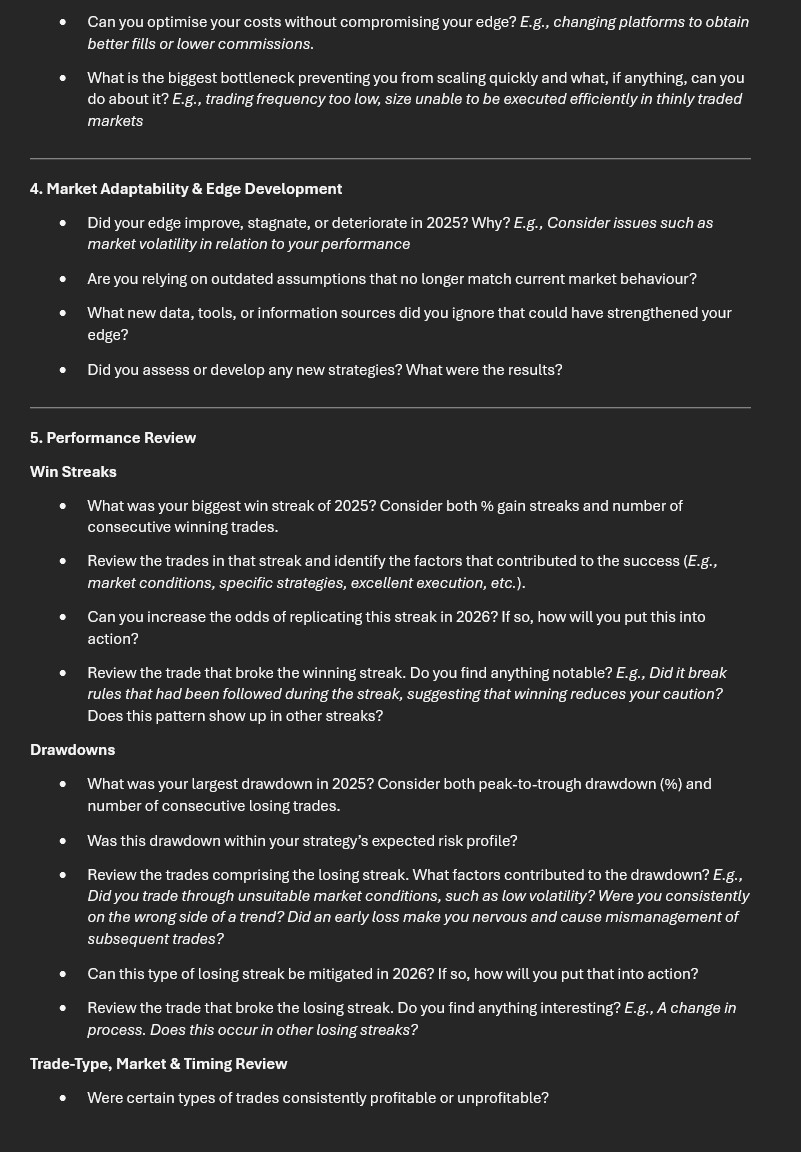
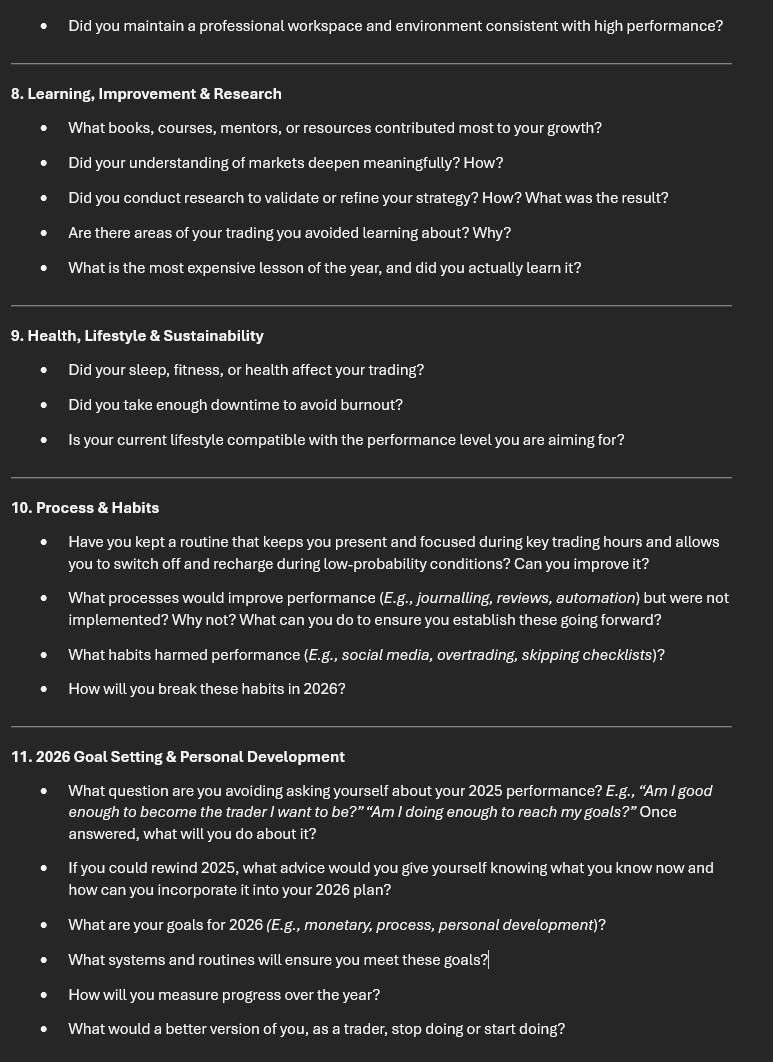
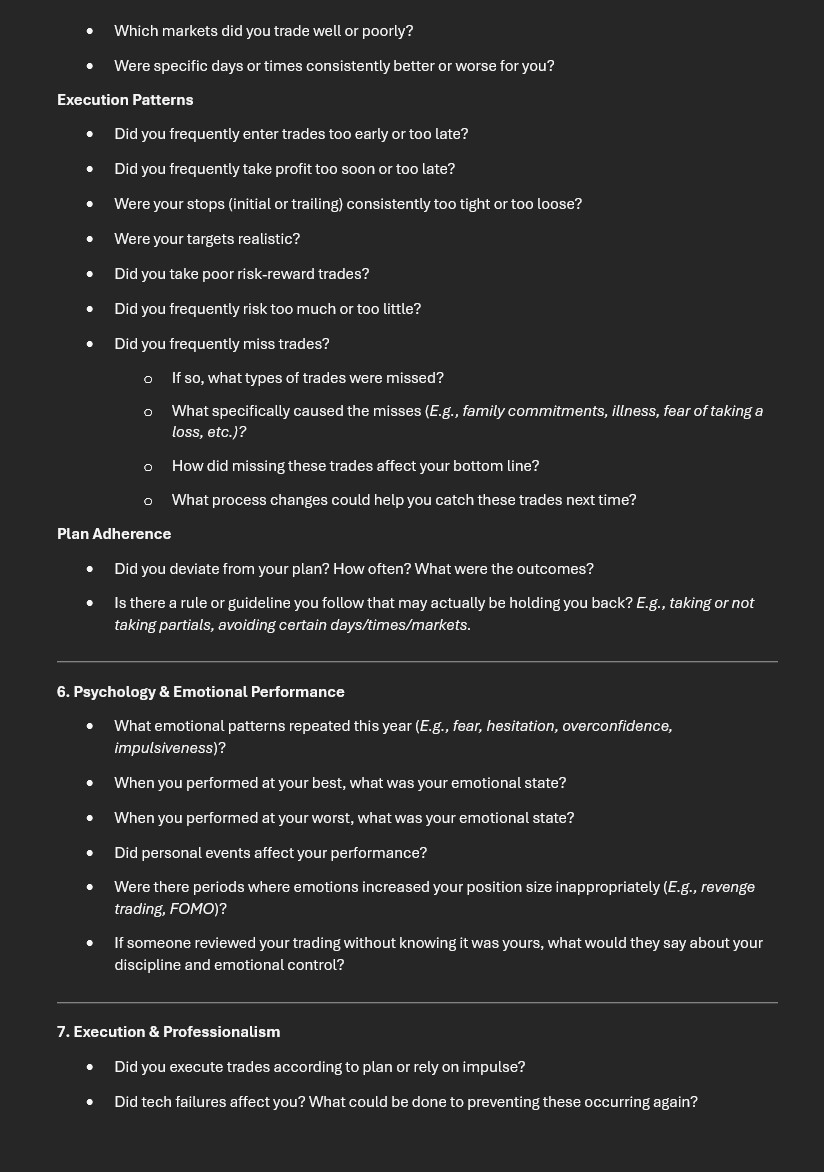
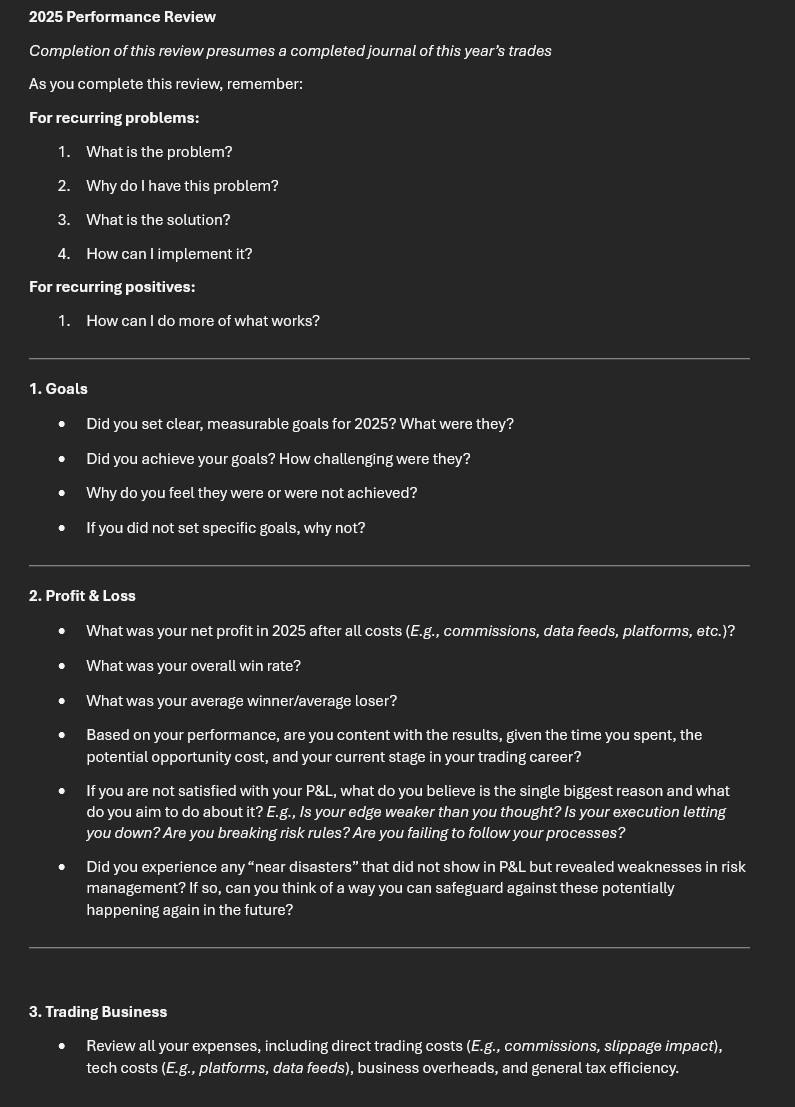
A traders year-end review comes down to three questions: What worked well? What didn’t? What's next?
Here is a structured 2025 Trading Performance Review for a deep dive into key issues including: edge decay, execution, psychology and more.
PDF: https://t.co/ifL2IbOkns