There are 42 states that hold bartenders accountable if the customers they over serve kill someone but 0 states that hold Judges accountable if the criminals they release kill someone.
Insane.
@dpshow Then They Do
Trace Adkins
Not really a TA fan, but that song is a shot to the gut when you want your kids to grow up and be successful and enjoy their lives and then they do. The nerve.
Nailed it.
"If Trump is guilty. Prosecute him. If a democrat is guilty. Prosecute them. If a celebrity is guilty, prosecute them. This isn't left versus right. This is kids versus predators. If your brain can't process child exploitation without filtering it through your favorite or most hated politician, you dont actually care about justice. You care about winning. And that's how evil people stay free."
Simpler times: when the commercials were the real halftime show.
Remembering Terry Tate: Office Linebacker. Super Bowl XXXVII, January 26, 2003. #SuperBowl
"What if your favorite politician is in the Epstein files"
I don't have a favorite politician. Stop worshipping politicians like celebrities, they're literally public servants.
@dpshow I don’t know if the texters are always right, but I would still love to hear Tod comment on how the only time he’s actually been funny is when the callers are providing the material.
Lucas seemed wobbly after that hit. If he was concussed he was probably out of the game either way but was the difference in the targeting calls supposed to be the launching or the difference between hitting with the crown or facemask? #fiesta
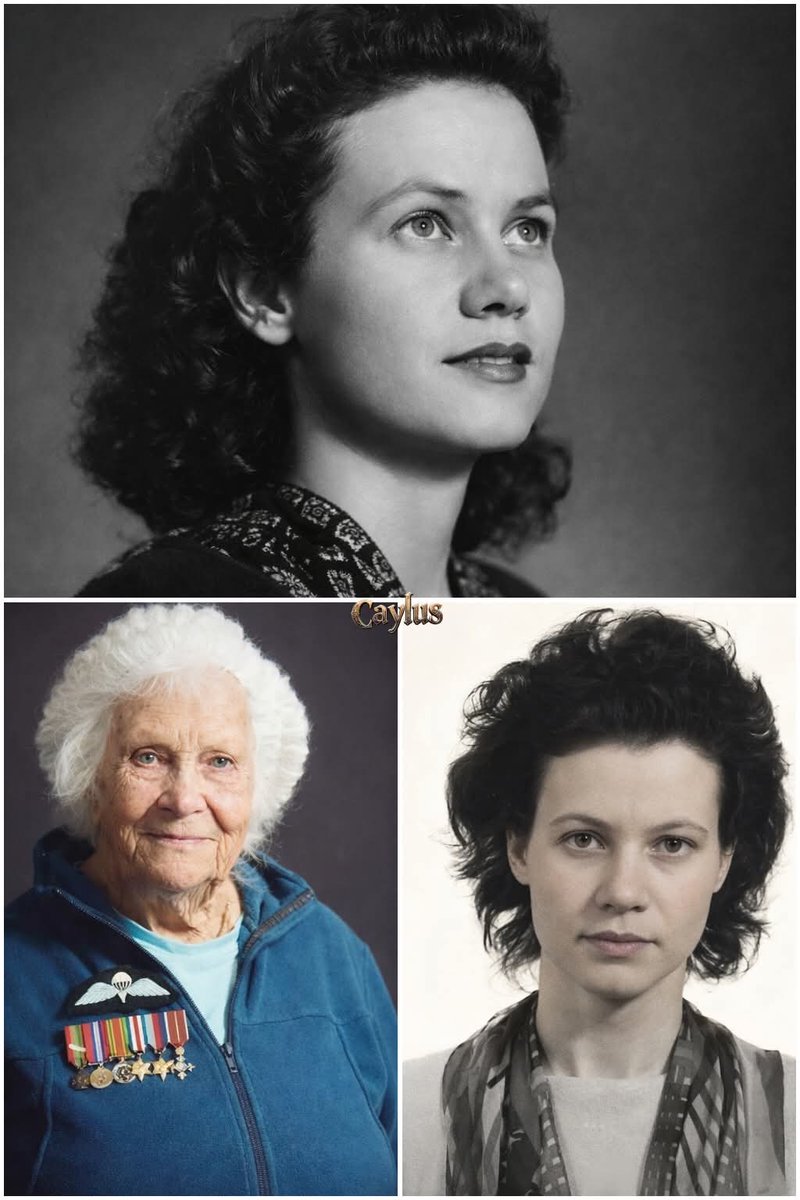
The male agents kept dying in the shadows, so British intelligence disguised a 23-year-old woman as a village girl, trained her to kill, and dropped her into Nazi-occupied France — where she outwitted the Third Reich for 135 days.
May 1, 1944. Five days before D-Day would crack open Nazi Europe.
A dark bomber sliced through the sky over Normandy. At its open door stood Phyllis Latour — tiny, calm, and impossibly brave, staring at occupied France thousands of feet below her.
No rifle. No platoon. Just a parachute, a cover story, and a battered bicycle waiting to become her execution — or her legend. She was 23. And the Nazis had already eliminated every male spy sent in her place.
Churchill’s Special Operations Executive needed someone invisible. Someone the Gestapo would dismiss before they feared. They needed a ghost dressed as a child.
They chose her.
She had trained until her knuckles split on cold stone. Morse code until her fingertips bled. Silent killing. Disappearing. Climbing walls with a cat burglar. Resisting torture.
This wasn’t duty. This was vengeance — the Nazis had murdered her godfather.
Then she jumped into the darkness.
She buried her British gear. Brushed her hair into a little girl’s ribbon — codes hidden inside — and pedaled into occupied towns selling soap, giggling like someone too innocent to fear war.
“The men before me were caught and killed,” she later murmured, calm as a winter lake. “I would be less suspicious.”
For 135 days, that “harmless peasant girl” memorized troops, tanks, bunkers, fuel lines. Then she vanished into forests to send lifelines to London at a speed most wireless operators never reached.
She never transmitted twice from the same place. If she did, a German detection truck would find her, torture her, erase her. So she slept in barns, fields, empty rooms — hunger and death whispering beside her.
Once, soldiers stopped her. Searched everything. A Nazi officer reached for her ribbon — the one hiding silk codes.
She untied it playfully, hair falling, eyes wide and childish.
They laughed and let her pass. Life and death swayed by a smile.
135 messages.
135 blows against the Nazi war engine.
D-Day’s success carried her fingerprints.
When Paris was liberated, she didn’t stand on a parade truck or write a memoir. She went home. Married. Raised four children. Told none of them.
Her son only learned the truth 56 years later — from a book.
In 2014, France finally placed the Légion d'honneur around her neck. She accepted it like someone who’d simply done laundry, not saved lives.
Phyllis Latour Doyle lived to 102. Quiet. Gentle. Deadly when history needed her.
She didn't win the war with bullets.
She won it with innocence, courage, and a bicycle.
When every man they sent was killed —
she went anyway.
And the world changed because a young woman pretended to be a child and rode through hell with soap in her basket and fire in her heart.
May we never forget her name.
Phyllis Latour Doyle.
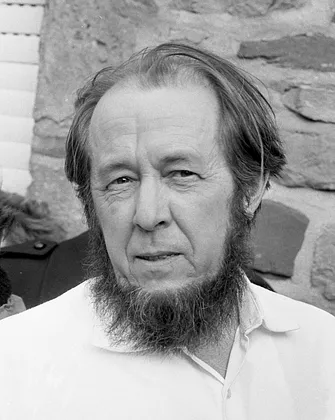
In 1945, Solzhenitsyn was a decorated Soviet officer who made a small, private joke about Stalin in a letter.
The state opened it, read it, and treated it as a crime. Within weeks he was arrested and stripped of rank. He was fed into the camps, and sentenced to eight years in the Gulag.
The camps were designed to teach one lesson: say nothing, remember nothing, become nothing. He shoveled frozen concrete until his hands split and bled.
Years later, Solzhenitsyn would write, “Bless you, prison, for having been in my life.” It sounds insane until you understand what he meant. Prison showed him the truth of the regime in its purest form.
After his release, the punishment did not end. He lived under constant surveillance, moving from place to place, knowing that writing a single page could mean death. So he did not write. He memorized. Whole chapters of The Gulag Archipelago lived only in his head. Friends hid scraps of text. Wives memorized passages. For years the book existed only in human memory, as fragile and dangerous as a secret prayer.
When it was finally published, it did not argue that Soviet communism had gone too far. It showed that this was exactly where it led. Solzhenitsyn had learned that systems built on lies survive only if people agree to repeat them, and that the simplest refusal… to stop saying what you know is false… is the first and most dangerous act of resistance.