Esto ya lo vimos en 2008.
Subir las tasas por un shock de oferta no tiene sentido. La inflación viene por demanda.
Incluso en 2011, con la pequeña subida del petróleo post-2008, el BCE subió las tasas para luego recortarlas a 0 en solo meses.
Esta vez no va a ser diferente. El mundo está en la etapa de desaceleración económica. No me sorprendería ver el petróleo en 45-50 dólares a fin de año si el conflicto se resuelve.
Subir tasas a las puertas de una recesión es una salvajada.
El BCE repite los errores de 2001 y 2008.
La inflación será coyuntural y veremos el petróleo por debajo de 60 o 70 a finales de año..
Try READ this - and understand the reasoning.
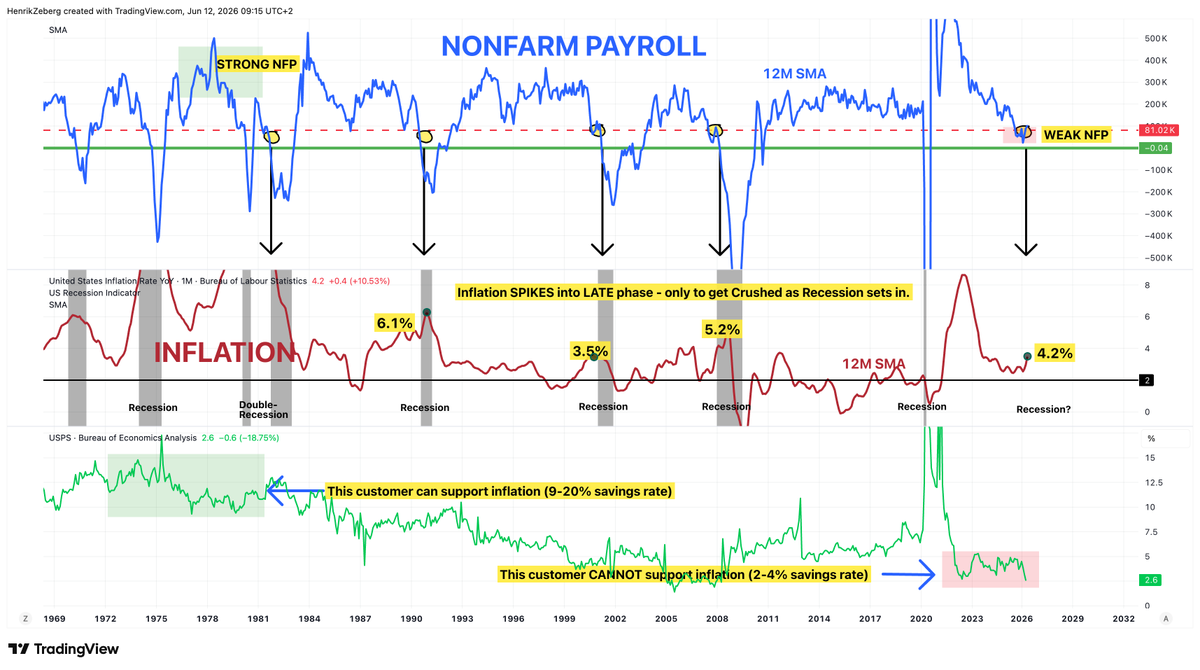
Inflation is NOT an issue at this point in the Business Cycle.
The CBs reaction to LATE-CYCLE inflation is what is the problem.
ECBs decision to hike rates yesterday was a terrible decision - and honestly speaks of an institution with limited understanding of the dynamics in the Economy.
Remember - they did same in June 2008 - as the Economy had been in Recession for 7 months.
It was a major mistake. Same this time - and it will only make the pending crisis worse!
Mark my Words!
Subir tasas a las puertas de una recesión es una salvajada.
El BCE repite los errores de 2001 y 2008.
La inflación será coyuntural y veremos el petróleo por debajo de 60 o 70 a finales de año..
1st Grader Analysis @JohnHCochrane. Terrible!
Inflation needs to be DEMAND-driven.
In 1970s SAVINGS RATE was 9-20%.
Today, it is 2-3%.
In late 1970s, JOB CREATION was VERY strong.
Today - it is VERY weak. (Remember job market is much larger today).
If the Consumer is weak - from where would inflation be fueled? Do you magically have 1000 USD extra as Price of Gas goes up?
I don't!
Hence - you will have to prioritize. Cut down on other goods. This is called "Income Effect". First year stuff at the Economics Studies.
You cannot compare Apples and .... well Eggs....!
Correlation does not mean Causality.
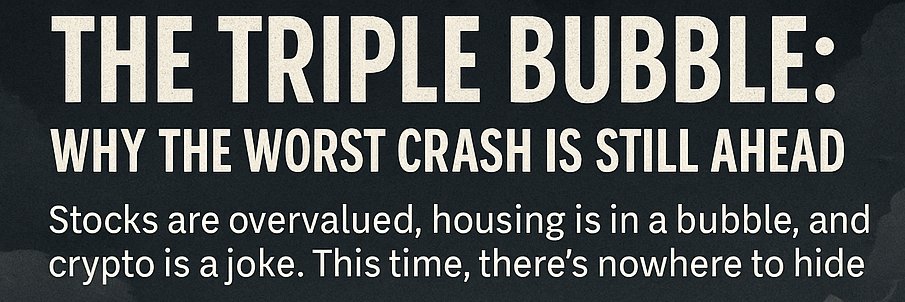
A diferencia de los ferrocarriles en 1840, los años veinte o incluso la burbuja de tecnología, todas estas anteriores generaron empleo, mientras que la burbuja de la IA no. Aunque el ciclo se desarrolla de manera similar, hay algunas diferencias. https://t.co/my9MdZwZPR
Agree.
The three rounds of inflation during the seventies are fully related to the demographics.
Baby boomers at the peak of their spending pushed up home prices, which in turn led to higher inflation.
The oil shocks in the seventies were just the final peak (like the 2022 war) of an inflationary wave caused initially by housing (similar to the 2021 expansion).
If you want to know where inflation is headed, check the housing market, as it is 35% of the index. Just math.
Fun fact of the day
This is not the 1970s!!
Wall Street economists still don’t get it.
Raising rates does nothing to fix the relative price shifts caused by a supply shock. Their fear that second- and third-order effects will trigger a 1970s-style inflation spiral is based on flawed economics.
Kevin Warsh understands this. Most of them don’t.
The ECB is well known for being wrong.
In 2008, they hiked rates due to rising oil prices, but cut them aggressively because the world was in recession.
In 2011, they also hiked rates just as the European crisis began; a few months later, they were cutting them to zero.
And here we are today...
Agree. Limited amount of BTC. An unlimited amount of cryptocurrencies.
In an extreme, hypothetical scenario (not real), where BTC is owned by only 10 people at a price of 10 million each and used for global payments, people would then use another crypto.
They would pump the new crypto until they switch to another. And when we switch to another, we find out the real value of the previous one.
@HenrikZeberg It is even less valid because you actually can NOT create unlimited amounts of land (you can buy lots of land elsewhere though, which is an analogy); you can create unlimited amounts of crypto currencies though.
@HenrikZeberg Australian Land Boom in 1890, too!
Very interesting that que quotes are the same: "if you don't buy now, you will never be able to."
Even in Canada, in 2021, everyone was repeating that. Owners who bought during the peak are 25% underwater.
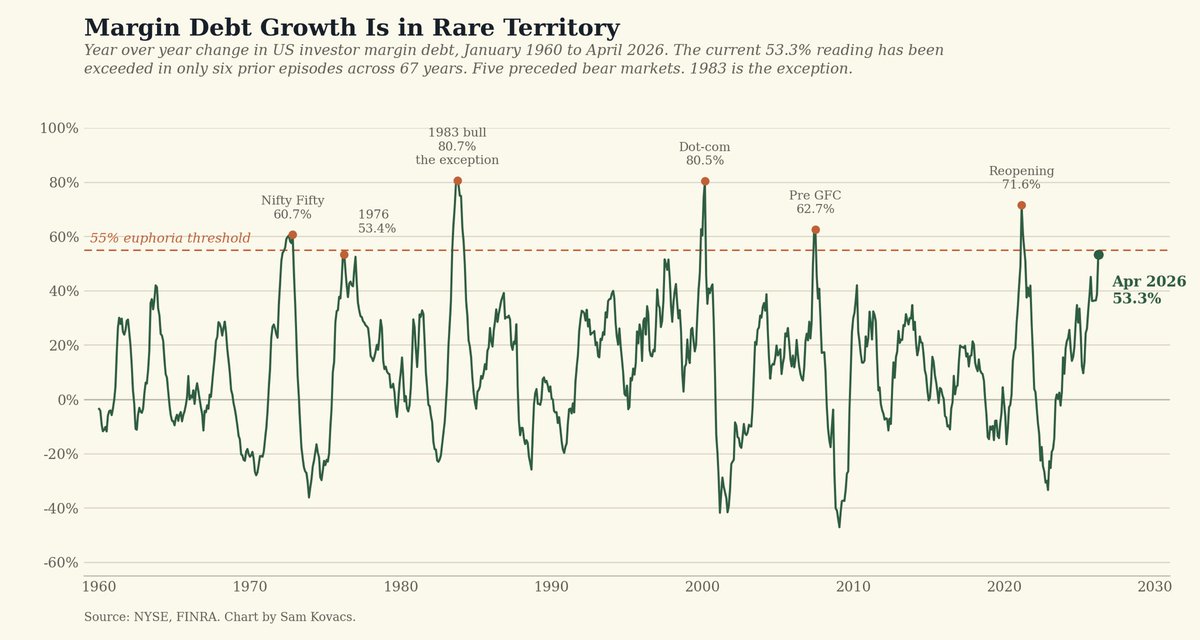
We are going to go beyond 60%. The last stages of the bull cycle usually get super interesting and euphoric.
However, this is strong evidence of where we stand in the cycle.
MARKET OFFICIALLY IN STUPID MODE.
Margin debt increased 53% yoy.
When this number rolls over, it usually leads market crashes by 3 months.
Peak Euphoria incoming.
The Dollar is getting a genuine lift from oil. Historically, the US was a net importer (blue bars), but that's shifted drastically in recent months and the US is now a big net exporter. That's completely changing how we need to think about "King Dollar..."
https://t.co/P2WFpy6OCd
¡Artículo Gratis!
El dólar puede subir aunque sus fundamentos parezcan débiles. No por confianza, sino por necesidad: deuda global en dólares, liquidez escasa y mercados buscando refugio.
En el nuevo artículo explico por qué este podría ser “el último baile del dólar”.
https://t.co/BP4hsoOsqo
Average weeks of unemployment are increasing. This is the highest number prior to entering a recession.
Unlike the railway mania in 1840, the Roaring Twenties, or the dot-com bubble, the IA bubble is not generating employment before the bust.
During the development of any bubble, employment usually increases due to bubble-related activities. Although the cycle is playing out the same way as before, this bubble does not even generate jobs.