This Jacob & Co. Bugatti Tourbillon has a tiny working V16 engine with moving pistons inside.
Price: $340,000.
Limited to just 150 pieces. Would you wear it?
I curled up with my favourite oversized hoodie and a cup of hot chocolate… and suddenly the world feels a little softer 🧸Girls, what’s your go-to cozy uniform when you just want to disappear into comfort?
Mine is hoodie + fuzzy socks + zero makeup.
Most people wait for motivation.
Winners build systems that don’t need it.
Try this today:
Pick ONE habit you want.
Attach it to something you already do (coffee, brushing teeth, opening your laptop).
Habit stacking > willpower.
What habit are you stacking this week?
for more mind-blowing finance facts daily 📷Did you know?
If you invested just $1,000 in Apple stock in 1980…
it would be worth over $1.7 MILLION today. 🍎📷Compound interest isn’t magic — it’s the closest thing we have.
💰
The most expensive watch ever sold costs more than a private island.
Patek Philippe Grandmaster Chime — $31 million.
20 complications. Almost never worn. Would you wear it… or lock it in a vault?
This is not a car.
This is pure status. Bugatti Chiron Super Sport.
0-100 in 2.4 sec.
Price? Over $3.5M. The kind of machine that makes people stop and stare. Follow for daily luxury cars & hypercars that most will only dream about. #Supercars#Bugatti
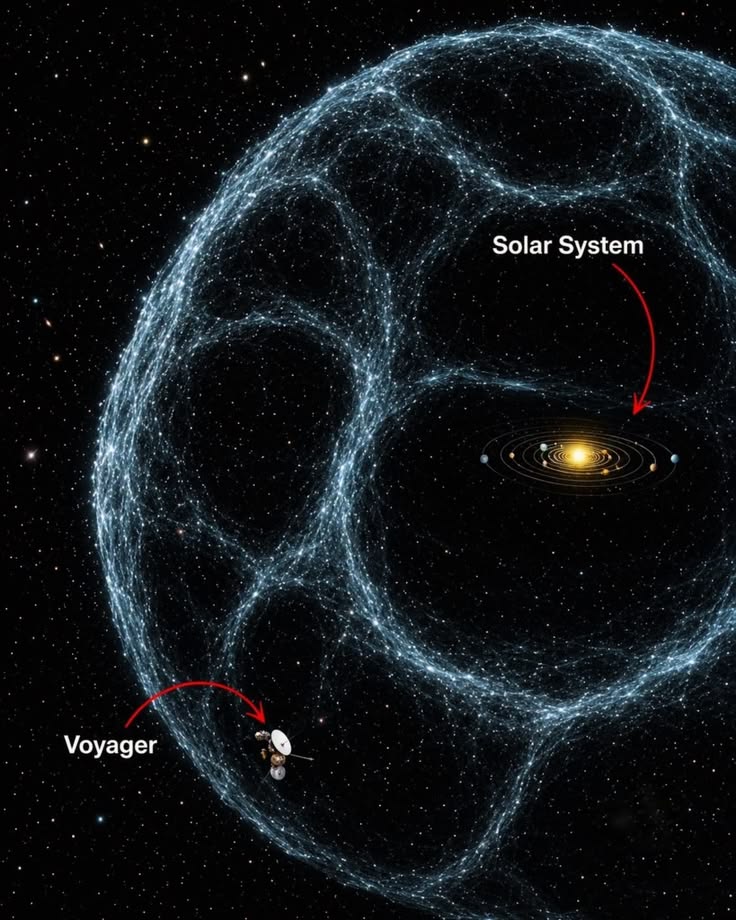
Voyager 1 and the Epic Journey Through the Oort Cloud Even though Voyager 1 has already entered interstellar space, it’s still deep inside our Solar System in the grandest sense.
It will take roughly 300 years for humanity’s farthest spacecraft to reach the inner edge of the Oort Cloud — the vast, spherical shell of icy comets and frozen debris that marks the true outer boundary of our Solar System.
Once there, crossing the entire Oort Cloud will take another ~30,000 years. That means Voyager 1 will spend tens of thousands of years silently drifting through this enormous region — a cosmic wilderness stretching up to 100,000 AU (nearly 2 light-years) from the Sun, filled with trillions of icy bodies.
By the time it finally emerges on the other side, it will have been traveling for over 30,000 years since leaving the planets behind… and it will still be only barely beginning its true journey into the wider Milky Way.
A humbling reminder of just how vast our Solar System really is — and how small we are in the grand timeline of space exploration. Voyager’s voyage is only getting started.
FUN FACT🚨: Earth is just 1 of an estimated 3.2 trillion planets. The Sun is just 1 of ~200 billion stars in the Milky Way.
And the Milky Way is just 1 of an estimated 2 trillion galaxies in the observable universe. Think about how small we really are.
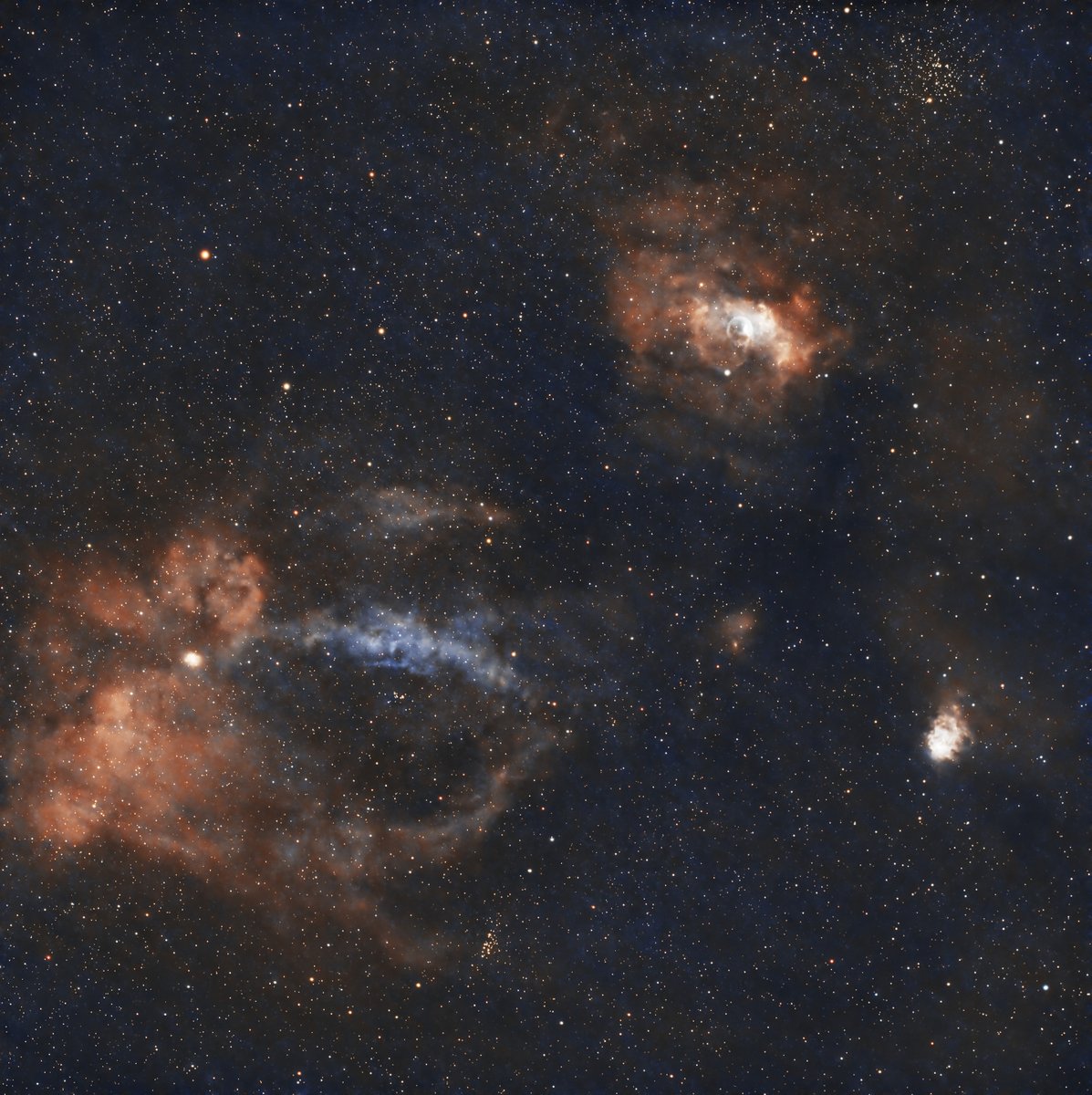
The Bubble Nebula (NGC7635) and Lobster Claw Nebula (SH2-157) in Cassiopeia. The Bubble was caused by a star losing it's outer layer and the Lobster Claw is an emission nebula. Both are fun targets to shoot with the wide field AT60ED telescope.