Warm greetings to all ranks, veterans, and families of the Assam Regiment on their Raising Day! Known for their unmatched bravery and the spirited war cry "Tagra Raho," the Regiment has built a glorious legacy of courage, sacrifice, and unwavering dedication to the nation.
An exceptionally gifted officer whose professional accomplishments speak for themselves. He was also involved in the early planning of the Kargil air operations from J&K HQ and was awarded the Mention-in-Despatches for his contribution.
Westland Wapiti, first Aircraft of the Indian Air Force 🇮🇳🔥
K1260 of No.1 Sqn flying over New Delhi with the Viceroy’s residence and Kingsway in the background.
The IAF's first headquarters in eastern India did not begin in a command complex. It began in a recruiting office.
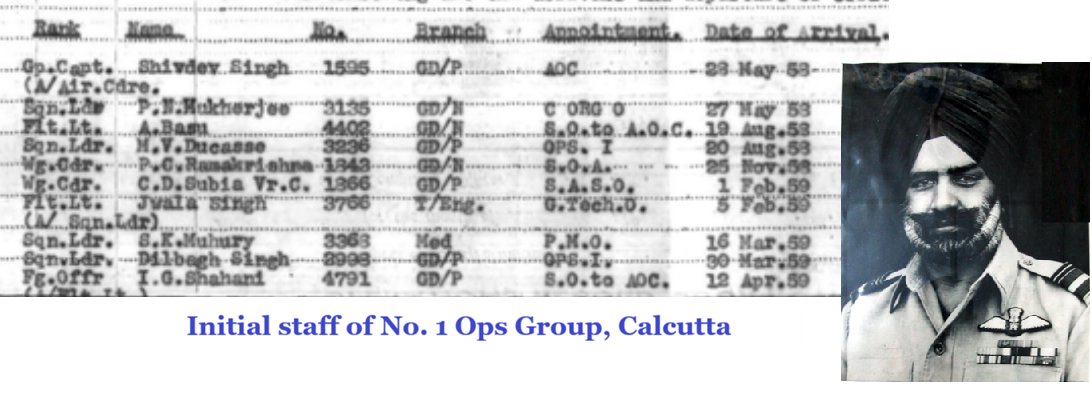
On 27 May 1958, No. 1 Group, IAF, was formed in Calcutta via Administrative Instruction No. 7/58. Air Commodore Shivdev Singh was appointed the first Air Officer Commanding.
But let us rewind.
At Independence, the IAF had only a single operational command structure for the entire country at Palam. It was a small force of about ten squadrons, and its flying units were concentrated largely in the west. Even Kanpur then marked the more easterly edge of the IAF’s regular flying geography.
The east entered the map slowly.
Barrackpore became the first real eastern flying base in 1950. In 1951, the newly raised No. 11 Squadron moved there with Dakotas, giving the station a permanent transport unit.
Jorhat followed in 1952, as No. 10 Wing, initially with a modest transport detachment. Its importance lay less in numbers and more in geography. It placed the IAF closer to Assam and the frontier areas, where the Army’s dependence on air supply was growing.
Kalaikunda came later, in 1956, and changed the character of the eastern presence. With the arrival of the Mystère squadrons, the east was no longer only a transport concern. Fighter aircraft now had a permanent base in the region.
There had been earlier fighter deployments too. No. 14 Squadron had operated Spitfires from Barrackpore, and other squadrons had sent detachments in connection with the Naga and Mizo insurgencies. But these were still episodic movements by an air force whose command structure remained centred elsewhere.
No. 1 Group changed that.
Its first home was hardly imposing. Its initial office was the AOC's residence and the only staff officer was Sqn Ldr PN Mukerjee. The Group headquarters soon after functioned from the office of No. 1 Air Force Recruiting Centre at No. 1 Gokhale Road, Calcutta. It remained there till the second week of August 1958 because no suitable office accommodation had yet been found.
That month, the headquarters shifted to Rani Kutir at Regent Park, Tollygunge. The building stood on about 3.07 acres and had enough room for offices, domestic accommodation, garages and kitchens. It had previously been acquired by the Government of West Bengal and was taken on hire from the Corporation of Calcutta.
By the end of August 1958, all stations and units under the new headquarters had been told to refer their returns and communications to No. 1 Group for decision and ruling.
Even the communications infrastructure came in stages. A detachment of No. 1 Air Formation Signals arrived from Palam in January 1959 with a PBX and installed telephone equipment. The Rani Kutir PBX was finally installed by Posts and Telegraphs on 2 February 1959.
This was not yet Eastern Air Command. But On 27 May 1958, the IAF began to command the east from within the east.
#IAFHistory @IAF_MCC
Roaring jets in front of the mighty Dhauladhar paid heartfelt tribute to brave IAF pilot Wing Commander Namansh Syal at the air show in Sainik school Sujanpur today, the very place he once studied.
Lt Gen Sagat Singh - the man who never lost
1961 Goa Liberation - Higher HQ made a slow & steady plan. He ignored it, raced ahead, forced Portuguese surrender, hoisted Tricolour over Panjim, ending 451 years of Portuguese rule. Portugal put a $10k bounty on his head.
1967 Nathu La (China War) - Eastern Command & Delhi ordered restraint & withdrawal. He refused, crushed China & avenged ’62.
1971 Bangladesh Liberation - Was ordered not to cross the Meghna River. Replied on radio - “Over my dead body!” Heli-bridged Meghna, raced to Dhaka & forced 93,000 Pak troops to surrender.
Respect to great men like him.
Why aren’t we teaching the younger generation about such brave heroes?