@DCI_Kenya If you release her again don't bother wasting our time with useless mugshots. How's she out after all these years!? And don't tell us your favourite line, "Insufficient evidence." Either lock her up for real or just keep acting in accordance to the partnership y'all clearly have!
This is an update to my earlier report on the coordinated mobilization and arming of militia across parts of the Rift Valley and western parts of Kenya. That report (Check my quoted tweet below), detailed the oathing ceremonies, the night gatherings, and the involvement of political figures in organizing young men from specific communities. Since then, trusted sources within government have continued to come forward with new information, and what is emerging paints an even more disturbing picture of how far these alleged preparations have advanced.
Reports I have received point to political militia in their hundreds being assembled across several counties, including Trans Nzoia, reportedly targeting western Kenya and Bungoma, Pokot and Marakwet, Turkana, Uasin Gishu, Nandi, Kericho, Nairobi, Kajiado, Kiambu, Murang’a, Nyeri, Laikipia, Nyandarua and Kirinyaga. Each militia member is allegedly paid a monthly salary of 30,000 kes, with an additional 10,000 kes sitting allowance for each meeting attended. According to my sources, this money is transported and physically delivered to the militia by the same veterinary doctor I named in my earlier report operating from the ugly house on the hill. In Nairobi, Kajiado, and parts of central Kenya, the operation allegedly runs through so-called stage managers aka kamageras, who coordinate activity on the ground and provide political cover.
Now, on the economic sabotage component of this plan. The strategy is not random criminality but a deliberate and calculated effort to disarm, wear down, and render targeted communities helpless and hopeless through sustained thuggery, knife attacks, child disappearances, cattle rustling, and relentless pressure on landowners around Uasin Ngishu to sell their land or, as they are told, remain "at their own risk." The goal is to break the spirit and economic backbone of targeted communities before any wider confrontation if necessary. The coordinators behind this plan are the same individuals I named in my earlier report.
The 41vs1 agenda being pushed is a deliberate replay of 2007: the Kikuyu community against the other 41 tribes, the same dangerous arithmetic that produced over 1,300 deaths and displacement that was never fully reversed. To that end, reports I have received indicate that Kikuyu political leaders allied to the current administration have allegedly been funded to the tune of 2.5 billion shillings, money intended to destabilize the region and neutralize potential resistance from within. Meanwhile, broader alliances are allegedly being sought with elements from the Coast and communities in western Kenya. Notably, according to my sources, the Maasai, Luhya, and Kisii communities have publicly refused to participate. Even in parts of Mount Kenya, the alleged organizers are said to face limited reach and credibility.
History is repeating itself in plain sight. Today, the political temperature is rising again, but this time the alleged plans are being flagged early by elders, citizens, churches, and concerned voices across the country. Framing legitimate national discontent over the economy, governance, and accountability as ethnic persecution or justification for balkanization is a deliberate distraction that benefits only the political class while impoverishing everyone else through fear, thuggery, and lost livelihoods.
We must stop the drums of war now. 2007 caught people off guard; this time the warnings are visible and public. Kenyans of all communities share the same daily struggles: sky-high living costs, insecurity, unemployment, and broken promises. No community wins when children disappear, cows are stolen, or families are forced off land they have farmed for decades. The real divide is between the political elite of all ethnicities and ordinary citizens who are being played in their hunger games.
1/2 continued…
UPDATE: Why are some Kenyan politicians organizing and oathing young men?
The happenings in the Mount Elgon area of Bungoma, Transzoia and West Pokot needs a closer look by all peace-loving people of Kenya comprising security agencies, citizens, political and religious leaders. Even the international community should take a keen interest. Information reaching me has indicated that some politicians and politically connected people from the area and further away in Rift Valley counties are organizing and oathing selected young men from one community.
In July 2024, some residents in the area reported a suspicious gathering of young men with a few elder politicians and influential people in the forest.The young men are said to have developed quiet behaviour after the meetings and unwillingness to engage widely with other people. This behaviour change raised suspicions as to what the young men and their handlers were up to.
Sporadic meetings continued with a climax in late September 2024. About 50 young men met with a few elderly politicians(both current and former), community elders and highly politically connected individuals in the bush at the border of Trans Nzoia and West Pokot counties. Some of the highly politically connected individuals are well-known operatives of the president, Ruto the butcher of sugoi. A top trade union leader from Western Kenya was also present and has since been taking every opportunity to remind Kenyans that Ruto’s second term as president is guranteed. The gathering went late into the night flowing into the wee hours of the following morning.
A resident of the area, who sought anonymity due to the sensitivity of the matter, said the gathering was an oathing ceremony for the young men. The resident said a governor of one of the counties stumbled into the oathing ceremony. The young men were removed from the location deep in the night when the ceremony was completed and taken to an unknown destination.
It is true that what happens in the dark eventually gets revealed. The oathing could be taken as a simple tradition of the communities in the area. However, the question arises as to what role the influential politicians and well-connected individuals played in organizing and financing the oathing and mobilization of selected young men. A further question arises as to what the role of the oath could be.
History teaches us to identify trends in human behaviour and events to put in place mitigation measures to prevent recurrence of disastrous events. Investigations in the 2007 post election violence revealed oathing ceremonies that had been carried out in the Kalenjin community to recruit warriors who participated in the post election violence. They were organized by politicians and community elders.
As the old adage goes, once bitten twice shy. The political temperature in Kenya is rising by the day as the country approaches the 2027 election. All indications are that the presidential election will be hotly contested with majority of Kenyans and some leaders seek to remove William Ruto.
I call upon all Kenyans to critically examine the happenings in the Mount Elgon and other areas where political intolerance by both government and politicians is rising by the day.
It is quite satisfying to watch the antelope loudly proclaim its friendship with the leopard. But the entire savanna knows, that this friendship has never existed anywhere but in the mind of the predator searching for a more comfortable way to feed, and that of a prey so foolish it has mistaken the beauty of those spots for something other than the last thing it will ever see..
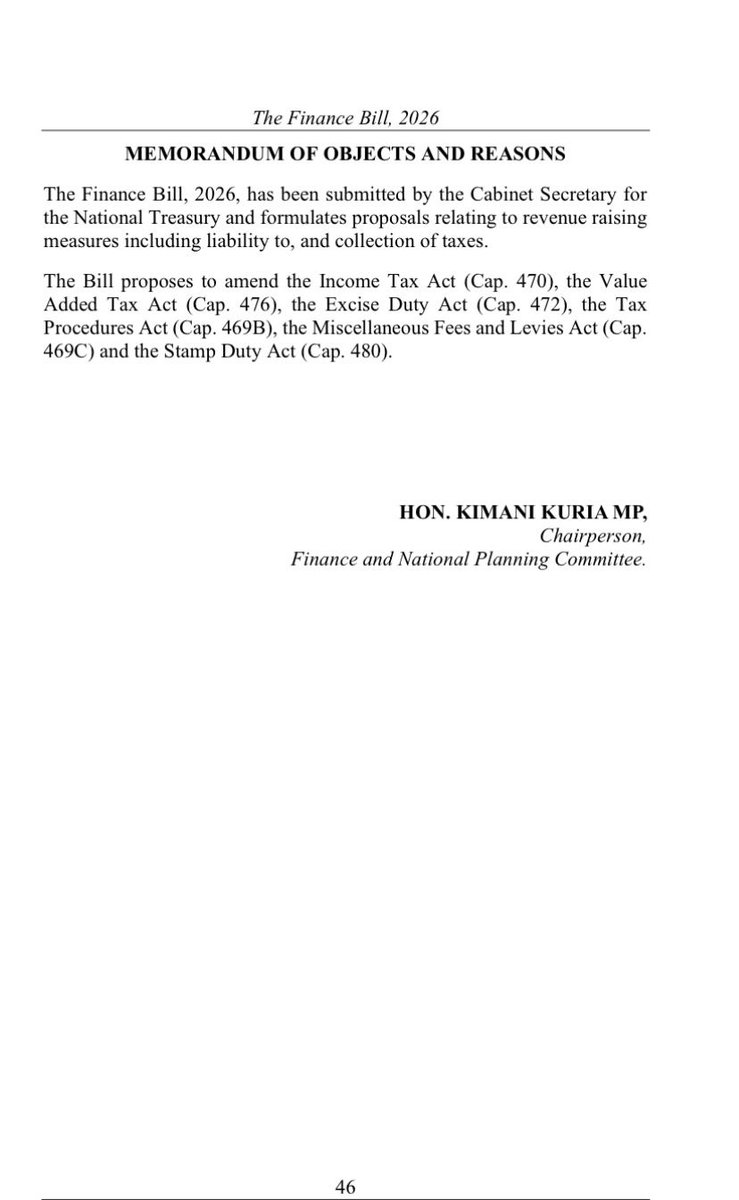
The Finance Bill, 2026 was published on 30th April and is now before Parliament and every Kenyan deserves to know what is in it.
The government targets Ksh3.63 trillion in revenue for 2026/27 and a wider budget deficit of 5.3% of GDP in the 2026/27 fiscal year (July-June) up from 4.7% in 2025/26. These are not unreasonable fiscal objectives but the manner in which the burden of achieving them is distributed is a cause for serious concern.
On tax filing timelines, the Bill moves the income tax return deadline to April 30th which is two months earlier than the current June 30th and compresses nil return filing to January 31st. This reduces the time available for audit completion, cash flow planning and compliance. For small businesses and individual traders, this is not administrative reform. It is an additional compliance cost they can ill afford.
On mitumba, the Bill inserts a new Section 12H into the Income Tax Act which deems profit at 5% of customs value payable upfront before goods are released by KRA as a final tax. A trader importing a bale worth Ksh1 million pays Ksh50,000 regardless of whether they make a profit or a loss. I cannot in good conscience describe this as equitable.
The Bill increases residential rental income tax from 7.5% to 10%. Absent a serious enforcement framework, this will drive non-compliance rather than revenue. The government must fix the enforcement gap before it increases the rate. One without the other is burden-shifting.
On digital financial services, the Bill removes existing VAT exemptions on money transfers and payment processing. These are the tools of financial inclusion that millions of Kenyans including the very people this government says it wants to reach rely on daily. Making them more expensive will not serve the objective of a broader tax base.
By including interchange and merchant service fees within the definition of management or professional fees for withholding tax purposes, the Bill introduces a compliance burden into automated banking processes. That burden will be passed on to businesses and ultimately to consumers.
The amendment to Section 24 of the Income Tax Act empowers KRA to deem at least 60% of a company's undistributed income as dividends for tax purposes. This fails to account for legitimate decisions on reinvestment, working capital and business growth. It is a retrogressive measure that sends the wrong signal to the investors Kenya needs.
A 25% excise duty on telephones for cellular and wireless networks is proposed. A phone is not a luxury. It is how Kenyans bank, communicate, conduct business and access government services. Parliament must interrogate this carefully.
On PAYE, Kenyans were led to expect relief and a restructuring of the tax bands to ease the burden on salaried workers. That proposal does not appear in this Bill. That is not a minor omission. An explanation is owed to every employed Kenyan who was waiting for it.
To be fair, the Bill is not without merit. The reduction of corporate tax for non-resident companies from 37.5% to 30% improves our investment climate. The extension of the tax amnesty to cover liabilities up to 31st December 2025 provides a genuine and welcome pathway to compliance. VAT exemptions on electric buses, bicycles, dialysers, animal feed raw materials and PPP infrastructure are sensible measures. The clarity introduced on trust taxation ensuring beneficiaries are not taxed on income already taxed at the trust level and the recognition of gratuity contributions as exempt income are also steps in the right direction.
Be that as it may, we cannot afford a repeat of June 2024. Parliament must discharge its oversight role with the seriousness this moment demands. They should not merely rubber-stamp what the Treasury has placed before it. Every clause must be scrutinised. Every punitive or ambiguous provision must be rejected or amended.
#FinanceBill2026 #PublicParticipation
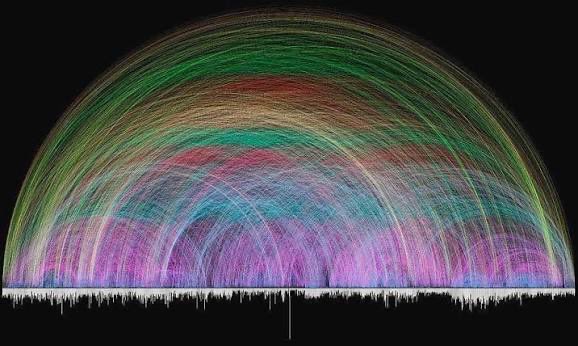
The Bible was written on three continents.
Asia.
Africa.
Europe.
In three languages.
Hebrew.
Aramaic.
Greek.
By over 40 different men —
Shepherds.
Kings.
Prophets.
Fishermen.
A doctor.
Across roughly 1,500 years.
Yet it tells one continuous story:
Creation.
Fall.
Redemption.
Christ.
Different writers.
Different centuries.
Different cultures.
One voice.
Because behind the human hands was a divine Author.
Men held the pens.
But God wrote the story.
My people;
On 14th May, I raised alarm about conditions at Hola Referral Hospital (then referred to as Tana River County Hospital). (Tweet below)
I have since been informed it is the same hospital.
At the time, pregnant women were being forced to fetch their own water, carrying jerricans on their heads, water meant to be used during delivery.
One would expect the Ministry of Health and the county government to act.
They didn’t.
This week, a pregnant woman and her unborn child died in the same hospital, because there was no anti-venom.
I must ask: what is the meaning of calling a facility a referral hospital if it lacks water, drugs, and basic dignity for mothers?
We are constantly told this government "listens."
Is this what listening looks like hearing, then ignoring?
This is not just disappointing.
It is infuriating.
People are dying slowly, quietly, deliberately. Wantam or Tutam William Ruto is killing all of them without mercy.
Not because Kenya is poor.
Not because money is missing.
But because it is being withheld, redirected, weaponized.
SHA owes KNH KSh 5.5 BILLION.
Owes MTRH KSh 2.5 BILLION.
Owes Mathare Hospital KSh 150 MILLION.
KNH owes suppliers KSh 2.3 BILLION.
Yet SHA collects at least KSh 6 BILLION every month from payslip holders people who sweat, struggle, and still believe deductions mean care.
So where does the money go?
Because it is not feeding patients.
It is not paying suppliers.
It is not buying medicine.
It is not saving lives.
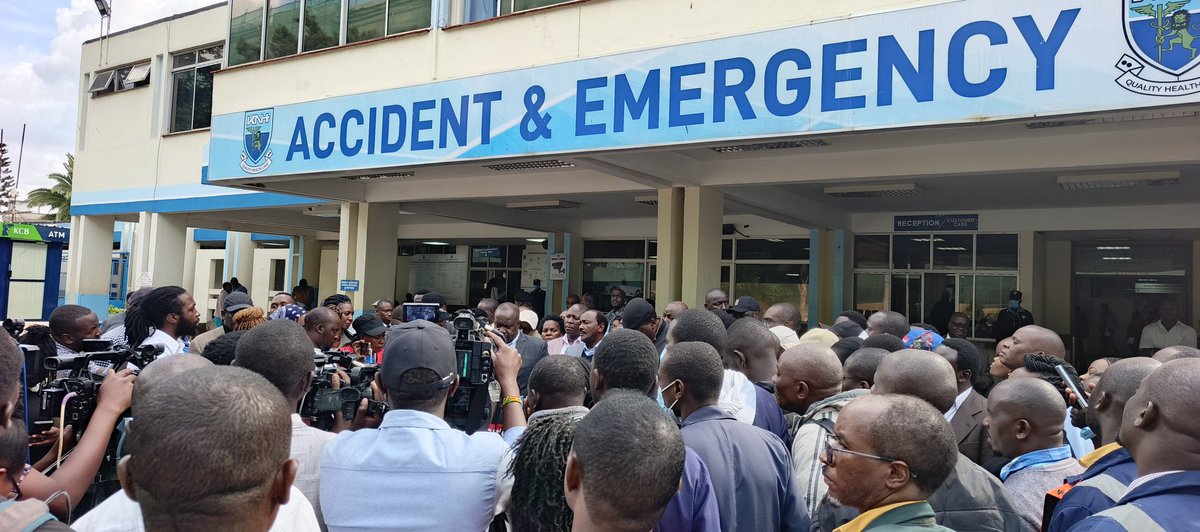
@HonAdenDuale Last week, patients missed food.
Not rumours. Not exaggeration.
Patients in Kenya’s biggest public hospital went hungry because suppliers said enough.
Imagine being sick, weak, scared and then starved by your own government.
KNH collects KSh 40–60 million every single day, but that money is hijacked through eCitizen, locked away like stolen goods.
The hospital can’t touch its own blood.
Treasury refuses to remit funds for daily operations.
This is not inefficiency.
This is economic suffocation.
And while patients starve, State House feasts.
Food. Alcohol. Excess. Takeaways.
No shortages there. No unpaid suppliers there.
To those paid to chant kumi bila break .
No politician will ever lie on a KNH bed.
They rush to private hospitals.
They fly to India to die clean.
They give birth in America.
KNH is reserved for the poor
and under William Ruto, poverty is a death warrant.
This is a government that treats healthcare like ATMs and patients like collateral damage.
They loot @MOH_Kenya, then recycle the stolen money as handouts to the same sick and desperate people during campaigns.
They starve hospitals today
so they can “help” tomorrow.
They kill quietly
so they can bribe loudly.
This is not failure. This is policy.
Under @WilliamsRuto, healthcare is not broken it is being cannibalized.
If you are poor, you are disposable.
If you are sick, you are expendable.
If you rely on public healthcare, you are already marked for neglect.
Hospitals drowning in debt.
Patients missing meals.
Suppliers walking away.
Billions flowing just not to care.
This is not a government.
This is a cartel wearing the national flag.
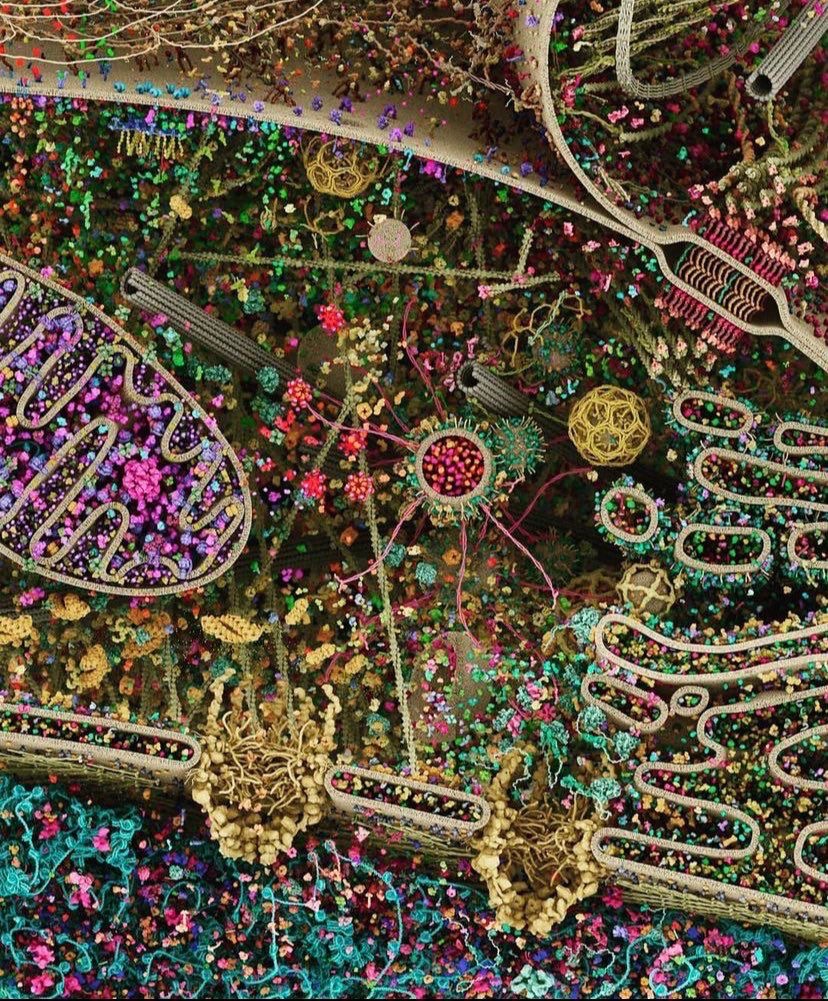
There are 10^80 particles in the observable universe.
The odds of getting just ONE functional protein by chance are about 1 in 10^77.
There are at least 400 essential proteins in the simplest living cell.
I don’t have enough faith to be an atheist.
Dear Lord, I am at a loss for words. The heartbreak, the fury, the fear... I can't describe it, but it overwhelms me. Help!
To the Kenyans who would tell us to just wait for 2027, that maandamano wouldn't help, do you still hold faith in the electoral process??
African innovation wins!!
👏🏾👏🏾 Congrats once more to Elly Savatia, Kenyan entrepreneur who designed app that translates speech into sign language using AI-powered 3D avatars for winning major award for African innovation. #AfricaPrize.