@DrLuetke Über viele Generationen hatte der BMW X3 D einen Tank mit 65-68 l Volumen.
Das neue Modell aus 2026 hat nur noch 60 l.
Jetzt weiß ich, warum.
Nicht gut.
@BratislavDJ Agreed- one key mutation just after Toba eruption made it a successful migration (and introgression of Neanderthals and Denisovans). Only this led to the universal mtDNA we all carry today.
Layed down as a fictional story in my novel „Amurru and the Breath of Beginning“
Yes. It seems so.
„Aboriginal people arrived in Australia 65,000 years ago, much earlier than previously thought
The findings rewrite the story of the first Aboriginal people.“
Aboriginal people arrived in Australia 65,000 years ago, much earlier than previously thought https://t.co/p2FIYXpfsJ
I see the order like this:
1. Primordial egoism is the biological starting point (primate heritage).
2. Culture (imitation) emerges as a minor mutation (blind imitation).
3. Cooperation arises because cultural groups curb egoism through norms and punishment (self-domestication).
4. Language emerges to enable reliable communication within this cooperative sphere, purified of egoism.
5. Intelligence and insatiable curiosity ultimately explode together: The brain grows because the vast amount of cultural information must be processed. And curiosity transforms from a life-threatening risk into the most powerful tool for penetrating, recombining, and further developing existing culture.
@gerhard_zeiler Unter dem Text steht Folgendes:
Disclaimer: This story is fictional and created for entertainment purposes only. Any names, characters, places, or events are fictitious or used fictitiously. No real person or organization is intended to be portrayed.
Great approach.
It may have been the Neanderthals (NTs) who, together with the early humans of that time, Homo sapiens (HS), initiated the “Big Bang” of modern humans between the Levant and East Africa starting 74,000 BP (the Toba eruption), rather than the HS acting on their own.
That’s how I described it in the fictional story *Amurru and the Breath of Beginning*.
Exactly like that ;-)
It is doubtful that the Romans created these stones. Mainly because they had no way of moving them—which is also why they are still in their original location and are not near the Temple of Jupiter.
I think the stones in Baalbek date from a much earlier era, and the Romans built their temple on foundations that were already in place.
These massive stones may have been formed tens of thousands of years ago…
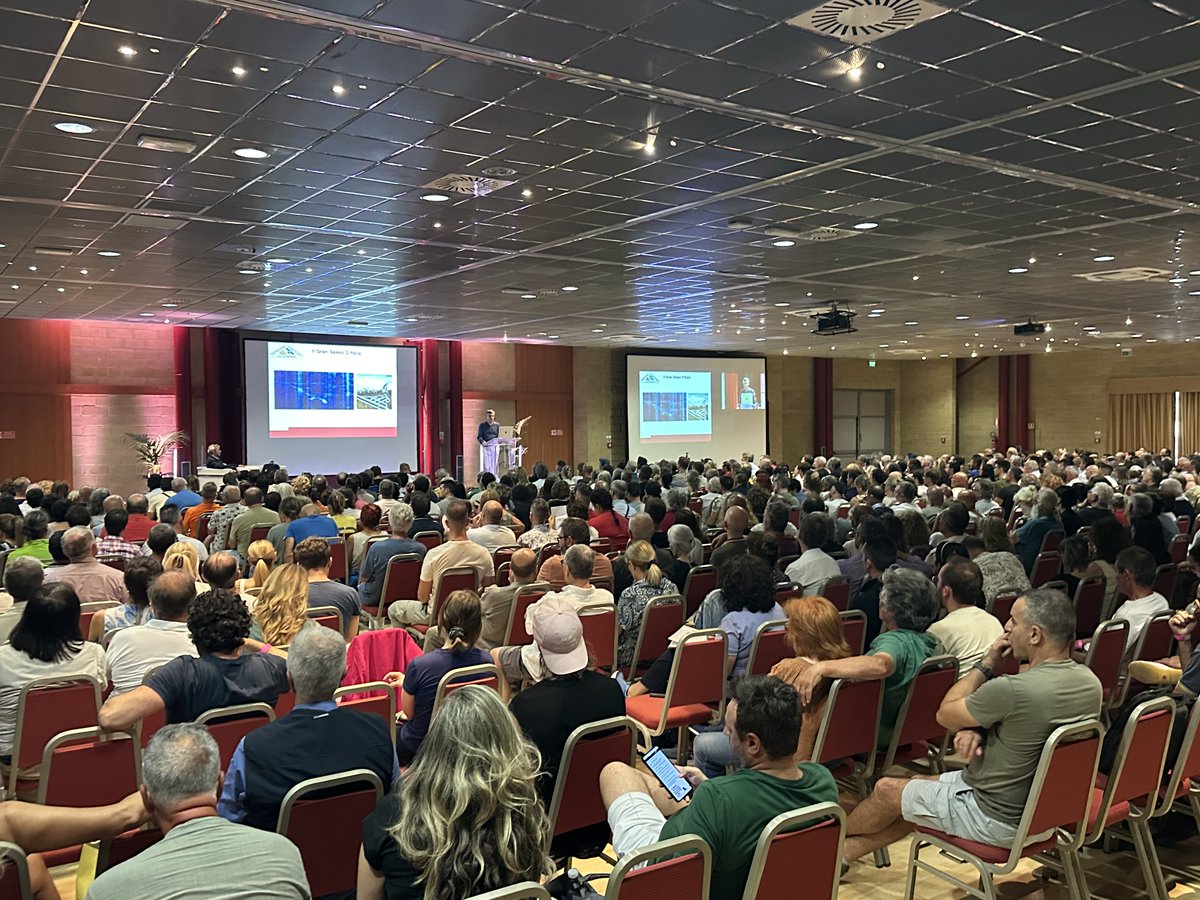
I was in Bologna when Dr. Filippo Biondi presented his theory about a second Sphinx.
What was missing—and still is—is the temple, just as with the first Sphinx. It has neither been found nor discussed.
Only when this important detail is addressed would I even consider the possibility of a second Sphinx. So far, unfortunately, there is no logical basis for it.
Here’s my take on it: The Egyptians of the 4th Dynasty built many structures, including pyramids—except for the gigantic pyramids on the Giza Plateau: Khufu, Khafre, Menkaure, and the Sphinx. These had stood there for tens of thousands of years as eternal symbols of a much older culture—
Thousands of years lie between the creation of the Sphinx and the Sphinx Temple, on the one hand, and the construction of the pyramids of Khafre and Khufu, as we see them today, on the other.
I wouldn't even rule out the possibility that the Sphinx, with its original lion's head, is actually a full cycle of 25,780 years older than the 12,500 BP that is often assumed.
@ScienceMagazine They live on within us to this day. They may have disappeared as isolated Neanderthals, but we—as hybrids of Neanderthals and Homo sapiens—have thus become the modern humans we are today.
If there is a second Sphinx—and eventually there is a certain likelihood of this, though I would have liked to see more in-depth discussion during the Bologna conference when I was there last weekend—now is the right time to address the implications.
- Assuming there is a second Sphinx (SP2), was it there from the beginning? At the same time as SP1?
- When were they built? At the same time as Pyramids 1 and 2, or earlier? If they were built in the same time period as Pyramids 1, 2, and 3, plus the three smaller ones, the symmetry doesn’t really hold up for SP1 and SP2.
- If they were built long before the pyramids, then why two? One facing east, one facing west. Okay- but why not at a straight line? What are the implications of the distance, position, and various heights above ground?
- Was there also a megalithic temple at SP2, like there is at SP1? Nothing about the temple was mentioned during the Bologna conference. The size, shape, and dimensions of the Sphinx temple at the potential SP2 site would have been even easier to detect using SAR technology.
I’m just wondering why this wasn’t investigated. This would have been low hanging fruit.
For symmetry’s sake, there must have been a temple there as well. Otherwise, the concept of the Second Sphinx doesn’t make sense.
- Returning to the age and the image of the head. During the conference in Bologna, I got the impression that the team had apparently identified a head similar to the actual SP1. Really? This would place the official dating of the Sphinx SP1 and SP2 at the Giza complex at 5k BP. Hmm. If so, why doesn’t Egyptian history mention
it? If SP2 features the same pharaoh’s head, this would have been mentioned in the Egyptian history
- If it’s not a pharaoh’s head—which to me seems much more likely—then we’re ultimately talking about a lion’s head or Anubis, with dimensions that fit better. But nothing like this was mentioned in Bologna, and the SAR photos do not show anything like this…
All in all, the Bologna conference can be seen as a kick-off for further discussion, and certainly not as proof of further evidence. This is all very much in the early stages.
But thinking through the implications consistently and logically would be a first step:
Is there a second Sphinx or not? If so, is it really in this location? And where is the associated Sphinx Temple?
#second sphinx #FilippoBiondo_1 #pyramid #cheops
Thank you very much for the impressive press conference, and heartfelt congratulations on attracting over a thousand participants to Castel San Pietro near Bologna for this fascinating topic.
It was an absolute pleasure to meet you, @Filippo Biondi, in person there.
Now the real work is just beginning, and that’s what makes it so exciting. First, the questions of the enormous implications for Egyptian history arise, particularly regarding the planning and construction history of the monuments on the Giza Plateau—assuming there is indeed a second Sphinx at that location.
Next comes the excavation and verification of the Sphinx��� head’s shape (Pharao or Lion?), and the question of whether the Sphinx and the pyramids were built simultaneously, or whether the two symbols were constructed separately—with consequences for historiography across different eras that are at least as far-reaching.
What fascinating discoveries lie ahead of us!
#BolognaConference #Egyptology #GizaPlateau #Archaeology #HistoryInTheMaking #FilippoBiondi @Filippobiondi_1
Summer Solstice—today is June 21, the longest day in the Northern Hemisphere. Exciting news will be presented to the global public today at the press conference in Bologna, Italy. Filippo Biondi will report on a second Sphinx that fits seamlessly into the Giza complex from a geometric perspective.
Fantastic. It’s just 5 hours away.
I’m thrilled to be here live on-site
#secondsphinx #biondi #filippobiondi #bolognapress #archaeology #solstice2026