My brilliant med student asked me to explain correlation, causation, confounding &collider bias. I used the following ex… so sharing here in case anyone finds it helpful!
PS -I have learned much from @dnunan79@Catalogofbias - a great resource for EBM. hopefully he approves😅
Here’s a review of DNA extraction methods developed for point-of-need DNA-based testing that could be useful for DNA testing practitioners, students of PCR, fieldwork researchers, and anyone interested in DNA extraction chemistry.
The authors, Lee et al. (2023), review methods suitable for use outside of conventional laboratories, ranging from quick and dirty extractions to affordable and easy-to-use extraction testing devices for mass distribution, such as lab-on-a-chip devices.
They also dive into the chemistry and processes behind each extraction option with referenced examples, comprehensive tables, and some great illustrations of the different methods. So this could be useful even if all of your work is lab-based.
Importantly, the authors examine recent DNA extraction methods devices in the context of the World Health Organisation’s REASSURED criteria for point-of-need testing, and assess their usefulness for users within this framework.
You can read the article here:
Lee et al. (2023). Chemical Trends in Sample Preparation for Nucleic Acid Amplification Testing (NAAT): A Review. Biosensors, 13(11), 980.
https://t.co/5gyoj3ndzn
Unfortunately, the authors didn't cover filter paper-based DNA extraction methods, which is a super-cheap and easy method which has been suggested as meeting numerous REASSURED criteria. You can find an example of this method below:
Aula et al. (2023). Optimisation of the DNA dipstick as a rapid extraction method for Schistosoma japonicum in infected mice samples and spiked human clinical samples. Infectious Diseases of Poverty, 12(1), 71.
https://t.co/4QOVUOgdsL
***
https://t.co/5gyoj3ndzn
🔬#PhDposition@LeibnizIGB! "#Microbiome-Mediated Adaptation of #Daphnia to Pollution" Are you enthusiastic about evolutionary and microbial ecology, especially in the context of #UrbanEcology? Join our dynamic interdisciplinary project. Apply by 18/12/23: https://t.co/kKNN3J0dOE
We are proud to announce our new paper:
"Exposure protocol for ecotoxicity testing of microplastics and nanoplastics"
October 2023Nature Protocols
DOI: 10.1038/s41596-023-00886-9
Despite harmful effects of #microplastics and #nanoplastics, there are no harmonised guidelines for testing their ecotoxicity. Research team with
@LeibnizIGB has published protocols
@NatureProtocols to assess toxicity in soil and aquatic #ecosystems > https://t.co/NJFbpsg8ic
📬 Why has #biodiversity improvement stagnated in European #rivers? Why are #ponds particularly suited as nature-based solutions? And how can animal welfare in #shrimp#farming be improved? These and more questions are answered in our IGB #newsletter 👇https://t.co/EiiDfKowYR
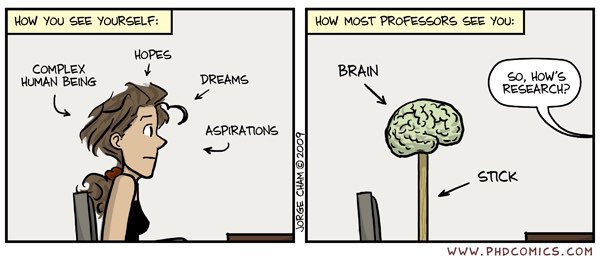
DO interview your potential advisor if you apply for a PhD or postdoc.
This can save you years of pain, lost dreams and wasted time.
❗ Most students are focused on receiving the offer. But this is the biggest mistake one can make when looking for a position.
▫️
NOT every lab is friendly and has a good mentor in charge. In fact, most professors don’t know how to mentor (as mentorship is not prioritized in academia).
AFTER you get an offer, you can avoid possible problems during your PhD/postdoc through this:
1️⃣ Interview your advisor about the approaches and opinion on:
1. Research advising (how your advisor understands it and how it’s done in the group).
2. Mentoring and personal development during PhD/postdoc.
3. Collaboration - how they do it and what role students/postdocs play in it.
4. Development of your independence and confidence in research.
5. Your participation in conferences and workshops (how often and which types of conferences).
6. How they prepare research publications – authorship, quality, time per manuscript, contributions, etc.
.
2️⃣ Make sure you can talk to the current students one on one (online or in person):
1. Ask about the group culture and support from the advisor
2. Hear their opinion on publication practices and conferences
Ultimately, don’t leave until you understand how you can fit in this group.
.
3️⃣ Talk to alumni (at least 3-4 people):
1. Check out the advisor’s website and find a list of alumni.
2. Google the names of those who went into academia and industry (to hear both sides).
3. Reach out via email or LinkedIn, explain your intentions and politely ask for a quick call.
.
🔴 Why is it important?
Because your advisor is the ONE who can shape your professional skills, motivation and perception of science.
Because the right mentor FORGES your critical thinking and vision.
And a careful search of such an advisor is the starting point.
#AcademicTwitter #AcademicChatter #phdvoice
🍤 Do you enjoy eating #crustaceans such as #shrimps? These are often farmed on a large scale in #aquaculture. But what about #animal welfare and #sustainability? IGB researcher Sven Würtz explains why we need evaluation criteria for crustacean #farming: https://t.co/dwWzElv9W1