The biggest mistake beginners make is buying software before proving the offer.
And honestly, this is where a lot of people burn cash too early.
A recent startup guide noted that 42% of startups fail because they build something the market does not really need. That means the real problem is usually not the tool stack. It is the offer itself.
If nobody wants the offer, then:
- a funnel will not fix it
- email automation will not fix it
- a premium platform will not fix it
What does work first?
Start simple:
1. Define one clear problem
2. Test one offer with a basic landing page
3. Collect emails or preorders
4. Only then upgrade your software stack
This is why lean tools often make more sense in the beginning. They reduce risk, keep costs low, and help you move faster without overthinking every feature.
According to recent business research, 92% of business owners believe the right digital tools improve success, but right does not mean expensive. It means fit for your stage.
So if you are pre-revenue, do not build a complex machine before you know the engine even works 🚀
Tung AMA exists to help beginners think smarter, not spend harder.
What is one tool you bought too early? Drop it in the comments, I want to hear your story.
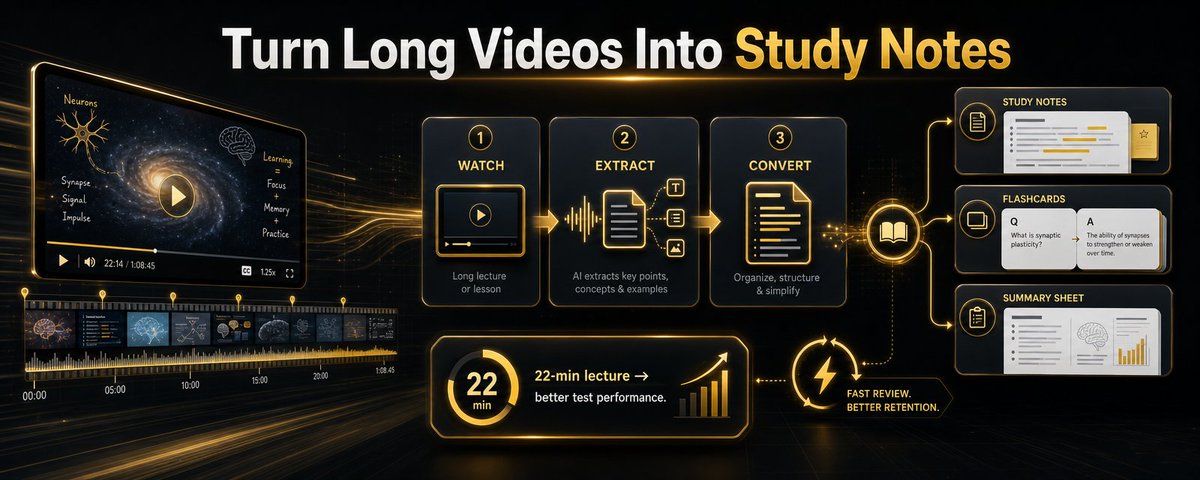
watching a long video is easy.
turning it into usable notes is the real bottleneck.
and it matters: note-taking during a 22-min stats video improved test performance. similar gains showed up in 16-min programming and 23-min technical videos.
simple workflow:
1. watch with intent
2. capture key ideas, definitions, steps
3. convert into questions or flashcards
4. review notes, not the whole video
that’s how 1 lecture becomes study notes, revision prompts, and fast summaries.
want a faster video-to-notes system? Please leave a comment.
You do NOT need a $200/month stack to start online.
In fact, one 2024 business cost breakdown notes you can get an online business up and running for under $300 if you use free tools the smart way. That means the real barrier is not money, it is confusion.
Most beginners get stuck because they think they need:
- a funnel builder
- email software
- course hosting
- design tools
- automation
- analytics
On day one, you do not.
Start with the minimum viable stack:
- One free content tool, like Canva
- One free AI helper, like ChatGPT
- One social platform to get attention
- One simple landing page or free plan platform
- One email capture system
That is enough to test an idea, collect leads, and learn what people actually want.
The fastest way to waste money is buying premium software before you have proof. A simpler setup lowers risk, reduces overwhelm, and helps you move faster.
Remember, tool stack first is the wrong order. Offer first. Audience next. Tools later.
If you are a beginner, this is your permission to start lean, stay focused, and build momentum without burning cash. 💡
What is the one tool you keep seeing people overbuy before they even launch?
Most people don’t need more motivation. They need fewer tools.
A lot of beginners think they are “stuck” because they lack discipline. But very often, the real problem is decision fatigue.
When you are trying to start online and you see funnels, email software, course platforms, CRM tools, booking apps, automation tools, and AI tools all at once, your brain does what any smart brain would do, it pauses.
And the data shows why this matters. Around 90% of startups fail, 42% because there is no market need, and 29% due to cash flow problems. For first-time founders, the odds are even tougher, with success rates near 18%.
That is why a simpler stack is often the smarter move. 🧠
Start with just 3 essentials:
1. A way to capture leads
2. A way to follow up automatically
3. A way to collect payment
Everything else is optional at the beginning.
Most beginners do not fail because they picked the “wrong” software.
They fail because they spend too much time choosing tools instead of testing an offer.
If you want to launch faster, reduce risk, and stop overthinking every platform, start simpler.
What is the one tool you think beginners waste the most time on?
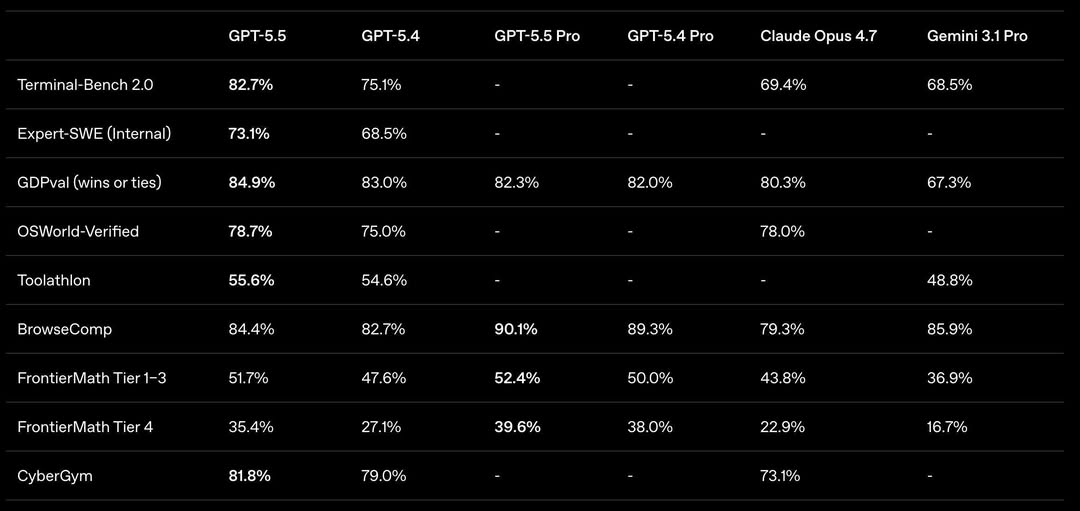
OpenAI has just launched the GPT-5.5 model with many outstanding features.
This represents a new step forward in how humans work with computers, especially in complex tasks such as writing and editing code, online research, data analysis, creating documents and spreadsheets, operating software, and coordinating multiple tools to complete tasks.
The distinguishing feature of GPT-5.5 is its ability to understand intentions faster, handle more parts of the work autonomously, and maintain progress in long tasks.
Instead of requiring step-by-step instructions, users can provide the model with a multi-part request, and GPT-5.5 can independently plan, use tools, check results, handle ambiguities, and continue working until completion.
GPT-5.5 significantly improves performance in fields such as automated programming, knowledge work, and early-stage scientific research. Despite being more intelligent, the model maintains a response speed comparable to GPT-5.4 in real-world use, while using fewer tokens in many Codex tasks.
OpenAI states that GPT-5.5 is released with the strongest security measures to date. The model has been evaluated across multiple security testing frameworks and further tested in sensitive capabilities such as cybersecurity and biometrics.
GPT-5.5 is currently being deployed to Plus, Pro, Business, and Enterprise users in ChatGPT and Codex. GPT-5.5 Pro is for Pro, Business, and Enterprise users. The API has also been updated as announced on April 24, 2026.
📷 Key points:
In terms of programming, GPT-5.5 is presented as OpenAI's most powerful coding agent model to date. The model achieved 82.7% on Terminal-Bench 2.0, 58.6% on SWE-Bench Pro, and surpassed GPT-5.4 on Expert-SWE, an internal assessment for lengthy programming tasks.
In knowledge-based work, GPT-5.5 can support the creation of documents, spreadsheets, slides, operational analysis, financial modeling, and the transformation of raw data into action plans. OpenAI reports that over 85% of its personnel are using the Codex weekly across various departments such as software engineering, finance, communications, marketing, data science, and product management.
In scientific research, GPT-5.5 shows improvements on tests related to genetics, quantitative biology, bioinformatics, and mathematics. A notable example is the internal version of GPT-5.5 which supported the discovery of a new proof related to Ramsey numbers in combinatorial learning, which was then verified using Lean. Regarding security, OpenAI emphasizes that GPT-5.5 has higher cybersecurity capabilities than GPT-5.4, and therefore comes with stricter control layers. The goal is to allow legitimate users to utilize AI for cybersecurity while limiting the risk of abuse.
Regarding API pricing, GPT-5.5 is announced at $5 per million input tokens and $30 per million output tokens. GPT-5.5 Pro is priced higher, at $30 per million input tokens and $180 per million output tokens.
Source: Compiled
Hello my friend...
I'm on my affiliate marketing journey.
I have limited time and am tired of searching for product information on ChatGPT and other fragmented prompts.
I'm learning about automation to automate my manual tasks using n8n.
And I'm in the process of learning and implementing an automation process for my manual tasks.
The idea is to create prompt sequences from the ChatGPT model and customize the prompts in the AI Agent on n8n.
I've already set up worklow research.
Next, I'll set up AI Agents for:
- Customer profile and journey setup
- Content pillar idea generation from customer problems setup
- 30-day content plan setup
- Content writing and image creation setup
If you're also just starting out like me, let's continue!
As long as you don't stop, you will reach your goal.
@trentjhughes Impressive trajectory.
Love the emphasis on hiring, accountability, and momentum.
Curious how you balance speed with depth in the early stages any specific interview questions or signals you rely on to spot problem solvers?
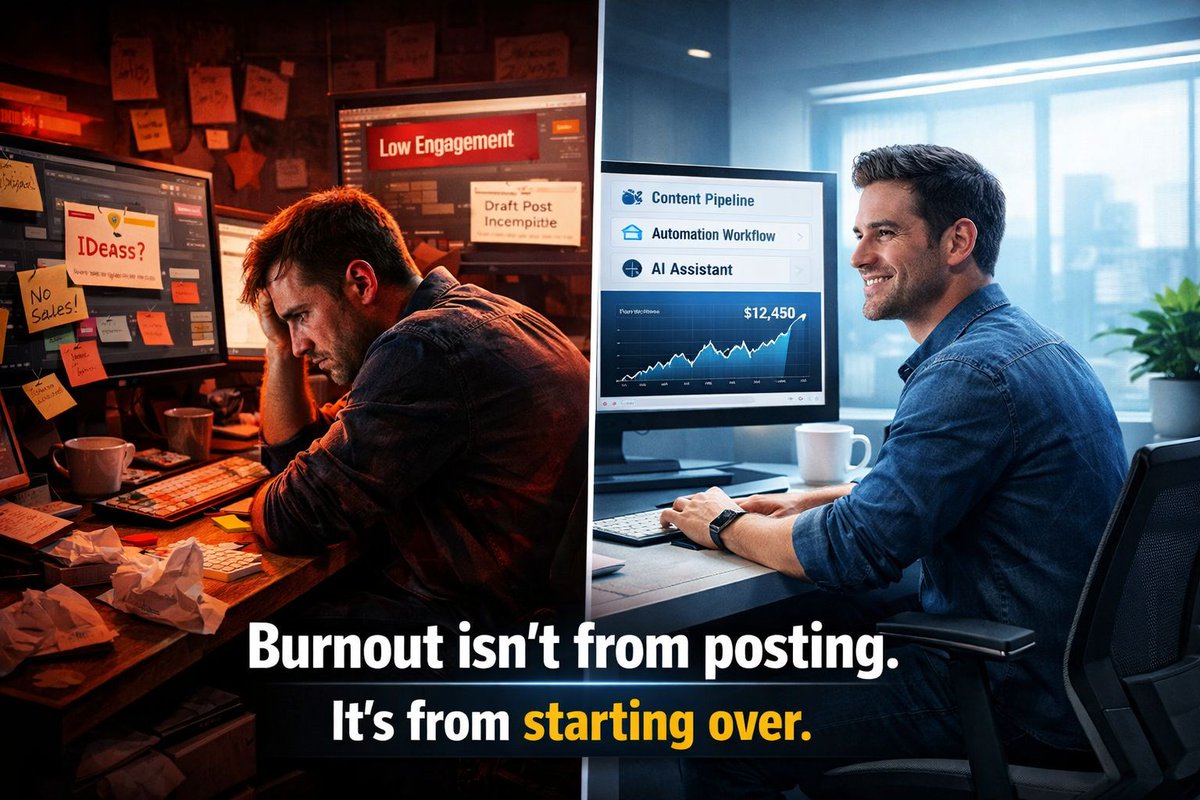
Content burnout doesn’t come from posting too much.
Most people misunderstand burnout. It’s not volume. It’s friction.
You don’t burn out because you post often.
You burn out because every post feels like starting from zero.
Think about your process:
👉New idea
👉New structure
👉New wording
👉New effort
Every single time.
That’s not sustainable.
Even if you’re motivated, your system is broken.
High-level creators don’t rely on motivation.
❌They reduce friction.
❌They reuse inputs.
❌They build systems.
The moment you stop starting from scratch
is the moment content becomes easy.
Be honest… are you building a system, or just chasing ideas?
@navi_Ai2 I’ve felt this before ghost work in the shadows.
If you’re comfortable sharing, what part of the project felt most underappreciated?
Curious how you’d recognize the invisible contributors.