Fanatic cricket follower!
Test match is ❤️
#Sports teaches life lessons !
an Accidental but equally passionate RADIOLOGIST!
hugely influenced by Vippasana!
Thank you for your reply sir...great to know what and how it goes behind d scene...
Following your since childhood ! great admirer of you work🙏🏼wish to meet you someday..
#Legend
When I spoke to him last time I asked him which language he was most comfortable in. He said any of those but settled on Hindi, so we did the interview in Hindi. Accordingly I started in Hindi tonight thinking he would be more comfortable but when he answered in English, I moved to that. The choice of language is always dependent on what the person being interviewed is happiest with
IF YOU DIED TOMORROW, YOUR FAMILY WOULDN'T BE ABLE TO ACCESS A SINGLE THING YOU OWN DIGITALLY.
BANK ACCOUNTS. PASSWORDS. CLOUD STORAGE. ALL OF IT PERMANENTLY LOCKED AWAY.
HERE'S HOW TO FIX IT IN 30 MINUTES:
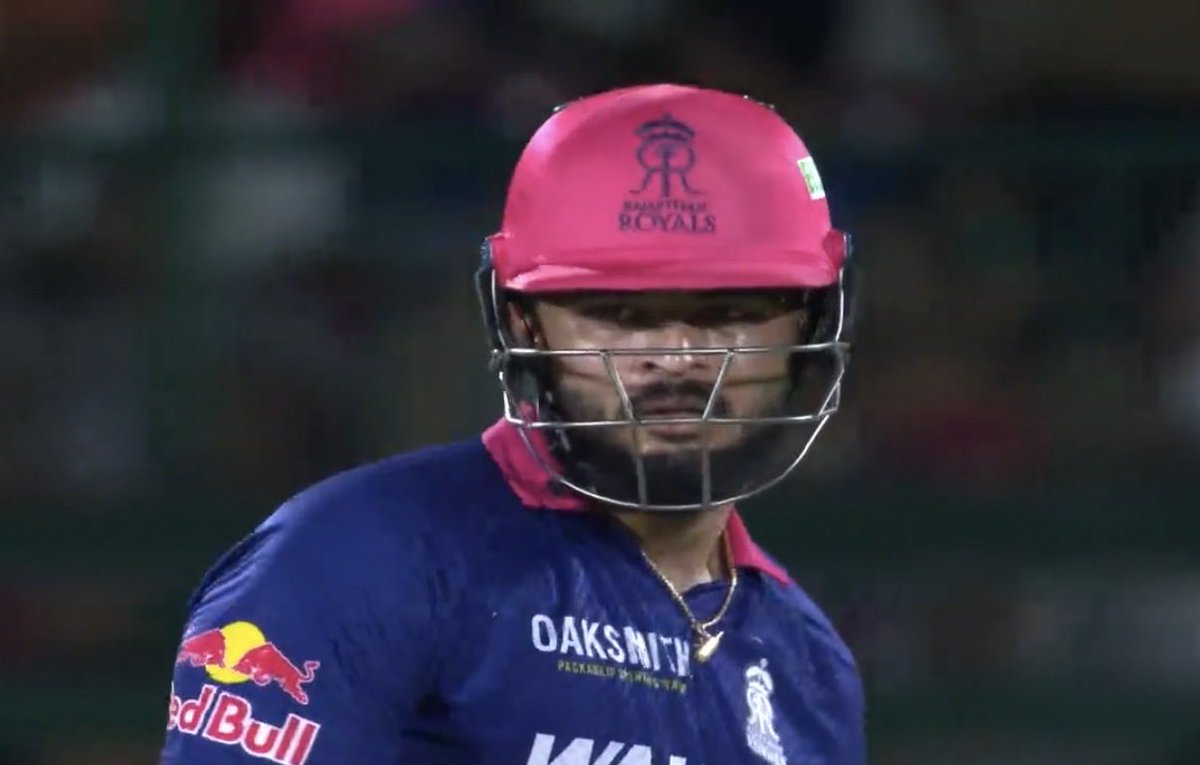
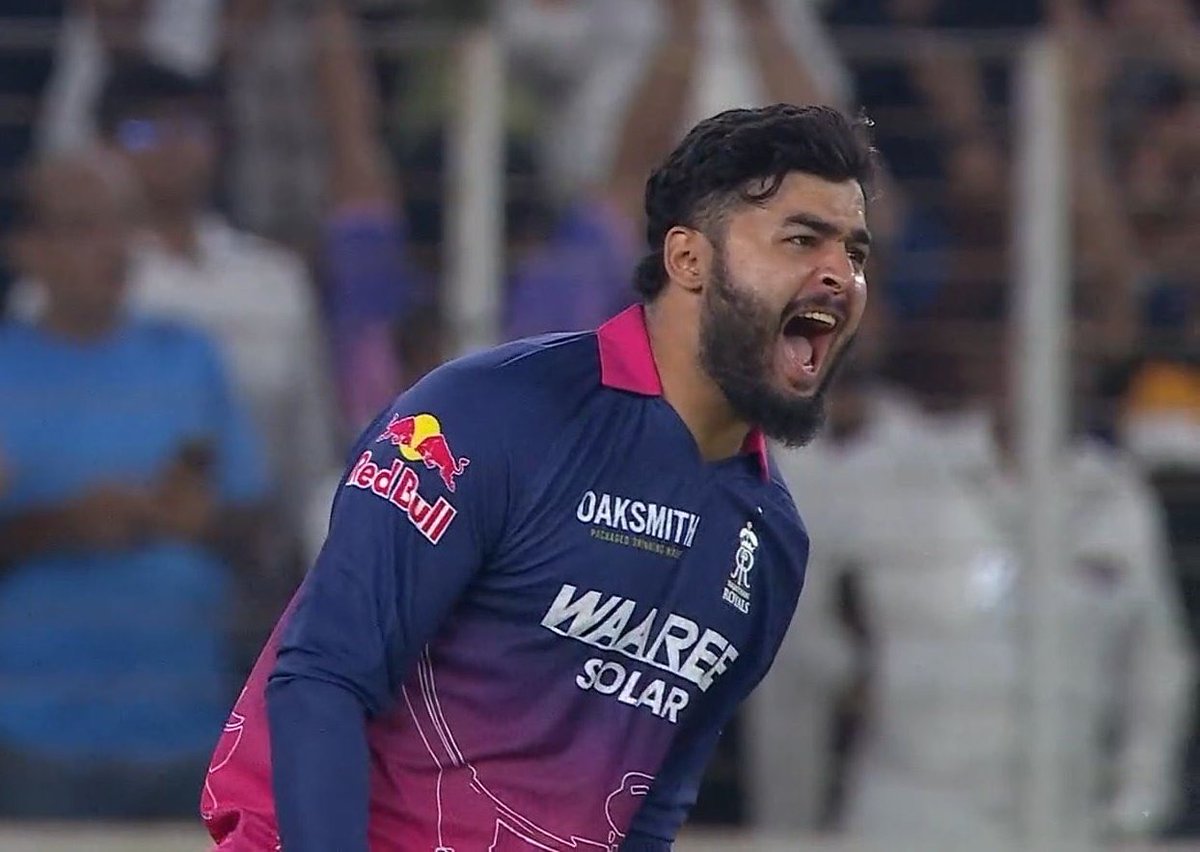
Read a lovely @ESPNcricinfo interview of Riyan Parag by Nagraj Gollapuddi.
After Virat Kohli and R Ashwin, the most articulate young Indian cricketer by a distance.
If Riyan can match Kohli's international body of work by even 50 % Indian cricket will benefit.
With @rajasthanroyals ownership changing hands, the new consortium of owners will also get an idea how Riyan thinks from this long form interview. #Cricket
The Soros gang wanted to embarrass the Indian prime minister in a foreign land. One Indian who is Christian by birth shut everyone's mouth; he was so effective that the planted journalist ran away in shame. My prime minister doesn't need to respond to such presstitutes; it's below his dignity. There are enough CB George in India to take on our ideological enemies, both inside the country and worldwide. United we stand divided we fall.
So the reason is that, according to the new rule, only players named in the 16 member match squad can go onto the field. The rest have to stay in the dugout.
Riyan is in the Impact Sub list so that he can move around the field and guide the players.
and many advocates @ParagRiyan captaincy is the reason RR lost the SRH match...(ignoring the missed opportunities)...PITCH needs to have more balance bw bat and bowl...else it's boring
Really impressed with Riyan Parag’s leadership here. Big call to decide whether Archer bowls the 19th or the last and he nailed it.
Backed more experienced bowler with high pace in the penultimate over, and it completely shut the game down (just 4 runs). That’s where matches are won.
Easily one of the best games in @IPL history. Archive this one! @ParagRiyan , you have got Balls of steel and a big future ahead, especially in a leadership role. Outstanding temperament. Well played! IPL Zindabad! @rajasthanroyals#GTvsRR#IPL2026
How Central Guwahati Changed And Why We Must Stop Blaming “Outsiders”
My grandfather, sometime in the 1950s, bought land in Central Guwahati from one Bhatti Babu, who local people say was among the biggest landowners in the city. Some even say Sarabbhati gets its name from him. He was the local dealer of liquor made in the area and had huge stretches of land, reportedly given to him during the British period. My grandfather also bought a piece of land in Fancy Bazar and set up a shop there. That shop still exists under our family, though barely. At one point, our family had a real economic stake in the heart of Fancy Bazar.
During the Assam Agitation, my grandfather was deeply moved by Prafulla Kumar Mahanta. He would collect money and resources for the student movement through the businessmen of Fancy Bazar. He used to call PK Mahanta “Mahapurush.” Even when the darker truths about Mahanta slowly began to emerge, my grandfather refused to believe them. He lived in denial. Looking back now, I sometimes feel that denial was not just his personal flaw. It was a symptom of something much larger in Assamese society.
Cut to the 21st century, my father moved the family to Dispur. Today, we are voters of the Dispur constituency. Our shop in Fancy Bazar is merely surviving, and none of us ever really wishes to return to that ancestral part of the city. The old property has been rented out to non-Assamese traders who now do business ironically in Fancy Bazar. That, in many ways, is the reality of Old Guwahati. The part of the city that was once the entry point for migrants into Guwahati and once held so much Assamese economic presence, is no longer aspirational to the next generation of Assamese families.
And that did not happen overnight. It happened because the reason people came to Guwahati changed. Once upon a time, migrants came here largely for business. But after the Assam Agitation, the Assamese middle class increasingly began to see government jobs as the highest form of security, prestige and power. Slowly, our collective obsession shifted from trade and enterprise to bureaucracy. The dream was no longer to build a business in the city. The dream became to secure a government post, enter the system, and occupy the machinery of the state. In many ways, filling the bureaucracy became the only socially respectable way to assert hegemony.
Meanwhile, commerce was quietly abandoned.
The same story repeats on my maternal side in Bharalumukh, where our family has roots linked to Rohini Kumar Choudhury, one of Assam’s tallest nationalist leaders. Today, most of those ancestral lands have been handed over to builders. Apartments stand where old homes and family legacies once did. The buyers are mostly from the business class, and yes, many of them are non-Assamese. Except for our ancestral home, much of that old world is gone.
The reason is not very complicated. Assamese families in Central Guwahati simply could not keep pace with the business class. They could not compete with communities that treated business not as an individual hustle but as a collective family project, where each generation protected and expanded what the previous one built. For many Assamese families, the easiest way to generate wealth and sustain status became monetising land. Sell the land. Rent the shop. Give the plot to a builder. Move out. Ask the children to study for APSC, bank exams, engineering or an MNC job in Bangalore. That became the new model of success.
I still remember buying sweets from Choudhury Sweets near Fatasil Ambari, an Assamese-owned sweet shop that was part of the memory of that old Guwahati. By the time I reached middle school, it was gone. And that story is not unique. The Assamese owned businesses in Panbazar from where I used to buy cakes and chocolates, are all gone! None of the uncles are chewing paanon the footpath anymore.
Many Assamese-owned shops across Central Guwahati were either sold off or rented out because the next generation simply did not care to take over. They had other aspirations. But not the kind that allowed us to retain a stake in the economic core of our own city.
And now, to hide from our own failures to remain relevant as a business community, the easiest thing for us to do is to blame the “Baniya” class. That has become our comfort zone. But the truth is far more uncomfortable. What we are seeing today is also the fallout of a short-sighted Assamese nationalism that taught us how to identify outsiders, but not how to build lasting economic power. It gave us slogans, sentiment and suspicion, but it did not build a strong entrepreneurial culture. It made many of us emotionally defensive and economically fragile.
As a student of Don Bosco, Panbazar, another institution rooted in Central Guwahati, I grew up with non-Assamese friends. Many of them came from families where business was protected like an inheritance and expanded like a duty. They worked together as a family unit. They have also created employment for Assamese youths and I myself have worked under them and learnt a lot about professionalism and work culture.
In our Assamese family setups, often the first thing we do after marriage is divide the household into another kitchen. More separation. More expenses. Less pooling of resources. Less collective planning. Less continuity.
This write-up is not to justify a non-Assamese person becoming the next MLA of Central Guwahati. That is not the point. The point is that if we are serious about understanding how Central Guwahati changed demographically, commercially and politically, then we must first have the courage to perform a postmortem on ourselves.
Because communities do not lose space only because others enter it. Sometimes, they lose space because their own next generation no longer wants to stay, build, compete and preserve what was once theirs.
And unless we are willing to confront that truth, we will remain stuck in the same victim complex, forever blaming the outsider for what was also, in no small measure, our own failure