Our undercover reporter, Chris Atkins, posed as a far-right journalist at the Reform Conference and got thrown out for asking difficult questions about Farage's corruption scandal @scatatkins
Reporter: Some members of the Jewish community, including Democratic Congressman Josh Gottheimer, were alarmed by the language you used at the rally last week, calling AIPAC monsters who move dark money.
Mamdani: I want to be very clear. We’re talking about a status quo where children are being killed on a daily basis. More than 1,000 Palestinians have been killed by the Israeli military since the so-called ceasefire.
Even an Al Jazeera journalist, Ahmed Wishah, was killed this past Saturday by an Israeli strike. And when I am speaking about AIPAC, I’m speaking about an organization that has been supportive of the status quo, that has fought any attempt to actually deliver safety to people not just in Palestine but, frankly, throughout much of the region.
And it is a status quo of immorality. It is one that I will not accept. And when it comes to the way in which they defend the status quo, oftentimes they defend it through direct contributions, as we are seeing right now in New York 13.
Oftentimes they also support the status quo through dark money, by funneling money that would have previously come directly from AIPAC through other organizations whose contributors’ identities are only made clear after an election.
And I think it is important that when we ask ourselves how such death and destruction is happening overseas, we also name those who allow it to take place.
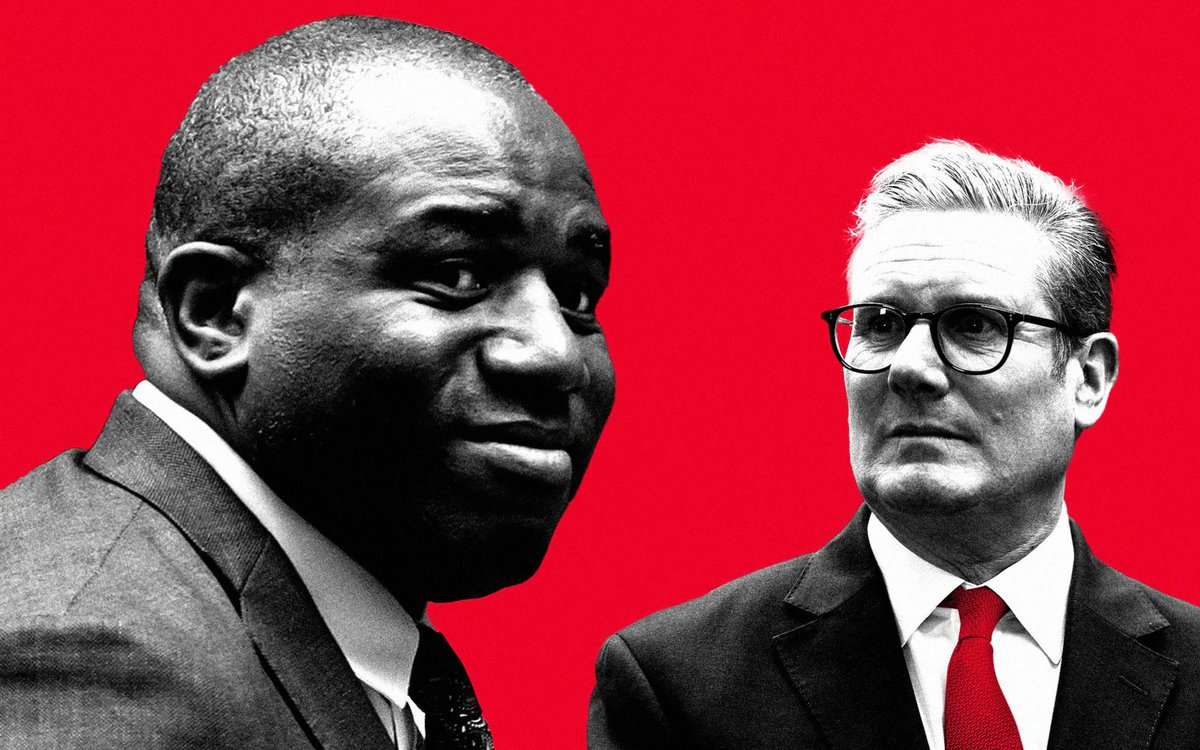
Keir Starmer was not merely a disappointment. He is a mendacious figure of ethical decrepitude, a man who won the Labour Party leadership based on promises that he jettisoned five seconds after winning - a Labour leader who dared banish from the Labour Party not only his predecessor but also remarkable human beings like director Ken Loach - the gentleman who has taken the historic Labour Party and transformed it into a vessel for the very oligarchy it was elected to restrain.
Consider the litany of Starmer’s moral and logical failures. He promised a 'different Britain', yet his actions were a masterclass in Tory-lite politics—using the same maxed-out credit card analogies that once served the austerity brigades to justify his own failure of vision. He promised a human rights lawyer’s approach but he embraced a racist-lite version of Farage.
On Europe, Starmer promised Brexiteers that Brexit is Brexit yet stood before those who yearn to rejoin the European Union, winked at them to make them feel that Britain would gradually reconnect, even rejoin, with the EU while offering nothing of substance. This is not leadership; it is a fraud.
And then there's the manner in which Starmer and his government rushed to offer Israel unequivocal support in pursuing its genocide in Gaza, sacrificing precious political and civil liberties in the UK by imprisoning grandmothers, priests and peaceful activists who dared support Palestine Action, an organisation that Starmer and his minions proscribed as terrorists for practising the usual activist tactics of trespassing to spray paint military planes that had demonstrably aided in the genocide. To add insult to injury, Starmer performed the diplomatic pantomime of recognising a Palestinian state, in a manner that ensured it would never happen.
But above all else, this is a government that has learned nothing from the post-2008 era. Starmer and his Chancellor are playing the same tired austerity game while enabling and empowering the Finance Curse perpetrated by the City of London, throwing in forgood measure cuts in international aid to fund a military spending trickle under the guise of a "Strategic Defence Review" . It is the same old doctrine: austerity for the masses, socialism for the financiers and the arms dealers.
History will remember Mr Starmer as a man without conviction, a Prime Minister who offers not a shred of honesty, but merely the cruel illusion of change. He is ethically decrepit because he had chosen, consciously, to abandon principle for power. And for that, history will indict him. Good riddance, I say.
https://t.co/sGfebPkDXR
Wow.
Mocking and ‘stripping’ Muslim women in niqab at a so-called “patriotic” march tells you everything you need to know about what this movement actually is.
Not pride in Britain.
Not culture.
Not unity.
Just humiliation, hostility, and an artificial obsessive hatred directed at Muslims.
They chanted “take it off” while stripping themselves in front of cameras.
Think about that for a second.
A group (led by a Mossad agent with a fake name) claiming to defend “Western/Christian values” publicly degrading religious women.
These people constantly claim they’re “saving the country” while behaving in ways that destroy any sense of dignity, cohesion, or mutual respect.
These are distraction movements built on hatred and they always need a target.
Today it’s Muslims.
Tomorrow it’ll be someone else.
BUT the point is that it will NEVER be the Epstein class. The people who funded this event.
The billionaire who turned on Charlie Kirk personally gave 6 FIGURES for this event….
Ask who benefits from constant social division and manufactured tension?
While ordinary people are pushed into cultural conflict the political and financial elite continue consolidating power quietly in the background.
Wake up.
Westminster may finally be about to have the argument it has spent 40 years avoiding.
If Andy Burnham returns to Parliament, the political class will know how to cover it. A leadership drama. Who is up, who is down, whether Keir Starmer can survive, whether Labour is once again turning inward. The familiar machinery of Westminster psychodrama will whirr into life.
That framing misses the larger point. Burnham’s possible return matters not because of what it says about Labour’s leadership, but because of what it reveals about the British state: what it can still do, what it has forgotten how to do, and what kind of country it must become if it is serious about resilience.
Britain is finally having a more serious conversation about national security. The Strategic Defence Review, the pivot back towards Europe, the recognition that hybrid warfare turns citizens, infrastructure and civic institutions into part of the front line: all of it marks a real shift in how the state thinks about its own survival.
But at the centre of that conversation lies a question that the defence establishment, and most of Westminster, still does not want to answer. What kind of society do you need to be before resilience is possible?
Finland is now the model everyone cites. Comprehensive security. Whole-of-society defence. Civilian preparedness woven into military planning. British strategists admire the Finnish system and ask how it might be copied. But the admiration stops short of the uncomfortable question: why does it work there?
The answer is not geography or history or some mysterious quality of Finnish national character. It is structural. Nearly 80% of Finns say they would defend their country if attacked. In Britain, the figure is closer to 33%. That gap is not an accident. It exists because Finland has spent decades building a society in which people have a genuine stake in what they are being asked to defend. Energy is affordable. Housing is available. Public services function. Institutions command trust. The Nordic welfare state is not a sentimental add-on to Finnish security policy. It is the foundation of it. You cannot ask people to defend a country that does not work for them.
Britain has spent 40 years building the opposite. The privatisation of essentials – energy, water, transport, housing – transferred wealth upwards from households to shareholders while making the basics of everyday life more expensive. The state, stripped of the tools to control costs at source, has been reduced to compensating after the fact.
Out of every pound the Government spends on housing, 88p goes to subsidising private rents. Just 12p goes to building homes. When energy prices spiked in 2022, the Government spent £40bn in a single winter cushioning the blow, not because it had a resilient energy system but because it lacked one. Debt interest now consumes more than £100bn a year. Britain has the highest debt servicing costs in the G7: the compounding price of financing failure rather than eliminating it at source.
This is what bond market dependency actually looks like. It is not an abstract fiscal condition. It is the consequence of a state that has been stripped of the supply-side tools that would let it cure the problems it now pays, indefinitely, to manage. And here is the paradox the Treasury refuses to confront. The countries that borrow most cheaply are often those that have retained the public investment model Britain abandoned. The spread between UK and Dutch borrowing costs has widened sharply not because markets fear public investment, but because they have lost confidence in a model that borrows to subsidise private failure while never addressing its causes.
This is the connection Britain’s defence debate is missing. The familiar framing, that social spending is what must be sacrificed to meet the NATO target, is not merely politically toxic. It is strategically illiterate. Cutting the foundations of social cohesion to fund the hardware of national defence is self-defeating. You end up with planes and no pilots, submarines and no crew, an army that cannot recruit because the society it is meant to protect has stopped believing in itself.
I think Burnham understands this. That is why his programme is more interesting than the leadership gossip suggests. What he has been building in Greater Manchester – public control of transport, expanded social housing, investment in the productive foundations of the city economy – is not a nostalgic rerun of postwar nationalisation. It is a proof of concept for a different kind of state.
The Bee Network is the most visible example, but the argument behind it travels. A state that can shape markets is not condemned to subsidise their failures. A state that produces affordable energy through public generation does not need to spend tens of billions cushioning every price shock. A state with a serious public housebuilding programme does not need housing benefit to rise endlessly in line with private rents. A state that builds institutions people can see, use and trust begins to restore the civic confidence on which resilience depends.
The real constraint on Britain is not money. It is capacity: the workers, institutions, supply chains and public purpose needed to turn national will into national renewal. Britain’s tragedy is not that it has run out of money. It is that after 40 years of hollowing out the state, it has made itself less able to act.
Burnham’s critics will reach for the familiar warning. Borrow more, spend more, spook the gilt markets, repeat the Truss disaster. But this misunderstands both the problem and the opportunity.
Bond markets do not have ideological preferences. They have functional ones. They prefer clarity, credible revenue streams, productive investment, and a state with a plan. What they punish is not public ambition but incoherence. A properly designed productive state programme would not be a leap into fiscal fantasy. It would be an attempt to end the much costlier fantasy that Britain can keep borrowing to compensate for broken markets while refusing to repair them.
The defence conversation and the economic conversation need to become the same conversation. Finland did not build national resilience by choosing between welfare and security. It built resilience by understanding that they are inseparable: that a country in which the basics work, where people trust one another and the institutions around them, is one that can face danger with something more than anxiety.
That is the deeper argument Burnham represents. Westminster will be tempted to treat him as a leadership story. It should resist the temptation. The question is not whether Burnham can return to parliament. It is whether Britain can return to the idea that the state should make life work. Because a country that cannot command the confidence of its people cannot truly defend itself.
Guys, we really need to let go of the narrative that it's only old people in the UK that are racist and voting reform. Not even trying to be divisive but it's simply not true. There's a reason why racism isn't dying out when older generations die. The flame is lit in middle aged and young people too. Let's let go of this cop out
He presents himself like a Russian novelist exploring the depths of human psychology. But there’s nothing profound about the people who voted for Vijay. Peel the onion and what remains is very simple truth - Short sighted, entertainment driven, low IQ idiots.
JEWISH terrorist, Alexander Heifler, was planning to assassinate a Palestinian Mother and activist.
If the roles were reversed, media would run Islamophobic headlines for weeks.
One thing about a diaspora, they gon hate. Could choose to go down a different path, but this internalised hatred is not moving nobody. At least could get a blue tick to get a cheque outta rage baiting, but he seems too irrelevant for that
This week, the Starmer administration voted to get rid of jury trials, a right enjoyed by British citizens for over 800 years.
But my investigations reveal THREE pro-Israeli lawyers pushing for the change.
Here are their names:🧵
When the United States decides to allow India to purchase Russian oil for just 30 days, it raises a fundamental question. Why should India need another country’s approval to secure its own energy needs?
Equally troubling is the sinking of the unarmed Iranian warship IRIS Dena by the United States soon after it participated in the International Fleet Review 2026 naval exercise hosted by India in Visakhapatnam. When a ship that came to India as part of a multinational exercise meets such a fate, India cannot appear silent or passive.
The Union BJP Government looks totally compromised on India’s long standing tradition of strategic autonomy and an independent foreign policy. India’s dignity in the international arena needs to be protected and the nation’s sovereignty and interests need to be defended.
@toyosialexis Hiii Toyo, hope you've been good and yes it was sorted cuz I managed to get on call with them after a 2.5 hr wait. Thank you for checking in 🫶🏽
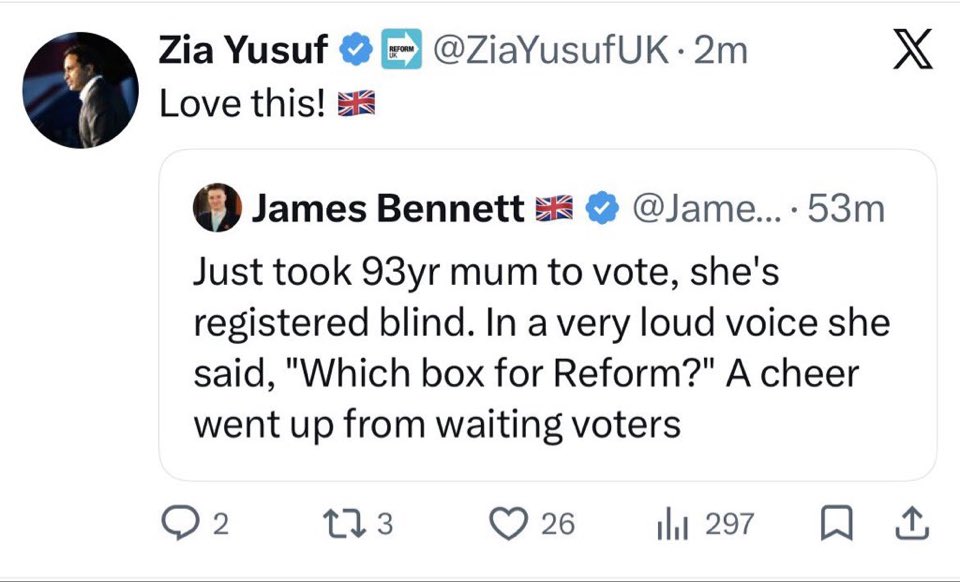
Never heard of the term "family voting" before.
But this seems to be a pretty good example of it? Reform were encouraging it during the day, so why are they scapegoating Muslims now?
Strange way to announce they've lost.
Indian nationalists have gotta be the ultimate example of cutting off their noses to spite their faces. Faced with rising white nationalist hate their main concern is telling people they aren’t Pakistani. As if white nationalists care.