The lighting from the Vanity Fair Oscar Party Red Carpet looked so glowy and beautiful?! I think I know why! It's because they used a style of lighting that I've NEVER SEEN ANY OTHER RED CARPET USE! 🧵
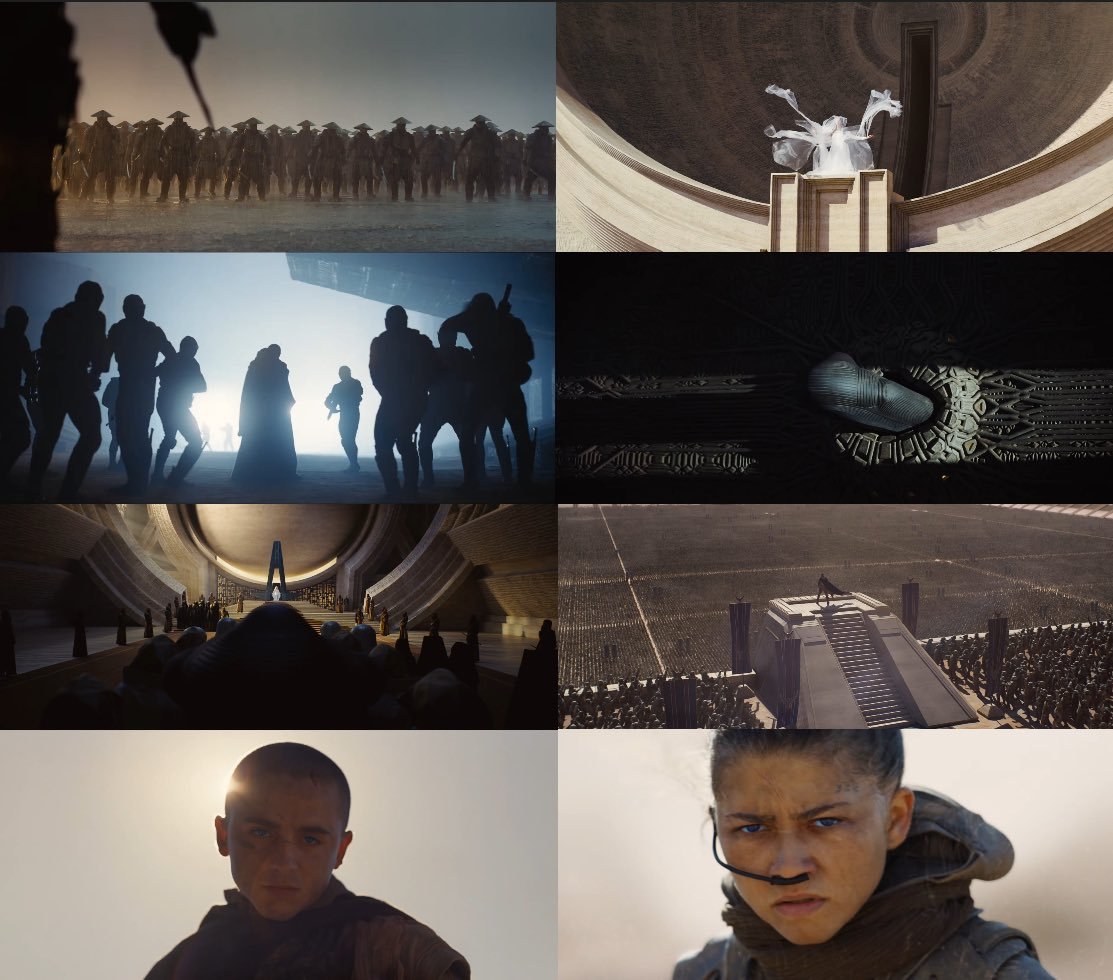
There's a reason Dune 3 looks like nothing else out right now. The first two movies were shot on digital cameras (same basic technology as your phone, just massively more expensive). Dune 3 was shot on actual, physical film.
Here's what that means. For Parts One and Two, cinematographer Greig Fraser captured everything digitally, ran the footage through a physical 35mm strip, and scanned it back to digital. It was a three-step workaround to make a digital image feel more organic, more textured. Fraser himself said the process "hasn't really happened before in commercial films." Villeneuve tested real film cameras for Part One and rejected them because the footage looked "too nostalgic" for sci-fi. Digital was too clean. So they split the difference.
For Part Three, they threw that whole system out. New cinematographer Linus Sandgren (Oscar winner for La La Land, also shot No Time to Die and Babylon) replaced Fraser after Fraser committed to shooting all four of Sam Mendes' upcoming Beatles biopics. Sandgren loaded actual 65mm film into the cameras. 65mm means the strip of film running through the camera is about 3.5x larger than standard movie film, so it captures way more detail and has a natural depth that digital sensors struggle to replicate. Some sequences were shot on full-size IMAX film, the largest format that exists.
One exception: the desert. Villeneuve kept those scenes on digital IMAX because, in his words, he loves "the brutality" of digital in sand and heat. So the interiors and ceremonial sequences have the warmth of real film grain. The desert stays harsh and unforgiving. Two visual textures inside one movie, and that contrast is a big part of why the trailer footage feels so different from the first two.
The whole thing started as a scheduling accident. Fraser left for the Beatles project. Sandgren walked in, pushed for real film, and Villeneuve, who'd rejected it twice before, finally said yes. The franchise's best-looking entry exists because a cinematographer was pulled away to work on a biopic about a band that broke up in 1970.
Vittorio Storaro on filming Apocalypse Now (1979):
"At the beginning, I said to Francis Ford Coppola, “I don’t think this is my kind of movie.” What was I supposed to do with a war movie when in Italy I was used to doing films about the philosophers or political films with Bernardo Bertolucci? But Francis said: “No, Vittorio. This is not a war movie. This is a movie about civilization. Please read Heart of Darkness by Joseph Conrad, and you will understand my concept.” And he was right. I read and understood that there was one principal idea in Conrad’s book: when one culture overpowers and superimposes itself over another culture, it creates an act of violence. And that’s what the film wants to say: the truth. When a country invades another, thinking they are bringing civilization, modernity, and so on, they commit an act of violence, because they don’t respect the other culture. This has happened throughout the history of mankind. I understood that it was something that I could make my own, because it’s a universal concept. So how to translate this concept visually? I said to myself: “Oh my God, I can have the artificial light superimpose itself over natural light, and artificial color over natural color.” And I created this kind of visualization of two different cultures: the visual conflict represents the conflict between the cultures."
— "Interview: Vittorio Storaro" by Yonca Talu, Film Comment, 2017
Neon noir are films with stylistic touches added to the traditional noir formula. We present you the 15 best neon-noir movies of all time: https://t.co/Be3QXCJ6yZ
Sylvester Stallone said the iconic Rocky stairs scene was filmed quickly before the police arrived.
“I wasn’t even thinking about the stairs. We didn’t have the money to film there.”
“I just got out of the car and said, ‘Let me run up the stairs and get one take of that.’”
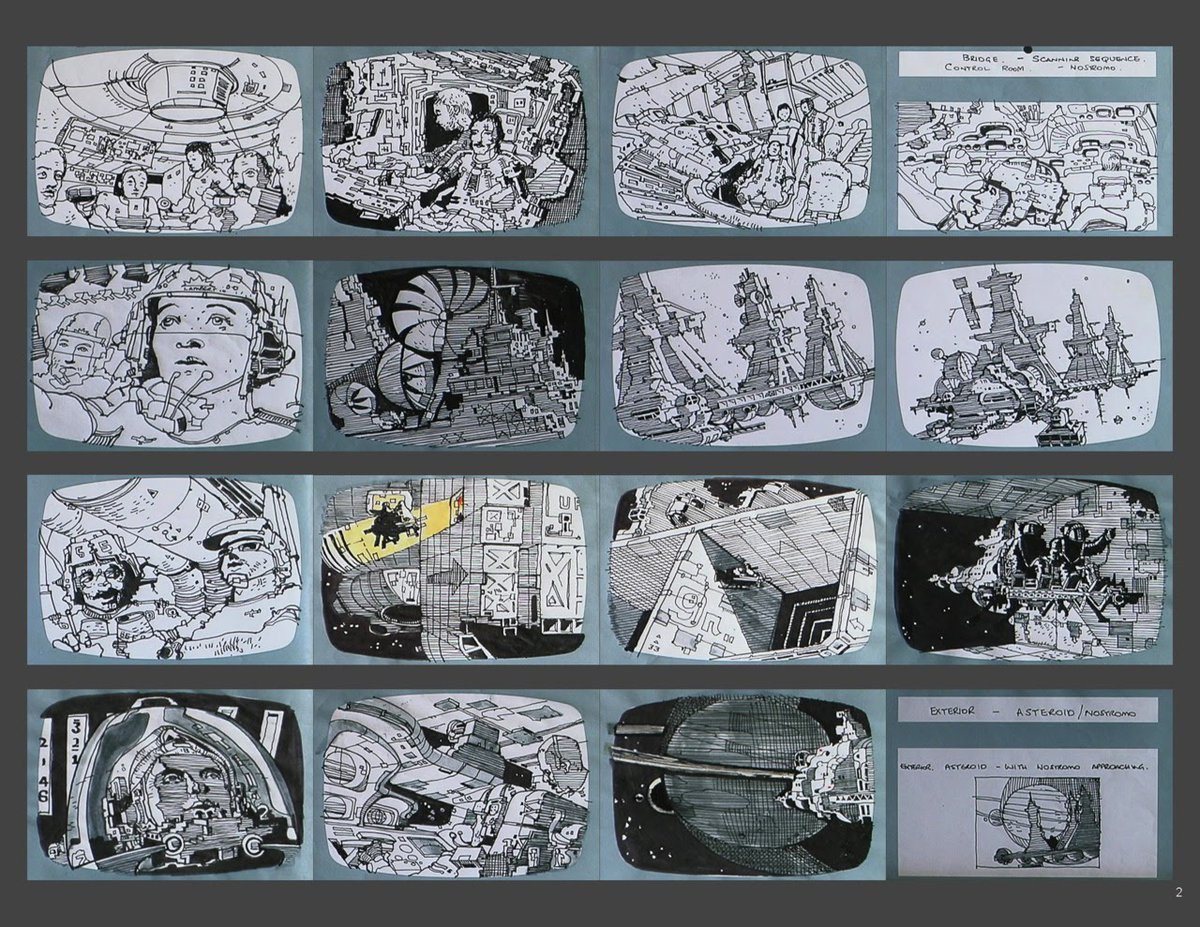
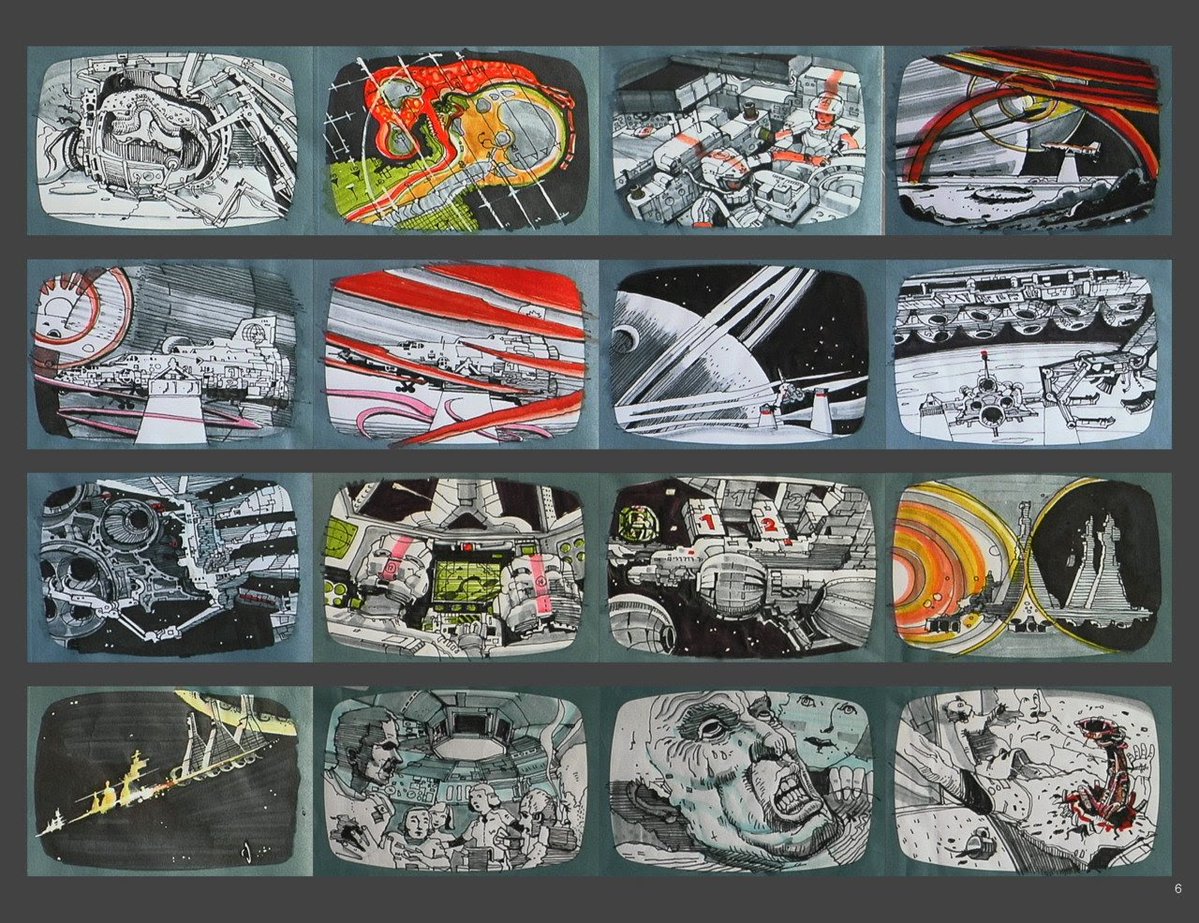
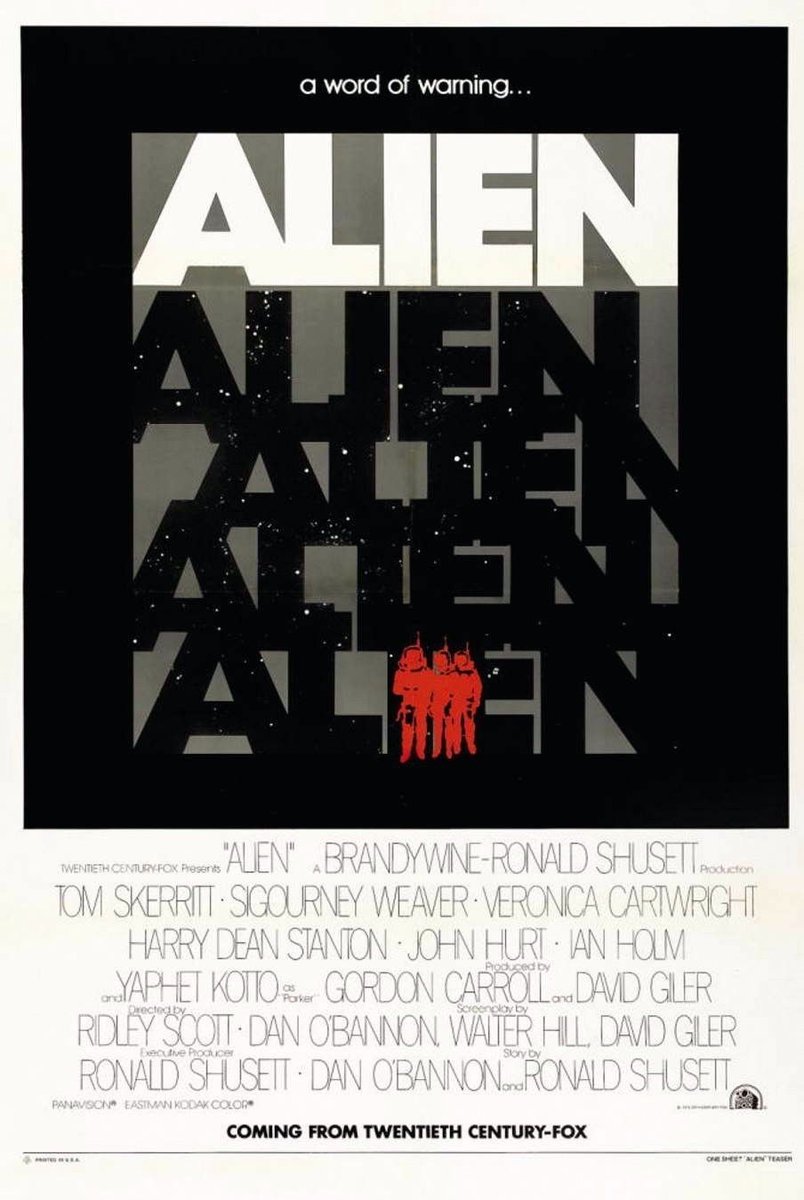
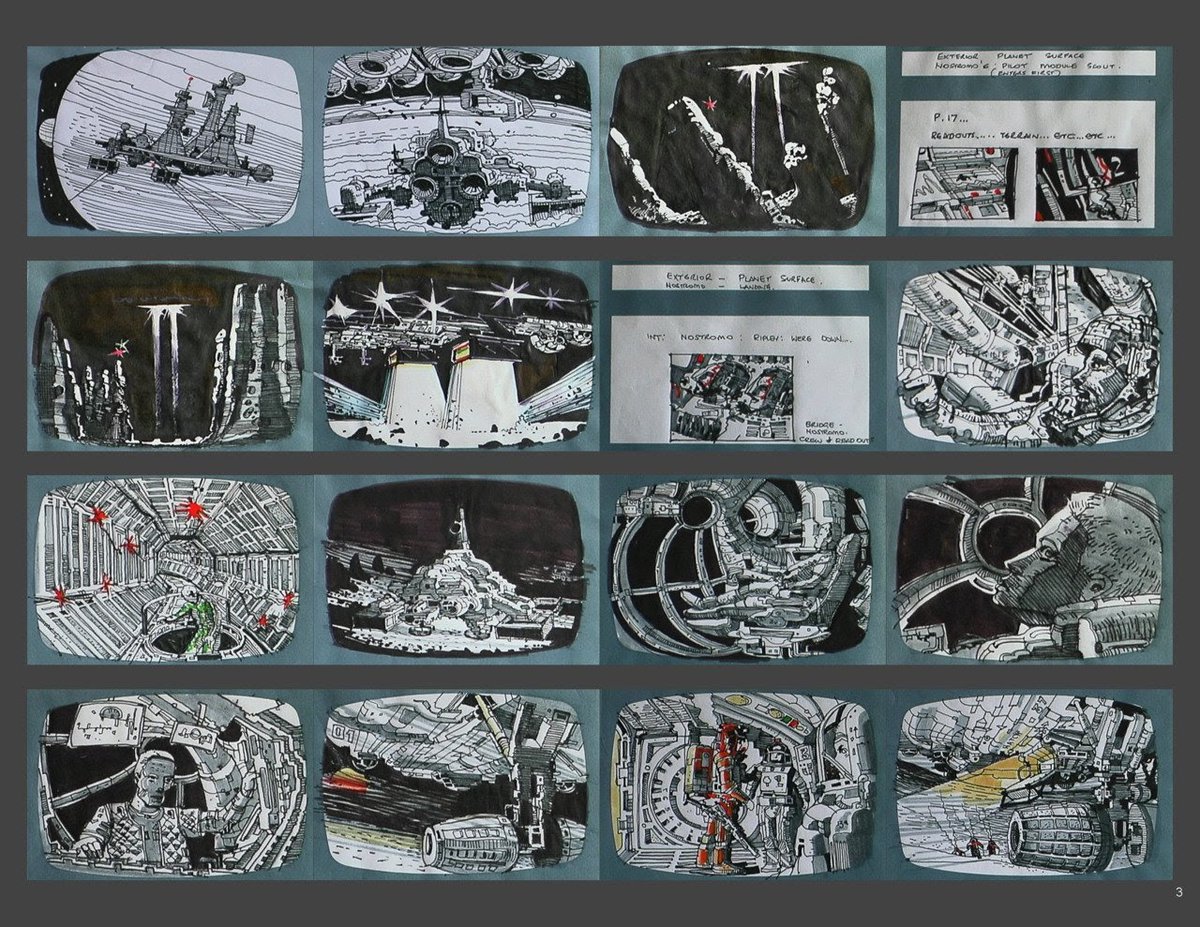
Ridley Scott's hand-drawn ALIEN storyboard presentation for 20th Century Fox. These helped him secure the director job and almost doubled the film's budget thanks to their clarity, vision and scope. They are also known as 'Ridleygrams".
No, you’re not crazy! Night scenes DO LOOK darker now than they did in the decades prior.
But it’s not because cinematographers refuse to light their scenes (common misconception). It’s because the STYLE of lighting has changed. Let me explain. 🧵