Palantir's CEO just exposed Sam Altman and Dario Amodei for robbing every Fortune 500 company.
Within two minutes, Alex Karp took the entire frontier AI industry apart on national television.
His exact words:
"Every single enterprise in this country, these people are LIVID. They are paying for tokens that create no value. These people are stealing the weights and alpha of my business."
He literally said the entire frontier AI business model is intellectual property extraction dressed up as a subscription.
Then he also destroyed the pricing model with a single question that Silicon Valley still refuses to answer:
"If it was so valuable, let's say I can make you $1 billion tomorrow. Wouldn't I say I'll make you $1 billion and I want 30 percent? Why are they charging for tokens if it's so valuable?"
That question breaks the industry.
If OpenAI and Anthropic's models truly delivered the productivity gains the labs claim, they would take equity or a share of the profit they generate. They would not sell access by the million tokens.
Token pricing is itself the CONFESSION that the product cannot produce reliable value at scale. If it did, they would price for the value. But they price for the compute because that is what they are actually selling.
Karp went even further...
He called the entire arrangement "a wealth tax that does not help the poor. It just punishes."
American businesses are transferring the alpha of their operations, meaning the workflows, the customer data, the strategy memos, the internal models that make them competitive, directly into the training pipelines of a handful of Silicon Valley labs. Once those labs retrain, the customer's own edge becomes the next enterprise product sold back to their competitors.
And the part the AI industry does not want anyone thinking about:
Every enterprise running its confidential documents, its customer conversations, and its financial models through a frontier model is potentially teaching that model HOW to replace them.
The vendor collects the token fee AND the compounding intelligence about that customer's business. That is the mechanism. And that is why Karp used the word "stealing."
He claims this is why every executive he meets is furious in private and silent in public. Nobody wants to be the CEO who called out the labs and then discovered their next competitor was built on their own leaked workflows.
The entire AI industry has been priced for perfection on one assumption:
That frontier labs produce durable, defensible value that justifies infinite compute spend.
But Karp just told us that the customers do not believe that assumption anymore. They believe they are being taxed without benefit, watched without consent, and copied without recourse.
The moment enterprises stop believing, the whole valuation stack shakes.
https://t.co/jYMFG8QRU9
First inning, first pitch. It’s just the beginning. To everyone who supported us and believed this Q3 is dedicated to you! #dvlt $DVLT
Vai šādi pieklājas izpausties zvērinātu advokātu padomes priekšsēdētājam par @Valsts_policija darbu? Jautājums diskutabls, protams, bet kā apsaukāšanās palīdz un kā tā sekmē adovaktūras un tiesu varas prestiža celšanu?
"Cīņa ar klimata pārmaiņām", izmantojot dažādus simulakrus un "faktos balstītu" apzinātību caur sojas desu varētu varētu būt salīdzināma ar baltkrievu dziesmoto nevardarbīgo revolūciju 2020. gadā, kuras rezultāts ir stabils Lukašenko jau sesto gadu pēc nozagtajām vēlēšanām. Līdzekļi būtu jāiegulda, lai dažādām dabas izpausmēm un ekstrēmiem pielāgotos, lietojot praktiski pārbaudītus risinājumus un līdzekļus ar droši aprēķināmiem rezultātiem - lai nepārkarstu, nenosaltu, nenoslīktu plūdos vai nenonāktu virpuļviesulī.
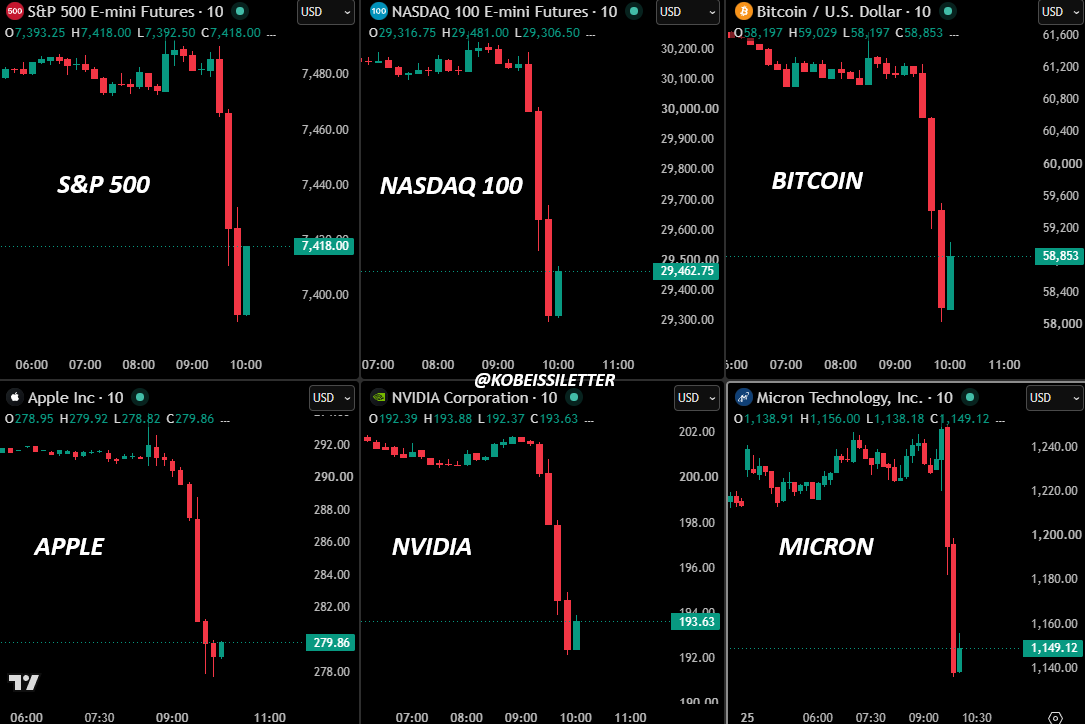
What just happened?
In just 27 minutes, the Nasdaq 100 just fell -1,000 points and the S&P 500 erased -$1 TRILLION without any major headlines.
The Nasdaq opened +1% higher then fell -3% between 9:30 AM and 9:57 AM ET.
What does it all mean? Let us explain.
(a thread)
@AndrisKulbergs@janisdombrava wouldn't it be a time to start an investigation and also bring to justice the company that has developed such a weakly secured system? This is already the second government system this year and I think there could be more week-developed and insecure systems like this that need to be addressed as fast as possible before data is leaked and sold on the black market! Developments are not supervised correctly by the government @Brivibas36
I am WARNING you now.
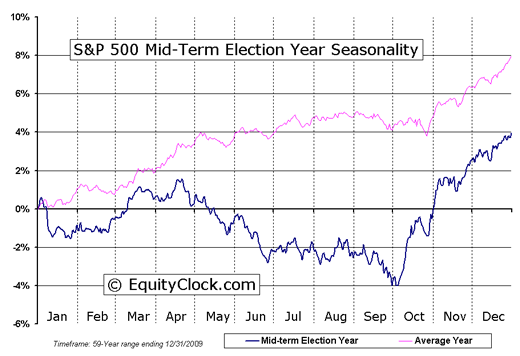
This is the START of the chop until October 2026 timing cycle.
My calculations show that ~62% of traders will LOSE money until October 2026.
Not because markets will be WEAK, but a combination of over-trading and trying to find rotations.
Traders are trying to OUTSMART the markets. Don't.
The best thing to do is STAY in your winners.
Let your winners CONTINUE to uptrend.
You can trim 20% - 30%, but do NOT sell fully.
What to do?
1. Balance with AI infrastructure and financials, healthcare, utilities until October 2026.
2. Mag 7's are showing weakness, make sure you have other parts of the AI trade in your books (power, memory, gpu's, optics, etc.)
3. Biotech and financials gaining strength
4. $MSFT, $PLTR, $NFLX and other software very weak; size appropriately. Can hold, but if you hold, I wouldn't make it my top allocation in my portfolio.
Peak-to-trough drawdown:
• March 2026: ~-6.4%; first real ugly month - VIX spiked hard
• April 2026: ~-9.6%; very choppy recovery - big dip early, then strong rally
• May 2026: ~-4.6%; decent but still had a solid pullback
• June 2026: ~-5.0% (so far); already down ~5% from early June high
I will make sure you SURVIVE until October of 2026.
Until then, stay in uptrending industries. Cut your losers.
It's going to be a very CHOPPY ride.
Expect red, green, red, green, red, green, constantly.
Tagad aplikācijai ir mājas: https://t.co/vvo3j4HESc 🇱🇻
Latvijas publisko iepirkumu risku platforma — konkurence, slēgtie tirgi, īpašnieku un holdinga saiknes. Viss no atvērtajiem datiem, pārbaudāms.
👉 https://t.co/B9GT2CCpPe
Kā firma ar 1 darbinieku un €6 798 gada apgrozījumu iegūst €4,2 milj. līgumu kā vienīgais pretendents?
Skaties platformā — pievienoti finanšu dati, holdinga ķēdes un kopīgās adreses saiknes.
Karogs nav pierādījums — dati ir publiski, pārbaudāmi.
👉 https://t.co/Tfm7j9VWme
1/ Pēdējā laikā veidoju brīvi pieejamu rīku publisko iepirkumu caurspīdībai. Tas analizē visu pieejamo IUB datu vēsturi — ~75 000 iepirkumu, 916 pasūtītāji — un izceļ modeļus, kas pelnījuši uzmanību. Nav apsūdzību saraksts, bet prioritizēšanas rīks. 🧵
https://t.co/Y20fOEkadT
https://t.co/cQT8s1yp4f
Tāds fantastisks, tādas Daces Rātfelderes Veiksmes Stāsts ... 🤔
pavisam mazā Valstī. ......
- kopš 2007. gada uzvarējis vairāk nekā Trīsarpus tūkstoš iepirkumos -3500 iepirkumi !!!,
liecina Iepirkumu uzraudzības biroja publiskotā informācija. 2019. gadā "Arbor Medical Korporācija" apgrozījums strauji pieauga, un pēc tam regulāri katru gadu pārsniedza 20 miljonus eiro.
Interesanti , cik simti miljonu Valsts veselības budžeta naudas, tajā peļņā - tajā kantorī ir nosēdušies pa šiem gadiem.
By age 40, nearly every person with Down syndrome has the same brain protein deposits that mark the beginning of Alzheimer's disease. The extra chromosome they are born with carries the APP gene, which produces the precursor to amyloid (the protein that clumps into Alzheimer's plaques). Three copies of that gene instead of two means 50% more output from birth. By their 60s, roughly half have developed clinical dementia.
For the 7 million people worldwide who have Down syndrome, there are zero treatments addressing the genetic root cause. Life expectancy jumped from 25 to 60 years since 1983, but that came entirely from better management of secondary conditions. Nobody has ever touched the source.
In February 2025, a team at Mie University in Japan, led by Ryotaro Hashizume, published the first successful physical deletion of the extra chromosome 21 from Down syndrome cell lines. The core challenge: three copies of chromosome 21 look nearly identical, so standard CRISPR (a gene-editing tool that uses molecular scissors to cut DNA) cannot tell them apart. The team genetically fingerprinted each copy, identified which was safest to remove, then designed precision cuts targeting only that one. Chromosome removal rates hit 30.6% in stem cells and 13.9% in skin cells. No accidental extra chromosomes appeared in treated cells.
Neurologists at Harvard Medical School and Beth Israel Deaconess Medical Center in Boston published a second study in April 2026, using a completely different approach. Instead of deleting the chromosome, they silenced it. The body already has a natural silencing mechanism: in biological females, one of the two X chromosomes gets switched off at birth by a gene called XIST. The Harvard team used modified CRISPR to insert XIST into the extra chromosome 21, telling it to go quiet. Standard CRISPR inserts large genes at under 2% success rate. Their modified version hit 20-40%, a roughly 30-fold improvement. Lead researcher Volney Sheen said that 30% "is high enough efficiency that you would get a clinically appropriate response." Both studies remain at the cell stage, with animal testing and human trials still ahead.
The urgency behind both labs: chromosome 21 does not just cause Down syndrome. That same APP gene is the best-known genetic trigger of early-onset Alzheimer's. Alzheimer's affects 55 million people globally. Anything either team learns about silencing or removing that chromosome matters far beyond the 7 million people with Down syndrome.