인류의 기술적 특이점과 곧 다가올 미래
(feat. 일론 머스크)
일론 머스크는 피터 디아만디스와의 대담에서 인류의 거대한 변화가 향후 3~7년 내에 집중될 것이며, 이 과정이 매우 급격하고 혼란스러울 수 있으나 결국 인류는 풍요의 시대에 진입할 것이라고 강조함.
1. 인공지능(AI) 및 컴퓨팅 전망
* AGI 도달 시기: 2026년 내에 범용인공지능(AGI)이 실현될 것으로 예상하며 , 2030년경에는 AI의 지능이 모든 인류의 지능을 합친 것보다 뛰어날 것으로 확신함.
* 지능 밀도: 현재의 알고리즘 효율성은 잠재력에 비해 매우 낮은 상태이며, 향후 알고리즘 개선만으로도 100배(두 자릿수) 이상의 지능 밀도 향상이 가능함.
* 산업�� 영향: AI를 완벽히 도입한 기업이 그렇지 못한 기업을 완전히 압도할 것이며, 이는 과거 수동 계산원이 컴퓨터로 대체된 것과 유사한 흐름이 될 것임.
* AI 안전성: AI의 정신적 이상을 방지하기 위해 '최대한의 진실 추구(truth-seeking)'가 가장 중요하며 , 호기심과 미적 감각을 가진 AI가 인류에게 우호적일 것이라고 주장함.
2. 에너지 및 제조 혁신
* 태양광의 압도적 비중: 태양은 태양계 질량의 99.8% 이상을 차지하는 궁극적인 에너지원이며 , 지구상의 다른 에너지원(핵융합 등)을 만드는 것보다 태양 에너지를 효율적으로 포집하는 것이 훨씬 경제적임.
* 배터리를 통한 전력 증대: 전용 발전소를 새로 짓지 않더라도 배터리 버퍼링을 통해 미국의 에너지 처리량을 두 배로 늘릴 수 있음.
* 나노미터 공정의 한계: 현재의 나노미터 단위 표기는 마케팅적 성격이 강하며, 실제로는 원자 단위의 정밀 배치가 중요해지는 단계에 진입함.
* 테슬라 팹(Fab) 구상: 공기 정화 기술을 극대화하여 방진복 없이도 반도체 제조가 가능한 수준의 환경을 갖춘 2nm 공정 팹을 구축할 가능성을 언급함.
3. 로봇공학 및 경제적 대전환 (UHI)
* 옵티머스(Optimus) 생산: 800만 평방피트 규모의 옵티머스 전용 공장을 준비 중이며 , 2040년까지 100억 대 이상의 휴머노이드 로봇이 보급될 것으로 전망함 (이는 오히려 보수적인 수치).
* 의료 혁신: 3~4년 내에 옵티머스 로봇이 최고의 인간 외과의보다 정교한 수술을 수행하게 될 것이며 , 이는 전 세계 의료 서비스의 민주화와 비용 하락을 가져올 것임.
* 보편적 고소득(UHI): 노동력과 지능의 비용이 급격히 낮아짐에 따라 '보편적 고소득(Universal High Income)' 또는 '보편적 고물자/서비스' 시대가 열릴 것임.
* 디플레이션: 상품과 서비스의 출력이 화폐 공급 증가보다 빠르게 늘어나면서 강력한 디플레이션이 발생하고, 인류는 생존을 위한 저축이 필요 없는 환경에 처하게 됨.
4. 우주 탐사 및 인프라
* 스타쉽(Starship)의 역할: 완전 재사용 가능한 스타쉽을 통해 매년 100만 톤 이상의 페이로드를 궤도로 운송하고 , 이를 통해 화성 이주 및 우주 인프라 구축을 현실화함.
* 우주 데이터 센터: 지상에서의 전력 및 냉각 한계를 극복하기 위해 스타쉽으로 궤도에 거대 데이터 센터와 태양광 발전 위성을 띄우는 것이 가장 효율적인 방법이 될 것임.
* 달 기지 건설: 단순히 몇 번 방문하는 것이 아니라, 영구적으로 거주 가능한 달 기지를 최대한 빠르게 건설해야 함.
5. 인류의 위치와 철학적 관점
* 부트로더(Bootloader) 이론: 인류는 디지털 초지능을 탄생시키기 위한 '생물학적 부트로더' 역할을 수행하고 있음.
* 시뮬레이션 우주: 우리가 살고 있는 현실이 고도로 발달한 문명에 의해 만들어진 시뮬레이션일 가능성이 높으며 , 지루한 시뮬레이션은 삭제되므로 흥미로운 미래를 만드는 것이 생존의 열쇠임.
* 인구 문제: 인구 과잉보다는 급격한 인구 감소와 저출산이 인류 문명에 더 큰 위협이 될 것임.
I'm Boris and I created Claude Code. Lots of people have asked how I use Claude Code, so I wanted to show off my setup a bit.
My setup might be surprisingly vanilla! Claude Code works great out of the box, so I personally don't customize it much. There is no one correct way to use Claude Code: we intentionally build it in a way that you can use it, customize it, and hack it however you like. Each person on the Claude Code team uses it very differently.
So, here goes.
분야를 막론하고 롱런하는 사람들의 특징
1. 지속적인 자기 갱신 (Adaptability)
* 성공 경험의 비우기: 과거의 방식에 매몰되지 않고 새로운 트렌드를 빠르게 수용함.
* 높은 메타인지: 자신의 강점과 약점을 객관적으로 파악하여 부족한 부분을 끊임없이 학습함.
* 변화에 대한 유연성: 환경 변화를 위기가 아닌 진화의 기회로 삼음.
2. 감정 및 에너지 관리 (Consistency)
* 감정 기복의 최소화: 일희일비(一喜一悲)하지 않고 평정심을 유지하는 심리적 회복탄력성 보유.
* 루틴(Routine)의 철저함: 기분이나 컨디션에 상관없이 일정 수준 이상의 결과물을 내는 시스템 구축.
* 체력 자산화: 장기전을 위해 운동과 휴식을 업무 순위 상단에 배치함.
3. 신뢰 기반의 인간관계 (Integrity)
* 평판 관리: 단기적인 이득보다 '신뢰'라는 무형 자산을 우선시하여 적을 만들지 않음.
* 겸손한 태도: 위치가 올라가도 동료와 후배의 의견을 경청하며 소통의 창구를 열어둠.
* 명확한 경계 설정: 무조건적인 호인이 되기보다 자신의 원칙과 가치관을 지키며 관계 맺음.
4. 본질 중심의 사고 (Essence)
* 장기적 관점: 당장의 성과보다 업(業)의 본질적인 가치와 지속 가능성에 집중함.
* 지루함 견디기: 폭발적인 성장이 없는 정체기에도 묵묵히 기본기를 다지는 인내심 보유.
* 자기 통제력: 유혹이나 지름길에 흔들리지 않고 자신만의 속도를 유지함.
🤝 DSRV signs strategic MOU with BC Card
Together, we’ll co-develop next-generation payment infrastructure — combining DSRV’s blockchain expertise with BC Card’s extensive payment network.
This partnership marks a key step toward interoperable and scalable financial innovation.
Stay tuned for the next stage of innovation!
🔗 Read more: https://t.co/Biol9JGhoL
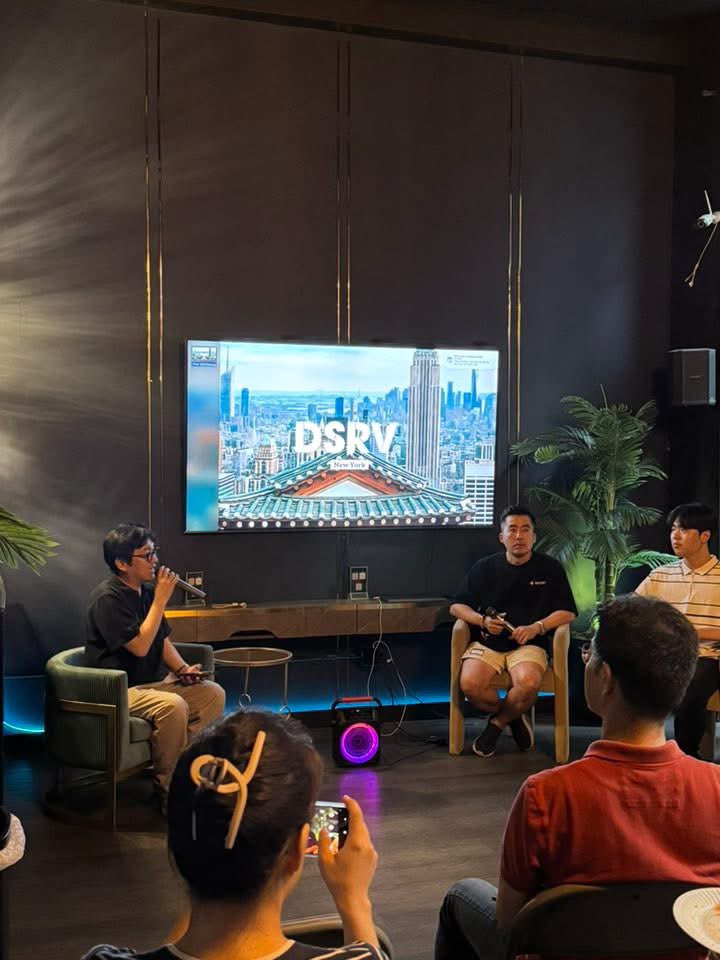
Coincidentally, on August 15th, Korea’s Liberation Day,
we were able to bring together leading Korean professionals in New York
and three founders who have just set foot here.
Over my two-month business trip in New York, I came to realize—ironically—
that in this melting pot city,
Americans gather with Americans,
Canadians with Canadians,
the French with the French,
the Chinese with the Chinese,
and even people from Hong Kong and Malaysia stay tightly knit within their own circles.
Today’s event included families,
and most attendees stayed for the full four hours,
lending their support to a gathering aimed at uniting the strength of Korea’s crypto industry abroad.
I am truly grateful to everyone who joined us,
and I will work even harder to bring together more Korean talent and capabilities in the future.
Finally, I would like to extend my thanks to our panelists,
Jihoon Park, CEO of Radius,
and Taemin Park, CEO of Test In Prod,
for their contributions today.
@dsrvlabs@radius_xyz@testinprod_io
Ethereum All Core Devs 훑어보기
All Core Devs - Consensus (ACDC), August 07 2025
이번 ACDC 미팅에서는 Fusaka와 Glamsterdam 하드포크의 진행 상황과 주요 EIP에 대한 논의가 이루어졌습니다.
1. Fusaka 하드포크
1.1 DevNet-3 및 DevNet-4 현황
현재 Fusaka DevNet-3은 높은 참여율을 보이며 안정적으로 운영되고 있으며, 네트워크의 40%가 오프라인이 되어도 한 epoch 내에 복구되는 성공적인 테스트를 마쳤습니다. 메인넷 규모의 10%에 해당하는 DevNet-4가 곧 가동되어 Blob 확장성 한계를 집중적으로 테스트할 예정입니다.
1.2 BPO (Blob Parameter Only) 스케줄 논의
Fusaka 런칭 후 Blob의 수를 점진적으로 늘리기 위한 3단계 BPO 스케줄이 제안되었습니다. 이 스케줄은 2025년 12월부터 시작하여 2026년 2월까지 진행되며, 최종적으로 블록당 21개의 Blob을 목표로 합니다.
2. 하드포크 타임라인 관련 논의
클라이언트 팀들은 Fusaka 관련 코드가 아직 master branch에 병합되지 않았다는 점을 우려하며 4주 연기를 요청했습니다. 이에 대한 해결책으로, 9월에 예정된 Holesky 하드포크는 클라이언트의 공식 릴리스가 준비되지 않아도 예정대로 진행하기로 합의했습니다.
3. Glamsterdam 하드포크
3.1 Headliner 선정
EIP-7732 (ePBS)는 커뮤니티의 강력한 지지를 받으며 Glamsterdam의 핵심 기능으로 SFI(Sanctioned for Inclusion) 상태가 되었습니다. 반면, EIP-7805 (FOCIL)는 CFI(Considered for Inclusion)로 분류되어, ePBS가 안정화된 후에 포함 여부가 재논의될 예정입니다. EIP-7782 (6초 슬��)은 아직 충분히 연구되지 않아 계속 논의를 이어가기로 했습니다.
3.2 Beacon API 업데이트
Blob 소비를 간소화하기 위한 getBlobs API가 제안되었으며, 현재 L2 팀들의 피드백을 기다리고 있습니다.
4. Glamsterdam 구현 타임라인
ePBS의 구현은 2026년 3월 또는 4월경에 가능할 것으로 예상되며, 개발팀들은 SFI된 EIP에 우선적으로 집중하는 단계적 접근 방식을 채택하기로 합의했습니다.
5. 용어 요약
- getBlobs API: 컨센서스 레이어 클라이언트가 실행 레이어 클라이언트로부터 Blob 데이터를 요청할 때 사용하는 인터페이스입니다.
- Perfect PeerDAS: 이더리움의 데이터 가용성을 확장하는 프로토콜인 PeerDAS가 최적의 효율성을 달성했을 때의 이상적인 상태를 의미합니다.
- EIP-7805(FOCIL)의 Blob 커버리지 간극 우려: FOCIL이 일반 거래에는 효과적이지만, 크기가 큰 Blob 거래를 강제 포함하는 데는 기술적 어려움이 있어 L2 거래의 검열 또는 지연이 발생할 수 있다는 우려입니다.
- CFI (Considered for Inclusion): EIP가 하드포크에 포함될 잠재적 후보로 고려되는 상태를 나타냅니다.
- SFI (Sanctioned for Inclusion): EIP가 하드포크의 핵심 기능으로 채택되어 우선적으로 구현 및 테스트될 상태를 의미합니다.
@ethereum @ethereumfndn
앞으로 Rust, Python, Typescript가 프로그래밍 시장을 삼킬 것.
1) 좀 과장해봄. 이 셋이 ai 시대의 주요 프로그래밍 언어가 될 것이라는 에측.
2) 아이디어 지향 프로그래밍(Idea-oriented programming)으로 패러다임이 변화. 바이브 코딩과 달리 세부 설계와 검증이 철저한 방식으로 개발자는 '건축가'처럼, 코딩은 ai 도구가 '제자'처럼 처리
3) AI 코딩에서는 라이브러리 사용 장벽이 낮아져, 생태계가 더 중요. Rust는 cargo, TypeScript는 npm, Python는 uv 등 안정적 패키지 시스템 보유.
4) 아이디어 지향 프로그래밍은 기존 PE급 개발 방식이지만, AI 덕분에 일반 개발자도 가능.
5) ‘코딩 플로우’ 시간은 ��어들지만, 설계·브레인스토밍 중심의 만족감은 오히려 커질 수 있음.
🏕 Join our Camp Mamo Seoul Meetup!
Camp Mamo is the first-ever online builder bootcamp for the @celestia ecosystem!
While the Camp Mamo (Aug 4–29) is underway, we’re hosting a face-to-face builder meetup!
Want to find teammates, connect with mentors, and meet the local builder community gearing up for Mammothon 2?
Join us in Seoul!
📍Aug 7 (Thu) 7 PM | DSRV HQ, Seoul, Korea
🔗 Event RSVP: https://t.co/NqDsfMLnRe
Register to unlock exclusive mentoring & support from @dsrvlabs in Korean!!
Amazing to see so many major L2s now at stage 1.
The next goal we should shoot for is, in my view, fast (<1h) withdrawal times, enabled by validity (aka ZK) proof systems.
I consider this even more important than stage 2.
Fast withdrawal times are important because waiting a week to withdraw is simply far too long for people, and even for intent-based bridging (eg. ERC-7683), the cost of capital becomes too high if the liquidity provider has to wait a week. This creates large incentives to instead use solutions with unacceptable trust assumptions (eg. multisigs/MPC) that undermine the whole point of having L2s instead of fully independent L1s.
If we can reduce native withdrawal times to under 1h short term, and 12s medium term, then we can further cement the Ethereum L1 as the default place to issue assets, and the economic center of the Ethereum ecosystem.
To do this, we need to move away from optimistic proof systems, which inherently require waiting multiple days to withdraw.
Historically, ZK proof tech has been immature and expensive, which made optimistic proofs the smart and safe choice. But recently, this is changing rapidly. https://t.co/MRqAcqiGre is an excellent place to track the progress of ZK-EVM proofs, which have been improving rapidly. Formal verification on ZK proofs is also advancing.
Earlier this year, I proposed a 2-of-3 ZK + OP + TEE proof system strategy that threads the needle between security, speed and maturity:
https://t.co/Z5N81HiiNi
* 2 of 3 systems (ZK, OP) are trustless, so no single actor (incl TEE manufacturer or side channel attacker) can break the proof system by violating a trust assumption
* 2 of 3 systems (ZK, TEE) are instant, so you get fast withdrawals in the normal case
* 2 of 3 systems (TEE, OP) have been in production in various contexts for years
This is one approach; perhaps people will opt to instead do ZK + ZK + OP tiebreak, or ZK + ZK + security council tiebreak. I have no strong opinions here, I care about the underlying goal, which is to be fast (in the normal case) and secure.
With such proof systems, the only remaining bottleneck to fast settlement becomes the gas cost of submitting proofs onchain. This is why short term I say once per hour: if you try to submit a 500k+ gas ZK proof (or a 5m gas STARK) much more often, it adds a high additional cost.
In the longer term, we can solve this with aggregation: N proofs from N rollups (plus txs from privacy-protocol users) can be replaced by a single proof that proves the validity of the N proofs. This becomes economical to submit once per slot, enabling the endgame: near-instant native cross-L2 asset movement through the L1.
Let's work together to make this happen.
@doo_cho_star@ethereum Yeah, it’s the same version, but that feature isn’t what’s doing the trick. The archive got way smaller because it switched to a path-based data-storage approach.
The @ethereum Geth v1.16.0 update brings a massive reduction in the database size for archive nodes!
The Geth archive node we run at All That Node actually reaches 25TB in database size, and the new 'path-based' approach in this update can go a long way in solving this issue.
The main advantages are as follows:
• Space Saving: Database size is drastically reduced from over 20TB to about 1.9TB.
• Cost Reduction: Historical records can be stored on regular HDDs instead of expensive SSDs.
• Flexibility: You can directly control the amount of history to retain with the --history.state flag.
As a technical trade-off, however, a specific advanced data proving feature (eth_getProof) is only supported for recent blocks. We expect this update to significantly lower the entry barrier and costs of running an archive node.
The CLI for Google ADK just got a major upgrade with the release of v1.9.0.
New flags, modular APIs, better logging, and improved eval support, worth checking out if you're building with agents.
https://t.co/LMmHjZJK3J
Celestia is a rollup-centric modular chain where the role of validators is limited to data posting. This structure makes it well-suited for PoG.
@celestia 에서 왜 PoG가 거론되는지 알 수 있는 문장이자 핵심이네요.
체인 구조에 따라 시도하거나, 최적화할 수 있는 합의 알고리즘있다는 것. 이 맛에 코인하지.
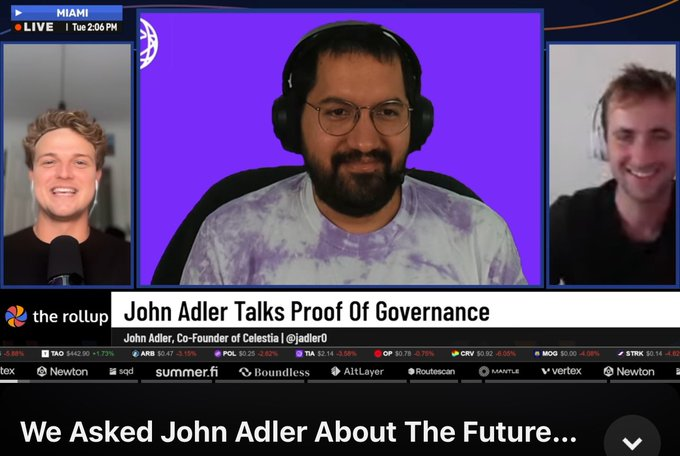
Proof of Governance (PoG) (feat. Celestia - John Adler)
In a recent interview, Celestia co-founder John Adler provided a detailed explanation of Proof of Governance (PoG). This structure is a proposal to shift validator operations entirely to a governance-based model, moving away from the traditional staking-centric PoS system.
This article, based on John's interview, explores the origins of PoG, its differences from PoS, and its significance.
What is PoG, and why did it emerge?
PoG, or Proof of Governance, is a structure for selecting and operating validators without staking. Validators are chosen through governance votes by token holders, and there is no reward mechanism based on staking as in traditional PoS. Instead, validators receive only their operational costs and a reasonable profit, placing the system's focus on social consensus rather than staking.
This concept isn't entirely new. In 2023, John Charbonneau proposed a direction similar to PoG while analyzing the structure of Liquid Staking Tokens (LSTs). Discussions about a PoG-like model have been ongoing within Celestia Labs since then. In his interview, John Adler elaborated on the PoG proposal and its structural background, drawing from these internal discussions.
PoS's Structural Limitations and the Rise of PoG
John Adler argues that the existing PoS structure has three fundamental problems.
First, he believes that staking rewards are not real profits. For instance, if a chain offers a 2% annual staking reward, a user who stakes their tokens receives an additional 2% reward. However, if the total token supply also increases by the same percentage, every token holder's share is diluted, resulting in no real gain for the network as a whole. Additionally, if staking rewards are taxed, users may actually lose money. John refers to this as "fake yield."
Second, staking creates a conflict with DeFi yields. Users are often forced to choose between staking rewards and profits from DeFi. While Liquid Staking Derivatives (LSDs) emerged to bridge this gap, they have given large LST providers significant influence over validator selection. Consequently, the choice of validators is shifting from individual staking decisions to a governance structure.
Third, the validator reward structure can be inefficient. A validator operating the same node receives more rewards if their voting power is higher, which leads to economies of scale. This results in well-capitalized validators dominating the top validator set, and their influence becomes more entrenched over time.
John views these limitations not as simple technical issues, but as structural problems in incentive design. He states that PoG is an approach to address these issues.
Advantages of the PoG Structure
By eliminating staking, PoG enables several structural improvements.
Most importantly, it allows validator rewards to be lowered to a controllable level. Since the protocol only needs to cover operational costs and a fair profit, it can avoid excessive rewards designed to encourage competition.
John Adler estimates that this structure could reduce inflation by 20 to 40 times compared to a traditional PoS model. Additionally, if all transaction fees were burned, the token's value accrual structure would become simpler and more deflationary.
In a PoG system, validators have equal voting power, which simplifies operations and rewards. Since all validators operate the same system and receive the same profit, political competition among them is reduced, and the network can be maintained in a more stable, mechanical way.
The fact that validator composition is determined by social consensus is also a key feature of PoG. Validators can be selected based on criteria other than just capital, such as geographic distribution, bare-metal operation, and OS diversity. This enhances the system's diversity and resilience. Responding to risks from specific national regulations or political pressure through governance is another major advantage.
Criticisms of PoG and John Adler's Rebuttals
PoG has faced several criticisms from the community, and John Adler clarified his stance in the interview.
The first criticism is that "PoG is not decentralized; it could become a consortium chain with few participants." John counters this by emphasizing that PoG is an inherently permissionless structure, and validators can be replaced at any time through governance. Thus, it's not a threat to decentralization.
The second criticism is, "how can a token's monetary premium be maintained without staking?" To this, John responds that a monetary premium is a product of people's belief. He argues that Bitcoin's value comes from trust, not just its technology. In a PoG structure, if sufficient social trust and a strong narrative exist, a token can maintain its value as an asset even without staking.
The third criticism is the concern that "frequent validator changes will lead to many hard forks." John acknowledges this possibility but offers a counterargument by citing Ethereum's non-contentious hard forks. He states that hard forks approved by the community are not a problem. The key, he emphasizes, is not the existence of a hard fork, but whether it is based on social consensus.
Is PoG a universal solution?
The PoG structure is not a universal solution that every chain can adopt.
Most current PoS chains rely on staking for security and their token economy. While the spread of LSDs is shifting validator selection towards more indirect governance, replacing this structure entirely is not easy. A transition to PoG for a chain like Ethereum, where staking is central to the protocol, would cause significant technical, economic, and political friction.
In contrast, Celestia is a rollup-centric modular chain where the role of validators is limited to data posting, not block generation or state verification. This structure makes it well-suited for PoG, as it can operate stably without staking rewards or slashing.
Consequently, PoG may be a design that aligns with Celestia's unique characteristics, but it's not a one-size-fits-all solution for all PoS chains. This highlights both the limitations of PoG and the new direction Celestia is pursuing. However, the PoG structure has not yet been officially adopted by Celestia, and it remains a concept under ongoing discussion with the community.
A turning point or a new standard?
While PoG has not yet been adopted by most chains, John Adler's proposal is more than just a technical suggestion to eliminate staking. It stems from more fundamental questions:
"Where do a blockchain's security and legitimacy truly come from?" "Why must we stake to become a validator?"
PoS has long been a universal structure, responsible for both validator composition and network security. But over time, staking has clashed with DeFi, governance has become more indirect, and the validator structure has become concentrated among a few wealthy players.
Celestia's PoG offers a solution to these inherent limitations. It asks: Is it possible to create a structure that allows for network stability and value accrual without staking? Is it possible to select validators based on social consensus, not capital?
Through PoG, Celestia is proposing an alternative that challenges the existing framework of blockchain design. And this new direction seems to be asking us all a question:
"Is a blockchain's legitimacy in capital, or in the consensus of its people?"
@celestia@jadler0
🚀 We’re excited to announce that DSRV has officially joined the Circle Alliance Program.
As a core infrastructure provider for digital assets, we’re joining forces with @circle to accelerate the adoption of stablecoins and shape the future of digital finance.
Together, we’re building the rails for global, open finance.