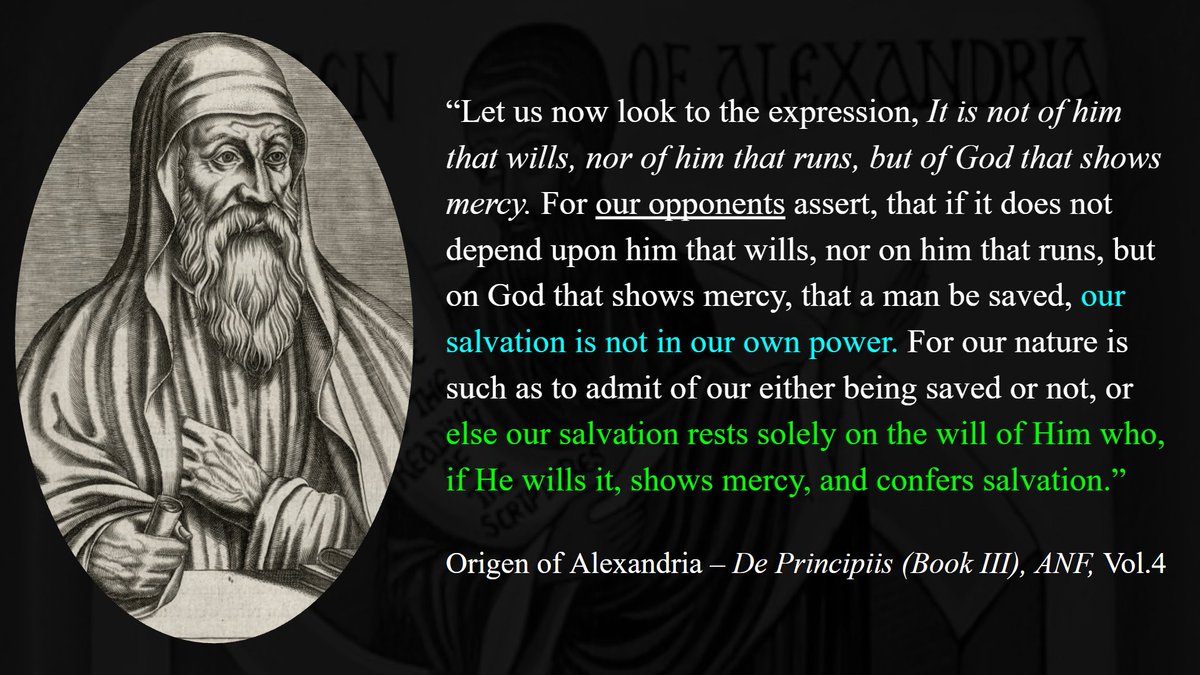
Determinists will sometimes charge the pre-Augustine fathers with being unclear on topics about grace, free will, predestination, etc.
I simply ask, how is it that the guardians of the faith were obscure, while the gnostics could teach the "true" position with clarity:
"As St. Augustine had frequently said that such works of unbelievers, which appear virtuous and praiseworthy, are truly sins and deserving of punishment, no one can doubt that he understood them not as morally good, but as morally vicious and evil."
— Blessed Gregory of Rimini
@ruckusofantioch@MrAugustlw2c@HagiosGregorio@dionysiusmaurus if his justification for the works being sin is that they spirate from original sin, and if original sin incurs guilt, what justification, *in augustine's writings,* is there for believing that the sinful works of the unregenerate do not incur guilt
@TheOrthoEnsign@MrAugustlw2c@HagiosGregorio@dionysiusmaurus you repeated what I stated. because of how the philosophers lived, reasonably/rightly, they were accepted by God. he's not speaking about faith, which is a work, he's speaking about how they lived