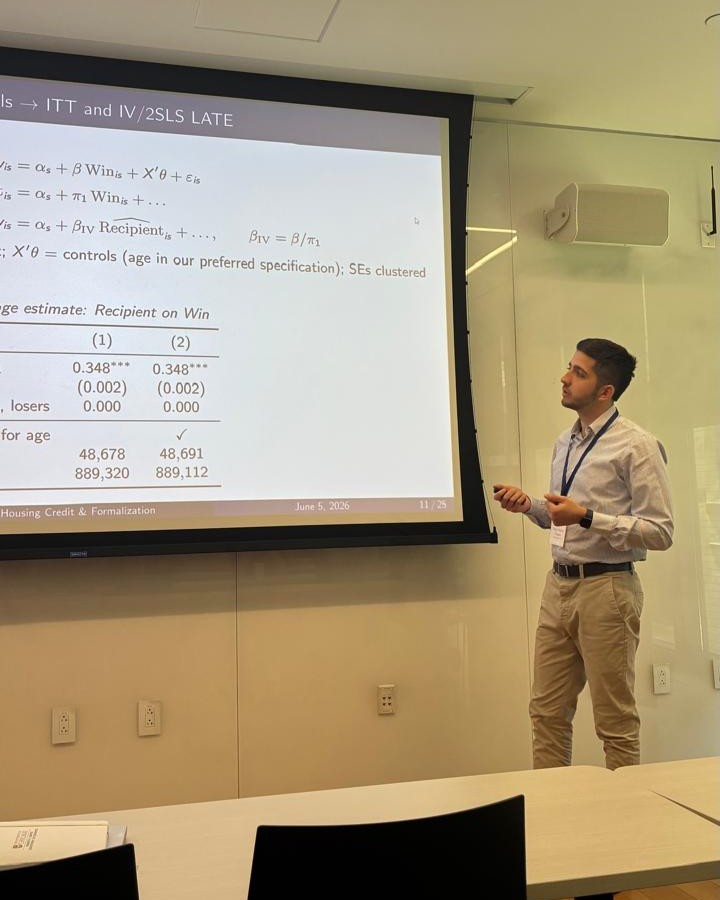
📣El martes 23/6 a las 11:20h (ARG), @VazquezFrancom, @raul_sosa2908 y @Juan_Duhalde_ presentan tres trabajos que abordan el diseño y los efectos de políticas públicas en Argentina.
📍Seminario en formato híbrido.
🔗https://t.co/C9r9FGUABS
Hoy estrenamos CRUDO, el nuevo programa de Oil & Gas de @econojournal junto a @EmpiriaWeb .
Con @ngadano , vamos a hablar de energía desde adentro: economía, regulación, operación e historias de una industria clave para el futuro argentino.
Link: https://t.co/X8iELqDKnV
🎉 Nuestros asistentes pre-doctorales, Genaro Damiani, @Juan_Duhalde_, @raul_sosa2908 y @VazquezFrancom, fueron seleccionados para participar en la Pre-Doctoral Economics Conference 2026 de Yale University, un encuentro que reúne a jóvenes investigadores de todo el mundo para presentar y discutir sus trabajos de investigación.
¡Felicitaciones por este logro y por representar al Departamento de Economía! 👏
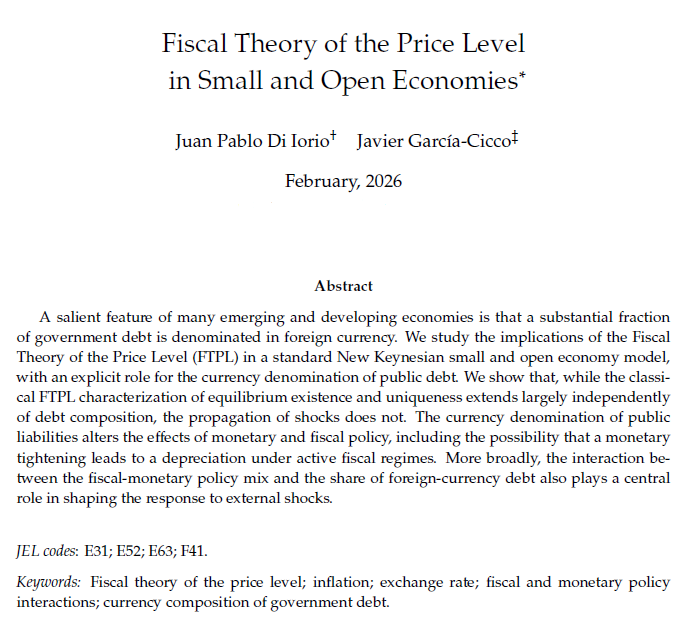
¿Puede una suba de tasas generar una depreciación? Sí.
Si te interesa macro abierta, política monetaria o entender por qué los mercados emergentes se comportan "al revés"… este paper de nuestro profesor @JavierGC14 y @juanpdiiorio (maestría 2022) es para vos.
👉https://t.co/3uGshvIawn
¿Para qué sirven las reservas?
En un paper reciente con @cmciappa y @VazquezFrancom, encontramos que, además de reducir la propensión a crisis y el spread en años malos, operan como seguro contra el riesgo de controles y convertibilidad del peso en años buenos, atrayendo IED.
En la nota que escribimos con @ngadano planteamos un doble efecto: por un lado, un saldo energético récord impulsado por Vaca Muerta; por el otro, el desafío de administrar el impacto de precios internacionales más altos sobre la economía argentina.
https://t.co/zfxfXrCIu2
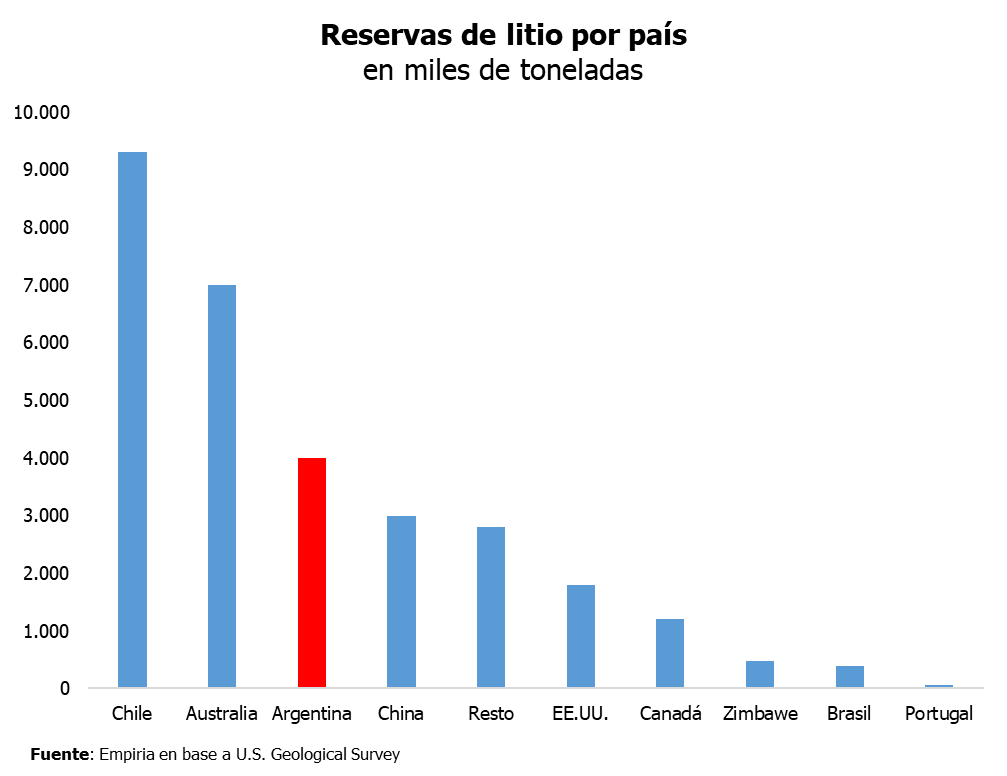
Argentina tiene una oportunidad enorme siendo el tercer país con mayor stock de reservas de litio del mundo. Hoy el litio ya explica ~15% de las exportaciones mineras, récord en 2025. El salto depende menos de la geología y más de la macro, la inversión y la previsibilidad.
The WSJ highlights data from our HBS Tariff Tracker.
Import prices have picked up in recent weeks, as noted in the article, but remain largely flat since November.
So far, the recent moves look more like a post-holiday rebound than a sustained increase.
See updated graphs through Feb 10 on the HBS Tariff Tracker.
📈 HBS Tariff Tracker Update
Tariffs continue to drive prices higher than pre-2025 trends:
🔹 Import Prices: +9.7%
🔹 Domestic Prices: +4.4%
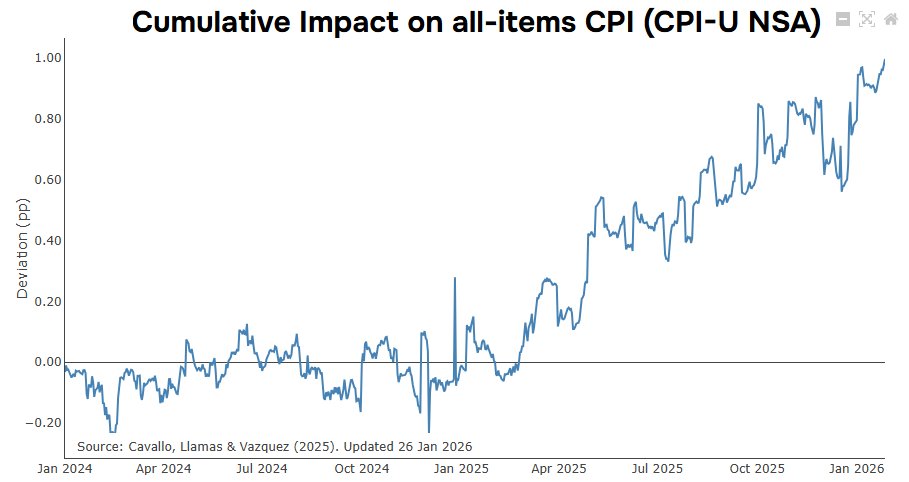
🔹 CPI Impact: +1.0 pp (since Mar 2025)
Our revised paper now includes an incidence estimate: Consumers paid 43% of the burden by Oct 2025 (see assumptions in paper).
Details: https://t.co/8SFZnOLSS9
New NBER working paper with @SFGaliani, @RamiroHGalvez, and @Franco_MettLG! We develop an LLM-based approach to measure how economics research frames efficiency and equity using 27,464 articles from 1950 to 2021, and document a sharp post-1990 shift toward equity-related framing.
Few facts are more surprising than that, as of early 2026, Latin America has a lower fertility rate than the U.S., reversing a long-standing historical pattern.
I was therefore very glad to see this morning a truly fascinating paper by Milagros Onofri, Inés Berniell (@InesBerniell), Raquel Fernández (@raquel1fernan), and Azul Menduiña on Latin America’s recent fertility decline at @nberpubs:
Understanding Latin America’s Fertility Decline: Age, Education, and Cohort Dynamics
https://t.co/LxCJnx72Jg
I have not yet had time to fully digest all its findings, but I will be reading it repeatedly over the next few weeks.
From a first reading, here are five key results (which align very well with some of my previous posts here on X):
1️⃣ The decline in period fertility between 2000 and 2022 is driven primarily by reductions in within-group birth rates, rather than by changes in population composition.
2️⃣ The largest contributions to the fertility reduction come from younger and less-educated women.
3️⃣ The decline in completed fertility reflects substantial reductions in the average number of children per woman.
4️⃣ This is driven primarily by lower fertility among mothers, rather than by rising childlessness.
5️⃣ There is currently a negative correlation between female labor force participation and the total fertility rate, suggesting that greater engagement of women in market work is not directly driving the fertility decline.
Findings 2️⃣ and 5️⃣ contradict some of the overfacile explanations one often reads in the media (or in the comments section): the reduction in fertility in Latin America is not concentrated among “liberated,” highly educated women with jobs in the market. Finding 3️⃣ says the observed reduction in fertility is not mainly about timing. Yes, timing matters, but much less so than reductions in completed fertility. Finding 4️⃣ is interesting, and perhaps different from more advanced economies.
My own conjectures (not the authors’!):
1️⃣ Their data end in 2022, since they need to rely on final consolidated sources. Everything I have seen in the provisional data for 2023–2025 fully supports their findings and perhaps even reinforces them.
2️⃣ By looking at the cohort level, I do not see much of a differential effect between cohorts with and without access to cell phones. Instead, I see a constant decline over time.
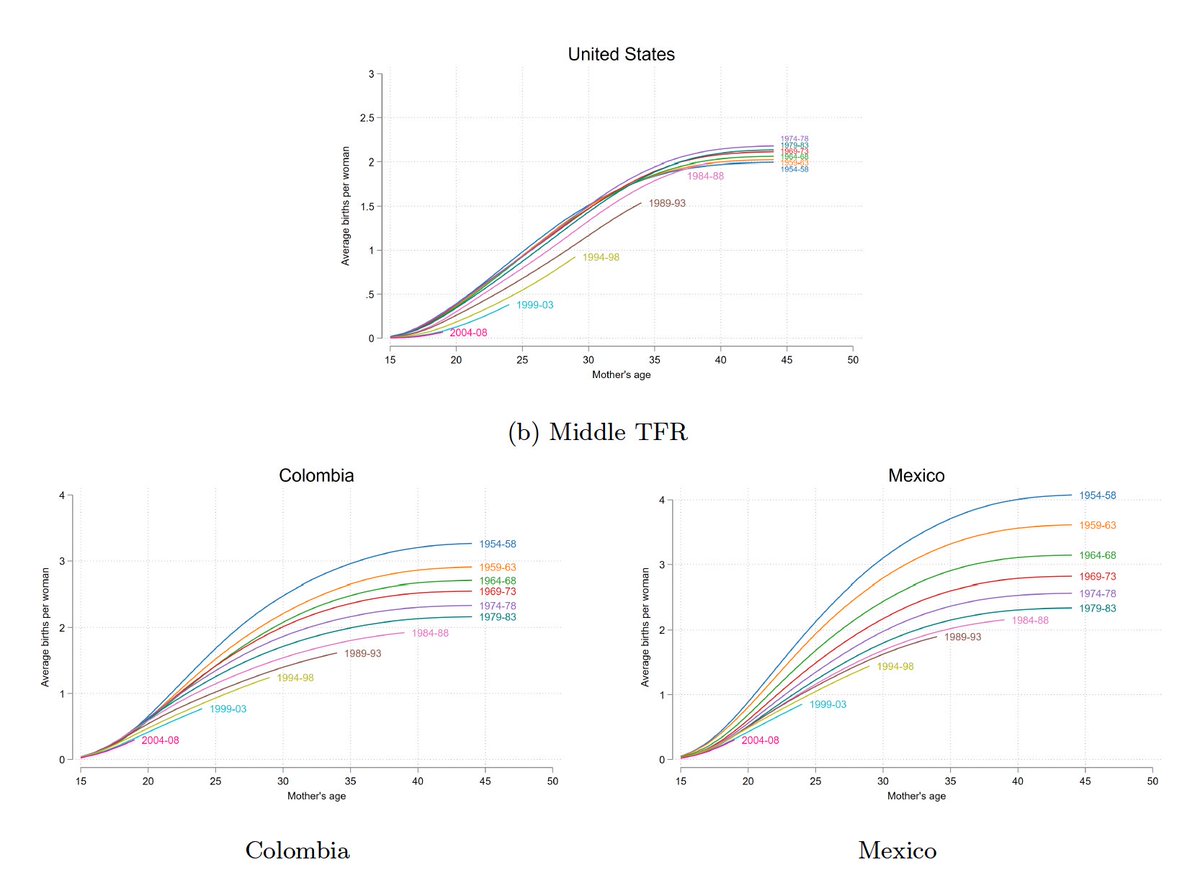
To make this latter point, I include one of the figures from the paper, plotting, for several countries and five-year birth cohorts from 1954–1958 to 2004–2008, the cumulative average number of children a woman has had by each age.
The only point where perhaps I diverge somewhat from the authors is in their more optimistic assessment of the WPP data than mine. But that is a very minor quibble.
Otherwise, anyone interested in Latin America’s fertility should read this paper with utmost attention. This is social science research at its best.
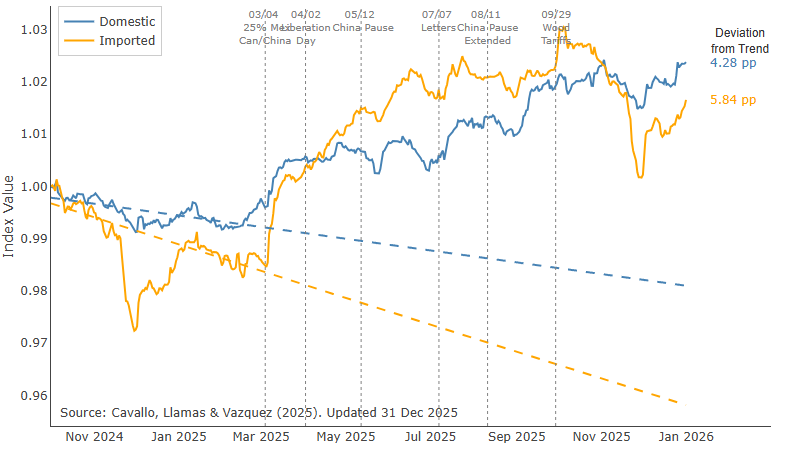
HBS Tariff Tracker updated through Jan 1:
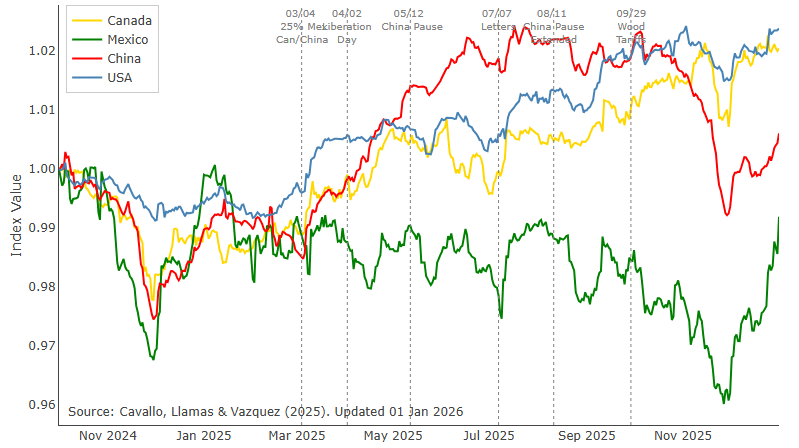
📦 Imported goods +5.8% | Domestic goods +4.3% vs pre tariff trends
💸 Imported goods saw large holiday discounts and have only partially rebounded.
🌏 Chinese prices fell in November and remain soft. Mexican prices are surging (seasonal). Canadian prices rising steadily.
📈 CPI impact: +0.65 pp
We added 250K new products to the sample.
More at https://t.co/Ew8bY32vHY
Gracias a @LuisCaputoAR por haberse tomado el tiempo de venir a @TiempoLibreok y conversar con total apertura.
Gran entrevista de @EleonoraCole y un placer haber compartido el cierre junto a la Colo @Jose_Godoyy
We updated the HBS tariff tracker through November 1.
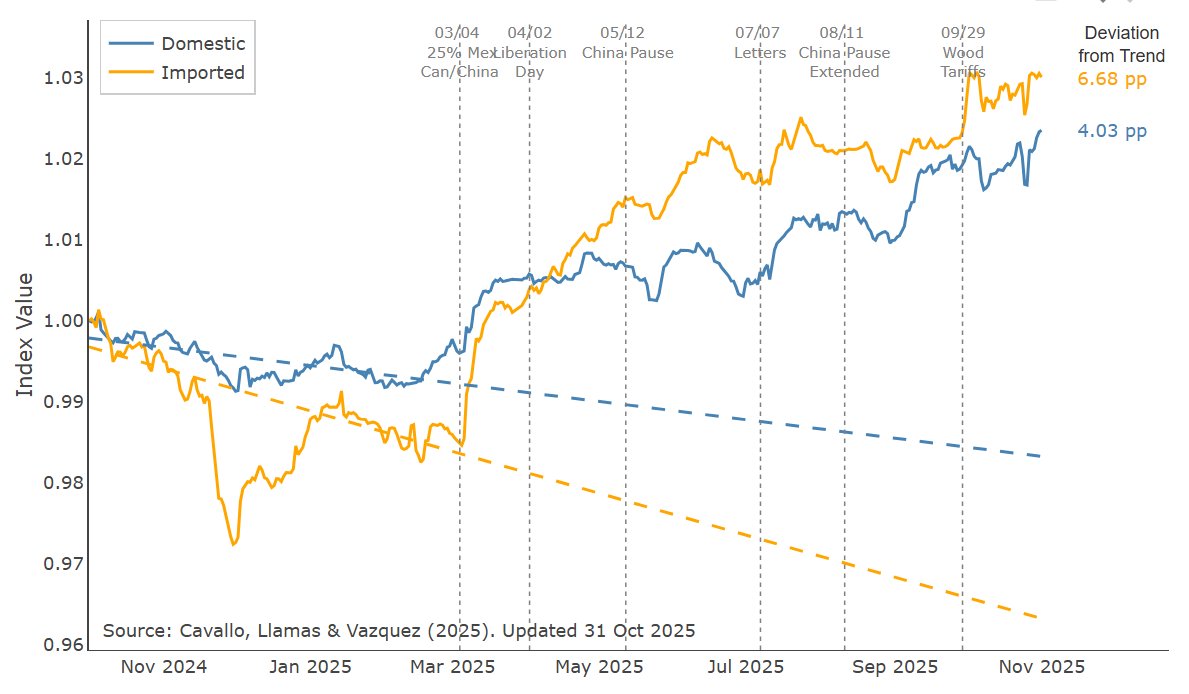
Results remain stable: imported goods up 6.7 percent vs pre-tariff trends, domestic goods up 4 percent. The combined impact from these sectors is now estimated at 0.63 percentage points.
See https://t.co/nPHKTLljJI
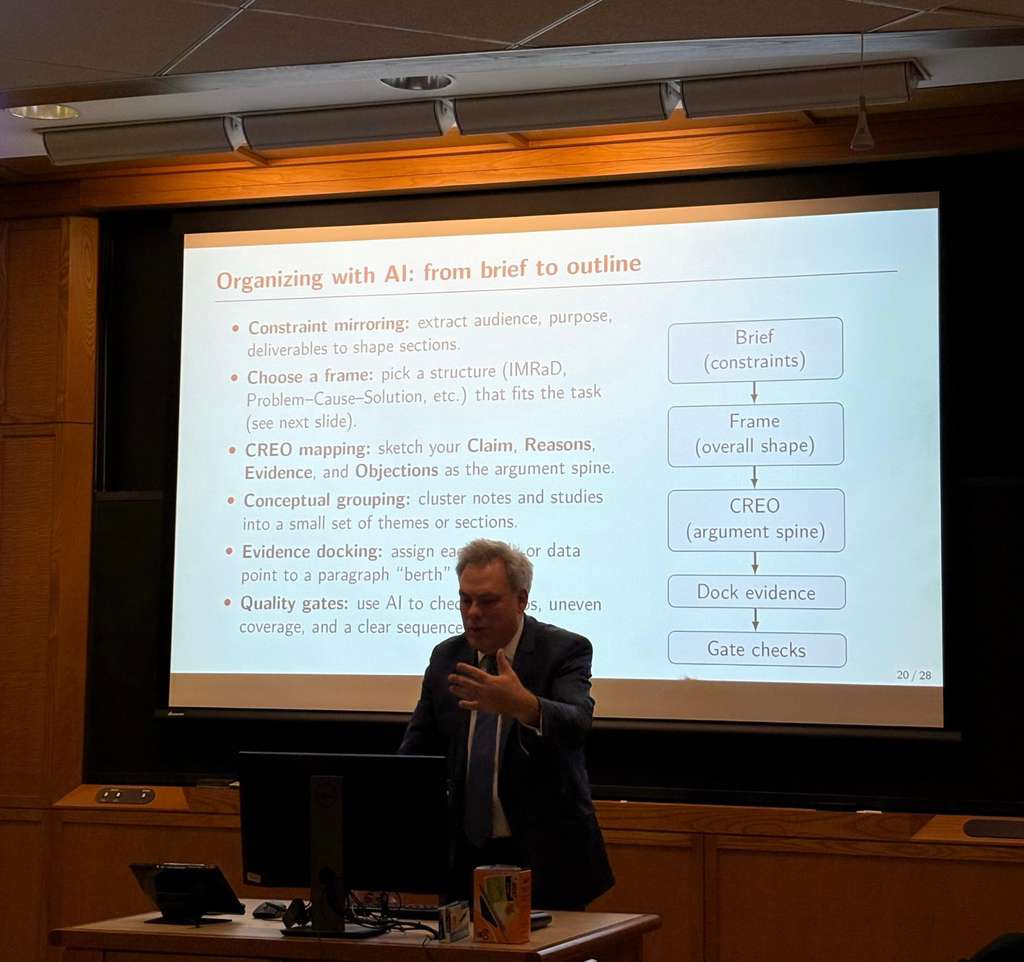
Rolling out AI at Your Side: first presentation of this very original book, co-authored with @raul_sosa2908, on how to use AI to boost learning and productivity. More to come. Today at Harvard Graduate School of Education @hgse — thank you for the invitation and the excellent comments.
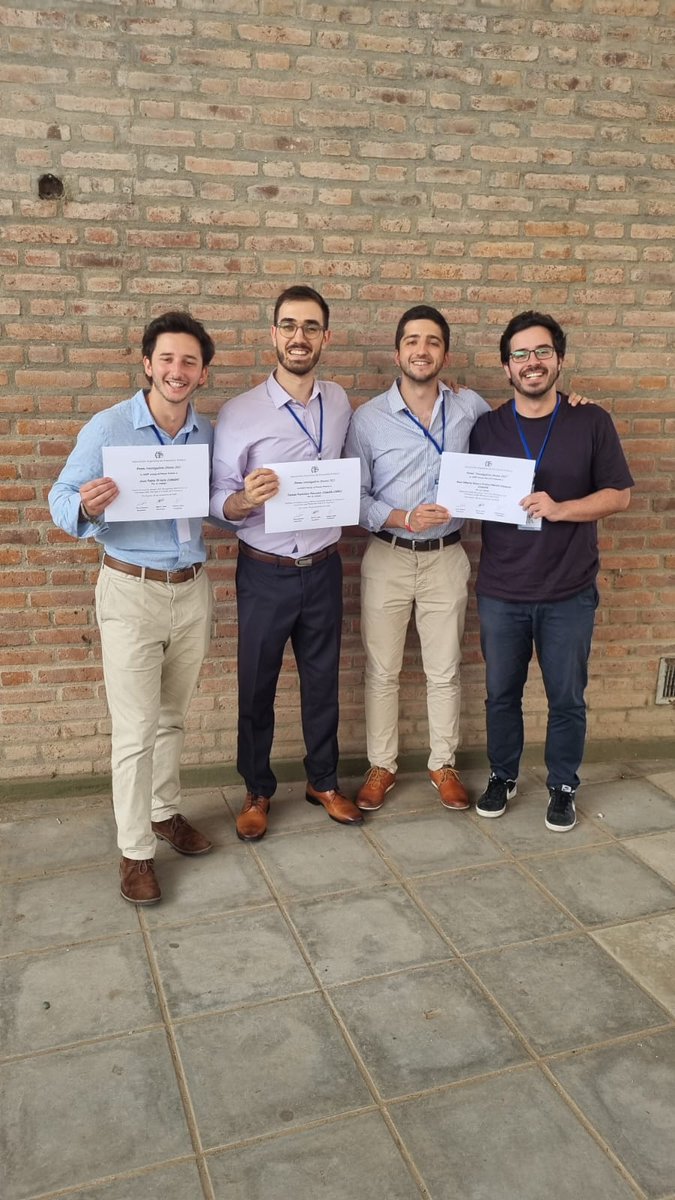
🏆Felicitamos a @juanpdiiorio (Mae. 2022) y Tomás Peruchin (Mae. 2022), distinguidos con el Premio de Investigador Joven en la LX Reunión Anual de la AAEP.
Además, @raul_sosa2908 (Mae. 2024) y @VazquezFrancom (Mae 2024) recibieron una mención especial. ✨📚
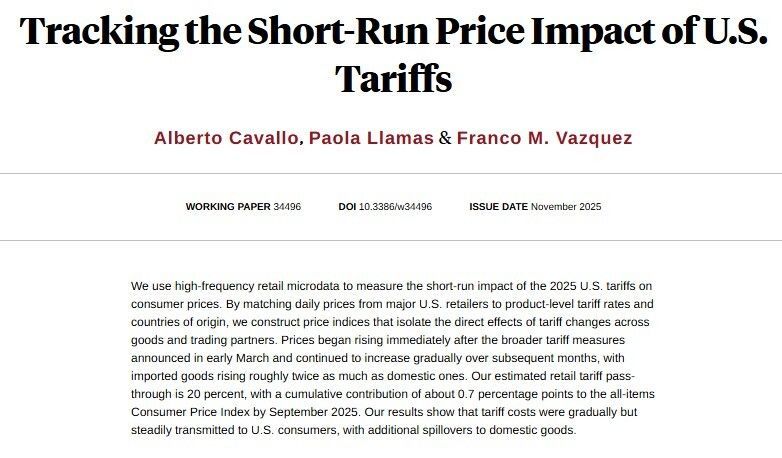
Tariff costs were gradually but steadily transmitted to US consumers, with additional spillovers to domestic goods, from @albertocavallo, Paola Llamas, and @VazquezFrancom https://t.co/EAXM6ETNqK