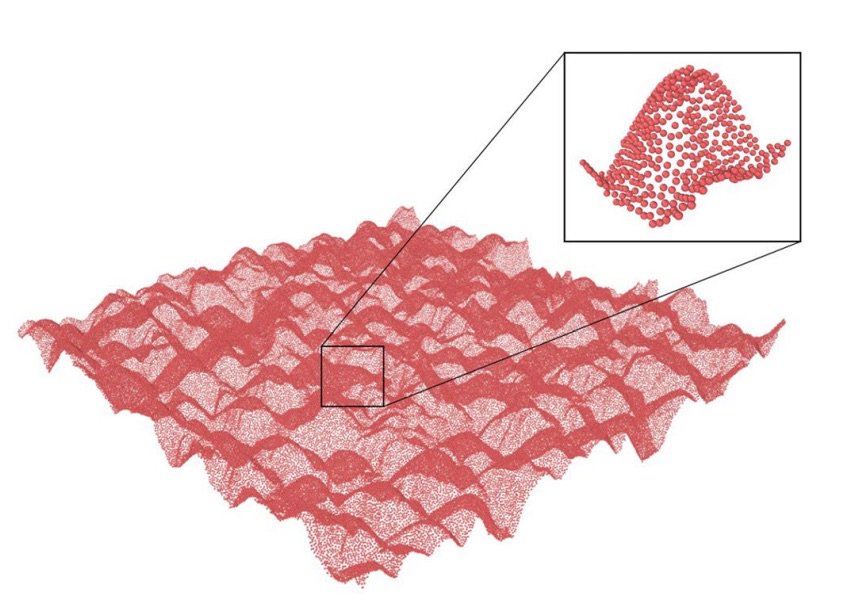
Una recerca col·laborativa entre la #URV i la @RMIT d'Austràlia ha dissenyat i fabricat una superfície capaç de reduir un 96% la capacitat d'infecció de #virus mitjançant mètodes mecànics i sense utilitzar productes químics 🔪🦠
https://t.co/ksvwBY7Ael
This example can motivate further developments towards merging creativity of AI, web3 technology and possibility for decentralized collaboration to advance the development of Artificial General Intelligence (AGI) for the benefit of science. https://t.co/rgYeCoujfS
An article highlighting the crucial role of ligands found on the surface of nanoparticles in modifying the surrounding environment. This have implications for the functionality of nanoparticles and can be used for sensing of microenvironments. https://t.co/z58OxnriSf
Local Environments Created by the Ligand Coating of Nanoparticles and Their Implications for Sensing and Surface Reactions, F. Schulz, J. Hühn, M. Werner, D. Hühn, J. Kvelstad, U. Koert, Nicole Wutke, M. Klapper, M. Fröba, V. Baulin*, and W. J. Parak*, https://t.co/5h0HekrHRM
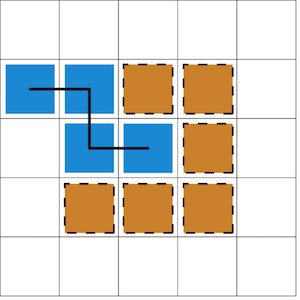
🔔ECLT #seminars Today April8⃣ at 3 PM Prof Baulin @vbaulin from @universitatURV Department of Physical and Inorganic #Chemistry & ECLT Academic Assembly member on "#Enumeration -selection #computational strategy for inverse design problems"
📌More info: https://t.co/oi3LmDrzhP
Our new study suggests #microplastics can mechanically destabilize membranes of human red #blood#cells and stretch them out such that it may potentially affect their ability to transport #oxygen https://t.co/Pob3POS0sC
Investigadors de la @universitatURV han dissenyat un nou mecanisme que millora l’eficàcia de les superfícies antibacterianes a escala nanomètrica. Els resultats d'aquest estudi obren la porta a la creació de nous materials antibacterians
https://t.co/4PVGON8IKU
Most read- Nanomaterial interactions with biomembranes: Bridging the gap between soft matter models and biological context @AVS_Members https://t.co/EPdRYv9D5V