Reminder for all young parents:
You only get:
- 1 Summer with your baby
- 3 with your toddler
- 9 with your child
- 5 with your teenager
This time is precious. Don’t rush it.
تدريبات النرويج في شمسِ أمريكا ..
الأوربييـن خصوصاً راح يعانون أكثر من غيرهم
كون اللاتينييـن وقارتي اسيا وافريقيا متأقلمين على هكذا درجات حرارة عاليـة بسبب طبيعة ومناخ بلدانهم
We are officially in World Cup month. Please leave your xG charts, pressing percentages, and defensive metrics in the club season. International tournament football is strictly decided by pure vibes, individual brilliance, tactical survival, and a random goalkeeper turning into prime Lev Yashin for two weeks. Enjoy the entertainment and put the spreadsheets away.
@TzolakiSZN Agree with the sentiment. Agree that the Azteca is a cathedral. Agree that MetLife is a soulless stack of CDs.
But final should have been in LA.
I believe we now have evidence of FIFA's World Cup ticketing shell game: FIFA is colluding with third-party resale platforms for its own supply management.
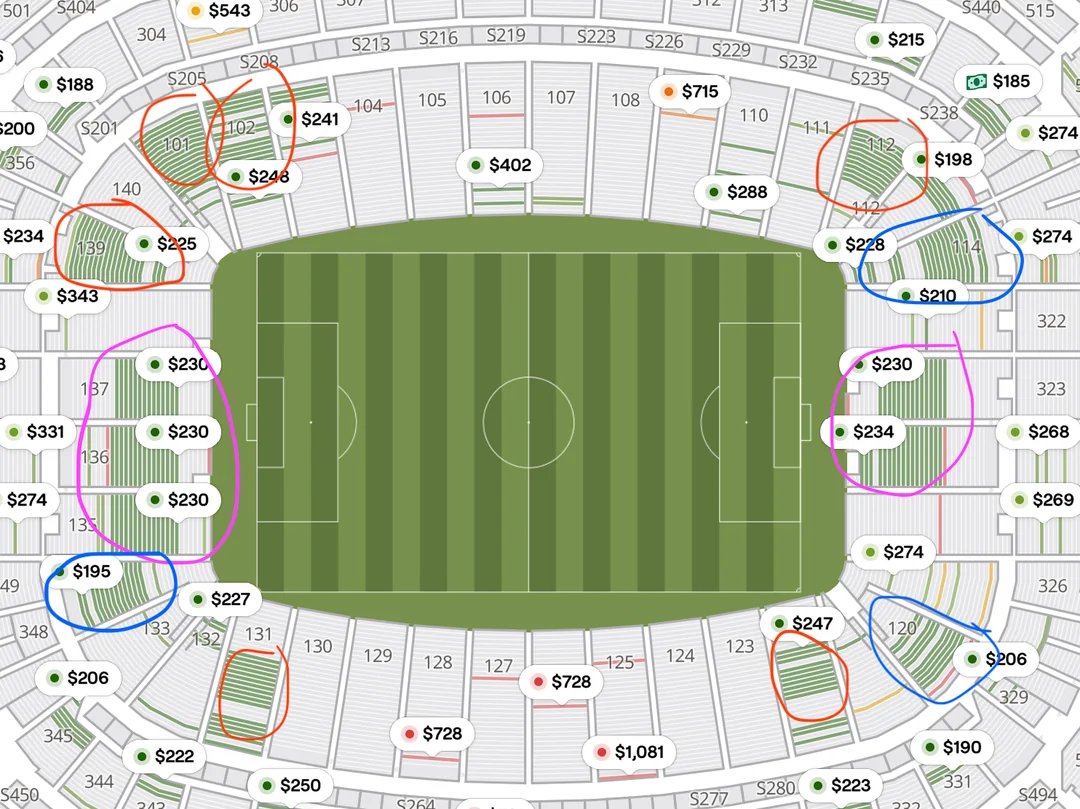
Look at this SeatGeek map (secondary market!) for Saudi Arabia vs Cape Verde. The circled areas are not random single resale tickets, but large, contiguous blocks of seats: entire rows and swaths in sections 101/102, 112/113, 119/120, 134–137, 139, ...
The blue circles appeared weeks ago, then the purple blocks suddenly showed up a day or two ago, and the red blocks seem to have appeared recently too.
That's not what ordinary fan or even commercial scalper resale looks like who resell pairs, fours, and scattered seats. Instead, this looks like inventory being dumped in bulk onto secondary markets, at prices below FIFA's official site.
Why doesn't FIFA just lower prices on its own site Probably because official price cuts could trigger refund demands, chargebacks, or consumer-protection headaches from fans who already bought at much higher prices.
Instead FIFA keeps official prices high, avoids openly admitting the market-clearing price is lower, and moves unsold inventory through third-party resale platforms instead.
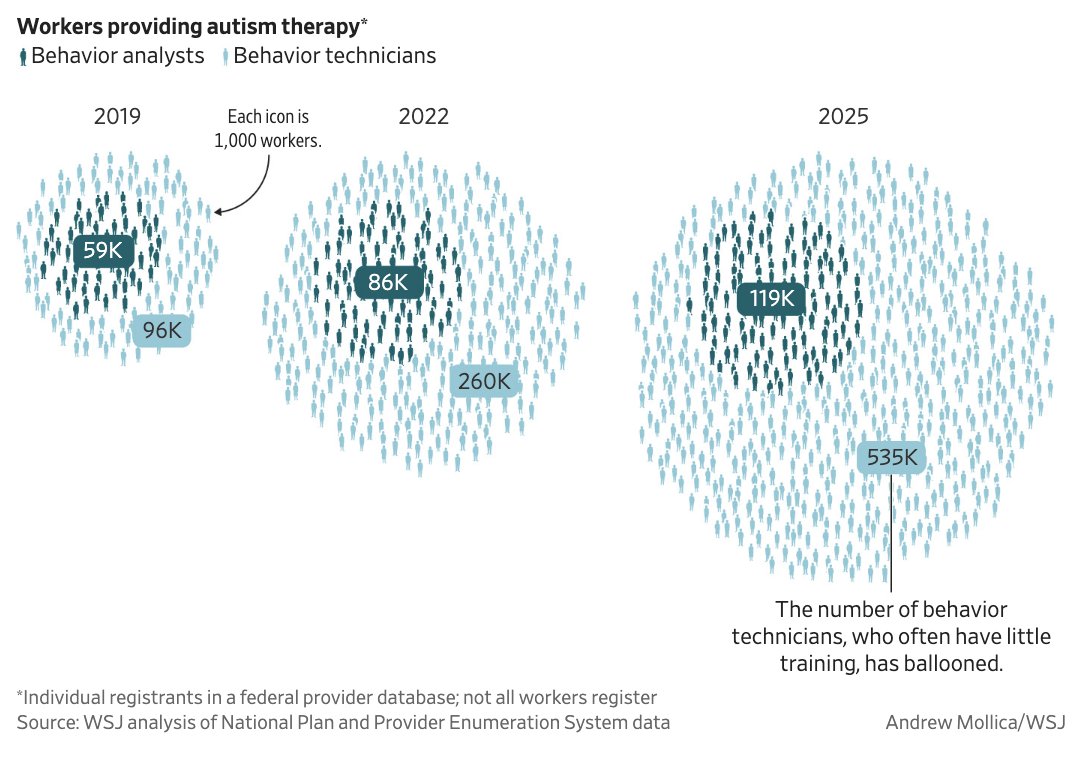
In 2019, there were about 150,000 people working in autism therapy.
Six years later, there were 654,000—more than the number of people who work in mining and logging, or telecommunications, or at the US Postal Service.