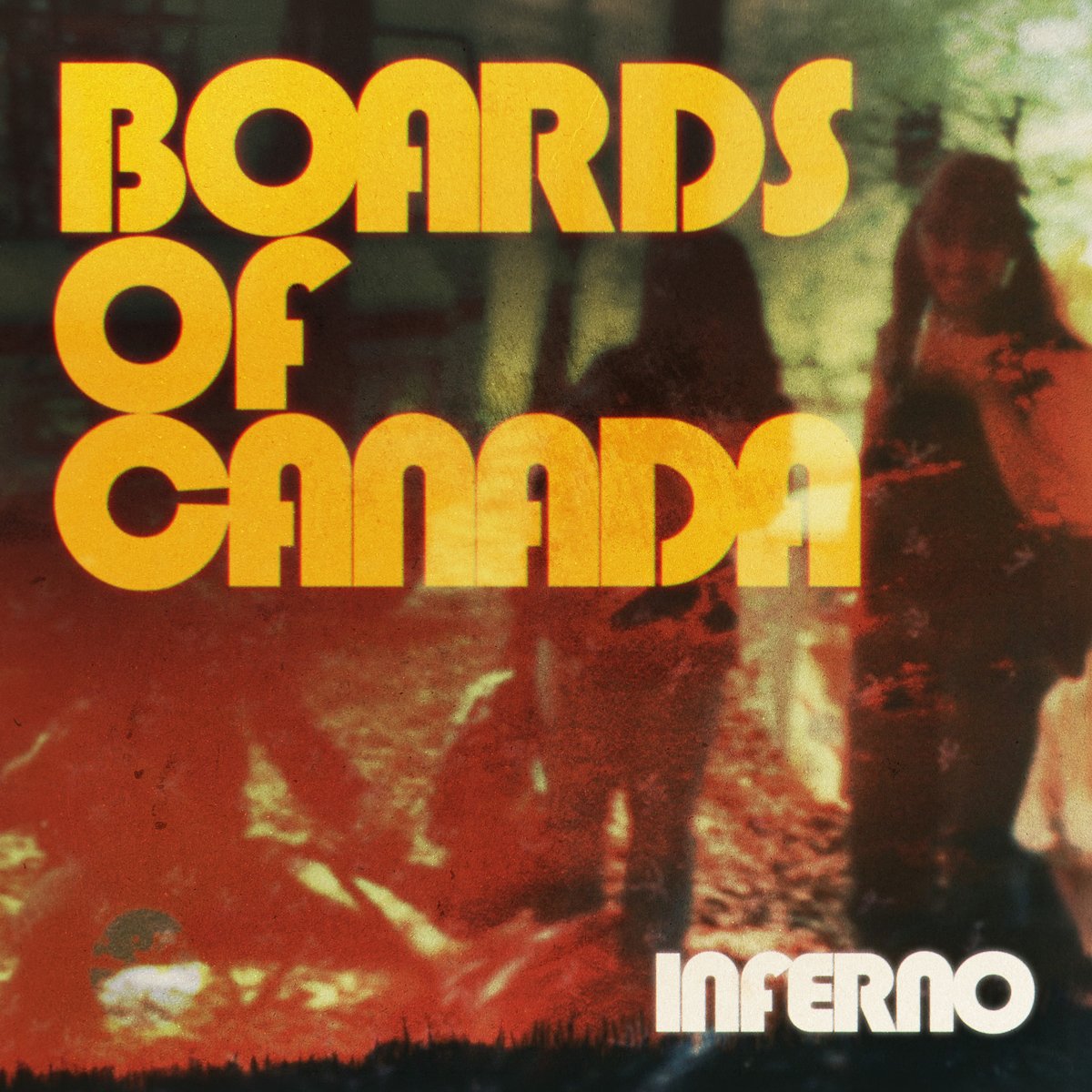
Inferno is truly a religious experience. People will debate if it could end up being their best album and cements their whole work in the halls of great artistic masters in history. Thank you for everything you have done in our lives @boardsofcanada@bocpages@WarpRecords
A reanalysis of black and white
As a young adult, I was in the phase of finding out what I believe and why I believe it. At this age, you should develop convictions, ponder and philosophize deeply, try to have conversations, and try to challenge yourself. I did these things, and I did develop convictions. At the time, I would get into heated debates on all kinds of philosophical topics, politics/ethics/economics being some of the most polarizing. I received a lot of backlash for my beliefs, and over time, I felt it wasn’t worth discussing with people because people don’t really want to change their minds.
A strong quote/concept at the time heavily influenced me: “There are two sides to every issue: one side is right, and the other is wrong, but the middle is always evil.” It allowed me to incisively look at issues as black and white, that the grey is always wrong. I ran with this for a long time and found it has limitations. This is because absolutist language works in higher levels of abstraction; it can lead to political and ethical ideals, but life events are composed of very large series of complex independent issues.
I have noticed in today’s political era of heavy polarization, social media siloing, propaganda, etc., that people are actually using this mentality to reinforce their own beliefs. In any event, they will find what aspect of a complex situation they deem right and what they deem wrong, and the entire issue is settled in their mind immediately. Another person can do the same at another point in the issue and resolve their mind in the completely opposite direction. This is partially due to making morality and ethics a subjective as opposed to an objective field. But it is also related to our inability to quantize human interactions.
An analogy I think of is as a child playing in MS Paint. I would zoom in very far and then make diagonal lines of black pixels, somewhat like a checkerboard. But when you zoom out, it progressively looks more like a field of grey. This is what is happening in human interactions. Each of us in an ethical interaction makes infinite quantized choices, ideas, and behaviors that may be right or wrong. As this process propagates to very large orders of complexity. You can imagine with each other person involved, this becomes very complex. In politics, that resolution is simplified again as decisions become more averaged, but the scaling principle still applies.
I wanted to highlight this because it would be a way for people to once again start having conversations instead of closing off communication to those you differ with. We can begin to understand each other more clearly by discussing at each quantized moment how we interpret that particular event for itself. It allows us to see how we actually disagree as opposed to shutting down an entire position.
If we zoom in together, we can see what is white and what is black. Then, expand its implications to find common ground and understanding from there. A very difficult undertaking, but I am not sure how else to stop the drifting apart of various peoples. So, I think it would be worth it.
@Grimezsz I would say yes. I didn’t know my biological father but over the course of my life and through my spiritual quest I became enamored with a very specific branch of Buddhism, Theravada and its Pali Canon, the state religion of Sri Lanka. Where my whole father’s family comes from.