It’s alleged that 150 Judges from India have gone to the UK along with the Law Minister and will be playing a Badminton Tournament there.
Few Observations around the same:
1. Judges are Humans too
2. It’s their Summer Vacations like our Kids have it and they have gone during these vacations
3. Everyone needs motivation and so do judges, so to keep them motivated for working close to 210 days out of 365 days in a year, the government seems to have taken this measure
4. This badminton couldn’t have been played in India due to poor courts, poor sports facilities and harsh weather and so this trip to UK is fairly justified.
5. All the sponsors for the event are Indians, including the Ministry of law and it should fill every Indians heart with pride that Indians and Indian brands are shining in a place like UK
6. All the Judges have gone along with the #LawMinister, himself which clearly indicates and reflects upon the level of discipline India follows
7. Who said any of these judges would’ve passed a favourable judgement on the pretext of such foreign trips by the client to them since the client out here is GOI itself
8. This also promotes India on global platform in terms of #KheloIndia movement and sends across a beautiful message around India’s commitment towards Sports
9. It would be even nicer if govt provides them with private choppers instead of chauffeur driven cars to save on their precious time and energies
10. The motivation is required even more since India has the second highest pendency of cases in the court globally and next 8 countries no where comes a shade close to India
#IndianJudiciary #Judiciary #Judges #JudgesInTheUK #InternationalTrips_Judges #SummerVacations #JudiciarySummerVacations #SummerBreak
THIS 18-YEAR-OLD DID NOT BLINK 🔥
RAJDEEP: CBSE says TCS quoted around ₹951 crore, Coempt Edutech around ₹384 crore. Lowest bidder wins, so rules were followed.
SARTHAK 🎯: My question is not whether CBSE followed the rules. My question is why CBSE changed the rules.
RAJDEEP: People say you are batting for the opposition.
SARTHAK 🔥: In a democracy, opposition parties are pressure groups. If someone supports me, I am thankful. If someone ignores me, I do not care.
Finally, the dreadful day has come knocking on my beloved Polo GT 1.2L TSI’s door.
@nitin_gadkari - Here’s proof of how your absolutely lunatic policy of E20 fuel has ruined my 2017 manufactured car. :)
Want more proof? Please come and check it for yourself! @volklub#E20
LIC owns 10.8% of Rajesh Exports.
Yesterday SEBI found out 99.8% of company's revenue for last 5 years was actually fake.
Mutual Fund managers never bought this stock.
LIC doesn’t have a team to do company research before owning such huge quantity?
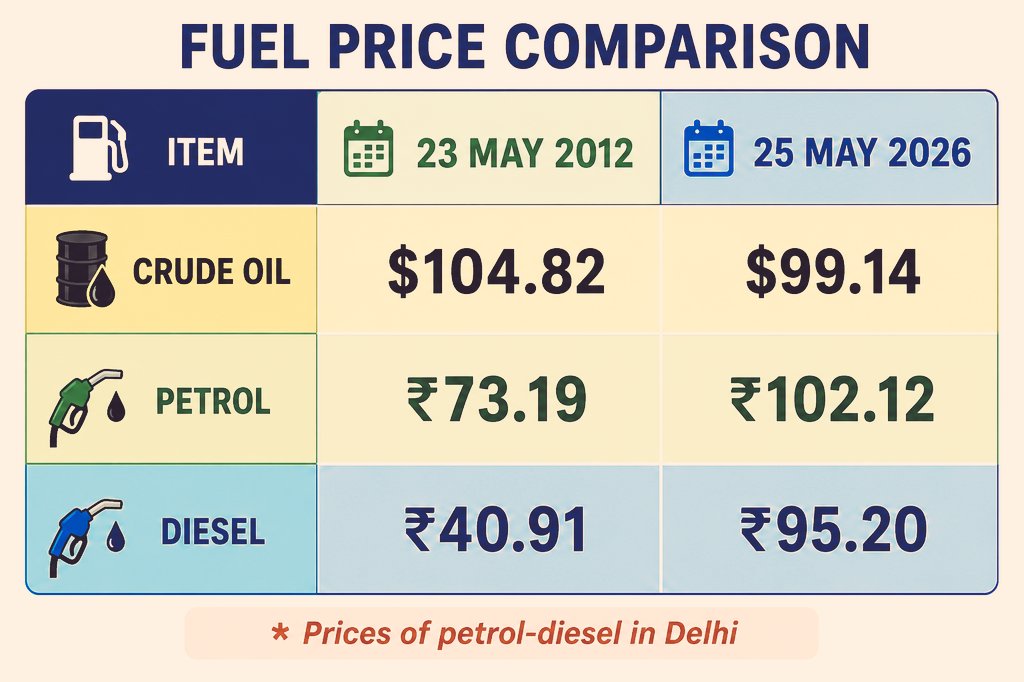
This useless cabinet achieved 187% GDP growth (versus under 100% in the last 12 years), under this cabinet the Rupee was not Asia’s worst currency like today, and our stock market was not the world's second-worst performing stock market. It didn’t shut down 93,000 public schools like your paw paw, maintained petrol at 50–60 INR without ethanol blending despite 100–147 USD crude oil, and preserved a strong RTI and relatively free media. Furthermore, it levied no STT, LTCG, or STCG, enabling middle-class wealth growth and stability. Under its watch, India's per capita was not less than Bangladesh like today, income inequality was not worse than the days of the British Raj like today, and Taiwan did not overtake India in stock market capitalization.
If Modi was in opposition, he'd have read this news and said at his rally: "Bhaiyon behno.. sarkar ne.. Bharat Mata ke.. gehne bech diye hai.. inn bhrashtachariyo ko sabak sikhana chahiye ki nahi sikhana chahiye?"
Dharmendra Pradhan won’t resign because accountability is contagious. If he goes, Hardeep Singh Puri is next. Then Ashwini Vaishnaw. Then Nirmala Sitharaman. Pull one domino and the entire chain of manufactured invincibility comes crashing down.
be @ni5arga
→ 19 years old, from West Bengal, studied in Delhi for a few years
→ just finished his own Class 12 exams in 2026
→ calls himself a hobbyist cybersecurity researcher
→ says he is an engineer, not a hacker
→ built an OSINT engine, a stock-tracking TUI, a pastebin in Rust
→ once found bugs in FOSS United and disclosed them quietly
→ just another CBSE student watching his own board roll out a new digital marking system
then he opened the portal
→ CBSE moves Class 12 evaluation to On-Screen Marking, 1.8 million students affected
→ Nisarga sees the portal link is fully public, gets curious
→ opens DevTools, downloads the Angular JavaScript bundle
→ first vulnerability found in 30 minutes
→ a literal master password sitting in plain text inside the frontend code
→ enter it, the OTP field auto-fills, the entire login flow gets bypassed
→ OTP validation happens in the user's browser, not on the server
→ no route guards, every internal page reachable by editing browser storage
→ password reset API never checks the old password
→ systemic IDOR across the entire API, change one value in sessionStorage, become any examiner
→ outcome: take over any teacher account, view answer sheets, edit marks
25 February 2026. He reports everything to CERT-In the same day.
→ CERT-In asks for a screen recording, he sends a full walkthrough
→ acknowledgement comes back as a boilerplate reply
→ reference number assigned: CERTIn-16590126
→ he follows up multiple times. no response.
→ three months pass. portal still live. Class 12 results released. vulnerabilities still there.
→ 22 May: publishes the blog post and a thread on X
→ Deedy Das, Satish Acharya, Internet Freedom Foundation amplify it
→ the post goes viral
→ CBSE issues a clarification: that was just a test portal, no breach
→ the URL CBSE cited in their own tweet was not even a registered domain
→ a friend buys the domain and points it at Nisarga's blog
→ CBSE quietly deletes the tweet
then it gets worse
→ 25 May: finds an SQL injection vulnerability on the live production portal
→ reports to CERT-In, gets a one-line thank you
→ gains admin access to the live https://t.co/1WpmNGsczK server
→ portal stays up for four more hours
→ he uploads anime videos and memes, links them publicly from CBSE servers
→ plays a viral Japanese song on a CBSE page, makes the news for it
→ CBSE finally takes the whole portal down
then he reads the database
→ master table accessed: 10 GB, 9.3 million records
→ examiner names, addresses, school names, bank account details
→ passwords stored in plain text
→ login tokens anyone can paste into a browser to log in as that user
→ 31 May: finds a second live CBSE production portal, 45,074 records of failed payments
→ emails, phone numbers, payment IDs, order IDs, all readable
→ 31 May, the bigger one: an AWS S3 bucket is misconfigured
→ ListObjectsV2 works without authentication, the bucket root is listable
→ samples pulled from 18 lakh scanned 2026 answer sheets, every subject
→ multiple institutions sharing the same bucket
→ also notices something strange in the scans: bedsheets visible in the background of answer sheets CBSE paid for proper scanners to handle
CBSE responds
→ posts an AI-generated image saying the system is robust and secure
→ three days later admits some vulnerabilities existed and have been contained
→ refuses to name the cybersecurity firm doing the audit
→ claims they tried contacting him. he says they have not.
→ Internet Freedom Foundation writes to the Ministry of Education and CERT-In
→ asks for an investigation into CBSE, a review of the contract with vendor Coempt EduTeck, a full audit
→ he points out he could have sold this data and made a lot of money
→ he did not. he is a CBSE student too.
→ his own analogy: the door wasn't just unlocked. the key was lying on the ground in front of everyone.
a 19-year-old with a anima pff broke a national exam evaluation system in 30 minutes with browser developer tools and the government is still pretending it was a test environment
Namaskar @PMOIndia,
This is perhaps the last office I can appeal to regarding the growing concerns surrounding the implementation of E20 fuel blending in India.
Progress is essential for any nation, but meaningful progress must be practical, inclusive, and aligned with ground realities. When a significant section of the population continues to rely on government welfare schemes, is it reasonable to indirectly pressure households into replacing perfectly functional vehicles and becoming part of an endless cycle of consumerism?
The rapid rollout of higher ethanol-blended fuels raises several legitimate concerns. Beyond compatibility issues with older vehicles, it is important to ask: how much water and agricultural land are consumed in producing a single litre of ethanol? How much sugarcane cultivation is required? Are the environmental and economic trade-offs being honestly evaluated, and are alternative solutions being explored?
Another fundamental question is this: if a vehicle passes pollution norms, remains roadworthy, and serves its purpose efficiently, why should its owner be compelled to replace or scrap it? Across developed nations, vehicles several decades old continue to operate legally as long as they meet safety and emission standards. A vehicle should be retired when it becomes unfit for the road—not because policy changes make ownership increasingly difficult.
#E20 fuel should be offered as a choice and implemented gradually through a carefully planned transition. Owners of older vehicles should be given practical options, including affordable modifications, engine upgrades, or conversion programmes, enabling them to comply with evolving standards without being forced into premature replacement.
Not everyone earns like the top income brackets of society, and even among those who do, not everyone wishes to participate in a culture of constant upgrading and conspicuous consumption. Many citizens are content with maintaining and using what they already own responsibly.
There are numerous other concerns that could be discussed, and many of them would likely highlight more challenges than benefits. However, my intention is not to oppose progress, but to advocate for progress that is realistic, sustainable, and considerate of ordinary citizens.
I respectfully urge the Government of India to evaluate the long-term impact of these policies and to ensure that environmental goals are pursued without placing unnecessary financial burdens on millions of responsible vehicle owners.
Regards.
@rashtrapatibhvn@narendramodi@MORTHIndia@PetroleumMin
When a rapist is garlanded and welcomed back into society, who do you think pays the price ?
You do.
You’re surrounded by pedophiles, perverted blackmailers, murderers, underage drunk drivers, thieves, lynchers, slashers, pick-pockets and rapists… who are out of bail or let off after writing 200 word essays.
Societal collapse, moral rot takes a long time, doesn’t happen in overnight.
First sh*t needs to float to the top.
If this is kalyug, it’s manmade.
Enjoy na 🤌🏽☺️
Breaking: Narendra Modi has become the first PM of India to advise his ministers to stay hydrated, in a cabinet meeting!
VishwaGuruGhantal for a reason 🫡
This so-called “critical minerals deal” and the Quad’s new port project in Fiji are two sides of the same dirty coin.
India is being locked into supplying RAW RARE EARTH MINERALS especially Neodymium, Praseodymium, Dysprosium, and monazite-rich beach sands to America and its allies. The primary Indian operator is the government company IREL (INDIA) LIMITED. The main foreign partner is Japan’s TOYOTA TSUSHO CORPORATION (through its subsidiary Toyotsu Rare Earths India), which has been taking processed rare earths from IREL for years.
Here’s the layer no one dares to say out loud:
The real mining will hit the coastal communities of Chavara (Kerala) and Manavalakurichi (Tamil Nadu) hardest. These areas already suffer from high background radiation due to monazite. Studies have shown severe soil and water contamination toxic heavy metals, radioactive waste, and destroyed ecosystems. Local people already report high rates of cancer, respiratory diseases, skin ailments, and other chronic illnesses.
This deal will intensify that destruction.
Fisherfolk will lose their beaches and livelihood. Groundwater will get further poisoned. Entire villages will face rising cancer clusters and generational health damage. The land, the sea, the air everything that sustains life in these areas will be stripped away so that America and Japan can secure their defense and tech supply chains against China.
Meanwhile, the Quad port project in FIJI (announced on 26 May 2026) is the military counterpart turning small Pacific nations into strategic outposts.
India is not gaining sovereignty or industrial power. It is voluntarily becoming a raw material colony and a geopolitical tool for the US-led bloc. The elite will call it a “strategic partnership.” The truth is far darker: India’s coastal poor will pay with their health, their land, and their future while the profits and finished products flow outward.
This is not development.
This is SACRIFICING INDIAN BLOOD and soil on the altar of American strategic interests.
The mainstream narrative of “win-win trade deal” is a complete and utter lie.
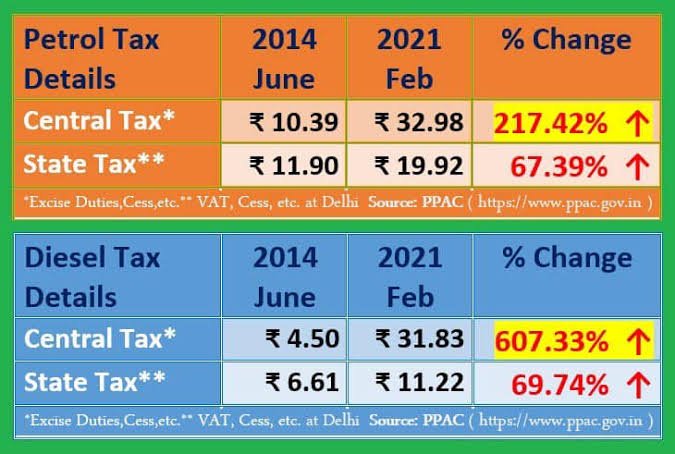
₹34–40 lakh crore, that’s how much BJP allegedly extracted from Indians between 2014 and 2026 through massive fuel taxation while denying people the benefit of low crude oil prices. And now they cry like babies over absorbing ₹30,000 crore? What a shame. Indians were made to pay the price for years.