A Stanford mathematician spent 40 years watching brilliant students fail at hard problems.
Not because they were stupid.
Because nobody taught them what to do before they started solving.
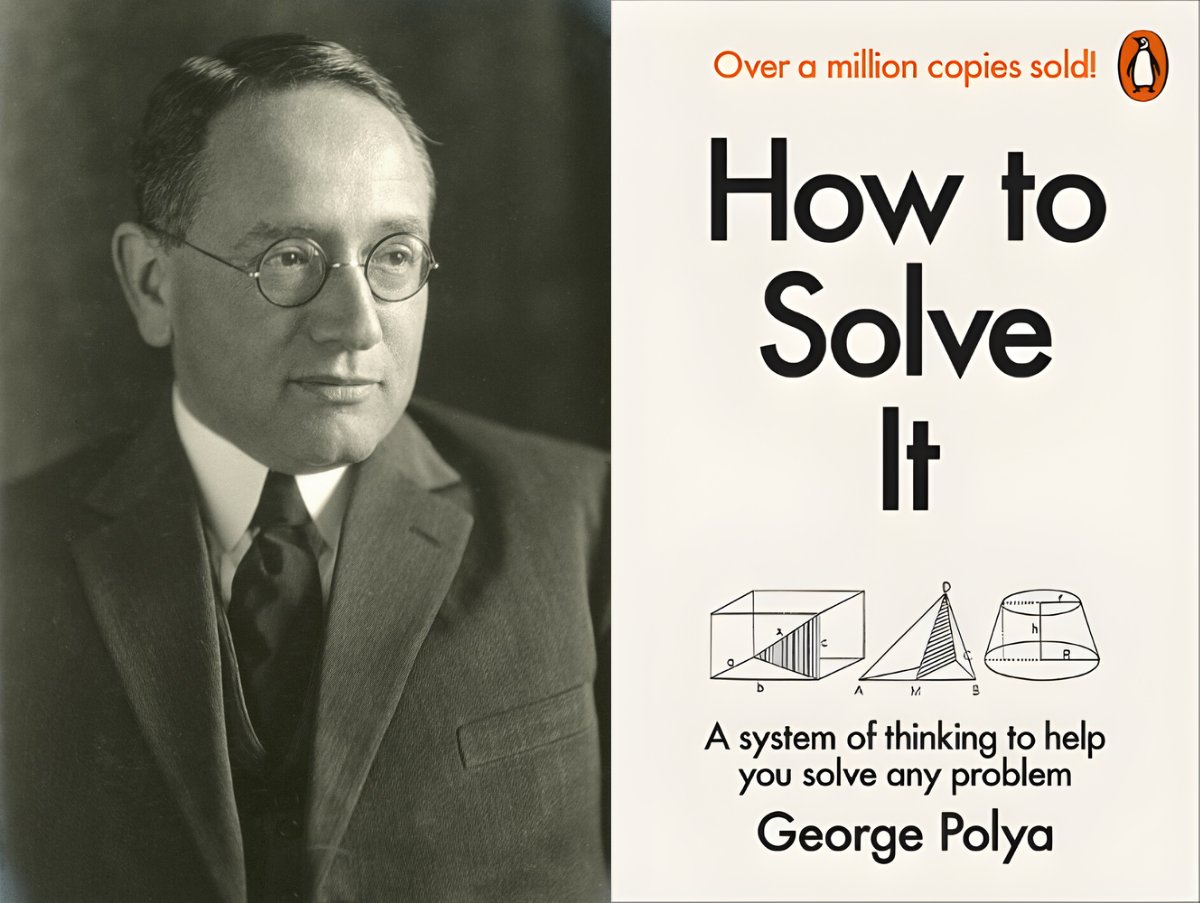
His name is George Pólya.
His 1945 book has sold over a million copies and never gone out of print.
Marvin Minsky, the man who built the first neural network machine at MIT, said publicly that everyone should read it.
Most people have never heard of it.
The failure Pólya watched repeat itself for four decades was always the same.
A problem appears. The student feels anxiety. They immediately start calculating.
Not because calculating was the right move. Because it felt better than sitting with not knowing.
The calculation was almost always wrong.
Not from lack of skill. From lack of understanding what was actually being asked.
He called it the most neglected step in all of problem solving.
Step one is to understand the problem. Not skim it. Not assume you've seen something similar. Actually understand it.
His filter was one question: can you restate the problem in your own words without looking at it?
If you can't, you haven't understood it. You've only read it.
Most people skip this and spend hours stuck on a problem they never actually understood.
Step two is to make a plan. Not execute. Plan.
The pattern Pólya saw in every successful problem solver was the same. When something feels impossible, find a simpler version and solve that first.
Not because the simpler version is the goal. Because it gives you a method you can carry back.
He phrased it once with precision: if you cannot solve the proposed problem, try to solve a related one.
That question alone is worth more than most problem-solving courses ever taught.
Step three is to execute. Everyone thinks this is the whole game.
It is the third of four steps. Pólya spent the least time on it because it is the most obvious. Once you understand and have a plan, execution is mostly patience.
Step four is the one almost nobody does.
Look back.
Not to check the arithmetic. To ask: can I verify this with a different method? Can I use this method somewhere else? What would I do differently?
This is where the real learning lives.
Every expert Pólya studied had this habit. Every struggling student skipped from the answer to the next question, carrying nothing forward, starting from zero every single time.
His deepest insight was not a technique. It was a diagnosis.
Intelligent people feel bad at problem solving because they confuse reading a problem with understanding it. They confuse starting to work with having a method. They confuse getting an answer with having learned anything.
These are not the same things.
The students who get genuinely good at hard problems are not the ones who practice more.
They are the ones who slow down at the two moments every instinct tells them to rush.
The beginning and the end.
The problem was almost never as hard as it looked.
They just hadn't understood it yet.
#iufb reached college football immortality Monday night, as the Hoosiers earned their first national championship with their victory over Miami.
Indiana finished the 2025 season a perfect 16-0 as the national champions.
https://t.co/1IBlEm2vLD
BIG NEWS 🚨 Himachal nurse Kamala Devi jumps a raging river to vaccinate a newborn 😳
NURSE: "I had to reach the baby; the mother couldn’t come due to weather. I was worried about the baby" ❤️
Their kids who came here with them as elementary school students are Americans in ever single way you can imagine, but the law tells them to leave when they reach adulthood or literally win the lottery to get to stay.... and be as discriminated against as your parents.
Thanks Anil Kumble sir for promoting Sanskrit !!
I am learning proper Sanskrit and I ask you all to give your 30 mins to Sanskrit in a day.
#SanskritDiwas
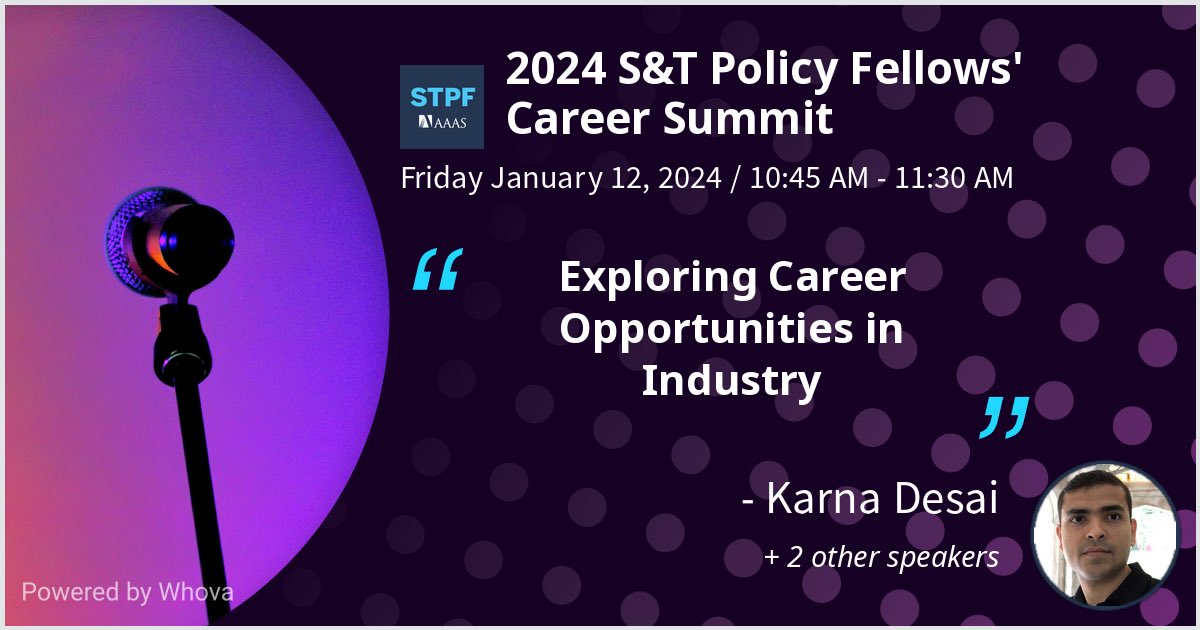
I am speaking at 2024 S&T Policy Fellows' Career Summit. Please check out my talk if you're attending the event! #STPF@AAAS_STPF - via #Whova event app
The last time Bloomington was in the path of totality for a solar eclipse was in 1869. This eclipse was observed by notable IU professors Theophilus Wylie, Daniel Kirkwood, and Elisha Ballantine on the roof of the Wylie House in Bloomington. #IUBEclipse
Grab your #eclipse glasses! 🕶
Researchers & eclipse enthusiasts are gearing up for 2️⃣ solar eclipses over the U.S. These events allow scientists to examine everything from the solar corona to impacts on other planets, including Earth. https://t.co/uTDIiKVRS5
📷 Rob Margetta, NSF
શ્રી મહાદેવભાઈ દેસાઈના આકસ્મિક નિધનના સમાચાર ખૂબ જ દુઃખદ છે. તેઓ ઘણા સામાજિક સેવાના ઉપક્રમોમાં અગ્રેસર હતા તથા વાંચન અને શિક્ષણને લગતી પ્રવૃત્તિઓને વેગવંતી બનાવવા માટે પ્રયત્નશીલ હતા. તેમના પરિવારજનો પ્રત્યે સંવેદના વ્યક્ત કરું છું. ૐ શાંતિ…॥