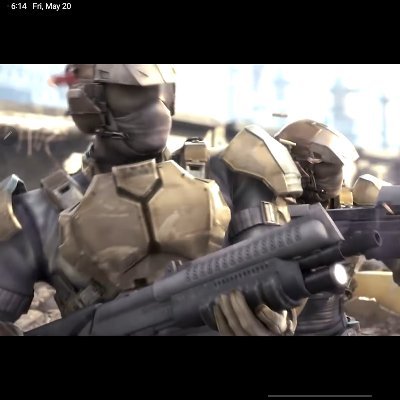
Fictief karakter uit het binnenkort te verschijnen boek Jachthond. Een uiterst hoogdravend literair epos over 'the rise and fall' van een boekhouderszoon.
How many people who had a career developing technology also had one of these kits from Radio Shack as a kid? I certainly did. There were many variants, but I remember having this specific one.
I wonder what the equivalent is these days.
Forget lidar.
One single camera.
Runs in real time & is open source:
A streaming 3D model that reconstructs scenes live, at ~20 FPS, over long sequences.
End-to-end.
Optimization tricks, cleanup steps?
Nope.
And it beats both streaming and even some offline methods.
Perception is becoming software-first.
Closer to machines that see and understand the world as it unfolds.
Thanks for sharing, @YinghaoXu1
📍Models: https://t.co/gnSDy919eX
Project page: https://t.co/zgpkgBvcik
Code: https://t.co/Js0MzHE387
Paper: https://t.co/FrzMojMMZC
——
Weekly robotics and AI insights.
Subscribe free: https://t.co/9Nm01QUcw3
Mijns inziens is dit een van de beste use cases voor AI-videocontent op dit moment. Een AI-influencer reist terug in de tijd naar 1536 om te vloggen over haar ervaringen in Tudor-Londen.
A girl made a casino for her cat
She built a real slot machine that dispenses a treat if the cat wins — now the fluffy one is literally hooked on “spins”.
A gambling cat — trouble for the household.
What an ingenious design!
This is a spherical gear meshing design that can be extended into a spherical joint mechanism. The expanded mechanism is suitable for robotic joints and directional control. This mechanism allows the robot's end effector to have greater motion freedom, enabling it to perform more complex tasks
Lego is boring.
Enter BYLT - real construction using real practices. From architect drawn blueprints to finished product... on a tiny scale.
Get your kit or order a la carte from the supply yard 👇
Tomás Vega, ingeniero formado en el MIT, ha creado un dispositivo que permite a las personas con parálisis controlar teléfonos, tabletas y ordenadores solo con la lengua.
El dispositivo se coloca en el paladar y funciona como un trackpad inalámbrico.
Researchers at Columbia University have developed modular robots that can adapt, repair, and even rebuild themselves using a concept called robot metabolism. 🤖
Instead of remaining fixed, these robots can detach, reconnect, and reorganize their own structure based on the task or environment.
If one part is damaged, the system can replace or rearrange itself rather than stopping completely.
This could reshape the future of disaster response, industrial automation, and even space exploration.
The idea of robots that evolve instead of wear out is becoming more than science fiction.
What real-world application do you think will benefit most from this technology?
🎥 Media: @Columbia
⚠️ This content is shared for informational purposes only. CTO Robotics Media is a media platform and does not own or develop the technology shown. Credit belongs to the original creators.