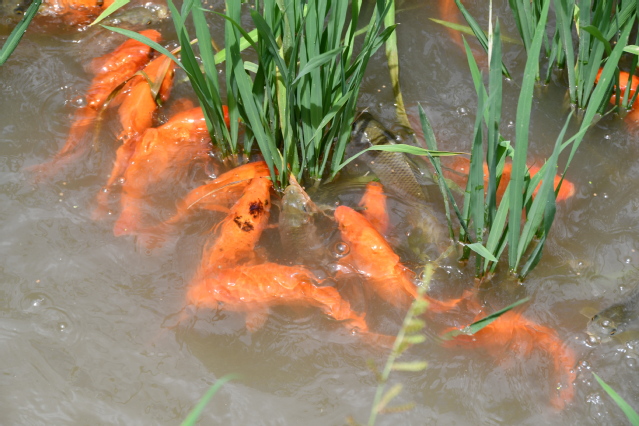
In one region of Indonesia, malaria rates dropped from 16.5% to nearly zero. The fix wasn't pharmaceutical. It was fish.
Farmers there raise fish directly in flooded rice paddies, a practice roughly 2,000 years old. The fish eat mosquito larvae before they mature, which is what crashed the malaria rate. They also eat insect pests and weeds in the rice itself, and their waste fertilizes the crop as they swim through it. The rice gives them shade and cover in return. One field, two harvests, and a public health outcome nobody was trying for.
The numbers hold up under modern scrutiny. Studies have found rice-fish systems use 68 percent less pesticide and 24 percent less fertilizer than conventional rice farming, with equal or higher rice yields. Same land, fewer chemical inputs, plus a second source of protein and income from fish that were already doing the pest control.
The Green Revolution pushed rice farming toward chemical monoculture, and practices like this nearly disappeared in the process. It's coming back because it never stopped working. A flooded field isn't a factory. It's an ecosystem, and apparently it can out-perform a malaria program too.
@NimmaShivanna “ವೃಕ್ಷೊ ರಕ್ಷತಿ ರಕ್ಷಿತಃ (ಯಾರು ವೃಕ್ಷಗಳನ್ನು ರಕ್ಷಿಸುತ್ತಾರೋ ಅವರ ರಕ್ಷಣೆ ಸ್ವಾಭಾವಿಕವಾಗಿ ಆಗುತ್ತೆ)”, ಈ ಅನುಭವಜನ್ಯ ಮಾತಿಗೆ ೧೧೪ ವರ್ಷಗಳ ಸಾರ್ಥಕ ಜೀವನ ಜೀವಿಸಿದ ಪದ್ಮಶ್ರಿ ಸಾಲುಮರದ ತಿಮ್ಮಕ್ಕ ಅವರೇ ಉತ್ತ್ತಮ ಉದಾಹರಣೆ!
ಓಂ ಶಾಂತಿಃ।