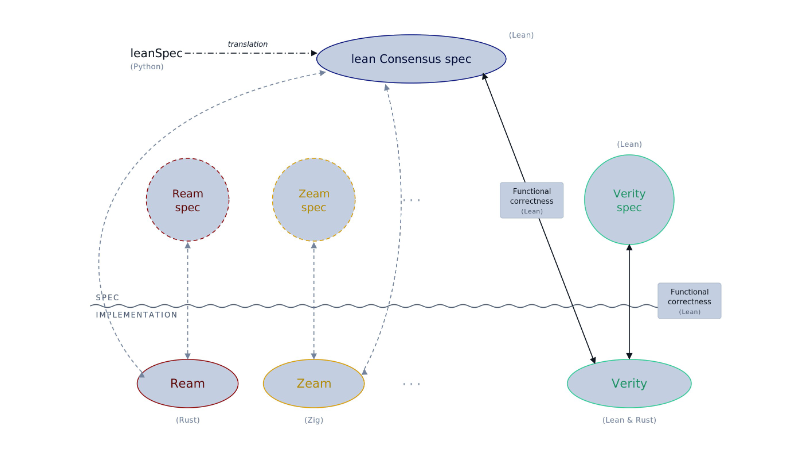
While formalizing the @leanEthereum spec in @leanprover, we found several critical bugs hiding in the spec itself.
Here's what we found 🧵
https://t.co/F2eAD9quvC
@tcoratger Closing
Formal verification prevented many problems before they could do harm. These were serious issues that had gone unnoticed until now — and testing had missed every one of them.
Verity is a "Lean" consensus client designed with formal verification in mind.
@VitalikButerin explains why formal verification is important for Ethereum.
must-read👀
Many people have claimed that with AI-assisted bug finding, secure code (and hence trustless anything) will be impossible.
I have a much more optimistic take, and AI-assisted formal verification is a major part of the reason why:
https://t.co/0ceMBZ6uqj
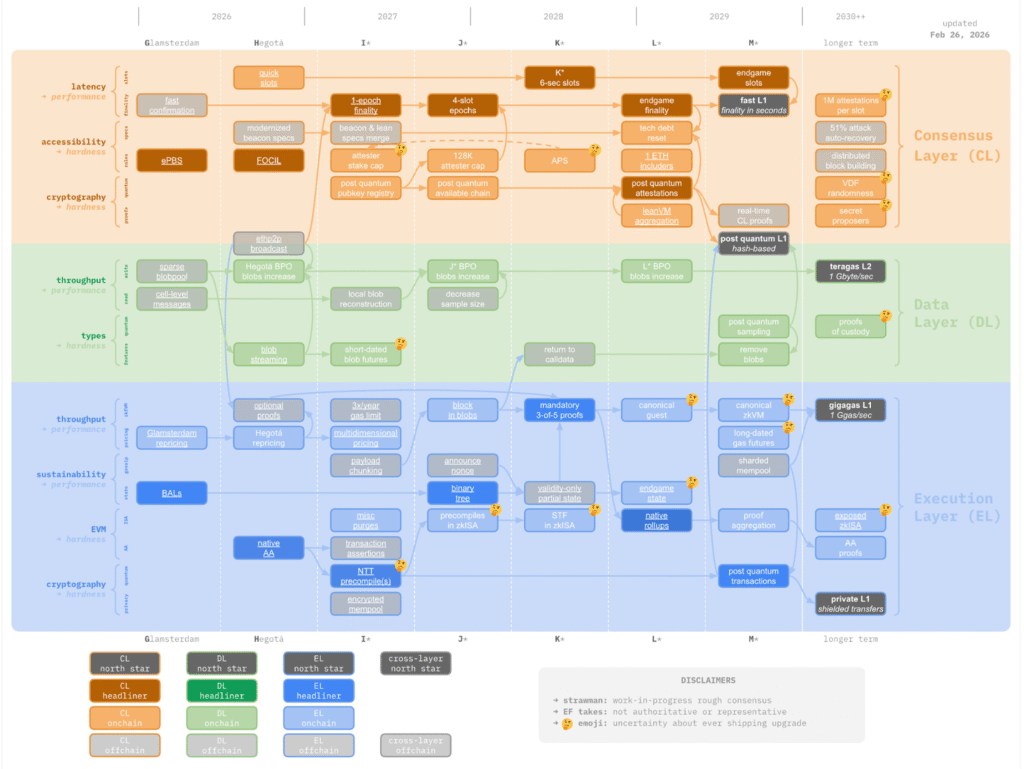
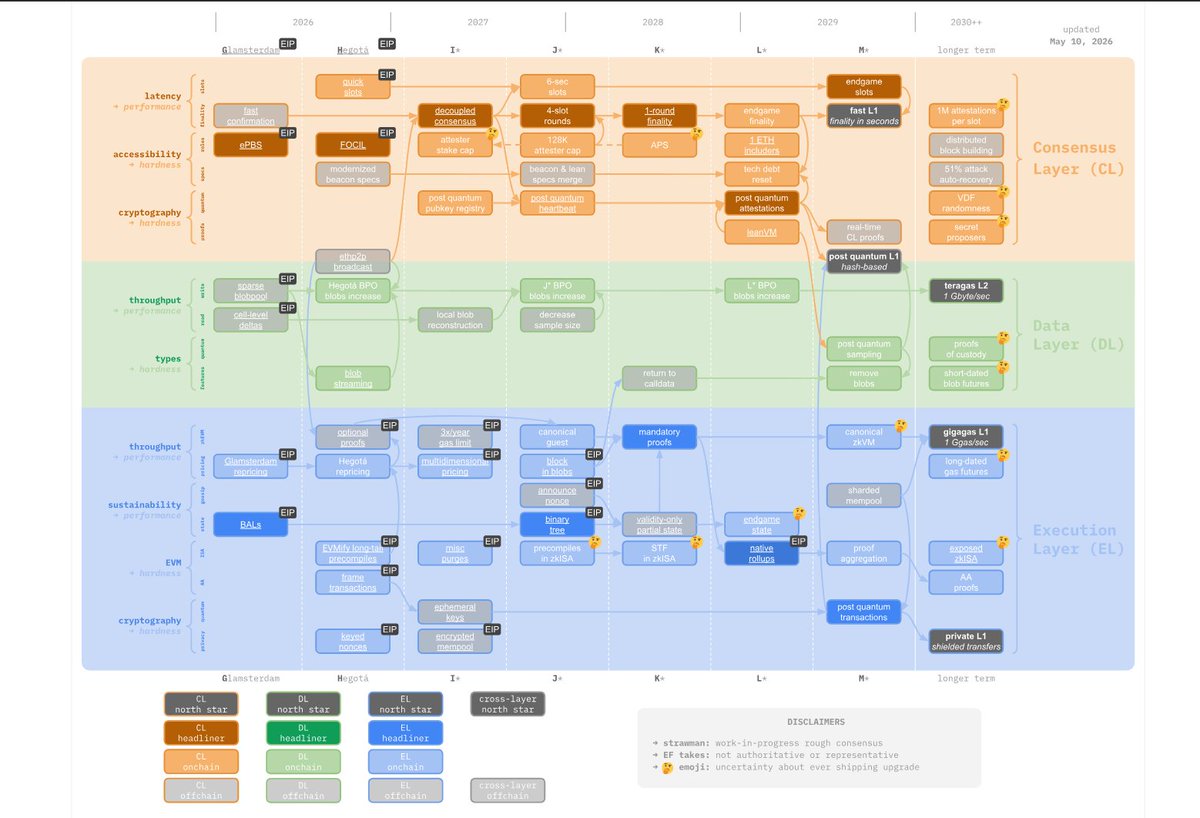
strawmap has been updated!!
←before
after
Decoupled Consensus, set to debut in 2027, will refine existing consensus layer.
This will enable fast finality, eliminate vulnerabilities, and accelerate the transition to PQC.
https://t.co/XSX0tSTZP6
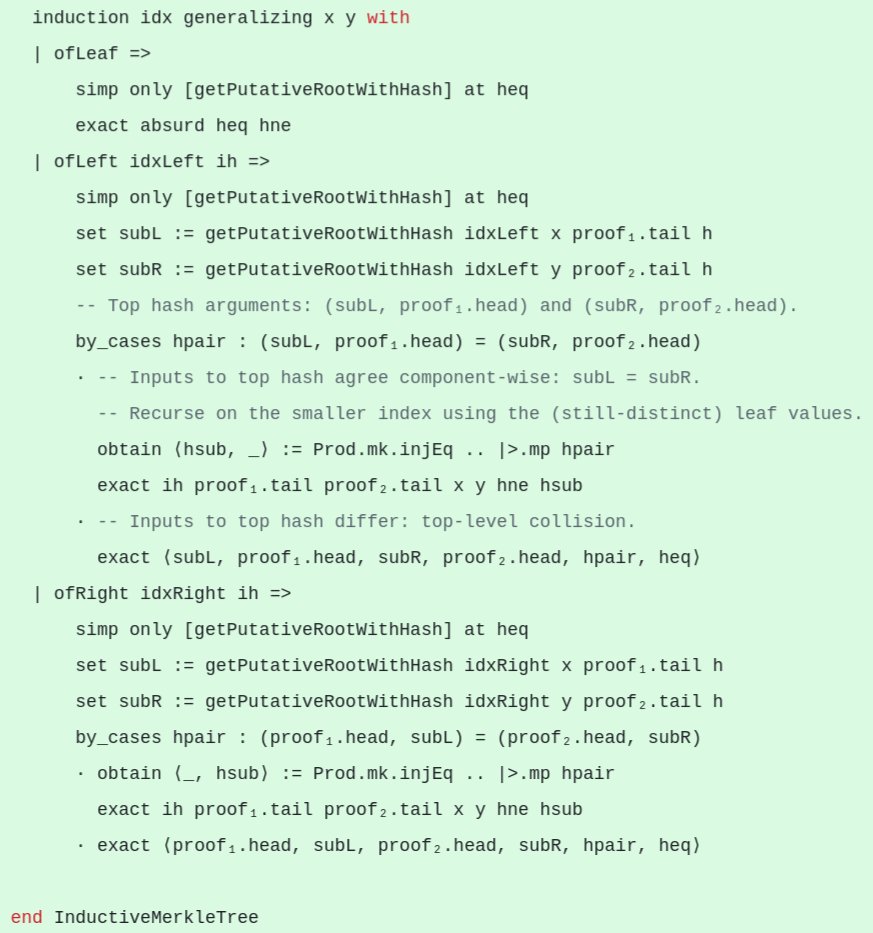
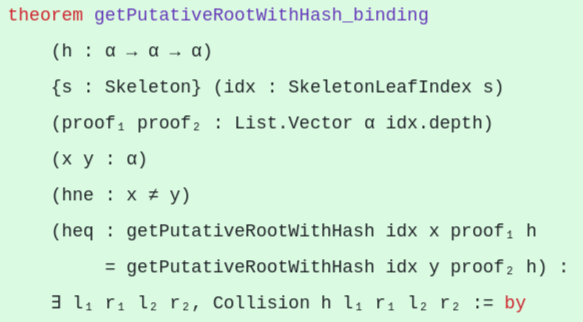
This theorem (left) means, the only way you can make proofs for two different things in the same position in the same Merkle tree, is by breaking the underlying hash function.
As a reviewer, you don't have to verify how Merkle branches are implemented or how the theorem is proven (right), you just have to verify what the theorem says, and that Lean verifies it.
And the beautiful thing is that you can even write live production code (including eg. CLI tools) directly in Lean.