Gastritis and stomach ulcers are way too common, and the solution isn't to just take herbs.
It goes much deeper, hence why people fail to resolve their issues of pain, heartburn, nausea, vomiting, bloating, and more.
These conditions encompass chronic inflammation and stress that destroy your bicarbonate-rich, alkalinizing, mucus membrane, which is meant to protect you from acid being in the wrong places, whilst simultaneously promoting healthy digestion by allowing it to float in the right places (eg., your stomach lumen and duodenum).
I've mentioned here how stomach acid is literally the first domino to digestion, absorption, and gut health optimization - if you suppress its production via PPIs, or H2 blockers, you're going to have a bad time (SIBO, dysbiosis, malabsorption, etc.):
https://t.co/V7n6WZZIBy
If you regularly take NSAIDs like aspirin or ibuprofen - you will also have a bad time because it lowers prostaglandin synthesis via COX enzyme inhibition.
No prostaglandins is a horrible idea, leading to:
- No mucus production
- No bicarbonate secretions
- No mucosal blood flow
- No epithelial regeneration
- No induction of inflammation (which is necessary in the right amounts)
- No resolution of inflammation
NSAIDs essentially blunt pain temporarily, but block repair signals, and never drop inflammation down to low levels, instead, it makes it sit at a medium threshold where all of the above is impaired.
So to truly resolve these conditions - beyond herbs, which I will mention below, because they do work in synergism - you need to:
- Support mitochondrial function (IR light, nutrients, low stress) to increase ATP, H2O, and CO2 which is a precursor to bicarbonate
- Avoid acidic drinks/foods, seed oils, alcohol, and spicy foods.
- Breathwork to allow for CO2 retention which contributes to bicarbonate production
- Optimize circadian rhythm (sunlight, grounding, avoid late-night eating/exercise, mitigate blue light/nnEMFs)
- Lower gut inflammation (elimination diet, curcumin, black seed oil, PEA, ginger, zinc L-carnosine)
- Sodium/magnesium bicarbonate directly provides bicarbonate
- Sooth the mucus membrane with mucilages (slippery elm, marshmallow root, aloe vera, okra, DGL)
- Support digestion (digestive aids like lemon/lime, ACV, bitter greens, carbonated water, or digestive enzymes if needed)
- Sip on warm teas daily (ginger, peppermint, hibiscus, chamomile)
- Micronutrient saturation (especially arachidonic acid, vitamin A, vitamin D, vitamin C, zinc, magnesium, B1, B2, B3, B12, taurine, glycine, choline, proline, iron, copper, and potassium).
- For ASIC3 and TRPV1 channel antagonism (to prevent pain from acid/protons) - explore vanilla, oleic acid, and avoiding spicy foods. GABA/glutamate is also important here so magnesium, L-theanine, taurine, passionflower, chamomile, etc.
- Other considerations: addressing H. pylori/SIBO, mastic gum, kefir/fermented foods, lactoferrin, S boulardii, pomegranate juice.
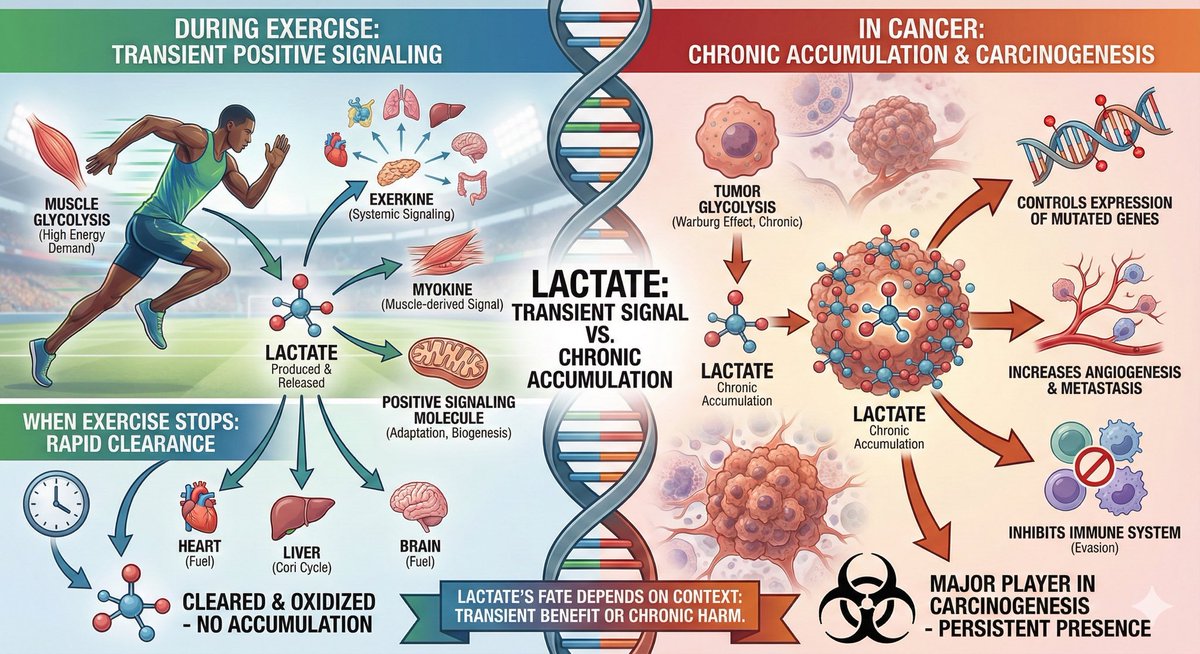
Lactate in Exercise vs Cancer: Same Molecule, Opposite Meaning
Lactate is not a waste product. It’s a central player in both peak human performance and tumor progression. However, the context defines its role.
🚴 In exercise, lactate is:
-A regulated byproduct of glycolysis during high energy demand.
-Mainly shuttled to slow twitch fibers and other tissues (heart, brain) as a preferred fuel
-A signal for mitochondrial biogenesis, improved metabolic flexibility and training adaptation
-Cleared efficiently via the lactate shuttle and mitochondrial lactate oxidation complex (mLOC). When exercise ceases, so does muscle lactate accumulation
🧪 In cancer, lactate is:
-The goal, not a byproduct (“lactagenesis hypothesis”, San-Millan and Brooks, 2016 https://t.co/yViJoMQV8u)
-Tumors intentionally upregulate glycolysis (Warburg Effect) to generate lactate even in oxygen abundance.
-Lactate accumulates in the tumor microenvironment, promoting:
*Angiogenesis (via HIF-1α)
*Immune evasion (T cell suppression)
*Invasion and metastasis
*Gene expression and Epigenetic remodeling (histone lactylation)
🏃���️ In athletes, lactate is a both a key regulator and marker of performance as well as adaptation.
🧬 In cancer, lactate is both a key regulator and marker of aggression as well as poor prognosis.
Same molecule. Different fate. Opposite implications.
#LactateScience
#CancerMetabolism
#MetabolicReprogramming
#ExercisePhysiology
#MetabolicFlexibility
#WarburgEffect
New research highlights the value of bundled measurement of LDL-cholesterol, lipoprotein(a), and high-sensitivity C-reactive protein across the cardiovascular risk spectrum for more comprehensive risk assessment.
🔗 https://t.co/0sle3F3q8S
#CardioResearch#PreventiveCardiology
Isn’t it ironic? Functional iron deficiency at the core of #ParkinsonsDisease pathobiology
This Viewpoint by Ian Peikon & Nancy C. Andrews @BostonChildrens@harvardmed calls for a rethink of iron’s position in PD pathology and treatment: https://t.co/BVZlwtxtZV
2026 could certainly be a hinge year marking a practical transition for how we think about mental illnesses.
Very high probability that by 2030 the mental health landscape is radically different, with millions of people having new access to empowering knowledge, tools and technology, and communities that support the healing process rather than suppressing symptoms.
Exciting time of transition we live in.
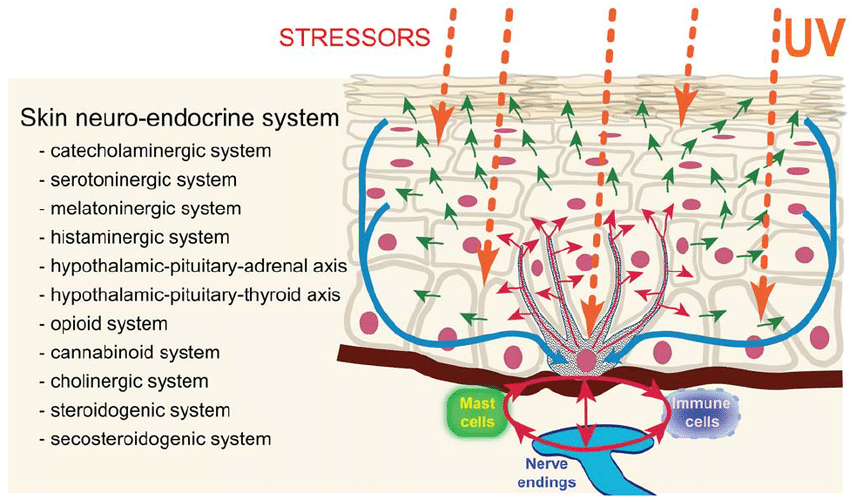
Think of your skin as a giant panel that responds to your environment - light, microbes, and touch - sending shockwaves of energy/information to the nerves, fascia, and immune cells embedded within it.
Your skin is an external neuro-endocrine-immune interface, rather than just a passive barrier.
It senses stressors (UV light, pollution, microbes, mechanical input) and locally responds by increasing certain hormones, neurotransmitters, cytokines, and redox signals accordingly.
Your skin expresses its own local versions of the HPA and HPT axes, and also produces on-demand catecholamines, serotonin, melatonin, opioids, endocannabinoids, and steroid hormones, and communicates bidirectionally with nerves, immune cells, and the brain.
It interprets the environment and decides how your biology should respond, and acts like a Bluetooth pairing device with your gut and eyes/brain.
New meta-analysis shows systemic immune-mediated diseases are linked to a higher risk of cardiovascular death—highlighting the importance of integrated cardiometabolic care.
🔗 https://t.co/w3sQsALPTi
#CardioResearch#HeartHealth#Inflammation#PreventiveCardiology
Informa la SSA de México el primer caso de influenza H3N2 subclado K.
Es un virus estacional que muy probablemente sustituya paulatinamente a los circulantes, se transmita con facilidad y sature algunos servicios, pero no se espera un colapso semejante al de las pandemias.
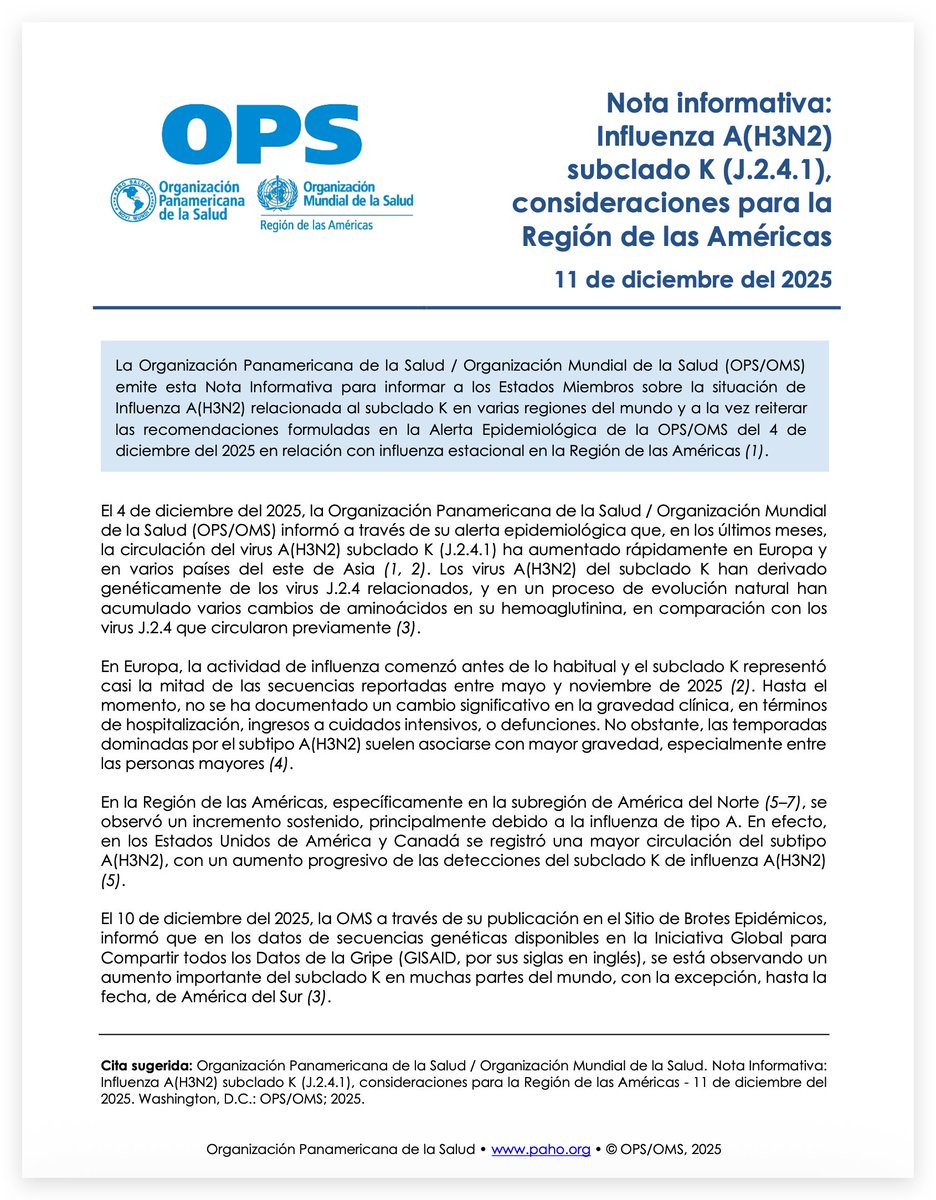
Influenza A(H3N2) subclado K: ¿Qué significa su expansión global para América Latina?
En las últimas semanas, un nuevo linaje del virus influenza A(H3N2), conocido como subclado K (J.2.4.1), se ha expandido rápidamente y hoy domina gran parte de los virus H3N2 secuenciados en Europa, partes de Asia y Norteamérica. Aunque no se trata de un virus nuevo, su velocidad de expansión ha generado preocupación legítima sobre su impacto y la efectividad de la vacuna estacional.
El subclado K acumula varios cambios genéticos (mutaciones) en la hemaglutinina (HA), la principal proteína de superficie del virus y el blanco de la respuesta inmune inducida por la vacunación. Estos cambios lo diferencian del linaje de referencia seleccionado para la vacuna 2025–2026 y explican por qué, en ensayos de laboratorio, los anticuerpos lo reconocen con menor eficiencia. Pero este punto es clave: la deriva antigénica no equivale a la pérdida total de protección.
La evidencia clínica temprana indica que la vacuna actual sigue ofreciendo protección significativa contra enfermedad grave y hospitalización, especialmente en niños y adolescentes (≈70–75%) y una protección moderada pero importante en adultos (30–40%). Como en temporadas previas dominadas por H3N2, la vacunación sigue siendo una herramienta central para el control de la influenza estacional.
¿Y qué significa esto para la región? Sudamérica ha sido la última región en reportar la presencia del subclado K. Esta semana, Brasil ya ha reportado una secuencia genómica de este linaje en la base de datos pública GISAID. Dado su crecimiento sostenido a nivel global, no resulta sorprendente que comiencen a aparecer más casos en nuestra región conforme avance la temporada y aumente la vigilancia.
Este escenario vuelve a evidenciar una brecha estructural: todavía sabemos muy poco sobre cómo se transmiten los virus respiratorios en zonas tropicales y en el hemisferio sur. Las condiciones climáticas, demográficas y sociales difieren marcadamente de las del hemisferio norte, de donde proviene la mayor parte de la evidencia. En Perú y el resto de América Latina, esta limitación se agrava por la escasez de datos de vigilancia epidemiológica y genómica sostenida sobre virus respiratorios.
La recomendación de los expertos: promover la vacunación de adultos mayores y de poblaciones de riesgo (personas con comorbilidades, gestantes y personal de salud). Incluso frente a esta nueva variante del virus de la influenza, la vacunación reduce hospitalizaciones, muertes y la presión sobre los sistemas de salud.
El subclado K nos recuerda que la influenza y todos los virus siguen evolucionando. Nuestra respuesta regional también debería hacerlo.
Fuentes:
https://t.co/hRcSkHj2iN
https://t.co/iFXqj6pB0C
https://t.co/oNsIsODzmt
https://t.co/EY4eX3jDe3
If you’re new to quantum biology (or just curious), it’s been around longer than most people realize.
This review by @johnjoemcfadden and @jimalkhalili lays it out for anyone interested: https://t.co/dDYUst4g6d
Great discussion with mitochondrial psychobiologist Parker Kelley @sequencemyneuro about how the brain must (re)allocate a finite energy budget.
And how putting pressure on the brain energy budget during stress could force the triage of brain functions/networks, driving psychopathology.
Delighted to have been involved in Parker's model development that helps us think more clearly of the brain and human experiences as energetic systems and states.
🚨 #ÚLTIMAHORA | La @SSalud_mx confirma el primer caso de Influenza A H3N2 subclado K. El paciente recibió tratamiento antiviral y ya se encuentra recuperado. Como medida preventiva, se mantiene la vigilancia epidemiológica.
Energy is the missing dimension in medicine.
Thank you for the opportunity to share thoughts on how we can effectively move forward to build a health- and healing-focused science.
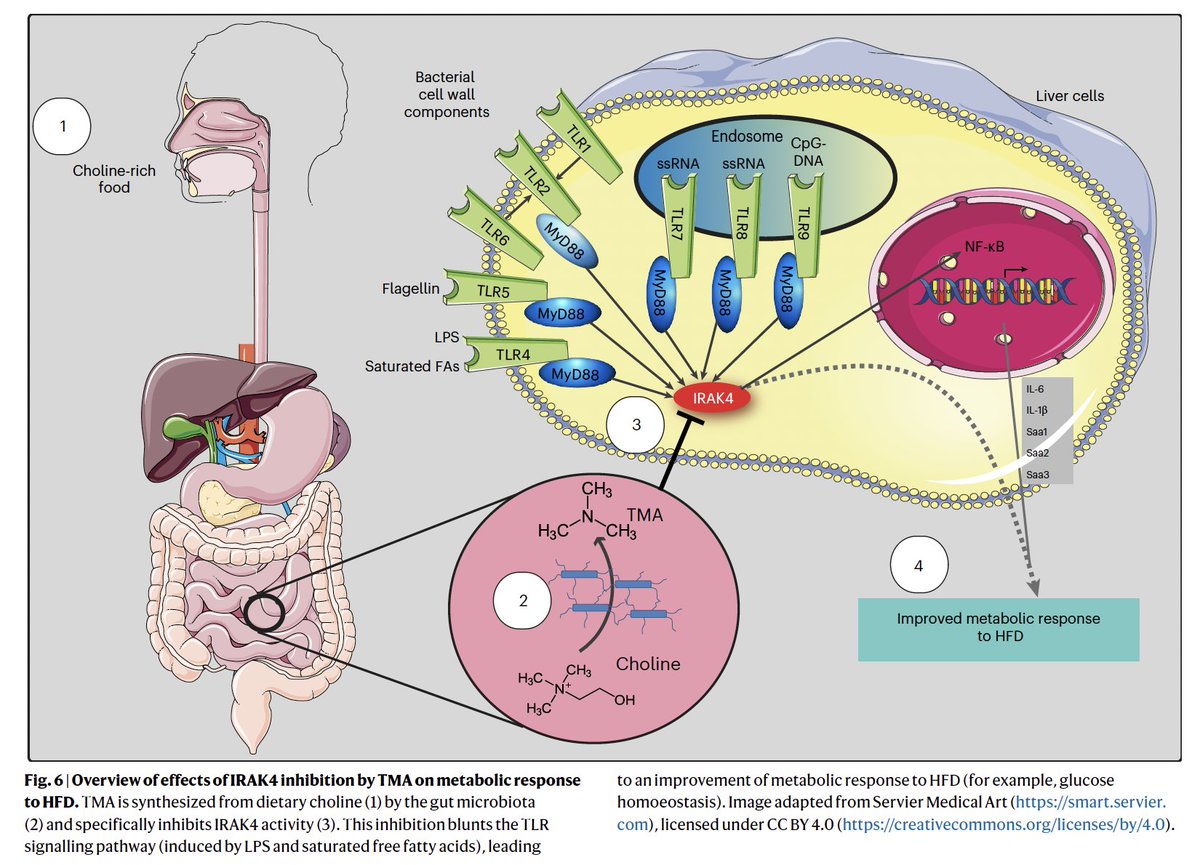
Discovery of a gut microbiome metabolite that blocks inflammation and resistance to insulin. Its mechanism and role in improving blood sugar control may prove important treating for metabolic syndrome and Type 2 diabetes
@NatMetabolism
https://t.co/4RJj7XHLUT