@0x_vessel So this is me making a proper introduction about myself.
I'm firstly, a Christian; true believer, web3 enthusiast, financial market trader and Mod @forte_nation...... I'm up for any web3 jobs offer as long as it's within my skills and capacity.
@BiGODToken My second entry 🔥
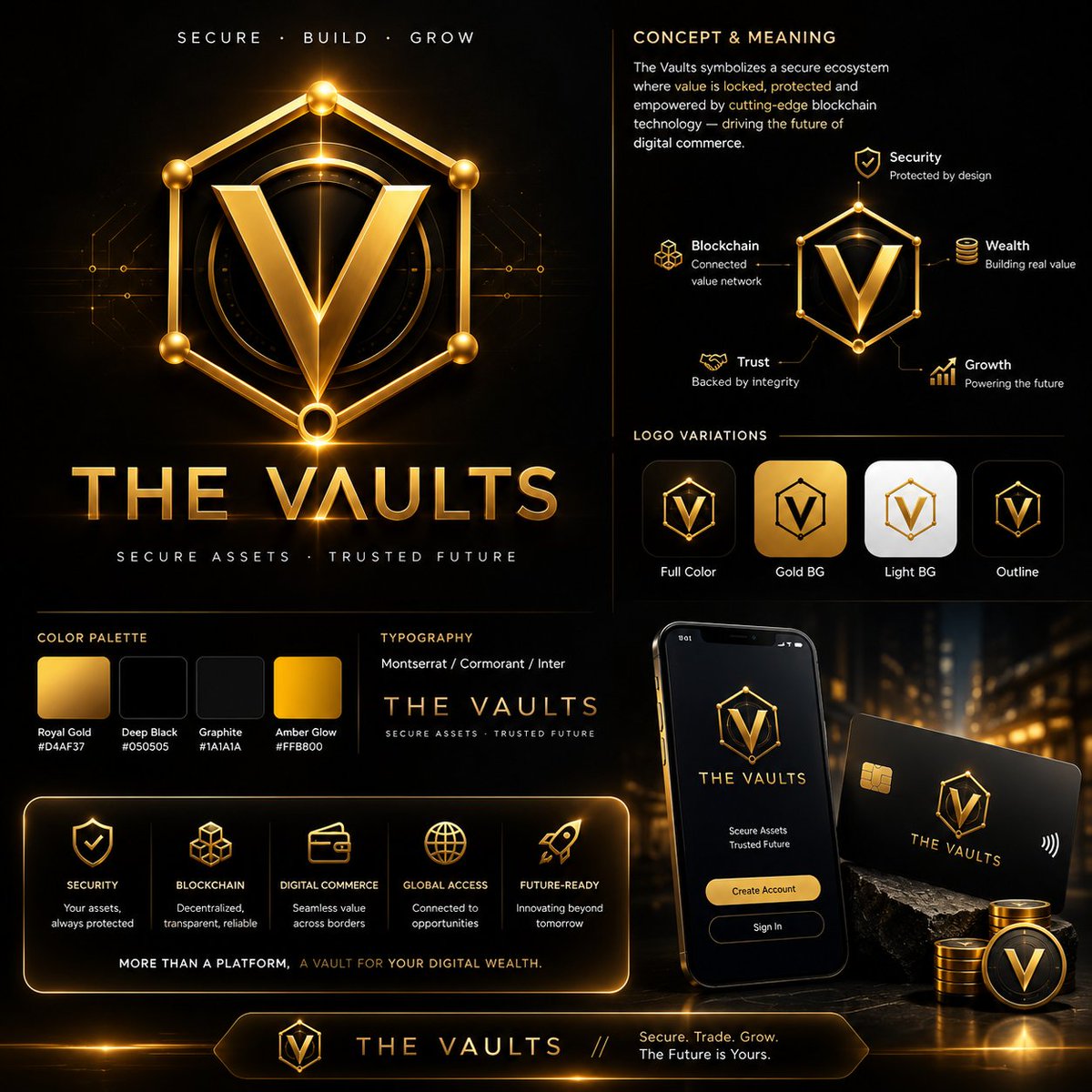
A gold V sits inside a hexagonal blockchain ring and a vault door, blending old-world security with digital trust. It stands for value, permanence, and safety in the future of digital commerce
@salemverse@Alioth0x
@BiGODToken A central keyhole symbolizes secure, exclusive access, with a subtle 'V' monogram as the brand signature. Circuitry/node lines nod to DeFi and web3, framed by a hexagon (blockchain) and shield (trust) for a unified, scalable icon.
@Vessel_0x@seniorsam_
My entry 💪🔥
A lot of founders die waiting on a warm intro to a fund that may never reply, meanwhile there's a whole internet of people who'd back them today if they could. The "round before the pre-seed round", like Adam said, could actually be the solution.
What stood out for me with @stardotfun's Internet rounds isn't just the speed, it's the structure:
-backers get actual equity-linked ownership instead of vibes
-funds unlock weekly instead of in one lump sum, with bigger withdrawals needing holder approval.
Now that's a real accountability loop, not just a fundraising gimmick.
It feels less like "crowdfunding" and more like giving builders a legitimate cap table entry point from day one, before VCs even show up.
Most crypto tokens are designed around one thing, the launch.
Big VC allocations, cliff unlocks, and a supply schedule that rewards insiders before anyone else gets a look in.
$CNPY was designed differently.
There is no pre-mine. No Genesis allocation. Every single $CNPY token in existence was earned through block production, meaning the supply enters circulation the same way Bitcoin does, through work, not through insider distribution.
Here's how the economics actually work.
The total projected supply is 504,000,000 $CNPY. The starting block reward is 80 CNPY per block, with blocks produced approximately every 20 seconds. That reward halves approximately every 2 years, triggered at every 3,150,000 blocks, which is a familiar schedule for anyone who understands why Bitcoin's model has held up for over a decade.
When a block is produced, 5% goes to the DAO Treasury every time, no exceptions. The remaining 95% is distributed across the validator committee by default as follows:
🌿70% to the block producer.
🌿10% to CNPY staker delegates.
🌿10% to native token validators.
🌿10% to native token delegates.
What makes this interesting is that validators don't just earn $CNPY, they earn the native token of every Nested Chain they secure simultaneously. That means validating on @CNPYNetwork isn't a single asset bet but rather a portfolio that grows with every new chain that launches on the network.
There's also a burning mechanic built in. Validators who choose not to auto compound their rewards take a penalty and that penalty is burned permanently. Combined with the halving schedule, this creates consistent deflationary pressure on the supply over time.
The restaking model is where it gets genuinely interesting. Validators can restake their $CNPY collateral across multiple Nested Chains simultaneously, extending the root chain's security without duplicating the cost. For a Nested Chain to qualify for subsidized security, it needs more than 33% of total stake committed to its committee. The more chains that launch and qualify, the more restaking demand grows and the stronger the economic case for holding and staking $CNPY long term.
And the long-term sustainability model takes direct inspiration from Bitcoin. Once the final halving occurs and new mint ends, the community sustains the chains it values through voluntary subsidization, effectively replacing inflation with economic participation. It's a serious model, not a whitepaper talking point.
$CNPY isn't just a gas token. It's the economic backbone of an entire ecosystem of sovereign chains and the supply mechanics were built to reflect that from day one.