Ray’s Rock - Omaha Beach
On the morning of June 6, 1944, 23 year old Staff Sergeant Arnold “Ray” Lambert came ashore with the first wave of the 1st Infantry Division on the eastern side of Omaha Beach. At this small patch of concrete he saved nearly 20 lives:
The division came under intense fire from several German bunkers surrounding the entrance to the Colville Draw (one of two exits off Omaha Beach). Ray, a medic, immediately went to work.
He was shot in the arm. Moments later he was hit by shrapnel in the leg, but Ray kept pulling men to safety. He pulled nearly 20 wounded soldiers to cover behind this 8ft wide obstacle, treating each soldier before going out in search of others.
After several hours under fire, while pulling a wounded soldier from the ocean, he was struck by a landing craft. It dropped its ramp on top of him, breaking his back. He fell face down in the water, drowning. The craft backed up and nearby soldiers pulled an unconscious Ray to safety, eventually evacuating him off the beach.
Remarkably, Ray had already earned two Silver Stars and three Purple Hearts in Sicily and North Africa, prior to landing in France. But here in Normandy his war would end.
He awoke in a hospital back in England a day later. In the next bed over was his brother, who had also been wounded at Omaha.
When asked about his work on D-Day, Ray simply said, “I did what I was called to do.”
Ray Lambert passed in 2021 at 100 years old. He exemplified the best of American grit and why remembering this day is so important.
Bro this might be highlight of season for me so far. Payton Sandfort makes his first NBA points in front of OKC bench, they going crazy, he’s literally on cloud 9…I’m so happy for him! How can anyone truly hate this team IS BEYOND ME #Thunder#OKC
Many people, even self-described conservatives, think socialism would work if human nature were different.
No. Socialism cannot work, even in a hypothetical society of selfless genius saints.
Why not?
Because socialism centralizes economic choices. How much lumber do we produce? How much wheat? What should the hourly wage of a garbage collector be? How much should insulin cost? How about bread?
Socialists think that if you elect the right people, they will make these decisions intelligently and altruistically, and everything will be great.
But it doesn't matter how smart and benevolent you are... you can't make a good decision without the right information. The Socialist Central Planning Committee, however wise or benevolent, doesn't know what's wanted, or what's available, because that information is conveyed in prices, and accurate pricing is the very thing that socialist governments wipe away with the bureaucratic pen.
Capitalist networks are decentralized. They distribute decision making to where the information is.
A man selling metal doesn't know anything about desks, or lumber. He doesn't know how many desks people want, or whether they should be made out of oak, or folded metal.
But he does know how much it costs him to smelt iron ore into steel, and roll it into sheets. So he sets a price, and others decide whether, and how much, to buy.
That price contains the information others need to decide whether steel is plentiful, and should be folded into anything you can make out of sheet metal, or is scarce, and should be saved for things that can only be done with steel, and furniture should be made out of oak, or pine, instead.
Socialism works, or rather doesn't, by using the threat of force to set the prices of things, or take money from one person and give it to another.
But every time this happens, critical data on supply or demand is erased... data that you need to make decisions.
Individual prices are a decision, a guess at where supply and demand cross paths. But since free markets reward those who guess correctly, or copy a correct guess, aggregate prices are data on supply and demand.
For a socialist central planning committee to order the manufacture of the correct number of cars, or to correctly set the price of a car, they need to know a thousand thousand thousand things about steel and aluminium, welders and assembly robots, rubber and glass and lithium batteries and copper wire, which they must gather, along with trillions of other pieces of data, from literally everyone in their entire civilization.
Tesla only needs to know how much people charge them for the stuff they need.
At every transaction in a captialist society, vital data is compressed into its most compact and useful form, then passed along to the adjacent step, where abundant brainpower is waiting to make decisions with it.
Any defective node in the web that fails to make good decisions receives swift and automatic feedback, and either heeds that feedback or goes out of business, to be replaced by someone who will.
Yes, in a capitalist system, there are many undesirable results. But capitalism doesn't create these results. It discovers them. They are inevitable consequences of the state of technology, and will persist until something is invented that changes the terrain.
In socialism, no such solution is possible, because all the inherent problems you need to solve with progress are hidden from view by the far worse problems you created for yourself by separating the place where decisions are made from the place where information is known.
https://t.co/s0nBZWjqoc
I am not a Christian Nationalist, but I almost could be. While I want Christian ideas and Christian voices prominent in the public square, and I celebrate that America was founded on many Christian ideas, I have a number of concerns with the Christian Nationalist vision. Here are six questions that I think are worth considering.
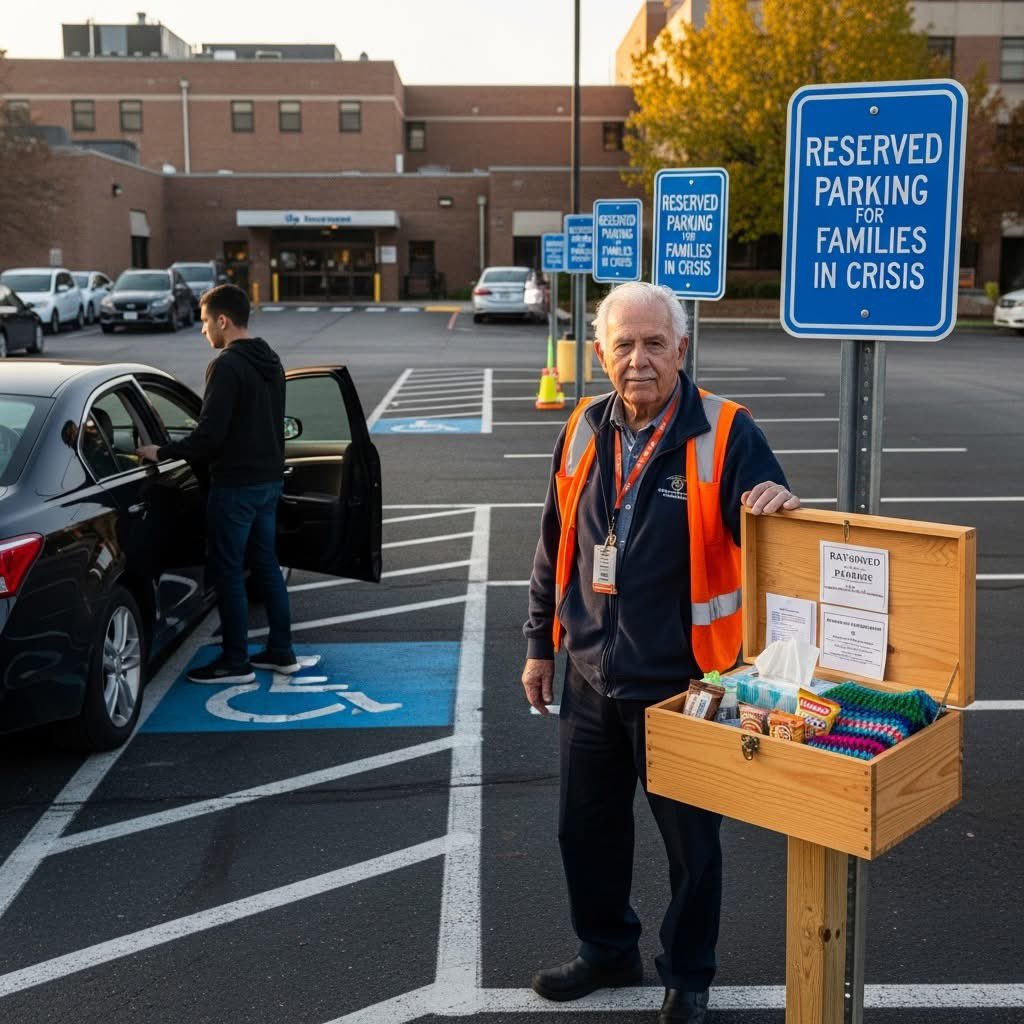
"My name's Raymond. I'm 73. I work the parking lot at St. Joseph's Hospital. Minimum wage, orange vest, a whistle I barely use. Most people don't even look at me. I'm just the old man waving cars into spaces.
But I see everything.
Like the black sedan that circled the lot every morning at 6 a.m. for three weeks. Young man driving, grandmother in the passenger seat. Chemotherapy, I figured. He'd drop her at the entrance, then spend 20 minutes hunting for parking, missing her appointments.
One morning, I stopped him. "What time tomorrow?"
"6:15," he said, confused.
"Space A-7 will be empty. I'll save it."
He blinked. "You... you can do that?"
"I can now," I said.
Next morning, I stood in A-7, holding my ground as cars circled angrily. When his sedan pulled up, I moved. He rolled down his window, speechless. "Why?"
"Because she needs you in there with her," I said. "Not out here stressing."
He cried. Right there in the parking lot.
Word spread quietly. A father with a sick baby asked if I could help. A woman visiting her dying husband. I started arriving at 5 a.m., notebook in hand, tracking who needed what. Saved spots became sacred. People stopped honking. They waited. Because they knew someone else was fighting something bigger than traffic.
But here's what changed everything, A businessman in a Mercedes screamed at me one morning. "I'm not sick! I need that spot for a meeting!"
"Then walk," I said calmly. "That space is for someone whose hands are shaking too hard to grip a steering wheel."
He sped off, furious. But a woman behind him got out of her car and hugged me. "My son has leukemia," she sobbed. "Thank you for seeing us."
The hospital tried to stop me. "Liability issues," they said. But then families started writing letters. Dozens. "Raymond made the worst days bearable." "He gave us one less thing to break over."
Last month, they made it official. "Reserved Parking for Families in Crisis." Ten spots, marked with blue signs. And they asked me to manage it.
But the best part? A man I'd helped two years ago, his mother survived, came back. He's a carpenter. Built a small wooden box, mounted it by the reserved spaces. Inside? Prayer cards, tissues, breath mints, and a note,
"Take what you need. You're not alone. -Raymond & Friends"
People leave things now. Granola bars. Phone chargers. Yesterday, someone left a hand-knitted blanket.
I'm 73. I direct traffic in a hospital parking lot. But I've learned this: Healing doesn't just happen in operating rooms. Sometimes it starts in a parking space. When someone says, "I see your crisis. Let me carry this one small piece."
So pay attention. At the grocery checkout, the coffee line, wherever you are. Someone's drowning in the little things while fighting the big ones.
Hold a door. Save a spot. Carry the weight no one else sees.
It's not glamorous. But it's everything."
Let this story reach more hearts....
Credit: Mary Nelson