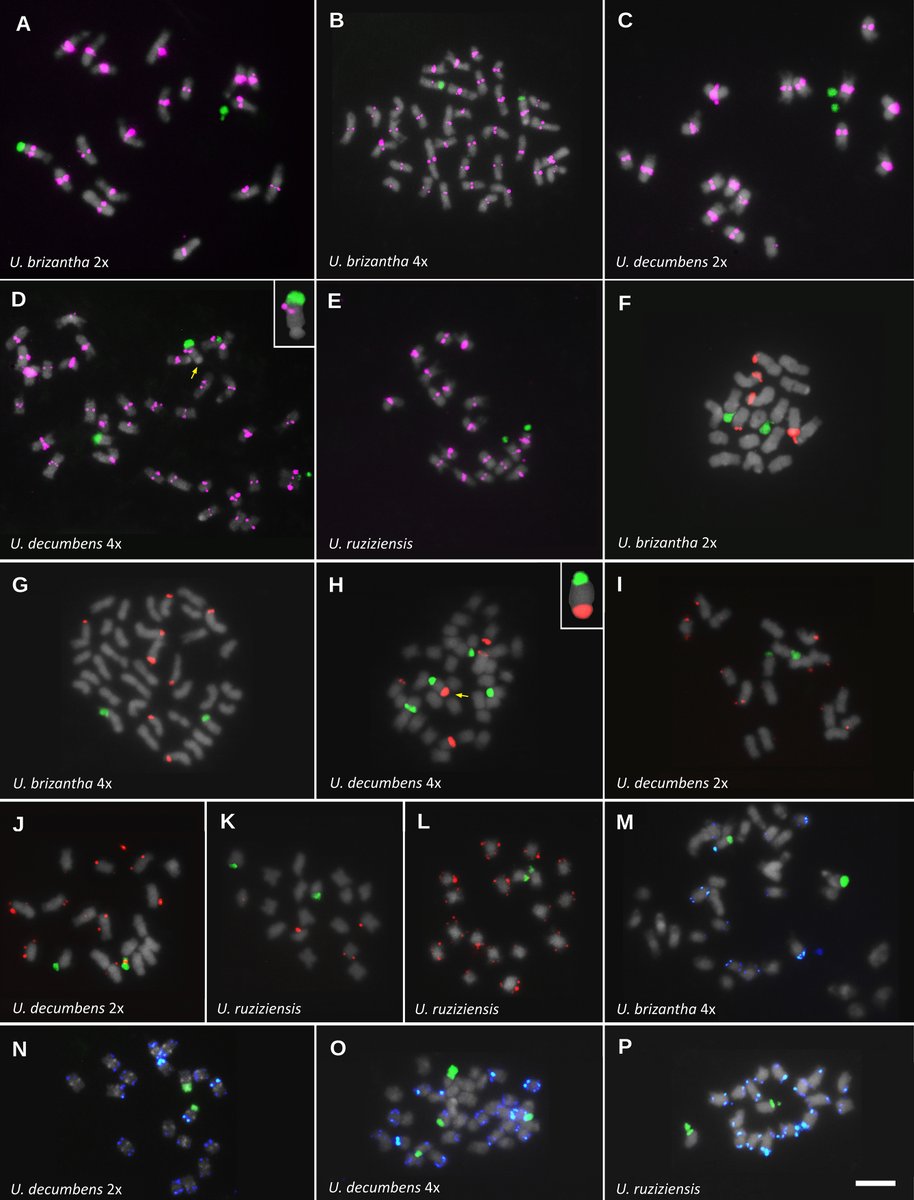
Grown widely for feeding #livestock, Urochloa grasses are key to #sustainable cattle farming. @vhtechio examined the #DNA "repeats" that make up over half of their genomes—offering insights into their evolution and breeding potential
https://t.co/Kaqk6bF6fY
🧬🌾 #FoodSecurity
Embrapa consegue clonar uma araucária gigante de cerca de 700 anos que caiu no Paraná! A clonagem foi um desafio devido à idade avançada da árvore. Os clones foram plantados em Cruz Machado, na propriedade onde a árvore tombou.
https://t.co/q7SQOBq6sH
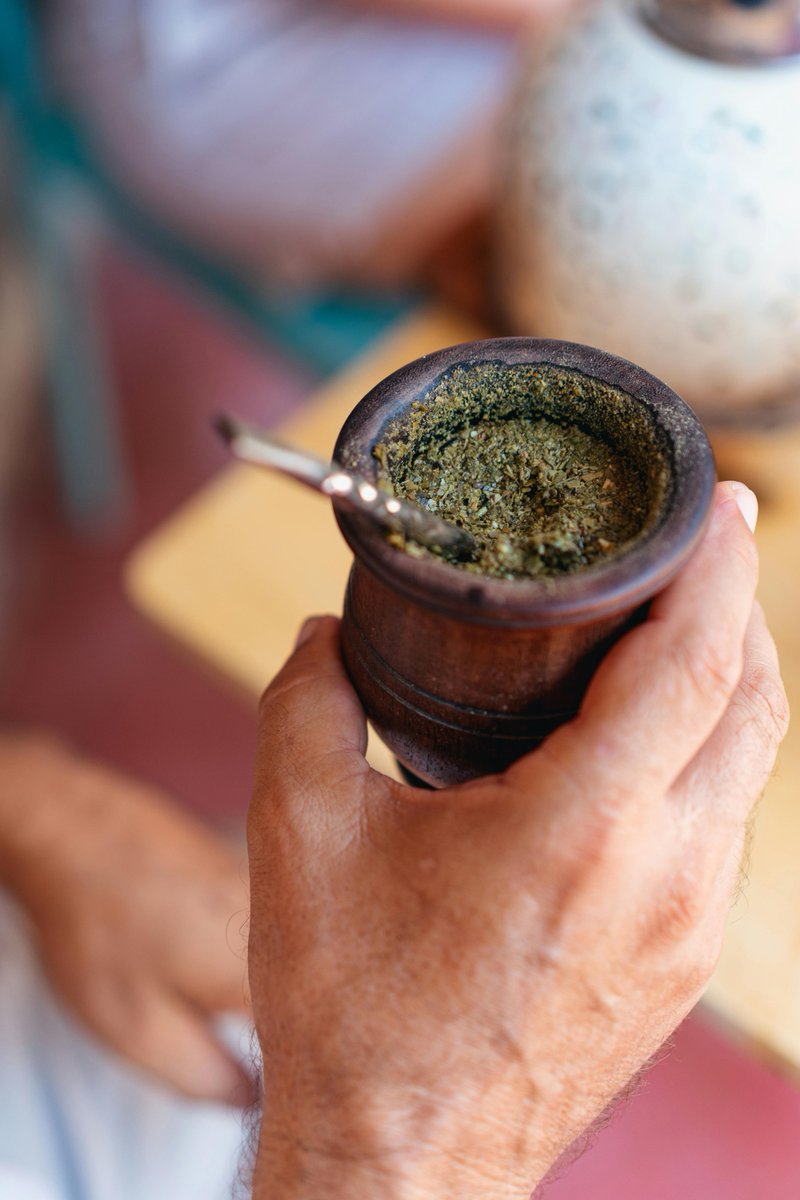
#YerbaMate makes the third most popular caffeinated drink in the world, but it’s unrelated to tea and coffee. The first reconstruction of its genome is helping us understand how multiple species have evolved to synthesise caffeine.
https://t.co/ACp25n4XeW
Registration now open for the 2025 EMBO workshop on Meiosis! June 22-26, 2025, Engelberg, Switzerland.
Deadline for abstract submissions and registration is Feb 15th, 2025. Lots of speaker slots will be selected from abstracts, so apply now! https://t.co/GQA6USy0bj
🧬 Biology Webinar: DNA Dynamics: Cell Division, Mendelian Genetics, & Genetic Replication 🧬
✨ Discover teaching tools- videos & quizzes- to boost student engagement and comprehension with JoVE.
💾 Save your spot! 🔗 Register Now: https://t.co/CVS135vdEO
#Biology#Professor
Join @NAPlantBreeders and the Education Committee as Dr. Jeff Ross-Ibarra presents his recent work on the Origins of Modern Maize.
Date: Thursday, November 21st at 11 am PST || 2 pm EST.
Register here: https://t.co/2VFQB3ptaf.
📢 @GenomeJournal's collection, "#Cytogenomics: Exploring #Chromosome Structure and Function," is open for submissions!
⏰ Deadline: December 31, 2024
👉 Find the full list of topics: https://t.co/gG8M5lNXxN
Thrilled to share our new work @biorxivpreprint:
https://t.co/6unXV2pn2C
Our Repli-Histo labeling marks nucleosomes in euchromatin and heterochromatin in live cells. We reveal genome chromatin is essentially replicated from regions with greater nucleosome motions. 1/2
Apples are a human invention.
Human selection has reshaped crop genomes.
Apples are very different today than 4,000 years ago.
Among the traits selected for by farmers and scientists are size, fruit acidity, color, firmness, and soluble sugar.
Throughout history, humans have played a significant role in the development of the apple as we know it today.
Early humans in Central Asia noticed variations in wild apples and selectively bred those with desirable traits, such as taste and size.
Over thousands of years, humans cultivated and propagated these selected varieties, gradually transforming wild apples into domesticated ones.
Through intentional breeding, humans enhanced traits like sweetness, size, color, disease resistance, and shelf life.
When life gives you Apples:-
↳ Thank scientists and farmers.
♻ Repost this → Because an apple a day keeps the doctor away.
Image credit @awaicekhan, Cornell University.
We are thrilled to announce the 2nd edition of the International Forage & Turf Breeding Conference - IFTBC 2024 in Brasilia, Brazil, from October 16-18, 2024!
Join us for three days of inspiring discussions and the latest updates and innovations on forage and turf breeding.
"Epigenetics in Plants": The new online course of PLANT 2030 ACADEMY starts on 27th of November (courses in English). Funded by the @BMBF_Bund and free of charge. Get deeper insights and learn about the state of research. Register & find details here: https://t.co/0yDziY9B9t
"The Plants That Feed the World" publication synthesizes the data of over 350 key crops and their genetic resources essential for ensuring the adequate conservation and use of these plant genetic resources for food and agriculture.
Learn more ➡️ https://t.co/063r6wdEdT
📣CONFERENCE ALERT‼️
Next year we’re organizing the PLANT MEIOSIS MEETING🎉
In Poznan, Poland😎
On September 4-6, 2024🤩
Mark this date on your calendar‼️
If the words MEIOSIS and PLANTS make you shiver, this meeting is just for you🤯
More details coming soon‼️‼️