This Holyrood election is the most important we have had since it opened in 1999
The formula of our D’hondt voting system.
Regional Votes ÷ (Constituency Seats Won + 1)
Glasgow. Region
In 2016, the SNP won all 9 constituency seats
SNP starting divisors was 10 ( 9+1 )
Scottish Labour 59,151 = 4 seats
Scottish Conservative 29,533 = 2 seats
Greens 23,398 = 1 seat
SNP 111,101 = 0 seats
In 2021, the SNP won 9 constituency seats
Regional list Results
Scottish Labour 71,232 = 4 seats
Scottish Conservative 30,629 = 2 seats
Scottish Greens 36,114 = 1 seat
SNP 109,437 =0 seats
In the final round, the SNP first round started at 10,943 (109,437 / 10), which was lower than the Conservative’s 15,314, so the final seat went to the Conservatives.
This = 87, 551 wasted votes .
20% of these wasted votes , 17,510.2 would have get @paul_ispGlasgow
elected
Replacing the last conservative seat
https://t.co/bt5CENzV9f
This is what the internet was invented for
In 1996, a King Penguin named Lala became a local celebrity in Shibushi, Japan. After being rescued from a fishing net by the Nishimoto family, he refused to return to the wild.
He lived in an air-conditioned room in their home and was famous for walking alone to the fish market wearing a tiny backpack.
The fishmonger would feed him a fresh fish and place another in his bag for the trip home.
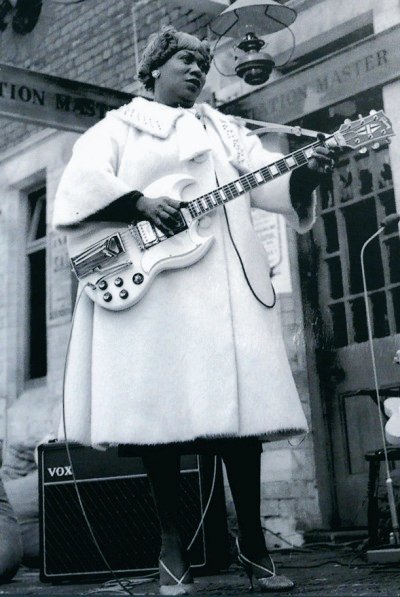
Born on this day, March 20, Sister Rosetta Tharpe (1915-1973), legendary US singer, songwriter, guitarist, and recording artist who played rock'n'roll long before anyone else, a pioneer in music #WomensArt 🎸 #WomensHistoryMonth
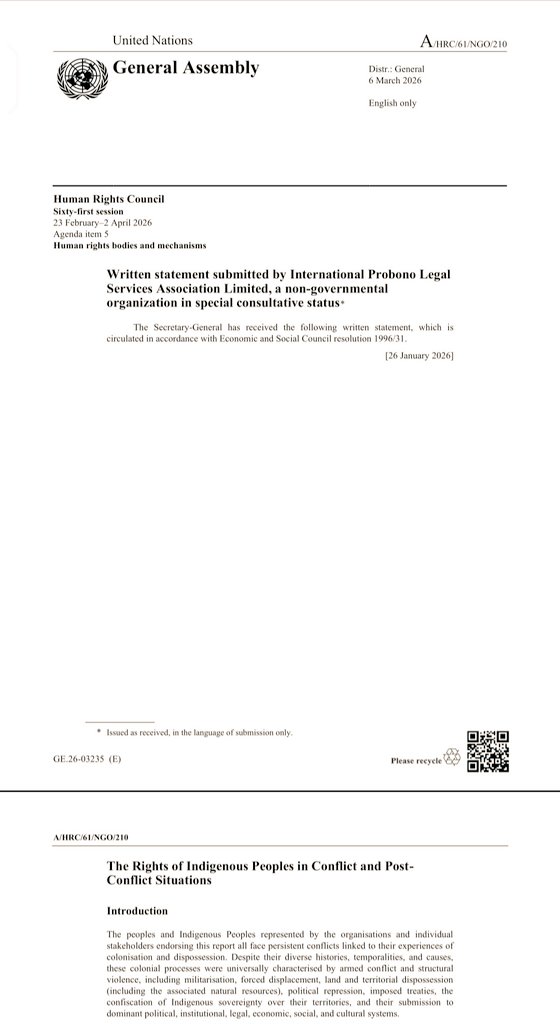
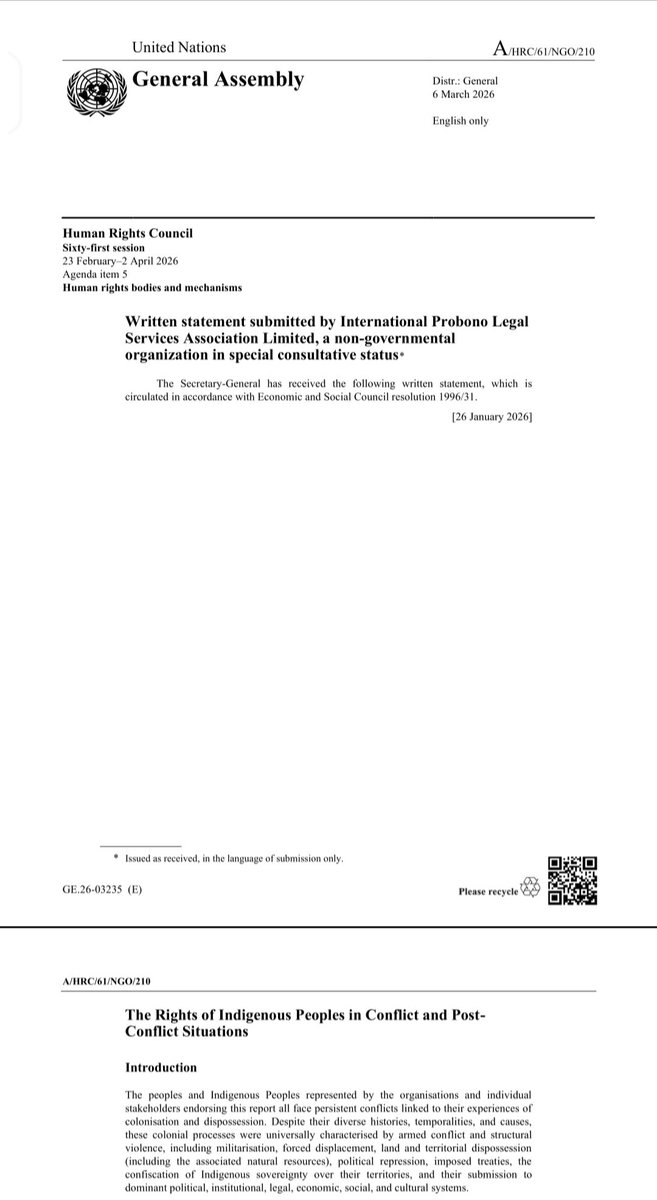
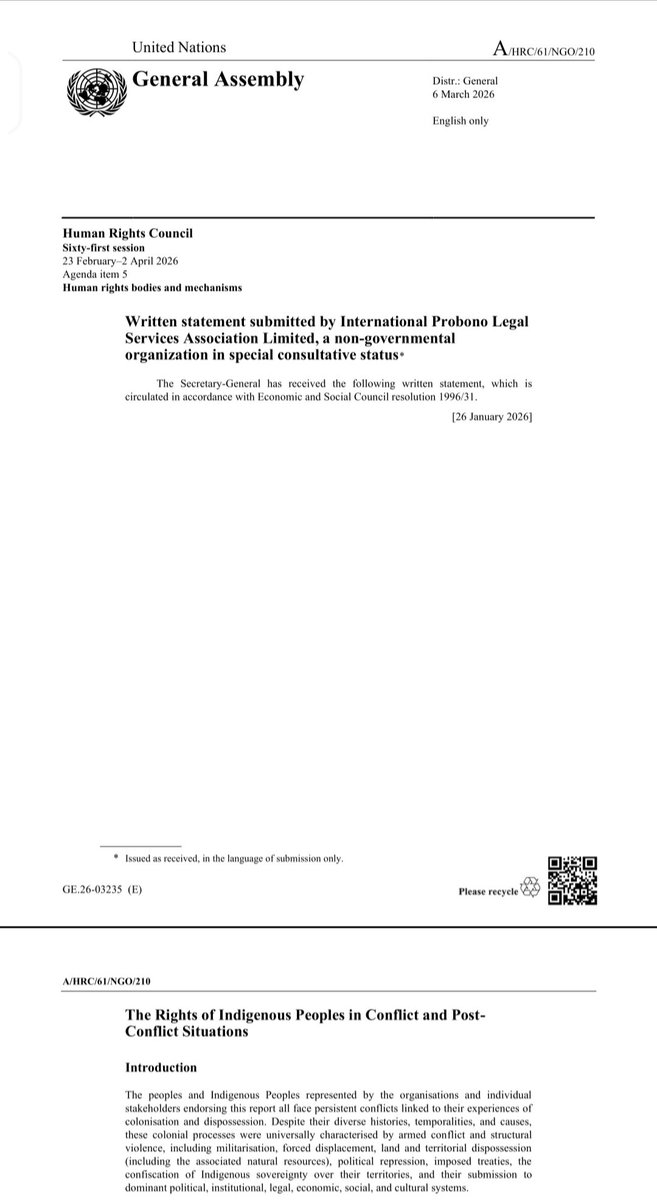
Indictment at the United Nations: A Report Submitted Directly to the UN Secretary-General Now Entered into the UN System Exposes Scotland as a Colony and Places the English Colonial State in the Dock
Read the full report by Liberation Scotland & Co. on the official UN website: https://t.co/A0lJ75qhza
3/ A Strategic Turning Point
This document must be understood for what it is:
-a legal articulation of Scotland’s colonial condition
-a bridge between Scottish claims and UN decolonisation mechanisms
-a tool capable of mobilising international opinion and institutional action
Its presence within the UN system matters. It creates a record and introduces language; establishing precedent while inviting response.
For Scotland as an English colony, it opens a pathway.
For the English colonial state, it signals exposure.
The entry of this report into the United Nations system marks a moment of rupture for Scotland.
The English colonial narrative is no longer uncontested. The legal framing has shifted and the international arena is now engaged.
The question is no longer whether Scotland can be described as a colony.
The question is how long the international community will tolerate a situation that increasingly bears all the legal, political, ethical and moral characteristics of one. As an English colony, Scotland's decolonisation & liberation from the English colonial state have started. Saor Alba 🏴
@UN@UNGeneva@UN_HRC@UNHumanRights@antonioguterres
Indictment at the United Nations: A Report Submitted Directly to the UN Secretary-General Now Entered into the UN System Exposes Scotland as a Colony and Places the English Colonial State in the Dock
Read the full report by Liberation Scotland & Co. on the official UN website: https://t.co/A0lJ75qhza
2/ As an English colony, Scotland’s situation cannot be resolved within the constitutional architecture of the English colonial state. It requires a transition from domestic subordination to international legal personality.
Scotland as a Sacrificial Territory: An English Colony, annexed and plundered by the English colonial state
The report introduces a geopolitical dimension that is as chilling as it is revealing; drawing a parallel between Scotland and Okinawa, highlighting how strategic military infrastructures expose local populations to disproportionate risks. In Scotland’s case, the presence of nuclear weapons at Faslane places the population in a position of acute vulnerability.
This is a classic colonial configuration.
The colonial centre accumulates power. The periphery absorbs risk.
Scotland becomes not merely governed, but instrumentalised. Its territory is used to project military force while bearing the existential dangers associated with that role.
This is not partnership but strategic subordination.
Towards UN Decolonisation: A Direct Pathway
The report calls for the automatic listing of territories under colonial sovereignty, including Scotland, as Non-Self-Governing Territories.
Such a move would trigger a cascade of legal consequences:
-Formal recognition of colonial status
-Obligations under Article 73 of the UN Charter
-International oversight of the decolonisation process
The English colonial state has avoided this classification for decades. The report places it squarely back on the table.
It further calls for:
-Enhanced coordination between UN bodies, including the Fourth Committee and decolonisation mechanisms
-Institutionalised UN supervision of self-determination processes
-The possibility of sanctions against states committing grave violations
This is institutional strategy, not symbolic language.
An Internationalisation of the Scottish Question
What emerges from this document is a transformation of the terrain.
Scotland is no longer framed as a domestic constitutional issue within the United Kingdom i.e. the English colonial state. Scotland is repositioned as a matter of international law, self-determination decolonisation, and global justice.
This shift is decisive.
Once internationalised, the question escapes the control of the colonial state. It becomes subject to external scrutiny, multilateral processes, and legal standards that transcend domestic narratives.
The English colonial state loses its monopoly over interpretation.
The Collapse of Legitimacy
The cumulative effect of the report is devastating.
-The “voluntary union” is exposed as a political fiction
-Devolution is revealed as colonial assimilation
-Internal self-determination is shown to be structurally insufficient
-Scotland is classified within a global framework of colonial domination
-External self-determination is affirmed as necessary
What remains of the English colonial state’s legitimacy under such scrutiny is profoundly fragile.
The report does not shout or exaggerate. It simply applies the logic of international law and comparative analysis. In doing so, it produces a conclusion that is far more powerful than rhetoric.
@UN@UNGeneva@UN_HRC@UNHumanRights@antonioguterres
Indictment at the United Nations: A Report Submitted Directly to the UN Secretary-General Now Entered into the UN System Exposes Scotland as a Colony and Places the English Colonial State in the Dock
Read the full report by Liberation Scotland and partners on the official UN website https://t.co/A0lJ75qhza
A document has now entered the official machinery of the United Nations. Circulated at the United Nations Human Rights Council (61st session), received by the Secretary-General, and registered under UN procedures, this report constitutes far more than an NGO submission. It is an intervention within the normative space of international law itself; and an indictment of the English colonial state.
For Scotland as an English colony, it is nothing short of strategic.
A Break in the Colonial Narrative
For decades, the English colonial state has relied on a carefully constructed fiction. Scotland, the narrative insists, is part of a “voluntary union,” endowed with democratic representation, protected by devolution, fully exercising internal self-determination. It's a colonial lie.
This report dismantles that fiction with clinical precision.
It identifies Scotland not as a partner, not as a region, but as a territory under colonial sovereignty, explicitly placing it alongside cases such as New Caledonia and French Polynesia.
This classification is not rhetorical but analytical, precise, legal, and comparative. It situates Scotland within the global structure of colonial domination. It strips away the British constitutional mythology and replaces it with a framework grounded in international law.
Once that shift occurs, everything changes.
Devolution Unmasked as Legal Assimilation
At the core of the English colonial strategy lies devolution. Presented as a generous transfer of power, it has long been used to argue that Scotland already governs itself.
The report exposes this mechanism for what it is. A colonial fraud.
The Scotland Act 1998 is described as establishing administrative structures while preserving the overriding authority of the central, colonial English state, constituting a process of legal assimilation designed to negate Scotland’s status as a treaty partner.
This is a devastating reframing.
Devolution is no longer interpreted as autonomy. It is revealed as a technology of control, a system through which the English colonial centre maintains supremacy while projecting the illusion of self-government. Internal self-determination, in this light, is containment, certainly not liberation.
The implication is profound. The English colonial state does not share sovereignty. It absorbs, restructures, subordinates, plunders.
The Failure of Internal Self-Determination
The report goes further. It demonstrates that systems of internal autonomy, wherever imposed under the authority of the dominant state, remain structurally incapable of delivering genuine self-determination.
They operate within what the report identifies as a framework of hegemonic legal pluralism, where the colonised are permitted limited expression only within boundaries defined by the coloniser.
Scotland’s constitutional reality is thus aligned with a broader global pattern. From New Caledonia to Okinawa, internal arrangements function not as solutions but as instruments of stabilisation for colonial rule.
The conclusion follows with force.
External Self-Determination & Decolonisation as the Only Solution
The report states unequivocally that external self-determination is the only effective means of guaranteeing the rights of peoples subjected to such structures.
This is not a suggestion but a doctrinal position grounded in international and UN law:
-Article 1(2) of the UN Charter
-The UN General Assembly Resolution 1514 (XV)
-The UN General Assembly Resolution 1541 (XV)
The implication is unmistakable.
@UN@UNGeneva@UN_HRC@UNHumanRights@antonioguterres
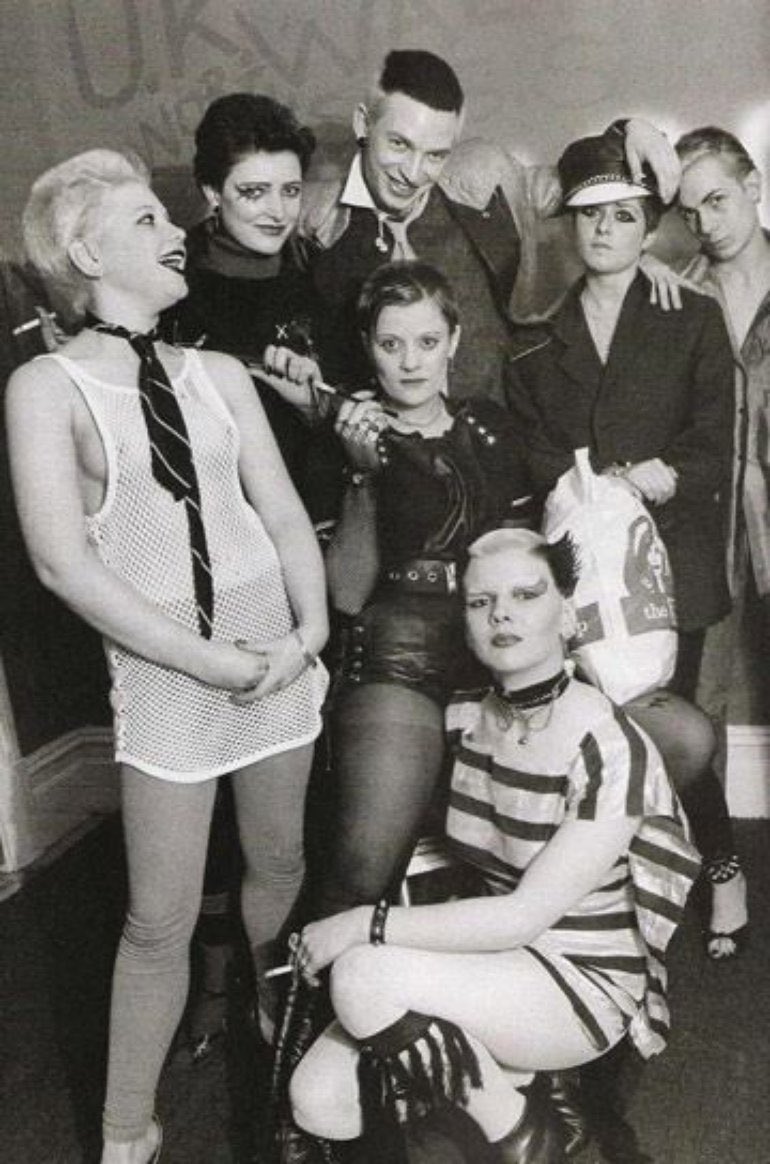
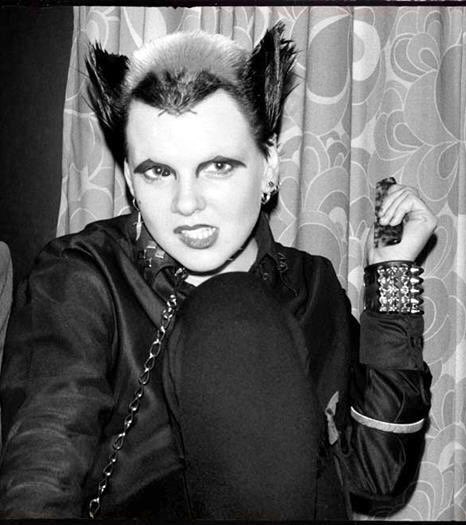
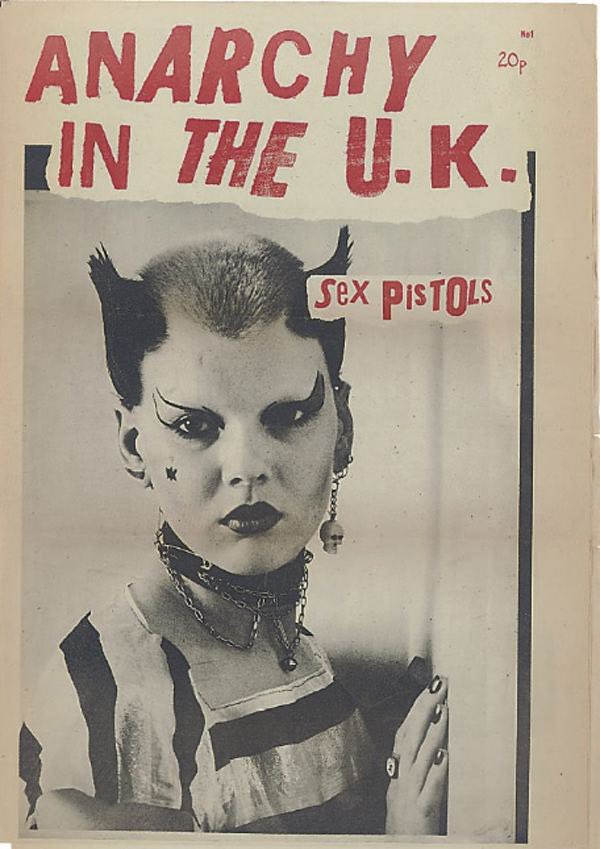
RIP Soo Catwoman, one of the first faces of punk rock and a stunningly photogenic member of hardcore Pistols fans the Bromley Contingent. 4th pic 📸 by Jill Furmanovsky.
The Online Safety Act 2023, a UK law ostensibly designed to shield users from online harms, is a draconian measure that imperils free speech, privacy, and digital innovation with alarming audacity. Its vague, sweeping provisions and heavy-handed enforcement mechanisms threaten to reshape the internet into a sanitized, state-controlled dystopia.
The Act’s assault on free expression is blatant. By imposing a "duty of care" on platforms to purge "illegal" or "harmful" content, it hands Ofcom, the regulator, a blunt instrument to police speech. The nebulous definition of "harmful" invites overreach, pressuring platforms to censor lawful content to dodge crippling fines—up to £18 million or 10% of global revenue.
This creates a chilling effect, where dissenting or controversial voices, especially on political matters, risk being silenced as platforms prioritize compliance over open discourse. The Act’s guidance, spanning over 1,700 pages, does little to clarify, leaving platforms to err on the side of censorship. Privacy takes an equally brutal hit. Mandating age verification for adult content sites demands mass data collection, turning personal information into a state-mandated commodity.
The requirement to scan for illegal content, even in private messages, obliterates end-to-end encryption, inviting mass surveillance. Cybersecurity experts have decried this as a "reckless betrayal" of digital privacy, with platforms like WhatsApp and Signal warning it could render secure communication obsolete. Smaller platforms face existential threats.
The Act’s labyrinthine compliance demands—risk assessments, transparency reports, and complaint systems—burden community forums and non-profits like Wikipedia with costs they cannot bear. Many may shutter, suffocating niche communities and consolidating the internet under tech giants who can afford compliance.
Most insidious is the Act’s empowerment of the Secretary of State to meddle in Ofcom’s codes with minimal accountability, opening the door to authoritarian control over online speech. This politicization risks turning the internet into a government mouthpiece.
Far from making the internet safer, the Act’s vague scope fails to address modern threats like livestreamed harms or misinformation while strangling free expression and privacy. It’s a legislative sledgehammer, crushing innovation and autonomy under the guise of safety, and threatening to transform the UK’s digital landscape into a tightly controlled, surveilled shadow of its former self.
Today's the #StopKillingGames promotion day planned by the volunteers! I encourage people to make a post with that hashtag. I'm just following orders though, it's safe to label me as a boomer in regards to social media.
@IkaFerrerGotic It moves everyday normal people but those are the people who don't hold the levers of power. If it's continuous, its what is desired by the ruling elite.
Do you know what unsettles me most about this war?
Not just the bombs. Not just the starvation. Not just the cold, calculated siege of two million souls.
It’s the silence.
It’s the choking, complicit silence of a world that once branded the 20th century as the “century of freedom.” A grand, televised drama of liberation. Where flags of justice were raised in parliaments. Where human rights were no longer ideals, but sacred laws. Where the marginalized were promised visibility, dignity, voice.
We were told we had turned the page. That racism was a relic. That war crimes had courts. That every human life mattered.
But today, in Gaza, human beings are being starved with bureaucratic precision. They are being bombed with Western-backed brilliance. Children are buried beneath concrete, not by accident, but by design. And the world watches on, not with shock, but with schedule. Press conferences. Ceasefire negotiations. Think pieces. Silence.
Where are the moral architects now? The statesmen with their Nobel Prizes and ghostwritten memoirs? The UN envoys and rights champions who wept in Bosnia, marched in Darfur, and raised rainbow flags in Berlin?
Where are they now, when the sky itself is a weapon, when hunger is strategy, when survival is a form of resistance?
I find myself clawing at the walls of reason. I feel, I know, I’m losing my mind.
How do leaders shave their faces in the morning without cutting their own throats from shame? How do they hold their daughters close, knowing they have signed off on the slaughter of ours?
When they kiss their sons goodnight, do they not hear the screams of the children buried beneath the rubble?
What kind of species are we?
What kind of godless planet have we built, where war criminals wear suits, and truth is drowned in polite vocabulary?
Why hasn’t the planet stopped?
Are we all participants in a myth so elaborate, so polished, so televised, that we’ve forgotten it’s a lie?
Because every time I try to speak, to scream, to reason, I feel like I’m tearing at the very fabric of sanity.
And maybe that’s the point. Maybe the world was always mad. Maybe Gaza is just the place where it finally tore open.
#GazaGenocide