Got to visit @SpaceX HQ 🇺🇸. This is the greatest company in human history!
It's a privilege to be working to bring @Starlink across Africa through Shona Prince Technologies.
Starlink is the most revolutionary technology to grace the continent since the smartphone! Let's go 🚀
Mt Pleasant, Avondale, Greendale, parts of Borrowdale e.g. Vainona are just the new mid suburbs, that's what happens when an economy grows. They are not becoming the ghetto, far from it actually, entry price is out of reach for many. 'Mid' doesn't mean bad, 'mid' means you're gonna interact with both the working class (who rent) and the wealtheir class (who own). You will still have millionaires in these areas, mostly because they prioritize convenience.
There's nothing affordable about Cluster housing currently in these areas, it's still very much expensive for 99% of the population. You're looking at $200k+ for the most basic uptown cluster home, and Zim is not a mortgage economy lmao.
So their problem is not cluster homes, it's that people are getting wealthier at a a rapid pace, exceeding current supply of amenities for their tax bracket. People tend to get richer faster than infrastructure can catchup, Harare is no exception. That's why everything feels so packed & overwhelmed. It's just a transition.
The truly wealthy of Harare mostly live, are moving to or own property north of Harare Drive and they are not yet experiencing these issues. So the people complaining really need to get their dollars up and move to the people in their tax bracket lol.
The most consistent mistake I see young would-be founders make is to care too much about investors' opinions and not enough about users' opinions. They've been trained their wholes lives to seek out and please the gatekeepers. But this is where gatekeepers stop mattering.
@oneplotman Your biggest competition in Zim is the informal market, which is far much worse than any formalized competition can ever be. Ask anyone who has ever fought in a guerilla war. Absolutely unpredictable, uncontainable, it breaks all rules with zero consequences.
I beg to differ. We started in Moz before we entered Zim & scaled to 6 other markets in a year. Zim is a lot wealthier than people assume. It's a shocking discovery. Other African markets just don't have the consumer strength despite the demographics. Kenya is a good example of a country with misleading data. Capital is mostly with foreigners.
It's also a regional thing, you just don't see many East African brands in SADC, but you'll see a few SADC brands in East Africa & even West Africa.
Zimbabwe, DRC, Uganda are outliers, very confusing markets, very difficult but deep pockets. You're eaten alive if you're just a chancer, there's no safety net for the weak.
Human capital is much worse out there. In fact, hiring locally only almost always guarantees you get fvcked. Folks out there just don't behave the same, employment rules are also different and this makes some staff members much more complacent. Some countries are much better, e.g. Rwanda, it's more of a high trust society. Zambia? Forget it, you'll be shown shege.
There's a country out there where every employee I've ever dismissed for stealing immediately went to labor court, despite overwhelming & explicit evidence. Their laws & attitude towards businesses make them believe they'll always win, despite it being a complete waste of time for everyone involved.
Scaling in Africa is very, very hard. Even SA firms are pulling out of some markets. Everything changes per country, regulations, taxes, labor laws, fx controls, corruption, you name it. Building an institution that adapts to every market is the stuff of legends or absolute maniacs.
I respect Liquid & Simbisa. Everywhere I've gone, these folks are actually trying. Zimbabweans actually punch above their weight in most cases, despite almost no form of external support.
The people who have this game figured out are the Nigerians & South Africans, they are relentless about scaling despite the challenges. South Africans have strong institutional & capital support back home, whilst Nigerians have learned to operate in extreme chaos & competition, this makes them adaptable to the rest of Africa.
Why do Zim companies that dominate at home seem to struggle once they cross the border?
❇️Delta is battling losses in Zambia and South Africa.
❇️Axia has faced challenges in Malawi.
❇️Simbisa exited Mauritius, Zambia and Ghana.
❇️Dairibord pulled out of Malawi.
❇️African Sun left Ghana, Nigeria and South Africa.
I could go on and on...
What's the missing ingredient?
@DukeofEmbu92 My landlords are either Indian or Somali. Most of the traders I interact with are either Indians, Chinese, Somalis or Congolese. There are bank branches in Nairobi with sections purely for Chinese. You cannot wish this reality away, no matter how much you shout.
@DukeofEmbu92 Nobody said Kenyans are poor. I wouldn't have invested there if I thought so myself. Nairobi is like my 2nd home in Africa. It's just a different market. Consumers there behave much differently than other markets, and that's ok, it means one has to adjust to that reality.
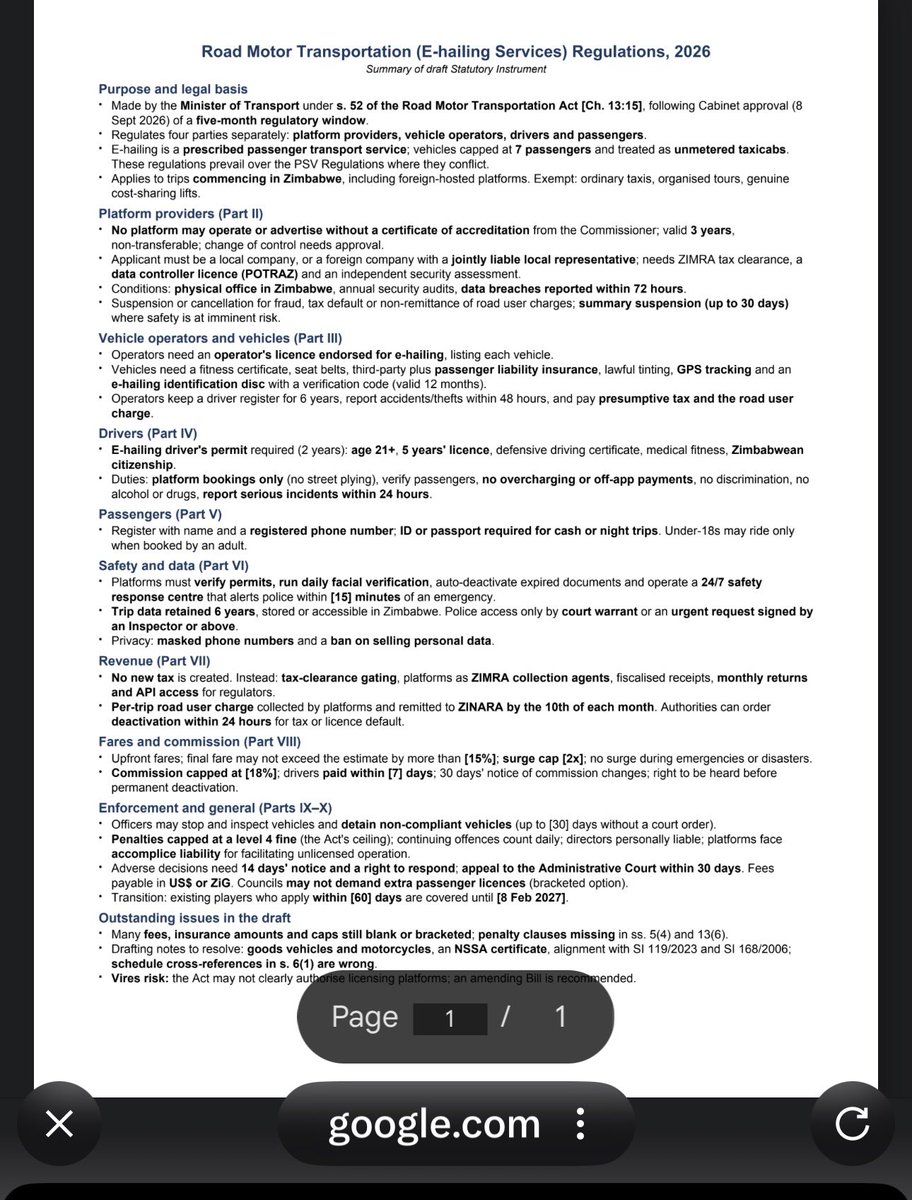
One of the unintended & dangerous consequences of AI is that policy makers in developing countries are turning to it to create regulations. ChatGPT is an African bureaucrat's wet dream.
It's never been easier to draft extremely verbose & ridiculous requirements for businesses.
@Kaka_Dubu You're actually validating my point. The things you're mentioning give very little insight into overall consumer economic strength. Businesses care about ROI, not IMF reports. Kenya is a strong market for sure, but not because consumers there are spending more than other places.
I think people severely underestimate the wealth of Nigeria and overestimate how much of Nigeria is still in the villages. This is because the government is very bad at capturing any of this wealth (the people are dodging).
Also, this false statistic of 200m population gives a very poor per-capita number.
Look at absolute numbers - Nigeria has more registered vehicles than South Africa and Columbia and is 80% of the vehicles in Australia.
You can't easily fake this number, and cars are a measure of real wealth.
And the thing is - Nigeria is growing rapidly, and many of these countries are not. Same thing is true across coastal West Africa, combined into one nation, it probably would be close to Brazil in most metrics.
West Africa unification should be a goal.
@markessien True. This is what I was saying about Zimbabwe as well. Once you have boots on the ground in several places, the reality becomes apparent. Nigeria is one of those places where you shouldn't rely just on what you read:
I beg to differ. We started in Moz before we entered Zim & scaled to 6 other markets in a year. Zim is a lot wealthier than people assume. It's a shocking discovery. Other African markets just don't have the consumer strength despite the demographics. Kenya is a good example of a country with misleading data. Capital is mostly with foreigners.
It's also a regional thing, you just don't see many East African brands in SADC, but you'll see a few SADC brands in East Africa & even West Africa.
Zimbabwe, DRC, Uganda are outliers, very confusing markets, very difficult but deep pockets. You're eaten alive if you're just a chancer, there's no safety net for the weak.
Human capital is much worse out there. In fact, hiring locally only almost always guarantees you get fvcked. Folks out there just don't behave the same, employment rules are also different and this makes some staff members much more complacent. Some countries are much better, e.g. Rwanda, it's more of a high trust society. Zambia? Forget it, you'll be shown shege.
There's a country out there where every employee I've ever dismissed for stealing immediately went to labor court, despite overwhelming & explicit evidence. Their laws & attitude towards businesses make them believe they'll always win, despite it being a complete waste of time for everyone involved.
Scaling in Africa is very, very hard. Even SA firms are pulling out of some markets. Everything changes per country, regulations, taxes, labor laws, fx controls, corruption, you name it. Building an institution that adapts to every market is the stuff of legends or absolute maniacs.
I respect Liquid & Simbisa. Everywhere I've gone, these folks are actually trying. Zimbabweans actually punch above their weight in most cases, despite almost no form of external support.
The people who have this game figured out are the Nigerians & South Africans, they are relentless about scaling despite the challenges. South Africans have strong institutional & capital support back home, whilst Nigerians have learned to operate in extreme chaos & competition, this makes them adaptable to the rest of Africa.