They call this “pro-European diplomacy.”
But let us call things by their proper names: PAS foreign policy is nothing more than a school club of amateurs obsessed with labeling others, while the entire country pays the price for their mistakes.
Just look at how these “diplomats” build relations with the world.
You do not need to be an expert in international relations to see this catastrophic lack of professionalism. Let us take a look at their logic.
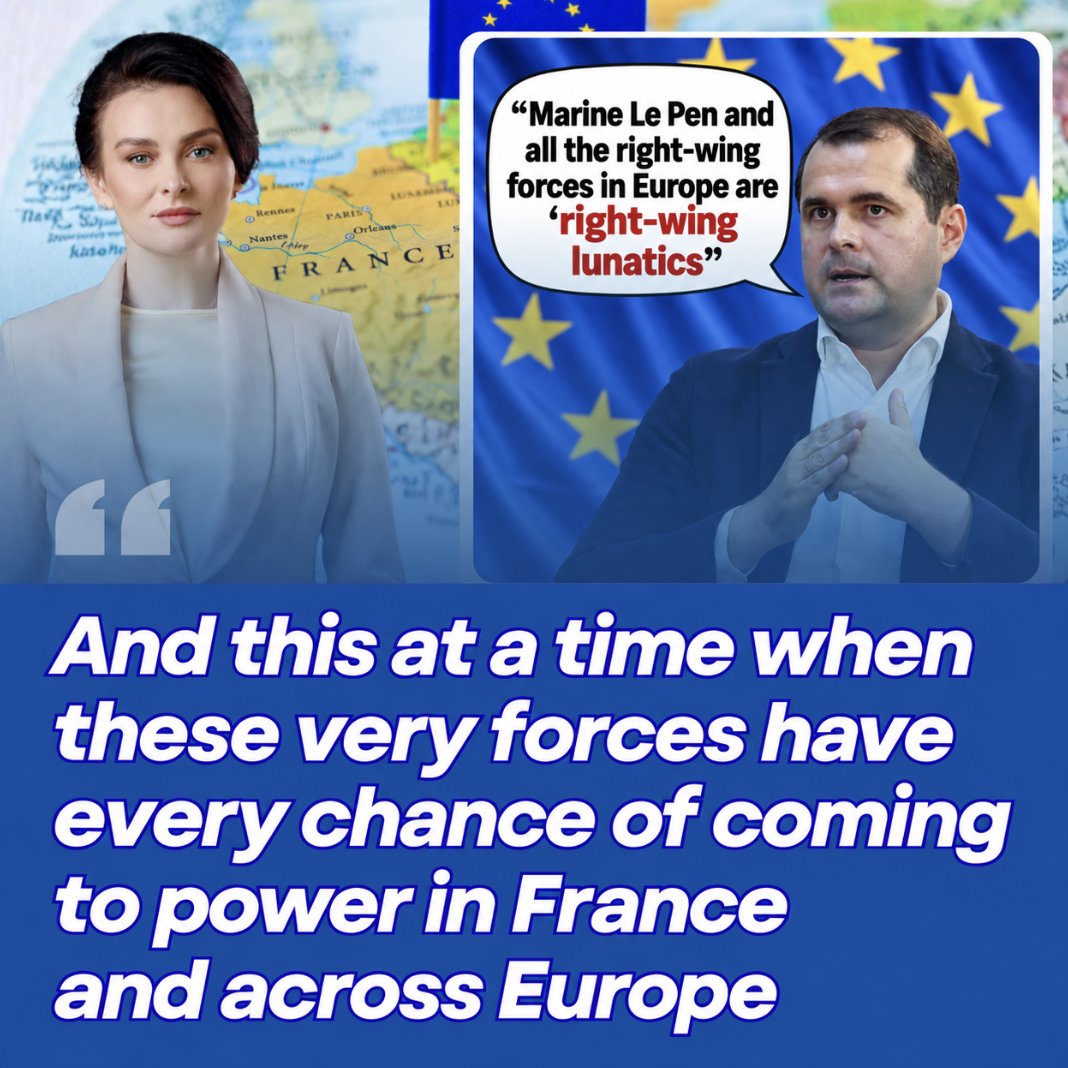
The Prime Minister of Republic of Moldova publicly calls Marine Le Pen @MLP_officiel, her political party, and all right-wing forces in Europe “right-wing lunatics.” And does it not matter that this very force now has every chance of coming to power in France — a country that holds a direct veto over Moldova’s accession to the European Union?! In many European countries, such forces could be in power as early as tomorrow. Who exactly are you planning to fight, you fake diplomats?
In the United States, with almost fanatical blindness, they put everything on the Democratic Party @TheDemocrats, while publicly branding Donald Trump @POTUS an “agent of the Kremlin.” Today, Trump is the President of the United States of America, and our government, swallowing its humiliation, is frantically trying to build at least some kind of dialogue with him, chasing Rubio @marcorubio through the corridors of international conferences.
Look at the map of Europe: in Poland, the president is Karol Nawrocki @NawrockiKn; in Serbia, Aleksandar Vučić @avucic; while Alternative for Germany @AfD and AUR @partidulAUR_RO in Romania are gaining ground. Yet PAS lives in an imaginary pink world, dividing the leaders of major powers into those they “approve of” and those they “disapprove of”! Pragmatic diplomacy? No, they have apparently never heard of it.
But the most outrageous disgrace happened with Georgia.
In the autumn of 2025, radicals storm the presidential residence in Tbilisi. And what does Maia Sandu @sandumaiamd do? Instead of remaining silent or calling for order, she openly supports those taking part in the unrest with the slogan: “Moldova stands with you!”
Did she condemn the violence? No! She publicly supported an attempted coup d’état in a sovereign country!
And when the chairman of a Georgian parliamentary committee, Irakli Kadagishvili, directly demanded explanations from Igor Grosu for this brazen interference, what did Grosu say? Listen to this masterpiece of reasoning: “The Georgian leadership is simply jealous of us!”
Jealous?! Of what?! Your sky-high tariffs? A looted state budget? Or your talent for turning Moldova against all of its neighbours?!
And what genuinely frightens me is that the next victim of this marketplace-style diplomacy could be Ukraine.
Today PAS swears eternal solidarity with Kyiv. But ask yourselves: what will happen tomorrow, when the geopolitical balance changes and all the promised European projects burst like a soap bubble?
Will PAS not turn into yet another political Brutus for Ukraine? One who, in order to save his own skin, betrays yesterday’s allies and leaves them alone to face their problems?
Remember history: Brutus does not betray his enemies. Brutus betrays those who were foolish enough to trust him.
A state’s foreign policy is not Maia Sandu’s personal blog, nor is it a platform for satisfying the ambitions of the PAS party. It is an instrument for defending national interests! Presidents and parties come and go. States and peoples remain.
And when tomorrow Moldovan citizens lose access to markets, borders are closed to them, or aid is blocked, it will not be Tofan, Grosu, or Sandu paying for this arrogance and stupidity out of their million-value asset declarations. It will be all of us who pay the price.
🇲🇩 MOLDOVA NEEDS A GOVERNMENT THAT KNOWS HOW TO WORK AND LISTEN.
Corruption, monopolies, and weak institutions are preventing Moldova from unlocking its economic potential. This is what French economist Philippe Aghion, winner of the 2025 Nobel Prize in Economics, has stated. He emphasizes that development requires competition, education, innovation, and real opportunities for new enterprises.
This is precisely why I have repeatedly raised the question of what kind of economy we are building and what kind of future we are offering our children.
Together with my team, we presented a plan for the industrialization of Moldova, proposals to support local producers, and measures to simplify taxation. We then introduced initiatives for cooperation in the fields of artificial intelligence, cybersecurity, food security, energy, and economic diplomacy.
These projects have been discussed with European specialists and politicians, and in the near future we intend to expand these discussions to the East as well. 🌍
All these proposals have one goal: to create conditions in Moldova for production, investment, decent jobs, and the development of talent.
A young person must have the opportunity to open a business and implement their idea at home. A farmer must be able to earn income from processing their own products. An entrepreneur must understand the rules and have access to financing.
Aghion’s words, just like those of all the other specialists with whom we discussed the plan to create a bridge between the West and the East, are an additional argument in favor of a serious discussion of these objectives.
Opportunities must be transformed into concrete results today, without wasting time on empty declarations and promises.
The incompetence of the authorities becomes especially dangerous when it is combined with self-confident stupidity: the belief that a useful proposal can be rejected simply because it comes from the opposition, and that the country’s stability can be achieved through blind faith.
Propose a solution that will deliver a better result. This is the kind of discussion citizens deserve from politicians — not endless excuses and the constant search for someone to blame.
🤝 Together with my team, I continue to promote the idea of Moldova as a bridge between the West and the East — a platform for economic, scientific, and technological cooperation.
I have discussed this concept with experts, representatives of the business community, and political circles in European countries, and in the near future I intend to expand this international dialogue toward the East.
Thank God, both in the West and in the East, there are people who are ready to discuss cooperation and mutual benefit despite the populist statements and accusations coming from the Moldovan authorities, understanding that the current government is temporary.
No one — not even the partners — believes in the PAS party anymore, and they understand that this represents the biggest failure of the country.
For Moldova, this is an opportunity to attract knowledge, technologies, and investment, as well as to open new markets for our producers. 📈
I am ready for a substantive discussion of my proposals.
I expect the same willingness from the authorities and politicians, if you have even the slightest understanding of what governing a state actually means.
Political arrogance is costing our country far too much.
And it is the people who pay the price — through lost opportunities, lost income, and lost years of their lives.
‼️🇲🇩When the leaders of major powers think about the interests of their own citizens, why do politicians in Chișinău forget about their own people?
U.S. President Donald Trump @POTUS and Russian President Vladimir Putin understand that energy security, economic stability, and dialogue are essential to the well-being of their citizens. When national interests require it, major powers look for solutions and negotiate.
But what are the politicians of the Republic of Moldova doing?
They continue to play the pro-European card, blindly following a political agenda, while our citizens are paying ever-higher bills, facing rising prices, and watching the country’s economy lose strength. Instead of negotiating with all partners in the interests of the Republic of Moldova, the government prefers to remain loyal to those who support it politically and financially, at the expense of its own people.
We do not need a politics of submission; we need a politics of national dignity! We do not need politicians who prove how obedient they are to outside forces. We need leaders who prove how much they care about the people of their own country.
The Republic of Moldova must be a partner to everyone, an enemy to no one, and negotiate everything in the interests of its own citizens!
The time has come to replace a political class that has come to confuse the interests of its financiers with the national interest. We need people who will put energy security, economic development, jobs, and the dignity of every citizen first.
Because the real question is not whether we are pro-European or pro-Russian. The real question is: who is truly PRO-MOLDOVA, and who is genuinely fighting for our people?
I believe in a sovereign Moldova that does not submit to orders from abroad, but builds its own future through dialogue, negotiations, and mutually beneficial partnerships.
Moldova must be governed in the interests of the Moldovan people, not in the interests of those who finance and control the political class!
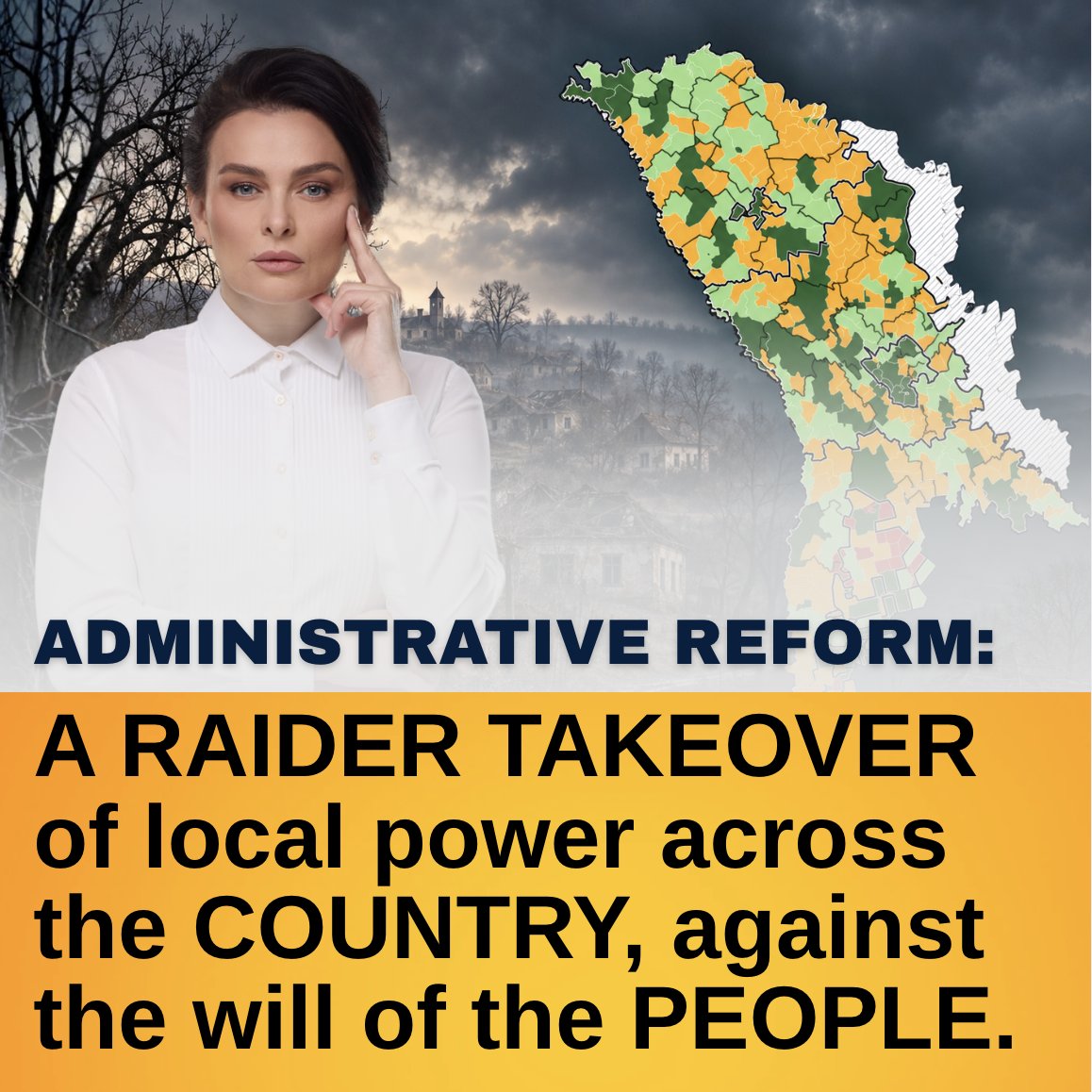
Let us strip away the glossy wrapping from the so-called “administrative reform” and look at what they are actually trying to sell you under the label of “European modernization.”
You are being told: 32 districts will be abolished. Out of 893 mayoralties, only 273 will remain. The country will be carved up into three faceless regions, governed by officials appointed behind closed doors. Without your participation, without direct elections, and without any real right to influence those who will decide the fate of your land.
This is not decentralization. This is a hostile takeover of local government across the entire country.
The scheme behind this deception was openly revealed by Prime Minister Vasile Tofan himself. With a straight face, he said: first, we will merge the mayoralties and shrink the system, and then the money and financial autonomy will come… sometime later.
Think about the cynicism of this plan. They are taking away the regions’ autonomy right now, while promising resources at some undefined point in the future. It is a perfectly designed noose around the neck of every village and every town.
The authorities are deliberately leaving mayors alone to deal with leaking roofs, broken roads and freezing schools. The mayor will be held accountable by the people for every problem, while officials in Chișinău will sit on the money bags and pull the strings. An obedient mayor who nods to the right party will receive a few coins to repair a kindergarten. A disobedient one will be left to watch his village die without a single leu.
At the same time, Tofan openly admits that the government has calculations showing how much will supposedly be saved, but they are not going to show them to the public. They are redesigning the very system that keeps the country functioning and hiding the figures from the people. Because there is no real saving there. There is only a cold party calculation aimed at clearing the political field.
They are violating Article 109 of the Constitution and openly disregarding the European Charter of Local Self-Government, which clearly requires that resources MUST be transferred together with responsibilities.
A genuine reform means that tax revenues remain in the region, that funding follows responsibilities, and that decisions are made by real people on the ground.
What the ruling party is building is not a European state. It is ordinary feudalism, where the entire province is expected to stand with an outstretched hand before the masters’ table in Chișinău.
I am addressing the government directly. You may erase district names from the map and force mayoralties into financial bondage. But once you strip citizens of the right to manage their own communities, you ultimately strip yourselves of the right to call yourselves a legitimate government.
And when this artificial power vertical collapses under the weight of its own lies, it will bury you with it.
❗️🇲🇩„Războiul cognitiv”. Ce definiție comodă și răsunătoare a inventat doamna Sandu.
Se pare că principala amenințare pentru stat nu sunt tarifele împovărătoare, nu sărăcirea populației și nici prăbușirea sistemului de drept. Principala amenințare, potrivit președintei, este „atacul cognitiv”, care distruge încrederea aproape sacră a cetățenilor în instituțiile statului.
Doamnă Sandu, haideți să lăsăm deoparte acești termeni și să facem un simplu exercițiu de confruntare cu realitatea. Să analizăm, punct cu punct, cine anume distruge această încredere:
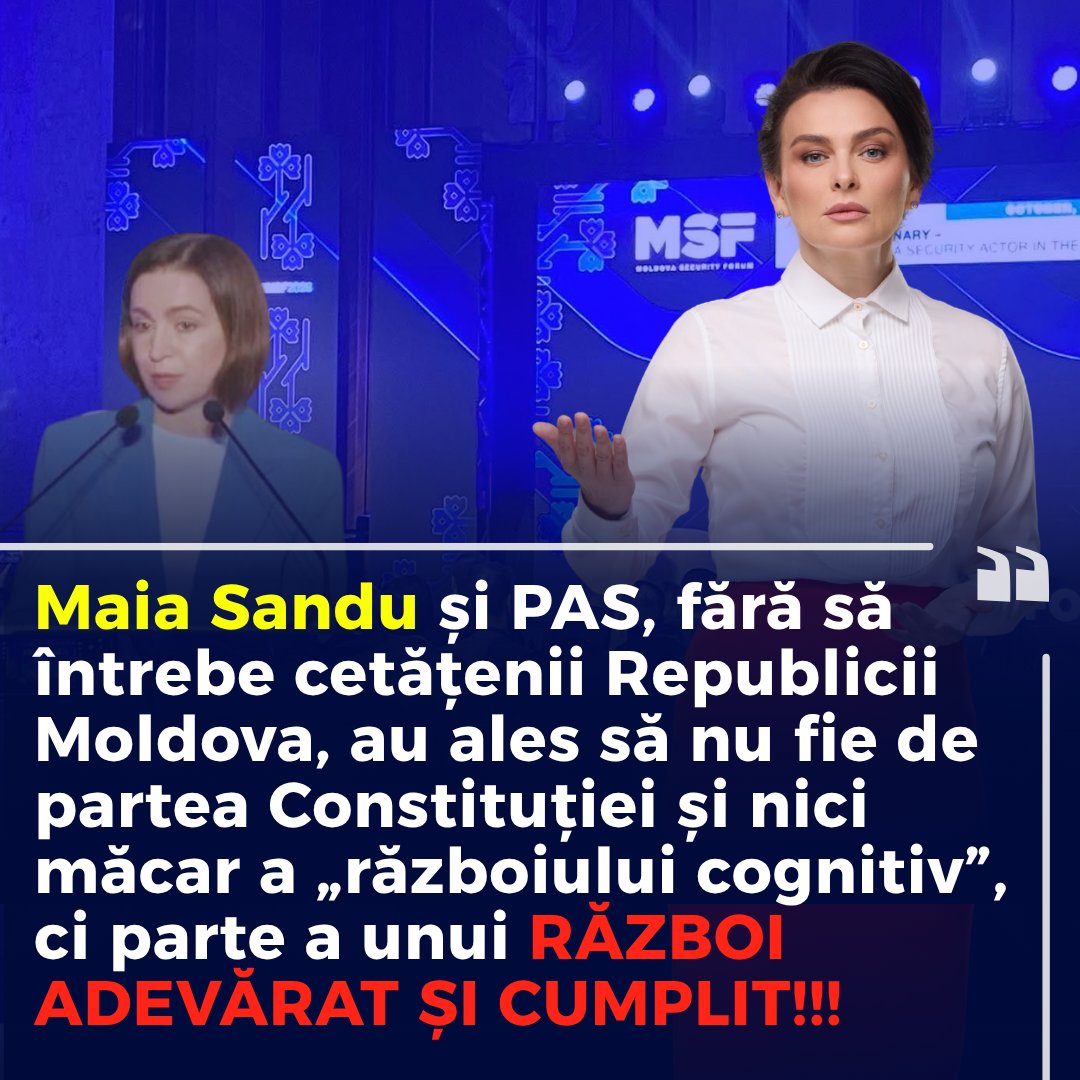
1. Dumneavoastră și PAS, fără să întrebați cetățenii Republicii Moldova, ați ales o tabără nu într-un „război cognitiv”, ci într-un RĂZBOI ADEVĂRAT ȘI CUMPLIT!
Încălcând principiul constituțional al neutralității, ați ales în locul poporului calea renunțării la neutralitate prin procesul de înarmare și prin construirea unor capacități de producere a dronelor. Înțelegem că vă asumați și consecințele acestor decizii.
2. Când cetățenii află că verișoara președintei primește la o întreprindere de stat peste 120 de mii de lei pe lună, aceasta este „propagandă inamică” sau propria dumneavoastră înțelegere a dreptății?
3. Când un procuror și angajați ai poliției ajung figuranți într-un dosar penal privind o mită de 400 de mii de dolari, sunt de vină boții hibrizi care le-au pus banii în buzunar sau sistemul dumneavoastră „reformat”, care a putrezit până la temelie?
4. Când funcționari din echipa dumneavoastră declară venituri anuale de câte 3 milioane de lei, iar profesorilor li se propune, cu un zâmbet arogant, să „mai aștepte majorarea salariilor până în 2027”, oare canalele de Telegram sunt cele care le insuflă pedagogilor sentimentul de nedreptate sau dumneavoastră personal le-ați arătat care este adevărata atitudine a puterii față de ei?
5. Când oamenilor li se promite stabilitate, iar ulterior prețul gazului este majorat brusc, ce anume subminează încrederea: acțiunile puterii sau cei care o critică?
6. Iar când un ministru cu milioane în conturile bancare le recomandă familiilor care îngheață în propriile case să trăiască la 14 grade, oare forțele externe l-au obligat să demonstreze o asemenea ruptură totală de realitatea în care trăiește propriul popor?
Răspunsul este evident.
Tot ceea ce am enumerat nu este un „război cognitiv”. Este un adevărat război împotriva propriului popor și o confruntare cu marile puteri.
Este reacția firească a societății la ipocrizie, la nedreptatea socială și la privilegiile de tip boieresc ale funcționarilor.
Dar cel mai uluitor este faptul că puterea încearcă să prezinte informarea cetățenilor drept o „amenințare la adresa democrației”.
Nu jurnaliștii și-au numit rudele în funcții bine plătite.
Nu cetățenii au luat mită de sute de mii de dolari.
Și nu opoziția a adoptat decizii care contrazic în mod flagrant promisiunile dumneavoastră electorale.
Dumneavoastră faceți toate aceste lucruri, iar apoi declarați război celor care vorbesc despre ele.Doamnă Sandu, vreți să protejați încrederea în instituțiile statului?
Încetați să căutați amenințări hibride în aplicațiile de mesagerie.
Începeți cu acțiunile propriei puteri.Încetați să induceți cetățenii în eroare și să-i mințiți. Eliminați privilegiile celor aleși și încetați să puneți propria incompetență pe seama factorilor externi.
Fiecare declarație a unui ministru sau a unui prim-ministru ajunge să devină un meme tocmai pentru că este ruptă de realitatea în care oamenii simpli trăiesc și încearcă să supraviețuiască.
Fiecare acțiune a unui ministru provoacă furia cetățenilor deoarece, 24 de ore din 24, aceștia nu fac decât să se justifice și să caute vinovați.
Vă amintiți de remarcabilul dumneavoastră ministru al Economiei, Alaiba, care scria înainte de alegeri:
„Când vom veni la guvernare, pentru tot ceea ce se întâmplă vom fi noi responsabili. Noi nu suntem dintre cei care caută vinovați.”
Vă amintiți cum dumneavoastră spuneați despre democrați că sunt „puterea scumpirilor”, că dacă nu sunt capabili să facă nimic trebuie să plece și că sunt corupți pentru că își numesc în instituțiile statului propriii oameni loiali?
Recunoașteți: ce forță externă vă obliga atunci să spuneți aceste lucruri? Rusia? Kozak, cu care v-ați întâlnit? Sau ce forță externă v-a determinat ulterior să vă reconsiderați propriile cuvinte?
Diferența dintre ceea ce spuneți și ceea ce faceți — aceasta este adevărata formă a războiului cognitiv.
Pentru că principala sursă a neîncrederii în stat nu este cel care vorbește deschis despre o problemă.
Principalul distrugător al încrederii este cel care creează problema și refuză să răspundă pentru ea.
❗️🇲🇩“Cognitive warfare.” What a convenient and grand-sounding term Mrs. @sandumaiamd has come up with.
Apparently, the main threat to the state is not crushing utility tariffs, not the impoverishment of the population, and not the collapse of the law-enforcement system. According to the President, the main threat is a “cognitive attack” that destroys citizens’ sacred faith in state institutions.
Mrs. Sandu, let us put these terms aside for a moment and conduct a simple reality check. Let us go through, point by point, who is actually destroying this trust:
1. You and PAS, without asking the citizens of Moldova, chose a side — not in a “cognitive war,” but in a REAL, TERRIFYING WAR.
By violating the Constitution and making this choice instead of the people, you are effectively abandoning neutrality through militarization and the construction of drone-production facilities. As I understand it, you are prepared to take responsibility for the consequences?
2. When citizens discover that the President’s cousin earns more than 120,000 lei per month at a state-owned enterprise, is that “enemy propaganda,” or is it your personal understanding of justice?
3. When a prosecutor and police officers become suspects in a criminal case involving a $400,000 bribe, did “hybrid bots” plant the money on them, or has your “reformed” system rotted to its core?
4. When officials from your team declare annual incomes of 3 million lei, while teachers are arrogantly told to “wait until 2027” for salary increases, is it Telegram channels that are making teachers feel humiliated, or have you personally shown them what this government truly thinks of them?
5. When people are promised stability and then the price of gas is suddenly driven sharply upward, what undermines trust more — the actions and words of the authorities, or those who criticize them?
6. And when a minister with millions in his bank accounts advises families who are freezing in their homes to live at 14°C, were foreign forces the ones who made him demonstrate such complete detachment from the reality of his own people?
The answer is obvious.
Everything listed above is not “cognitive warfare.” It is a real war against your own people and a confrontation with major powers. It is the natural reaction of society to hypocrisy, social injustice, and the privileged lifestyle of officials.
But what is most astonishing is the attempt by the authorities to portray informing citizens as a “threat to democracy.”
It was not journalists who appointed relatives to highly paid positions.
It was not ordinary citizens who accepted bribes worth hundreds of thousands of dollars.
And it was not the opposition that made decisions completely contradicting your own campaign promises.
You take these actions yourselves — and then declare war on those who speak about them.
Mrs. Sandu, do you want to protect public trust in state institutions?
Stop searching for hybrid threats in messaging apps.
Start with the actions of your own government.
Stop misleading citizens and lying to them. Eliminate privileges for the chosen few and stop blaming external forces for your own incompetence.
Every statement made by a minister or prime minister turns into a meme precisely because it is detached from the reality in which ordinary citizens are forced to live and survive.
Almost every action by a minister provokes anger among citizens because, 24 hours a day, seven days a week, officials do little more than make excuses and search for someone else to blame.
Do you remember your outstanding former Economy Minister, Dumitru Alaiba, writing before the elections: “When we come to power, we will be responsible for everything. We are not the kind of people who look for someone else to blame”?
Do you remember how you used to say about the Democrats that they were “the government of price increases,” that if they were incapable of solving problems they should leave office, and that they were corrupt because they appointed their own loyal people to state institutions?
Tell us: what foreign force made you say those words back then?
Russia?
Kozak, with whom you met?
Or what external force later forced you to reconsider your own words?
The contradiction between words and actions — that is cognitive warfare.
Because the main source of public distrust in the state is not the person who openly speaks about a problem.
The main destroyer of trust is the person who creates that problem and then refuses to take responsibility for it.
Dragă profesoare, dragi profesori!
Vă felicităm de Ziua Profesorului, dar este timpul să privim adevărul în față: sunteți persecutați și lăsați în nepăsare, cu salarii mizere, tocmai de propriii elevi pe care i-ați crescut!
Reveniți la etica vie, nu la cea moartă din cărți!
Înaintea formulelor, a fizicii și a matematicii, însușiți-vă mai întâi dumneavoastră limba și Istoria Moldovei, chiar dacă curricula politică vă forțează să le predați Istoria Românilor.
Învățați-i pe copii să-și iubească neamul și adevăratele rădăcini.
Astăzi, copiii ajung să-și deteste propria țară și identitate, iar din acest motiv nici nu mai vor să o dezvolte.
Degeaba umpleți caietele cu cifre și teorie, dacă din școală ies oameni reci, fără suflet, fără patrie și fără Dumnezeu.
Un elev educat doar tehnologic va deveni mâine un conducător orb și insensibil la nevoile celor care l-au învățat.
Puneți în centrul școlii credința, morala, patriotismul și omenia.
Doar când veți plăsmui caractere drepte și conștiințe treze, acești copii vor crește prețuindu-vă munca și oferindu-vă respectul și traiul demn pe care le meritați!
Dear teachers!
We congratulate you on Teacher’s Day, but it is time to face the truth: you are being persecuted and neglected, left with miserable salaries by the very students you once taught and raised!
Return to living ethics, not to the lifeless ethics found only in books!
Before formulas, physics, and mathematics, first master the language and the History of Moldova yourselves, even if a politically driven curriculum forces you to teach the History of the Romanians. Teach children to love their people and their true roots.
Today, children are being brought to the point where they come to despise their own country and identity, and because of this, they no longer want to contribute to its development.
There is little point in filling notebooks with numbers and theory if schools produce people who are cold, without compassion, without a homeland, and without God.
A student educated only in technology may tomorrow become a blind leader, insensitive to the needs of those who once taught them.
Place faith, morality, patriotism, and humanity at the heart of education.
Only when you shape upright characters and awakened consciences will these children grow up valuing your work and giving you the respect and dignified standard of living that you deserve!
🇨🇳🇲🇩 Dincolo de Temu: de ce este important dialogul economic al Moldovei cu China!?
⬇️
Zilele trecute am scris despre un paradox: în Moldova, despre China se vorbește cel mai des atunci când autoritățile încep discuțiile despre taxarea coletelor comandate online.
Dar China înseamnă mult mai mult decât platforme de comerț online. Este a doua economie a lumii, un lider în tehnologii avansate, echipamente industriale și dispune de un capital investițional enorm.
Cifrele Biroului Național de Statistică vorbesc de la sine:
📊 Import: În anul 2025, China a reprezentat 13,6% din totalul importurilor Republicii Moldova (+19,1% într-un an), fiind depășită doar de România. În prima jumătate a anului 2026, această pondere a crescut până la 13,8%.
📉 Export: În același timp, China continuă să lipsească din lista principalelor piețe de desfacere pentru produsele moldovenești.
Am învățat să cumpărăm. Acum este timpul să învățăm să vindem și să atragem investiții.
În cei 34 de ani de relații diplomatice, începând cu 30 ianuarie 1992, am pus bazele unei cooperări solide.
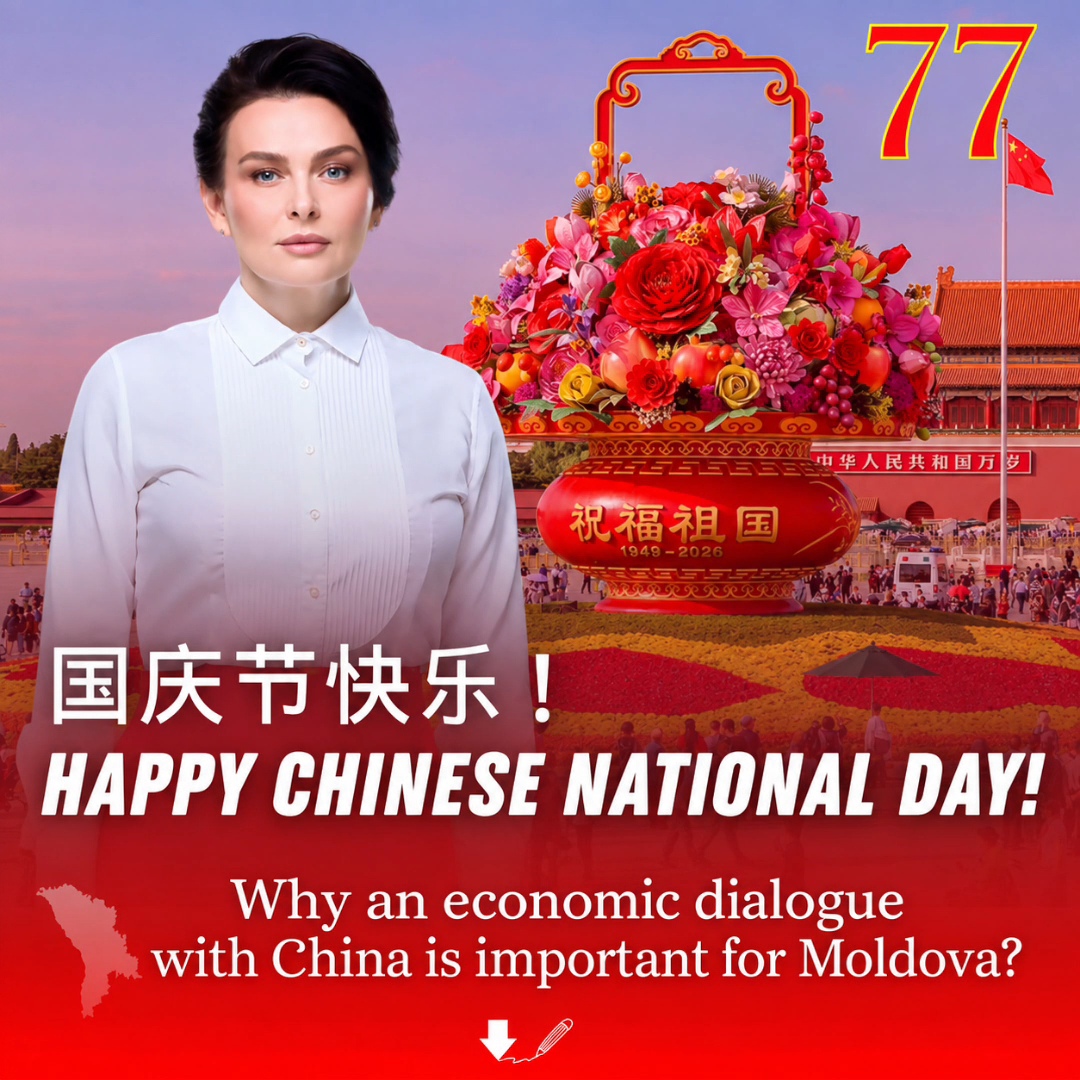
Astăzi, când China marchează cea de-a 77-a aniversare a fondării Republicii Populare Chineze, merită să privim această cooperare dintr-o perspectivă nouă — prin prisma pragmatismului și a beneficiului reciproc:
• Promovarea exporturilor moldovenești
• Investiții în sectorul real al economiei
• Modernizarea tehnologică a sectorului agroindustrial
• Proiecte educaționale și umanitare
Felicit poporul chinez cu ocazia Zilei Naționale! Îi doresc pace, bunăstare și prosperitate.
Fie ca relațiile dintre Republica Moldova și Republica Populară Chineză să fie dezvoltate prin proiecte concrete, ale căror beneficii să fie resimțite direct de oameni.
🇲🇩🤝🇨🇳 国庆节快乐! — La mulți ani de Ziua Națională a Chinei!
🇨🇳🇲🇩 Beyond Temu: Why Moldova Needs an Economic Dialogue with China!?
Recently, I wrote about a paradox: in Moldova, China is often mentioned only when the authorities start discussing duties on online parcels.
But China is far more than marketplaces.
It is the world’s second-largest economy, a leader in advanced technologies and industrial equipment, and a major source of investment capital.
Moldova should look at China not only as a supplier, but also as a market, investor and long-term economic partner.
According to Moldova’s National Bureau of Statistics @statisticamd:
📊 Imports: in 2025, China accounted for 13.6% of Moldova’s total imports (+19.1% year-on-year), second only to Romania.
In Jan–Jun 2026, China’s share rose to 13.8%.
📉 Exports: China still does not rank among the main destinations for Moldovan products.
We have learned how to buy. Now we need to learn how to sell and how to attract investment.
After 34 years of diplomatic relations, the foundation is already there.
Since diplomatic relations were established on 30 January 1992, Moldova and China have built a solid foundation.
Today, as China marks the 77th anniversary of the founding of the People’s Republic of China, our cooperation should be viewed through pragmatism and mutual benefit.
The priorities are clear:
• promoting Moldovan exports
• investment in the real economy
• technological modernization of agriculture
• educational and humanitarian projects
These are areas where cooperation can deliver concrete benefits for people in both countries.
Congratulations to the Chinese people on National Day! I wish China peace and prosperity.
May Moldova–China relations be filled with concrete projects that people can see and feel. 🇲🇩🤝🇨🇳
国庆节快乐!
@MFA_China@MOFCOM_China@MoldovaMFA
#ChinaNationalDay #MoldovaChina
🇨🇳⬇️🇲🇩We have grown accustomed to discussing China whenever another Temu parcel happens to irritate someone in government.
‼️But I suggest looking at China a little differently.
Moldova keeps moving from one crisis to another: energy, investment, exports, jobs, agriculture. Each time, we look for another loan, grant, or assistance programme and tell people that they simply need to endure a little longer.
Meanwhile, practically next door to us is an enormous market and a major source of technology, equipment, and capital — yet Moldova makes use of it in a surprisingly one-sided way.
In 2025, China accounted for 13.6% of Moldova’s total imports, becoming the country’s second-largest source of imported goods after Romania. Imports from China increased by another 19.1% over the year. In the first half of 2026, China’s share rose further to 13.8% of Moldova’s imports. At the same time, China did not even appear on the National Bureau of Statistics’ published list of Moldova’s main export markets.
This creates a rather strange model.
We have become very good at leaving our money in China. But we have hardly learned how to make money from China.
And the first thing I propose is to reconsider the decision regarding Moldova’s ambassador to China.
In February, the current government appointed Petru Frunze, a former MP from the PAS parliamentary faction, as ambassador to Beijing. His official biography shows a legal education and experience as a mayor and a governing-party MP, while party loyalty rather than relevant experience appears to have been the main criterion behind the appointment. His published CV does not show a professional career in the diplomatic service, specialised expertise on China, or knowledge of the Chinese language.
China is not a place where a small country can afford to send someone to learn diplomacy only after presenting their credentials.
It is a civilisation with its own political culture, protocol, system of relationships, economic logic, and an entirely different negotiating tradition.
Moldova needs someone in Beijing who understands China, knows how to engage with the Chinese state and business community, understands economic diplomacy, and is capable of opening doors for Moldovan companies that they would never be able to reach from Chișinău on their own.
Because the opportunities there are very real.
For example, back in 2018, Moldova and China held three rounds of negotiations on a free trade agreement and agreed on more than 70% of the legal documents. Eight years have passed, yet Moldova has still not taken advantage of this opportunity.
That same year, the Chinese side agreed to explore projects for Moldova in the field of renewable energy and electricity storage systems. Had we paid closer attention to such projects five years ago, today we might not be discussing energy security and the country’s dependence on imports in the same way. Instead, we could have been strengthening our energy security and even offering our experience to neighbouring countries.
From the challenges facing the agri-food sector to medical equipment, construction, industrial digitalisation, and renewable energy, all of these areas could have benefited from cooperation with Chinese companies and investors.
In other words, the potential does not need to be invented.
My second proposal is to create not another commission, but a dedicated Moldova–China economic mission for two years within the embassy, bringing together diplomats, exporters, agricultural representatives, energy specialists, and investment experts.
Third, we should bring the 2018 free trade negotiations back out of the archives and conduct a new professional review: what remains relevant from the more than 70% already agreed, what has changed since then, and what is compatible with Moldova’s commitments in the European integration process.
A smart small state does not choose between East and West where no such choice is necessary.
🇲🇩De cinci ani de stare de urgență, moldovenii au învățat un singur lucru: puterii i se dau împuterniciri excepționale, iar oamenilor — facturi mari și secrete pe bandă rulantă.
❗Haideți să vă spun ce înseamnă, de fapt, această stare de urgență.
Ieri, cucoana de la Risipeni ne spune iarăși că instaurăm stare de urgență pentru că nu avem gaz și apă. Păi nu am avut niciodată! Tocmai de asta vă alegem: să vă gândiți din timp, să negociați și să găsiți soluții, nu să veniți cu scuze!
Haideți să vedem ce am cedat în stările de urgență instituite în Moldova:
În 2023 am transmis României rețelele de transportate a gazelor naturale.
Am avut achiziții de gaz rusesc sub mască europeană, cumpărat la prețuri de zece ori mai mari.
În stare de urgență nu mai funcționează ANRE, ci un grup de persoane afiliate PAS.
Nu mai poți contesta nicio decizie! Dacă întrebi de ce am cumpărat gaz scump când pe piață este mai ieftin, ți se închide gura scurt: „e stare de urgență”.
Deci, sub paravanul stării de urgență se ascund fraude la scară largă, achiziții fără licitații transparente și contracte secretizate. Când vine timpul de plată, de la noi se cere doar disciplină și tăcere. Dar când omul simplu întreabă pentru ce anume dă ultimii bani din buzunar, i se răspunde sec: „informație confidențială”.
Nu se poate construi securitatea țării pe spatele credulității noastre. Prim-miniștrii se schimbă, dar schema rămâne aceeași: deciziile se iau pe ascuns, iar toată greutatea așa-ziselor „măsuri extraordinare” cade tot pe umerii familiilor din Moldova. Moldovenii au obosit să plătească cu ochii închiși!
Și până la urmă, ce schimbă această stare de urgență pentru cetățeanul simplu? Nimic în bine. Doar că îl obligă să plătească mai mult, să tacă mai tare și să privească cum alții decid în locul lui.
After five years of states of emergency, Moldovans have learned one thing: the authorities are granted exceptional powers, while ordinary people are left with huge bills and an endless stream of secrets.
Let me explain what this state of emergency really means.
Yesterday, @sandumaiamd once again announced that a state of emergency would be introduced because we do not have gas and water. But we never had them! That is exactly why we elect you: to think ahead, negotiate, and find solutions — not come back with excuses.
Let us look at what Moldova has given up during the states of emergency introduced over these years:
In 2023, we transferred the natural gas transmission network to Romania.
We had purchases of Russian gas under a European label, bought at prices ten times higher.
During a state of emergency, ANRE no longer functions as it normally would; instead, decisions are taken by a group of people affiliated with PAS.
You can no longer challenge any decision. If you ask why expensive gas was purchased when cheaper gas was available on the market, you are quickly silenced with one answer: “It is a state of emergency.”
So, behind the cover of the state of emergency, large-scale fraud, purchases without transparent tenders, and classified contracts are being hidden. When the time comes to pay, all that is demanded from us is discipline and silence. But when an ordinary person asks what exactly they are paying their last money for, the answer is blunt: “Confidential information.”
A country’s security cannot be built on the back of our trust and credulity. Prime ministers change, but the scheme remains the same: decisions are made behind closed doors, while the full burden of these so-called “extraordinary measures” falls on Moldovan families. Moldovans are tired of paying with their eyes closed.
And in the end, what does this state of emergency change for an ordinary citizen? Nothing for the better. It only forces people to pay more, stay quieter, and watch while others make decisions in their place.
🇲🇩We are among the TOP 5 countries in the world in terms of population decline.
A question for those in government: are you waiting until only civil servants and empty houses are left in the country? More than 22,000 people left us in 2025 alone. People are fleeing! They are fleeing from you and from the lack of any vision for the future. People understand that you have called yourselves “Eurozei,” while every one of your failures ends with excuses: that everything happening now is the fault of the Russians, previous governments, the Middle East, and so on.
Stop looking for excuses. You are receiving your salaries now. You are wasting the budget now — on relatives, concerts, and pointless conferences. We, the citizens, are telling you: stop the waste! We want a real economy, not a life built on debt! Cut the army of civil servants and stop the schemes! Accelerate the expansion of IT Parks and develop industrial hubs in the regions so that we can create well-paid jobs and stop migration from villages to Chișinău and abroad.
Let local producers breathe and invest in our own production. Pass a law requiring 60% of what is produced at home to be sold in our stores.
A mother talks to her child through a phone screen. An elderly person waits for a call from abroad. A professional packs their bags. Everyone has their own story, but the duty of the state is one and the same: to make a decent life at home possible — through a real economy, not by wasting the people’s money on the luxury of MPs and government officials.
Congratulations to AfD @AfD on its victory in Saxony-Anhalt: 43.8%, more than double its 2021 result, while the CDU @CDU fell to 17.2%.
For years AfD @AfD was isolated, targeted by attempts to ban it and subjected to political pressure. Yet voters answered by doubling its support. For me, this is a victory for citizens’ right to choose despite pressure — and a sign that justice eventually breaks through.
Moldova faces a similar pattern. Moldova Mare is being restricted, sanctions have been imposed against me on allegations I consider unproven, while PAS portrays political opponents as threats to the state. Administrative power cannot replace public trust forever.
Poland has elected Karol Nawrocki @NawrockiKn, whom PAS attacked over links with Donald Trump @realDonaldTrump and George Simion @georgesimion. AfD @AfD has achieved a historic result in Germany. Marine Le Pen @MLP_officiel leads French presidential polling. Europe is changing faster than PAS can invent new labels.
PAS believed it belonged to the only “acceptable” political camp. That world is disappearing.
The more power is used against inconvenient opponents, the more clearly citizens see its true face. The days when repression could be sold as democracy or European integration are ending.
PAS must understand: Moldova does not belong to one party. I will continue to demand accountability for every proven abuse of power, regardless of rank, connections or protection.
The longer PAS relies on fear and administrative pressure, the harder the political reckoning will be when Moldovan citizens deliver their verdict.
The Republic of Moldova cannot build its identity by opposing other states or by cultivating geopolitical conflicts.
Mrs. @sandumaiamd , if the Republic of Moldova is a neutral state, citizens have the right to ask: why is the country being militarized, why are military parades being organized, why is armament being increased, why is one side in a conflict politically supported while sanctions are imposed on the other?
Is this the policy of a state whose permanent neutrality is enshrined in the Constitution?
Even more concerning is the fact that, while we speak about independence, we increasingly hear messages about the disappearance of the Republic of Moldova as a state, about unification, and about the gradual abandonment of our own national interests.
A state does not become strong simply by being against another state.
True independence is built from within: through functioning institutions, stability, respect for citizens, a strong economy, and the ability to offer people a future here, at home.
Moldova needs peace, balance, and a foreign policy built around its own national interest, not around the confrontations of others.
Why @sandumaiamd, do you not honor the oath you took as President?
You swore on the Constitution of the Republic of Moldova to devote your strength and ability to the prosperity of the country.
So today we have the right to ask: why are the Constitution and the laws being disregarded?
Why is the obligation to protect the fundamental rights and freedoms of citizens being ignored?
Article 10 of the Constitution clearly states that the Republic of Moldova is founded on the unity of its people and is the common and indivisible homeland of all its citizens.
Instead, society has been repeatedly divided: into “good people” and everyone else, into pro-Russian and pro-European citizens, into opposing camps with fundamentally different visions of the country’s future.
Today, Moldova remains deeply divided.
Any attempt to undermine the statehood, sovereignty, independence, neutrality or territorial integrity of the Republic of Moldova must be assessed in accordance with the Constitution and the law.
No one including those at the highest levels of power should stand above them.
Constitutional rights cannot become empty words.
They must not be restricted through unjust laws, weakened by state institutions that fail to fulfill their legal duties, or subjected to a justice system influenced by political power.
Those who violate the law, abuse their authority or undermine the constitutional foundations of the Republic of Moldova must be held accountable before the law.
Political office cannot and must never grant immunity from responsibility.
I call on @sandumaiamd to respect the oath she took, the Constitution and the laws of the Republic of Moldova, as well as the traditions and culture of the Moldovan people, the Moldovan language and the values of our country.
Moldova needs peace, unity and respect for every community living on its territory.
It needs a future in which its statehood, sovereignty and independence are protected — not weakened — and in which the country is united rather than divided.
🇲🇩 INDEPENDENCE ON PAPER, DEPENDENCE IN REALITY.
How independent can a country really be if it constantly relies on loans, budget deficits, and foreign financing?
Today, Moldova still lacks the level of energy, economic, and food security needed to ensure its own sustainable development.
Public debt continues to rise, the budget deficit remains a persistent problem, and ordinary citizens are paying the price through higher costs, rising utility bills, and growing pressure on their standard of living.
At the same time, more and more major decisions are shaped by the conditions set by creditors and international institutions. When external financing starts to matter more than the national interest, sovereignty risks becoming little more than a formal declaration.
Independence is not just about flags, concerts, and ceremonial speeches. It means having a strong domestic economy, reliable energy supplies, institutions that act in the interests of citizens, and a state that is able to decide its own future.
Moldova should continue to cooperate with international partners, but without giving up its right to make its own decisions.
A truly independent country cannot live indefinitely on debt or trade away its sovereignty for the next loan.
❓✍🇲🇩 WHO WROTE THE DECLARATION OF INDEPENDENCE, AND WHAT CONSEQUENCES DID IT HAVE?
One of the issues that deserves public discussion is the way in which the Declaration of Independence of the Republic of Moldova was drafted.
According to certain testimonies and public sources, alongside Moldovan MPs Vasile Nedelciuc and Valeriu Matei, Aurel Preda, Valentin Stan, and Alexandru Farcaș, who came from Bucharest, are also said to have participated in drafting the document.
This information raises legitimate questions: what exactly was the role of the Romanian experts? Who decided that they should be involved? How significant was their contribution to the final text?
Another important issue concerns the name of the language. The legislation adopted in the Moldavian SSR in 1989 referred to the “Moldovan language” and its return to the Latin script. By contrast, the 1991 Declaration of Independence uses the term “Romanian language.”
This wording subsequently acquired major significance: through Judgment No. 36 of 5 December 2013, the Constitutional Court interpreted the Constitution in conjunction with the Declaration of Independence, while in 2023 Parliament replaced the term “Moldovan language” with “Romanian language” in the legislation.
This leads to an essential question: if there is serious information indicating that officials or experts from another state participated in drafting a fundamental act of the Republic of Moldova, should these circumstances not be officially clarified?
The Republic of Moldova needs documented truth, transparency, and institutional answers.
⁉️Madam President @sandumaiamd, for what purpose was the independence of the Republic of Moldova proclaimed if, today, unification is being presented as “Plan B”?
‼️Or perhaps this was, in fact, Plan A all along, while the European path was used to gradually accustom society to the idea of giving up its own state.
Independence is not celebrated in order to be surrendered, and the people did not give you a mandate to prepare the disappearance of the Republic of Moldova.