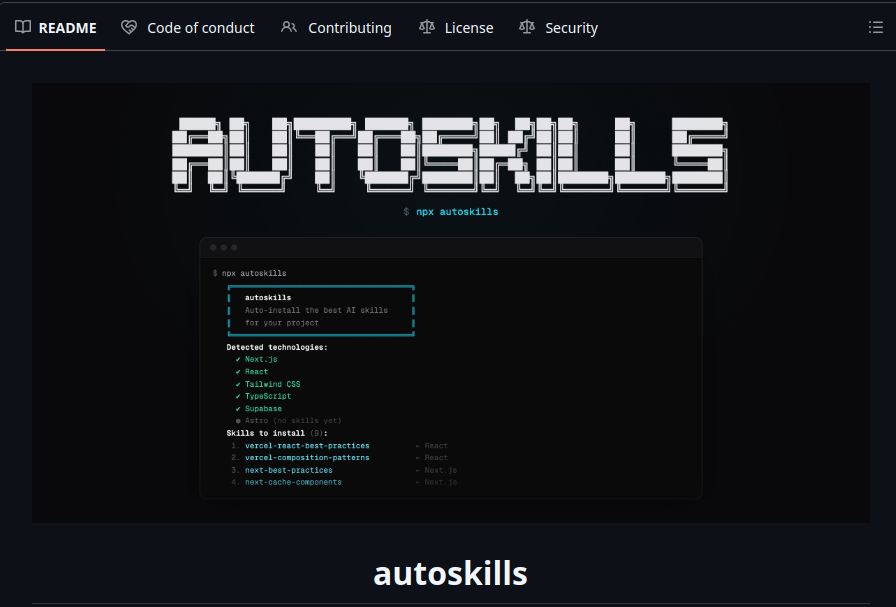
Els models locals (que s'executen al vostre ordinador) responen ja el 88,7% de consultes quotidianes i són un +40% més eficients energèticament que el núvol. La qualitat s'ha multiplicat per 3 en dos anys.
El futur és AI en local. Apreneu com usar-la:
https://t.co/NU5NiUoWoN
🤝 #Política | L'exalcalde de Jorba per ERC, David Sánchez, s'apunta a les files de Junts 👉 https://t.co/LBkwnlA6wG
➡️ L’exalcalde diu que se suma "amb la voluntat de sumar a un projecte on m’han rebut amb els braços oberts i que m’ha encisat per obert, plural i seriós".
Bona tarda.
Ens plau comunicar-vos la nova incorporació del David Sànchez a l'executiva comarcal de l'Anoia,
Amb aquesta incorporació, sumem un perfil amb una àmplia experiència municipal i coneixement de la comarca.
Gràcies @vidsanchez_ia i benvingut a casa teva!
People are realizing that AIs are nowhere near human intelligence and learning abilities.
Yet they have become very useful by compensating for their lack of common sense, lack of understanding of reality, and limited reasoning and planning abilities, by the accumulation of enormous amounts of declarative knowledge.
I’ve always believed the No.1 application of AI should be to improve human health.
That work started with AlphaFold, and now at @IsomorphicLabs with the mission to reimagine drug discovery and one day solve all disease!
We are turbocharging that goal with $2.1B in new funding.
China: a 10-year-old casually gets a Mac Studio for “raising lobsters,” aka letting multiple AI agents work together like a tiny digital crew.
“The world of the future belongs to those who understand Tokens.”
Meet the AI-native children.
La comunicació política de Gabriel Rufián en les darreres 30 hores: diversos retuits relacionats amb el merder del Reial Madrid. Ni un de sol sobre la infiltració de Mossos en una assemblea de docents.
El “govern alerta”…
A veure… La IA ja està impactant el mercat laboral —sobretot en feines de despatx— perquè automatitza tasques concretes: redactar informes, analitzar dades, atendre clients o gestionar processos interns. No elimina tota la feina, però sí parts clau. I això canvia perfils sencers.
El problema no és la IA. És arribar tard a saber ser innovador, àgil, líder…
Dir que “cal analitzar-ho” és quedar-se a la superfície. El que cal és actuar ja:
✔️ formació massiva en IA i competències digitals (no només joves, també professionals en actiu)
✔️ plans reals de reconversió dins les empreses, universitats, govern…
✔️ protecció ràpida per qui perd la feina
✔️ TOTA una estratègia de país per crear nous llocs de treball de més valor
Per què? Perquè aquesta transició no serà lineal: alguns sectors cauran molt ràpid i d’altres creixeran. Si no ho anticipem, tindrem més desigualtat i més atur estructural.
Catalunya pot liderar… o pot reaccionar tard, un cop el problema ja sigui més gran.
Ja n’hi ha prou d’alertar.
💬Tecnòlegs al poder
👔"Necessitem menys addictes al relat i més persones capaces de desplegar projectes. Menys gestors del símbol i més constructors de capacitat"
✍️Opinió d'@ealmirall
https://t.co/rW1Q2VtZOa
Gran notícia per començar la setmana:
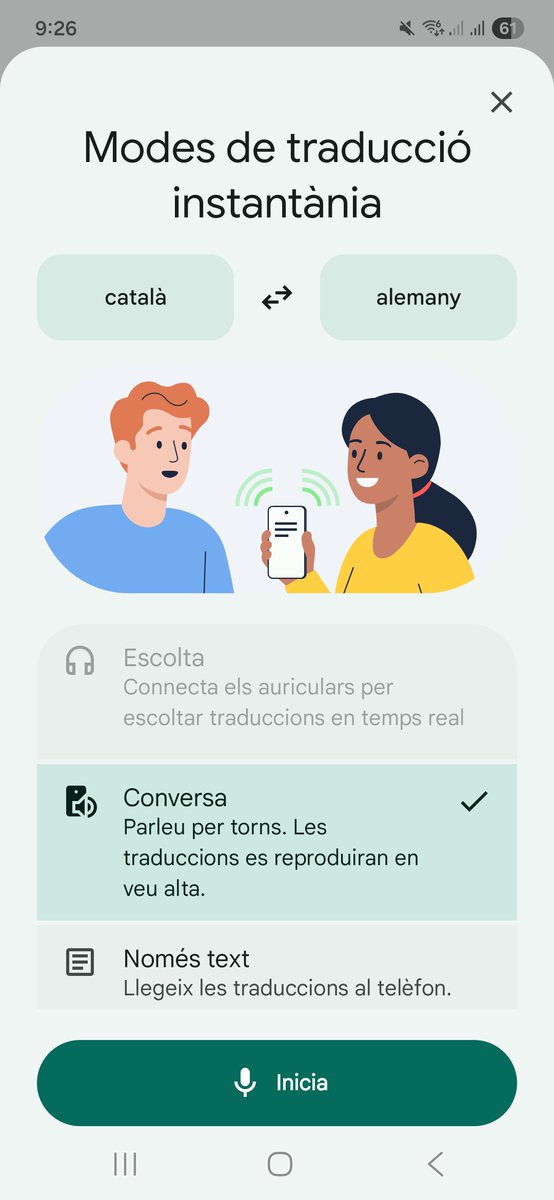
El traductor de Google per a Android ja no fa només traducció consecutiva de/a catala. També han activat la traducció simultània si portes auriculars. M'estan parlant en alemany i ho sento en català!
@digitalencatala
Tinc curiositat per saber si aquesta vigilància del Gobierno sobre el discurs d'odi a les xarxes inclourà la catalanofòbia.
/via @mwlespanol
https://t.co/XVfAJ1p0vQ
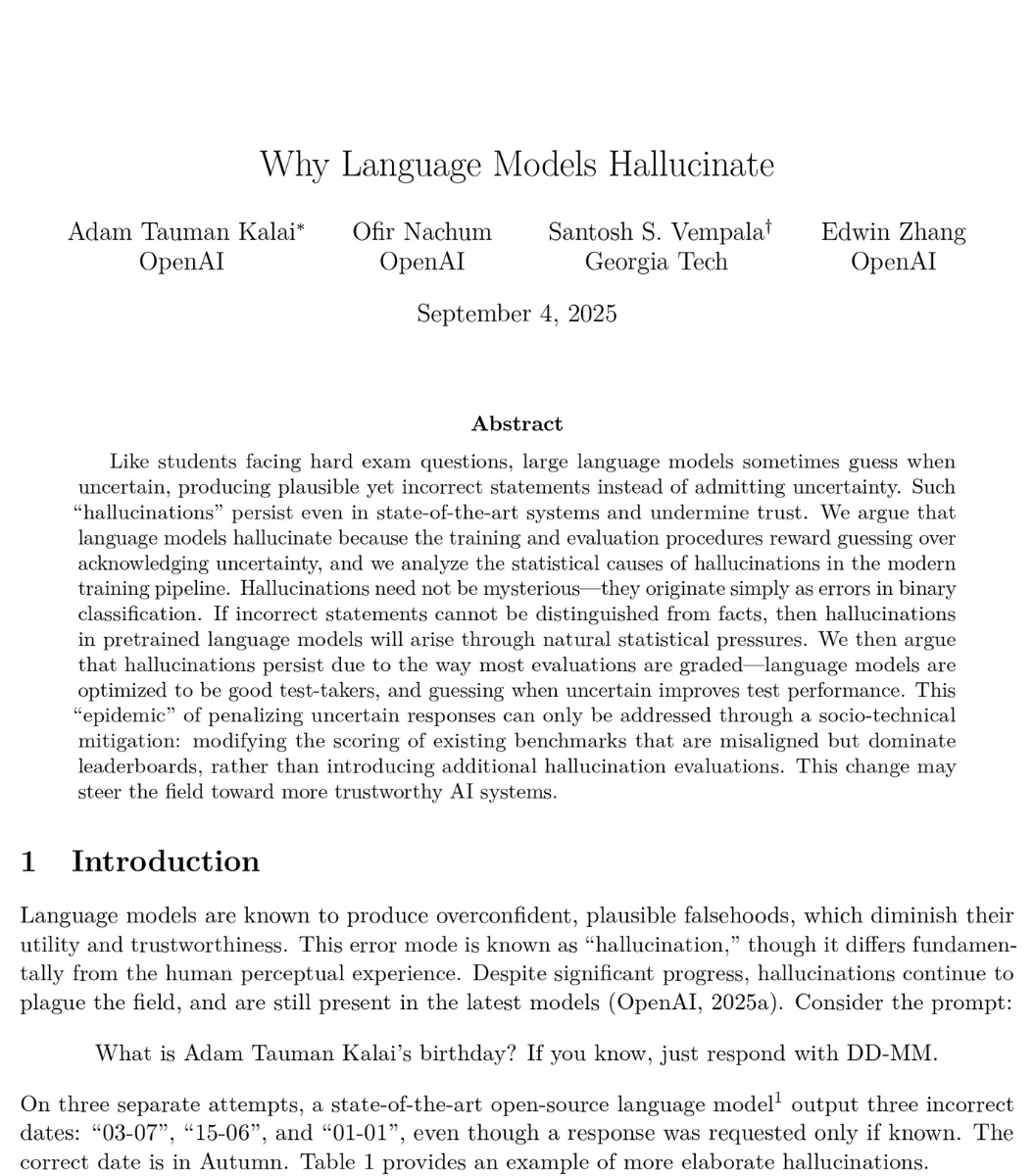
🚨BREAKING: OpenAI published a paper proving that ChatGPT will always make things up.
Not sometimes. Not until the next update. Always. They proved it with math.
Even with perfect training data and unlimited computing power, AI models will still confidently tell you things that are completely false. This isn't a bug they're working on. It's baked into how these systems work at a fundamental level.
And their own numbers are brutal. OpenAI's o1 reasoning model hallucinates 16% of the time. Their newer o3 model? 33%. Their newest o4-mini? 48%. Nearly half of what their most recent model tells you could be fabricated. The "smarter" models are actually getting worse at telling the truth.
Here's why it can't be fixed. Language models work by predicting the next word based on probability. When they hit something uncertain, they don't pause. They don't flag it. They guess. And they guess with complete confidence, because that's exactly what they were trained to do.
The researchers looked at the 10 biggest AI benchmarks used to measure how good these models are. 9 out of 10 give the same score for saying "I don't know" as for giving a completely wrong answer: zero points. The entire testing system literally punishes honesty and rewards guessing.
So the AI learned the optimal strategy: always guess. Never admit uncertainty. Sound confident even when you're making it up.
OpenAI's proposed fix? Have ChatGPT say "I don't know" when it's unsure. Their own math shows this would mean roughly 30% of your questions get no answer. Imagine asking ChatGPT something three times out of ten and getting "I'm not confident enough to respond." Users would leave overnight. So the fix exists, but it would kill the product.
This isn't just OpenAI's problem. DeepMind and Tsinghua University independently reached the same conclusion. Three of the world's top AI labs, working separately, all agree: this is permanent.
Every time ChatGPT gives you an answer, ask yourself: is this real, or is it just a confident guess?