1/ “Las vacas calientan el planeta”
“Los rumiantes son el problema”
“El metano del ganado es incompatible con la sostenibilidad”
Curioso.
Porque el ecosistema terrestre con mayor concentración de grandes herbívoros del planeta funciona, precisamente, gracias a millones de rumiantes productores de metano. 🧵
The hidden physics of everyday things you never questioned:
1. The refrigerator doesn't create cold. It moves heat from inside to outside. Cold is not a thing,it is the absence of heat being relocated.
2. Glass is not a solid. It is an amorphous liquid frozen mid-flow. Old windowpanes are thicker at the bottom because the glass has been slowly moving downward for centuries.
3. Fire is not a thing. It is a process,the visible release of energy as a substance rapidly oxidises. Flame has no mass, no defined boundary, no independent existence.
4. The shadow you cast is travelling at the speed of light. Shadows are not objects,they are the absence of photons, and absence propagates as fast as presence does.
5. When you stand on the ground you are not touching it. The electrons in your feet and the electrons in the floor repel each other. Physical contact as you experience it is electromagnetic resistance, not actual touch.
6. Hot water freezes faster than cold water under certain conditions. This is called the Mpemba effect and physicists still do not fully agree on why it happens.
7. Sound cannot travel in space. But if it could, the sun would be louder than anything the human ear could survive at any distance.
8. A piece of paper cannot be folded in half more than seven times regardless of its size. The exponential thickness increase makes it physically impossible.
9. The atoms in your body are almost entirely empty space. If you removed all the empty space from every atom in every human on Earth, all of humanity would fit inside a sugar cube.
10. Honey never expires. Archaeologists have found 3,000-year-old honey in Egyptian tombs that was still chemically edible.
11. The static electricity built up by walking across a carpet is between 10,000 and 35,000 volts. The shock you feel is harmless only because the current is near zero.
12. Metals that are perfectly smooth will permanently bond on contact in a vacuum. There is no force holding them apart,welding requires no heat, only the absence of surface contamination.
13. The loudest sound ever recorded,the 1883 Krakatoa eruption was heard 4,800 kilometres away and circled the Earth four times as a pressure wave.
14. Light from the sun takes eight minutes to reach you. When you look at the sun you are looking eight minutes into the past. When you look at the nearest star beyond the sun, you are looking four years into the past.
15. Time moves measurably faster at the top of a tall building than at its base. Gravity literally slows time. Your head ages fractionally faster than your feet every single day.
🚀 Agentic AI: The Future is Not Just Intelligence — It’s Execution
Most people still think AI = Chatbots.
But the reality is much bigger.
We are moving through a clear evolution:
👉 AI/ML → Deep Learning → GenAI → AI Agents → Agentic AI
And each layer adds a new capability:
🧠 AI/ML → Learn from data
🎨 GenAI → Create content
⚙️ AI Agents → Take actions using tools
🤖 Agentic AI → Automate entire workflows end-to-end
The real shift?
➡️ From “Answering questions”
➡️ To “Executing business processes autonomously”
💡 What makes Agentic AI powerful:
• Multi-agent collaboration
• Memory (short + long term)
• Planning & reasoning (ReAct, CoT)
• Tool orchestration (APIs, DBs, systems)
• Continuous learning via feedback loops
⚠️ But here’s the truth most ignore:
Without governance, Agentic AI will fail in production.
✔️ Guardrails
✔️ Observability
✔️ Human-in-the-loop
✔️ Risk & compliance
🎯 Final takeaway:
The future of AI is NOT better prompts.
The future is autonomous systems that think, act, and improve.
If you're building AI today, ask yourself:
👉 Are you building a model… or a system?
Cc : Author
🔴 Let's talk about what AI is ACTUALLY doing to our work, our minds, and our cities. Because....
I spent time with Kyle Kingsbury's "The Future of Everything is Lies" a brutally honest, deeply researched take on what LLMs are doing to society right now.
Here are the 8 things that hit hardest to me:
1/ LLMs are not intelligent: they are autocomplete at scale. They confabulate constantly, and the terrifying part is how plausible the lies sound.
2/ The "jagged frontier" is real. Models ace multivariate calculus and fail simple word problems. You cannot predict where the cliff edge is which makes them genuinely dangerous in critical systems.
3/ We are building systems that get harder to verify as they get bigger. Code volume is up. Code correctness? Unknown. This is latent disaster accumulating in plain sight.
4/ Our information ecosystem is already broken. Web search is clogged with AI slop. Wikipedia is fighting AI edits. Spam and propaganda are hyperscale problems now, not human-scale ones.
5/ Automation doesn't just replace work it deskills workers. Doctors using AI mammography tools are worse at reading mammograms themselves. We are borrowing competence from the future.
6/ Nobody is accountable. When an insurance LLM denies your mastectomy, trained on EMRs classified by 6,000 contractors, coordinated by three different companies who answers for it?
7/ The alignment problem is not solved. It is barely addressed. We are mass-producing the conditions for anyone with money to build an unaligned model. The "friendly" version guarantees the evil version exists.
8/ The economic shock may be coming faster than we think. And the people who built this are not planning to fund UBI out of the goodness of their hearts.
The author ends with a radical suggestion: stop.
I'm not sure I agree with everything here but I think everyone building with AI should read it.
What's the risk you think is most underrated right now?
#ai #futureofwork #futureofhumans
Microsoft’un ücretsiz kurslarından 10 haftalık ve 20 derslik bir müfredat olan Türkçe dil destekli “Yeni Başlayanlar için Veri Bilimi” kursu…
Link👇
https://t.co/yzw3OkTkIr
You see hundreds of ads every single day. On your phone. Your laptop. Your smart TV. Your game console. Your kid's tablet. Even your thermostat.
Someone built a tiny $5 computer that blocks every single one of them. For every device in your house. Forever.
It's called Pi-hole.
Not a browser extension. Not an app. A network-wide ad blocker that lives on your WiFi. Every device that connects to your home internet gets ad-free browsing automatically. No setup on each device. No subscription. No tracking.
Here's how it works:
Every time your phone loads an ad, it asks the internet "where is this ad server?" Pi-hole sits between your phone and the internet. When your phone asks for an ad, Pi-hole says "that server does not exist" and the ad never loads.
The ad is dead before it reaches your screen.
Here's what Pi-hole blocks:
→ Ads in mobile apps. Ads inside games. Ads on free apps that usually can't be blocked.
→ Smart TV ads. Roku ads. Amazon Fire ads. Samsung TV ads. Every TV ad at the DNS level.
→ Tracking pixels. Facebook tracking. Google Analytics. TikTok pixels.
→ Telemetry. Windows spying on you. Apple sending data. Your smart fridge phoning home.
→ Malware domains. Phishing sites. Crypto miners.
→ Ads and telemetry on Xbox, PlayStation, and Nintendo Switch.
Here's the wildest part:
A Raspberry Pi Zero costs $5. An old Android phone, you already own. An old laptop in your closet, you already own.
Any of them can run Pi-hole.
One small device. Plug it in once. Forget about it. Every phone, tablet, laptop, smart TV, and game console on your WiFi gets ad-free browsing.
Forever.
No monthly fee. No subscription. No tracking. No account. No login.
Pi-hole users report their home internet feels faster because ads are never downloaded in the first place.
The developers are volunteers. They've been building this for over a decade. It handles hundreds of millions of DNS queries on server-grade hardware.
52,000+ GitHub stars. EUPL-1.2 license.
100% Open Source.
TeamViewer charges $50.90/month.
AnyDesk starts at $22.90/month.
And every single connection goes through their servers.
Your screen. Your passwords. Your files. Your private conversations. All routed through someone else's computer.
TeamViewer was breached in June 2024. An APT group got into their internal corporate IT environment.
There is a free alternative. You host it yourself. Your data never touches a third party.
It is called RustDesk. 102,000+ stars on GitHub.
You download it. Share your ID. Connect. That is it. Works instantly. No account needed.
Here is what it does:
- Full remote desktop control across Windows, Mac, Linux, Android, and iOS
- File transfer between devices. Drag and drop.
- Clipboard sync. Copy on one machine, paste on the other.
- Direct P2P connections through TCP hole punching. Faster than any relay.
- End-to-end encryption on every connection. NaCl cryptography.
- Works out of the box with zero configuration
Here's the wildest part:
You do not need to self-host to use it. Public relay servers are built in. Download and connect in seconds.
But if you self-host on a $5 VPS, you get something no paid tool offers:
Complete data sovereignty. Your screen. Your files. Your logs. All on YOUR server. Nobody else sees them. Ever. Unlimited users. Unlimited devices.
TeamViewer Business: $50.90/month. $610/year.
AnyDesk Solo: $22.90/month. $274/year.
RustDesk: $0. Forever.
Built in Rust. 356 contributors. 14,900+ forks. Translated into 39 languages.
AGPL-3.0 licensed. Self-hosted. Community-driven.
100% Open Source.
(Link in the comments)
Los chinos tienen una herramienta muy buena, se llama MinerU. Es una herramienta de análisis de documentos que utiliza IA para extraer y transformar información de archivos como PDF en formatos que los LLM (como DeepSeek) pueden entender de manera más fácil.
Cuando uno sube, por ejemplo, un paper a DeepSeek, la extracción de información del paper no es eficiente; el LLM no es capaz de leerlo en detalle porque no entiende el formato; esto se puede solucionar con MinerU.
Sirve especialmente para investigación científica, donde los papers contienen fórmulas y ecuaciones que son difíciles de entender de manera correcta por los LLM, si no están en el formato adecuado (LaTeX). De tal manera, por ejemplo, si la información de un paper es extraída primero utilizando MinerU y luego es enviada a DeepSeek, este es capaz de entender mejor el paper debido a que está en un formato adecuado.
MinerU es de código abierto y se puede instalar en un propio computador (aunque debe tener una buena tarjeta gráfica para ejecutarse de manera apropiada), o se puede usar un token para conectarse a una API proporcionada directamente por https://t.co/1eW69XFByd. La token es gratuita con un límite de análisis de 2000 hojas por día para alta prioridad, si se pasan las 2000 hojas, se baja la prioridad a la petición de transformación de la información.
Estoy aprendiendo cómo utilizar la API de MinerU para luego integrarla con el modelo deepseek-reasoner (con el que también me comunico mediante API). Así, DeepSeek podrá analizar papers con muchas ecuaciones, de manera optimizada.
Imagina que mañana se cae internet para siempre...
Chao Wikipedia.
Chao mapas.
Chao todo.
Project N.O.M.A.D. es el computador de supervivencia offline que te salvaría el pellejo en ese escenario:
- Wikipedia completa (Kiwix).
- Mapas OpenStreetMap.
- IA local potente (Ollama + Open WebUI).
- Calculadoras, guías de supervivencia y más.
1 solo comando curl y lo tienes corriendo en cualquier máquina Debian (incluso una vieja).
Sin internet.
Sin telemetría.
Sin cuentas.
Sin nube.
Accesible desde el móvil, tablet o laptop de toda tu red local.
Cuando todo lo demás falle… esto sigue vivo.
REPOOO👇
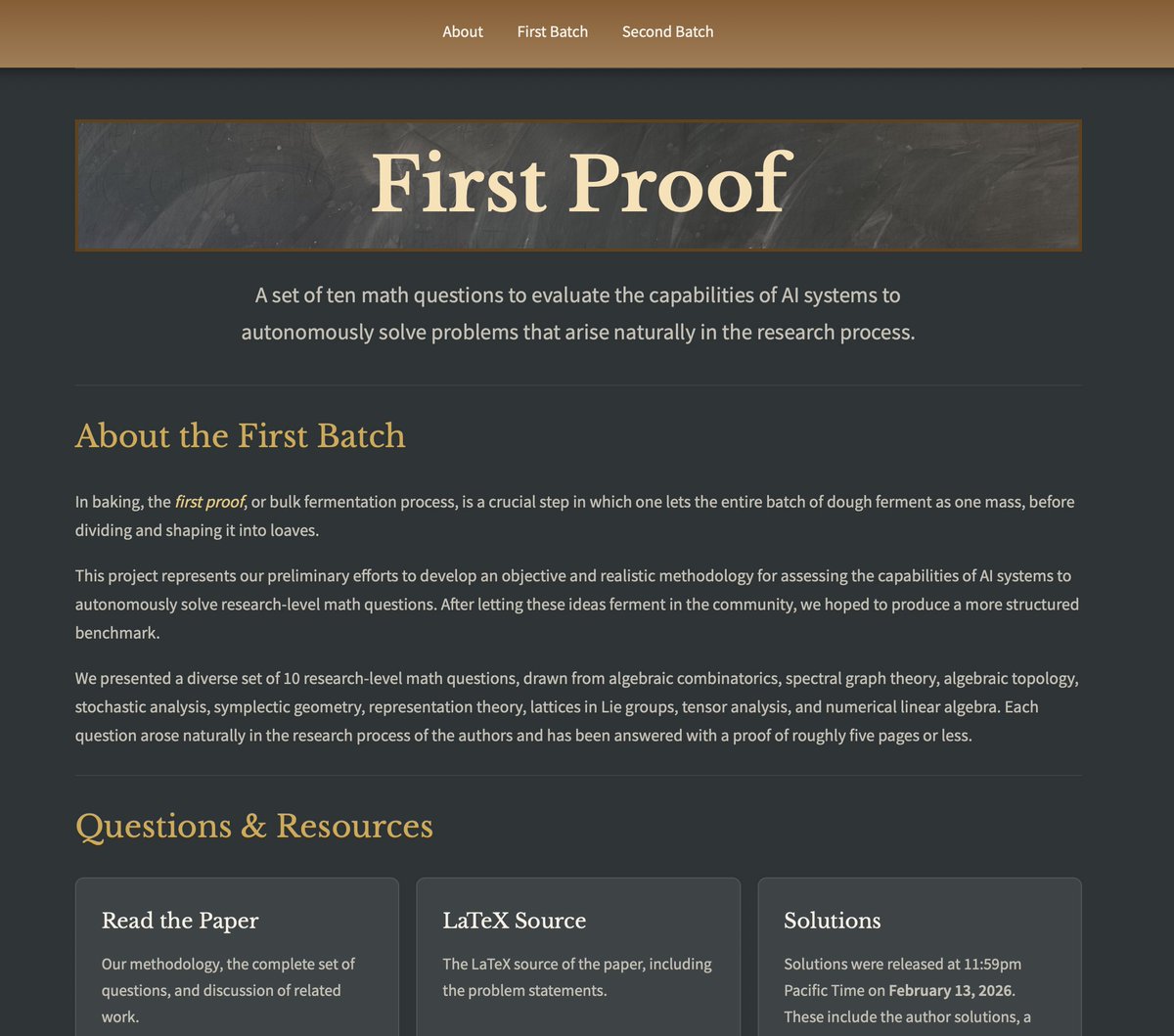
Todo lo que te dijeron sobre la potencia de la inteligencia artificial es mentira. Y la primera prueba real recién acaba de salir.
¿Y sabés por qué? Imaginате que un alumno tiene las respuestas del examen antes de rendirlo. ¿Le creés la nota? Eso es exactamente lo que pasa con la IA. La mayoría de las pruebas más usadas para medir su capacidad usaban problemas que ya existían en internet, que la IA pudo haber memorizado durante su entrenamiento. Para colmo, el único intento serio de resolverlo, FrontierMath, fue financiado por OpenAI. Es un alumno que se toma la prueba a sí mismo.
Todo esto cambió cuando un grupo de 11 de los matemáticos más respetados del planeta — un ganador del equivalente al Nobel de Matemática junto con gente de Harvard, Yale, Stanford y Columbia — decidió hacer algo que nunca se había hecho. Se llama "First Proof" y es el examen perfecto para terminar con la discusión.
Cada uno aportó un problema sacado de su propia investigación que les llevó semanas o meses resolver. La clave es que jamás se habían publicado en internet. Como si fuera poco, también incluyeron una conjetura: un problema abierto hace más de una década para el que nadie encontraba solución. Convocaron a las mejores inteligencias artificiales del planeta y les dieron una semana para resolverlos sin ninguna ayuda humana.
Sorprendentemente, la que mejor rindió fue la IA de Google DeepMind, resolviendo 6 de los 10, ¡incluida la conjetura! La IA gastó más tiempo pensando en ese problema que en todo el resto junto. En los 4 que no resolvió, fue la única IA que logró una proeza: admitir que no sabía en lugar de inventar cualquier cosa.
Pero antes de concluir "ya está, la IA piensa", los matemáticos están sumidos en un debate profundo. Las soluciones son correctas, pero la manera fue como resolver un cubo Rubik girando las caras al azar a la velocidad de la luz hasta que queda armado. Lo resolviste, pero no a partir de una nueva teoría elegante sino de paciencia infinita.
Entonces, ¿esto cuenta como pensar? ¿Y si, en el fondo, no importa mientras sigamos resolviendo lo que antes no podíamos? La revancha es el 14 de marzo.
🔗 Fuente: https://t.co/xa0uYzOBk8
¡ENCUENTRA TRABAJO REMOTO! 🌎
LinkedIn está bien, pero no es el único lugar. Si quieres trabajar desde casa, un café o donde sea, aquí van 12 plataformas para encontrar trabajo remoto, freelance o nómada digital 🚀
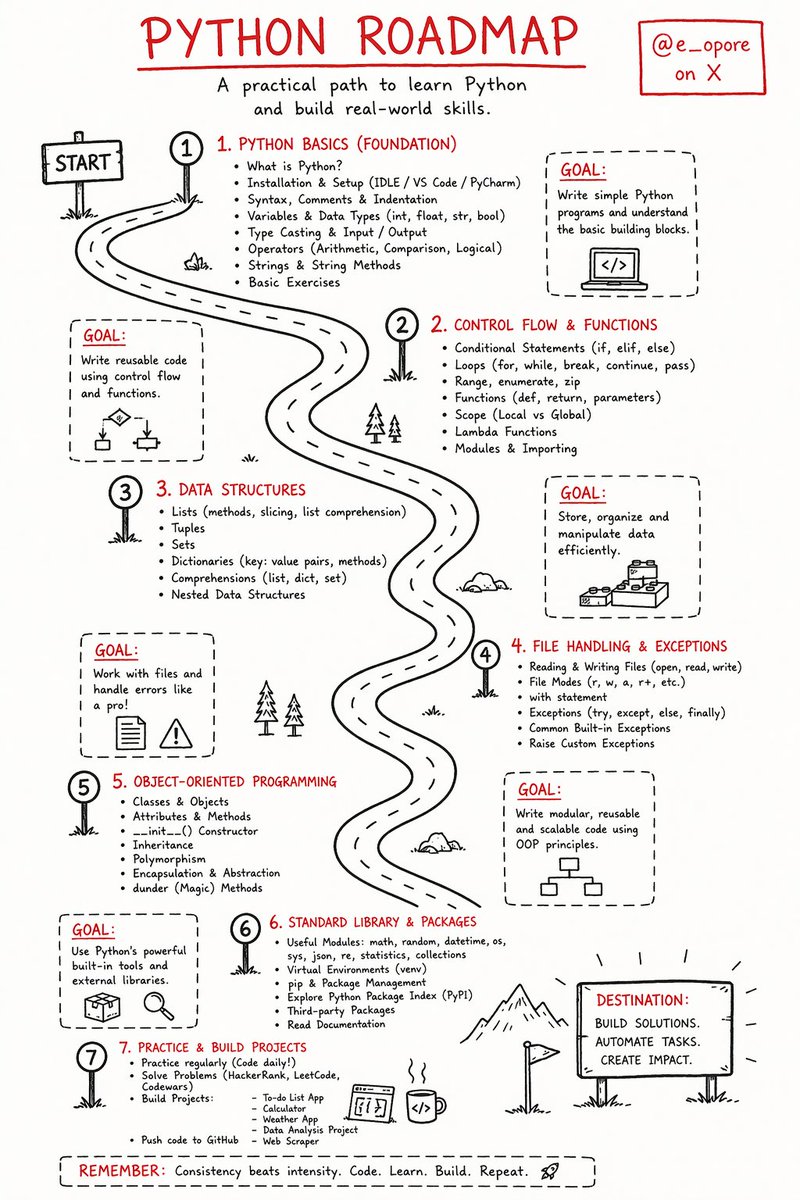
Estas son mis 7 guías en pdf para aprender fundamentos de programación.
→ 200 páginas
→ 1000 fundamentos
→ Python, JavaScript, Java, SQL, Bash, Markdown y glosario de términos más utilizados
100% gratis en:
https://t.co/BHKD8EYlD4
Este hilo, escrito hace cuatro años, mostraba un incipiente paralelo entre la neolengua de los nazis en la Alemania de los 30 y el léxico de la extrema derecha
Este año, el discurso está peor. Ya ha avanzado en el mismo camino que Kemplerer describió
Hoy habrá hilo al respecto.
⚠️ ATENCIÓN
Según la Agencia para Sustancias Tóxicas y el Registro de Enfermedades nos cuenta que, la acrilamida es una sustancia química que se origina en los alimentos que contienen almidón, esta se da cuando los alimentos son expuestos a temperaturas muy altas por un tiempo extendido.
investigaciones realizadas por expertos de la Universidad Autónoma del Estado de Hidalgo, se encontró la relación entre la aparición de una sustancia peligrosa en los alimentos y el uso de las conocidas freidoras de aire.
La relación que tienen las freidoras de aire y la aparición de acrilamida en nuestros alimentos se basa en que, si los alimentos son cocinas por encima de los 195 grados, estos pueden terminar por adquirir la sustancia tóxica, situación que puede ocurrir con facilidad en este electrodoméstico al no tener un control exacto de la temperatura.⚠️🤯
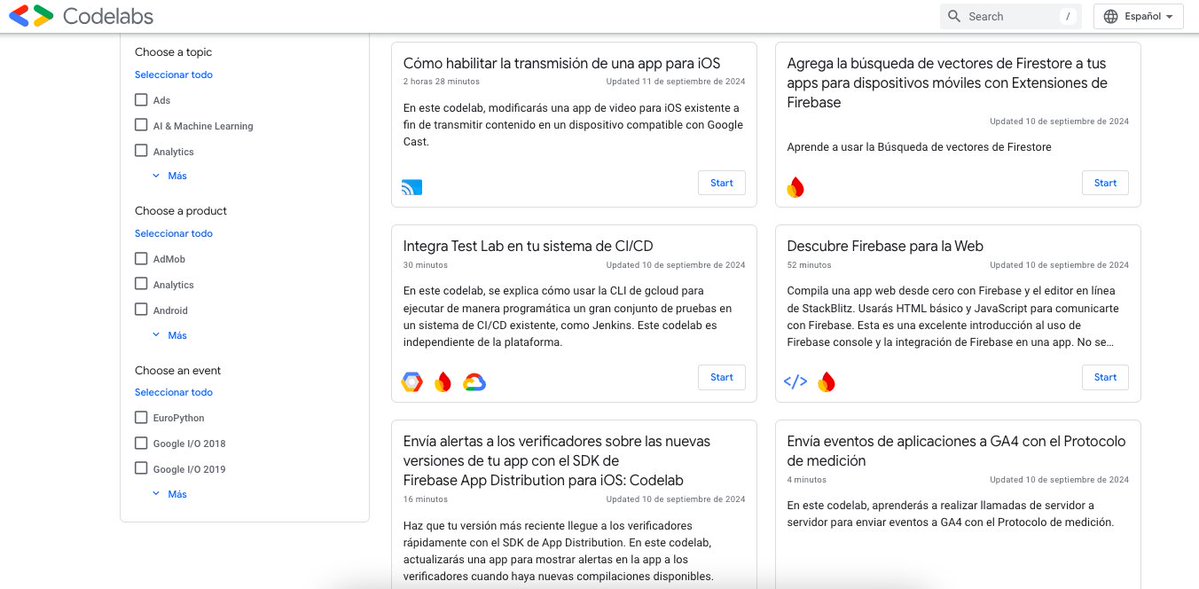
🚀Todos los tutoriales de programación de Google en un solo lugar y GRATUITOS.
En Google Codelabs puedes elegir entre una variedad de temas: desde IA hasta Realidad Virtual. Además, puedes filtrar por productos como Android y Google Cloud📚💻→ https://t.co/LjnQ2Z1bJ4