Gen-Zs are under the misconception that Indian society only consists of Boomers and Gen-Zs. That's it's either uncles or yuva.
They forget that the bulk of India's military-age population is actually Gen-X and Gen-Y (people born 1981-1999). These are majorly Modi supporters who entered the workforce in the late-2000s and early-2010s, and by now have great amount of savings, property, and skin in the Indian game.
24 hours to lift-off. 🚀
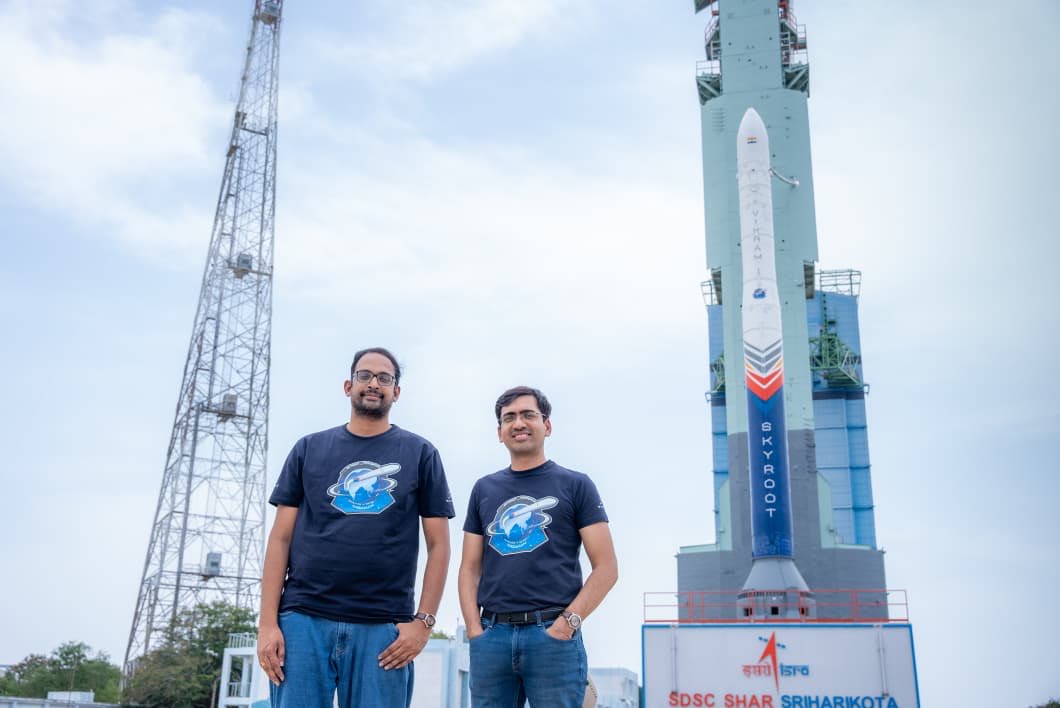
Eight years ago, @SkyrootA started with just two people with an idea.
There was no policy framework for private spaceflight in India, no real funding ecosystem for space startups, and we were taking on one of the world’s hardest engineering challenges. The odds of success seemed incredibly small.
Today, India’s first privately developed orbital rocket stands on the launch pad, ready for lift-off.
This moment belongs to every member of our team, our investors, the Government of India,@PMOIndia, @isro, @INSPACeIND, our partners, suppliers, customers, and everyone who believed in us long before this day.
We have done everything we possibly could.
Now we let physics do its job.
Whatever tomorrow brings, every second of flight will teach us something invaluable. Reaching the launch pad and attempting an orbital launch is a landmark milestone for India—and an achievement only a handful of companies worldwide have reached. Every milestone we cross will advance not just Skyroot or India’s space journey, but the global commercial space ecosystem.
Tomorrow, we take the next step. 🇮🇳🚀
ORBIT ACHIEVED. 🚀
Vikram-1 Test Flight-1 has reached orbit. India's first privately developed orbital rocket has completed its final burn and injected its payloads into a ~450 km orbit, making India the third country in the world with private orbital launch capability.
History is made. 🇮🇳
#Vikram1 #JourneyToOrbit #SkyrootAerospace
India's Biggest Economic Challenge Is not Inflation, Oil, or War - It is an Unskilled Population Addicted to Distraction.
Every time oil prices rise, economists panic. Every time a war breaks out in the Middle East or Europe, television studios declare that India's economy is under threat. And yes, both matter. But neither represents India's greatest economic challenge. The real crisis is unfolding much closer to home.
It is a generation that spends more time consuming content than creating value. A workforce that debates geopolitics without mastering spreadsheets, artificial intelligence, coding, welding, precision manufacturing, sales, finance, communication, or even basic problem-solving. An economy where attention has become the most wasted national resource.
India is one of the youngest countries in the world. That should have been our greatest competitive advantage. Instead, we risk turning our demographic dividend into a demographic liability.
The Age of Endless Consumption
Never before has information been so accessible. Yet never before have so many people spent so much time learning so little. Hours disappear into political debates, celebrity gossip, cricket controversies, influencer reels, conspiracy theories, and outrage cycles that have absolutely no impact on an individual's earning potential. Ask someone how many hours they spent on social media last week. Then ask them how many hours they invested in acquiring a new professional skill. For many, the answer is uncomfortable. We have become experts at commenting on the economy while contributing very little to it.
Degrees Are Not Skills
India has no shortage of graduates. It has a shortage of employable graduates. Companies repeatedly report the same problem: vacancies exist, but suitable candidates are difficult to find. Not because people lack certificates. Because many lack practical skills. The world is rewarding competence, not credentials.
- Can you solve problems?
= Can you communicate effectively?
- Can you sell?
= Can you lead a team?
- Can you analyze data?
- Can you use AI to improve productivity instead of merely asking it amusing questions?
- Can you create something that another person is willing to pay for?
Those are the questions that determine economic success. Not the number of degrees hanging on a wall.
Attention Is the New Currency
The biggest theft today is not of money. It is of attention. Every notification fragments concentration. Every endless scroll delays mastery. Every hour spent consuming outrage is an hour not spent building expertise.
Modern economies reward deep work, specialized knowledge, creativity, and disciplined execution. Algorithms reward emotional reactions. Unfortunately, millions choose the algorithm.
The Coming Divide
Artificial intelligence is not replacing everyone. It is replacing people who refuse to learn. The future will belong to workers who continuously upgrade themselves. Those who combine human judgment with technological tools will become dramatically more productive. Those who stop learning will find themselves competing for fewer opportunities at lower wages. The divide will not be between rich and poor. It will increasingly be between skilled and unskilled.
National Growth Begins With Individual Discipline
Governments can build highways. Businesses can build factories. Universities can build campuses. But none of them can force an individual to develop skills. Economic transformation begins with personal responsibility. Spend one less hour arguing online. Spend one more hour learning. Read instead of scrolling. Build instead of complaining. Acquire one valuable skill every year. Become indispensable.
If millions of Indians made that simple choice, the country's economic trajectory would change more profoundly than any fiscal stimulus, any election promise, or any temporary fall in oil prices.
Wars will end. Oil prices will rise and fall. Markets will recover. But a nation that neglects skill development while surrendering its attention to endless distraction will struggle long after those headlines have disappeared.
The strongest economy is not built by the loudest voices. It is built by the most capable people.
#JaiHind
Hot take: India's biggest economic risk over the next 20 years is not a geopolitical shock or a currency crisis.
It is a young population with no industrial skills, no manufacturing base to absorb them, and a service economy that cannot grow fast enough to employ everyone.
Next year i would like to see the entire management of CSK right from coach to assistant coaches including the captain changed. This is not The CSK we used to know in Dhoni era .
Go for a confident captain, maybe less talented , but confident yes, please
@IPL
Cockroach Janta Party is trying to copy the Nepal-style revolution model by using Gen Z for street politics and online outrage.
But this model won’t work in India.
Most Indian Gen Z are busy with JEE, NEET, UPSC, placements, or college admissions. The rest are under strict family guidance and know one wrong move can damage their career.
Indian society is different. Most people don’t want chaos on the streets because everyone is busy building their own life, earning money, and securing their future. People here mostly try to make the best out of what they have instead of joining Internet followers count revolution.
Admiral Devendar Kumar Joshi, owning Indian Ocean like it should be at 71 years! while Rahul baba is vacationing in Muscat.
Governor of Andaman & Nicobar.
#NicobarProject
pay solid attention;
an average millionaire is 40 not 23
an average billionaire is 55 not 35
the average age to buy a house is 35 not 25
most men hit their peak confidence at 32 not in their 20s
it takes the average person 66 days to build a habit not 7
the average ceo is 57 not 30
most people meet their life partner after 27 not 18
the average successful business takes 5-7 years not 6 months
most people don’t know what they want until they’re 30 not at graduation
stop letting social media brainwash you. you are not behind, you’re on your own track. live it ❤️