What is the most important thing you need to build a successful hard-tech startup?
My answer: Capital.
Great technology, a brilliant team, and strong market demand mean little if you cannot fund the journey from research to sustainable revenue.
#HardTech#StartupFunding
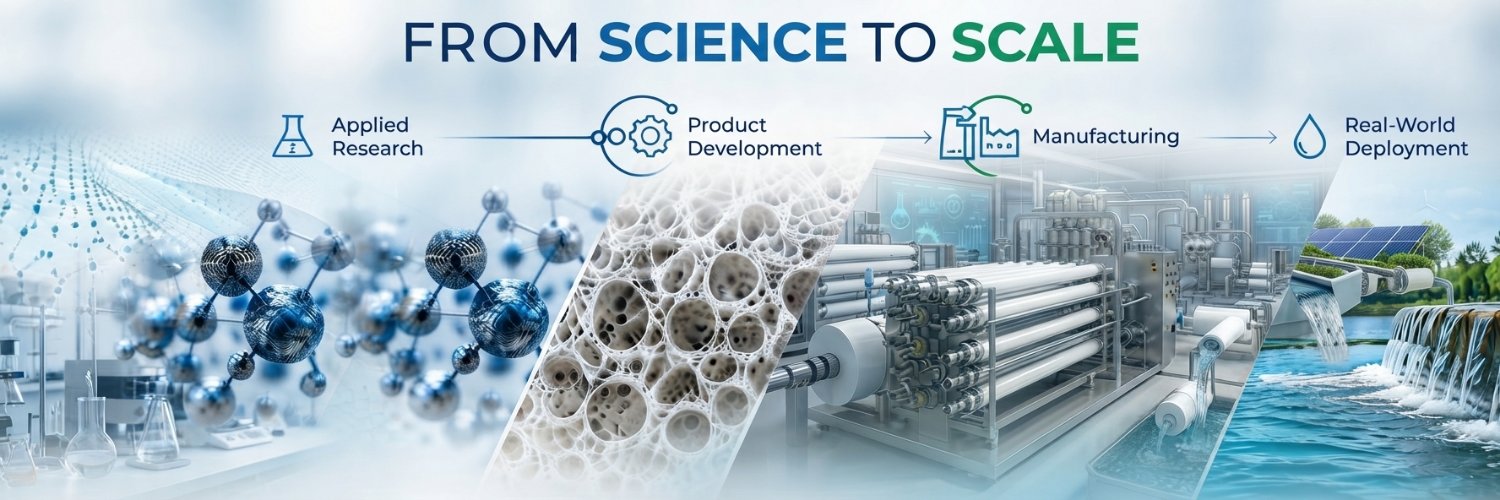
Academic research asks: Can this work?
A company has to ask: For whom, under what conditions, at what cost, and can we make it consistently?
Move from research to commercialization begins when such questions shape the next experiment.
#DeepTech#TechTransfer#Commercialization
In research, we often focus on the best result. In a company, repeatability matters too.
A material that performs slightly less well but can be made consistently may be more valuable than a record result that’s hard to reproduce.
#DeepTech#MaterialsScience#ScaleUp
A broad technology platform can open many doors. The challenge for an early startup is choosing which one to walk through first.
A focused first application gives a clear target for development and testing, while leaving room for the platform to grow.
#DeepTech#Commercialization
An experiment is useful even when the result isn’t what you hoped for if it tells you what to change next.
In a startup, the goal isn’t just to generate data. It’s to reduce the uncertainty between a promising technology and real-world use.
#DeepTech#Startups
A technology has to work for the people who install it, operate it and maintain it.
Those needs should shape the design from the start, not show up as an afterthought.
#DeepTech#ProductDesign#Engineering
A grant proposal starts with an honest look at where you are:
What can our technology do today? What can’t it do yet? What unmet need exists in the market?
The strongest proposal connects that gap to a clear plan for closing it.
#DeepTech#GrantWriting#Innovation
Building a company means switching between big questions and small details.
You can spend the morning thinking about where the technology could go, then the afternoon fixing one thing that’s slowing the team down.
Both are part of the work.
#FounderLife#DeepTech#Startups
In hard tech, the best next version isn’t always the one that does more.
Sometimes it’s the one that’s easier to make, use, maintain and trust.
That’s a different kind of innovation and often the one that gets a technology into the real world.
#DeepTech#Engineering#Innovation
The same technology can sound very different in a lab meeting and a customer meeting.
Part of a founder’s job is translating between the two: keeping the science accurate while making the value clear.
#DeepTech#Startups#Science
In a small startup, focus isn’t just choosing what to work on. It’s also choosing what can wait.
That’s harder than it sounds when every opportunity feels important.
#Startups#FounderLife#DeepTech
Persistence isn’t always sticking with the first plan.
Sometimes it means staying committed to the problem while changing your mind about the solution.
That’s a lesson I keep learning as a founder.
#Startups#DeepTech#Entrepreneurship