@Silkpyjamas Your sambo keeps the old preservation calendar: ferment, dry, salt, eat the whole animal. Norway’s version is rakfisk, fermented trout. The first written record is from 1348, in Jämtland. Which was Norway at the time.
Erling Haaland reportedly runs on 6,000 calories a day: heart, liver, raw milk. The world press calls it the Viking diet.
By the standards of a Viking Age farm, nothing on that plate is extreme. The whole animal was eaten. Every glass of milk on Earth was raw.
One meat made a statement: horse. It was the meat of blót, the pagan sacrificial feasts, and Christian law banned it.
When Iceland converted in the year 1000, the pagan side cut a deal. The horse meat stayed.
@besttrousers Correct. She is built from saga descriptions, not from any archaeological find, and our own scholars even hesitate to call her a Viking ship. A vessel too mythical for Norway just got cast in Greek mythology.
@TheNextMazer That is a Greek galley with the wrong details. Harryhausen missed by inches. Nolan missed by 2,000 years. And Nolan cites Harryhausen as an inspiration for this film.
Odysseus sails home in a Viking ship.
The vessel in Nolan’s Odyssey is Draken Harald Hårfagre, the largest Viking ship built in modern times. Built in Haugesund, Norway. Named after Harald Fairhair, our first king.
The Odyssey is set around 1200 BC. Ships like this appeared around 800 AD. The Viking Age is closer to us today than to Odysseus.
Homer’s ships were black, low, open galleys, light enough to be dragged onto the beach at night. Not a 35-meter dragon ship built for the North Atlantic.
A sailing reconstruction of a Mycenaean warship already exists: the Argo, 50 oars, built in Volos, Greece. Nolan filmed in Greece. He still picked the Viking ship.
This week Draken sails down the Norwegian coast to the Oslo premiere. She will be the most authentic thing on screen. She is 2,000 years off.
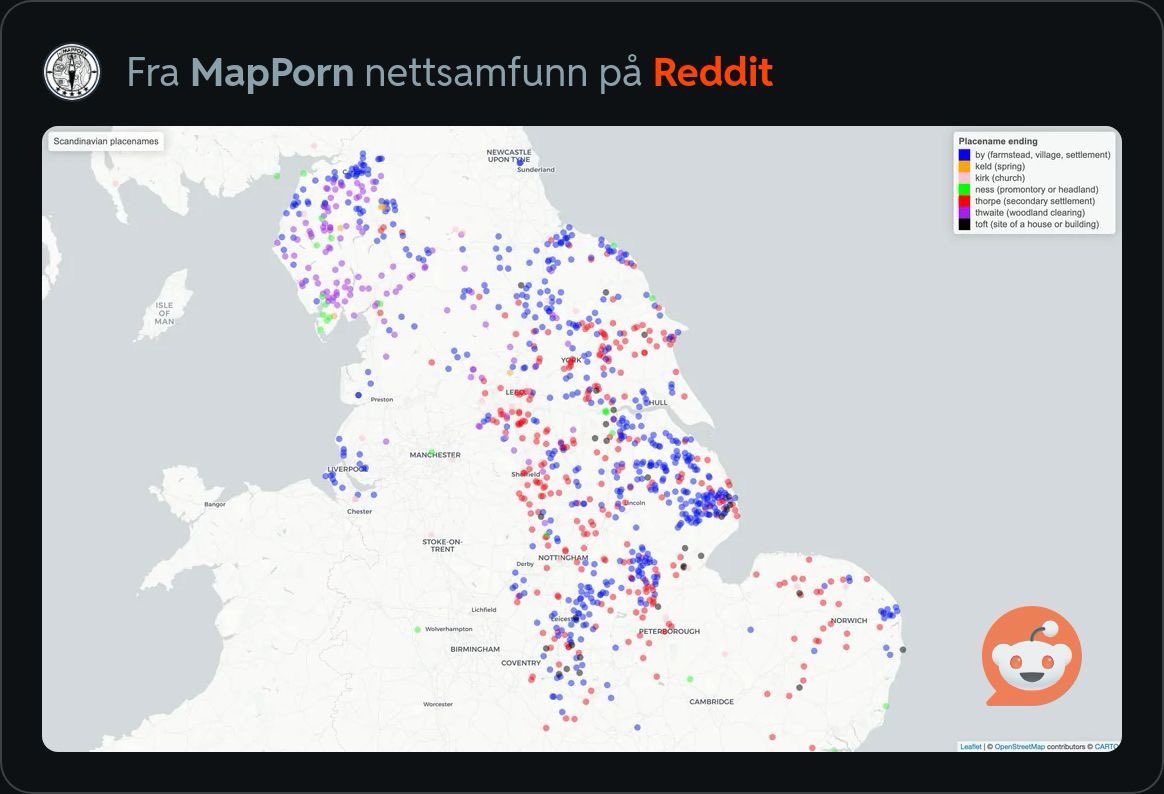
Good question. Partly, yes. Both Old English and Old Norse built names this way, so the suffix alone proves nothing. But the geography repeats the pattern on the map: -son surnames concentrated in the north, in the old Danelaw and the Norse settlement areas , while the south preferred the -s form instead. Same father, different region: Johnson in the north, Jones in Wales and the south.
🇳🇴🏴Norway vs England tonight. English fans will spend 90 minutes shouting in a language full of our words.
The Angles who gave England its name sailed from the Jutland peninsula, right next door to us. Four centuries later, Norse settlers crossed the same sea and took the north and east of England.
The evidence never left. They, them and their are Old Norse words. So are sky, egg, knife and anger. Window comes from vindauga, wind-eye.
And more than 600 English place names end in -by. Grimsby. Derby. Whitby. By is still the Norwegian word for town.
Norway’s World Cup shirt has sold out across Europe.
Look closer at it. The pattern woven into the stripes is Urnes style, the last great Viking art form, taken from 11th century carvings on a Norwegian stave church. The numbers use a typeface built on Elder Futhark runes, a script so old it predates the Vikings themselves.
Nike’s first attempt was rejected by FIFA. Referees couldn’t read the runes.
The last great Viking journey began with a fifteen-year-old on the losing side of a battle.
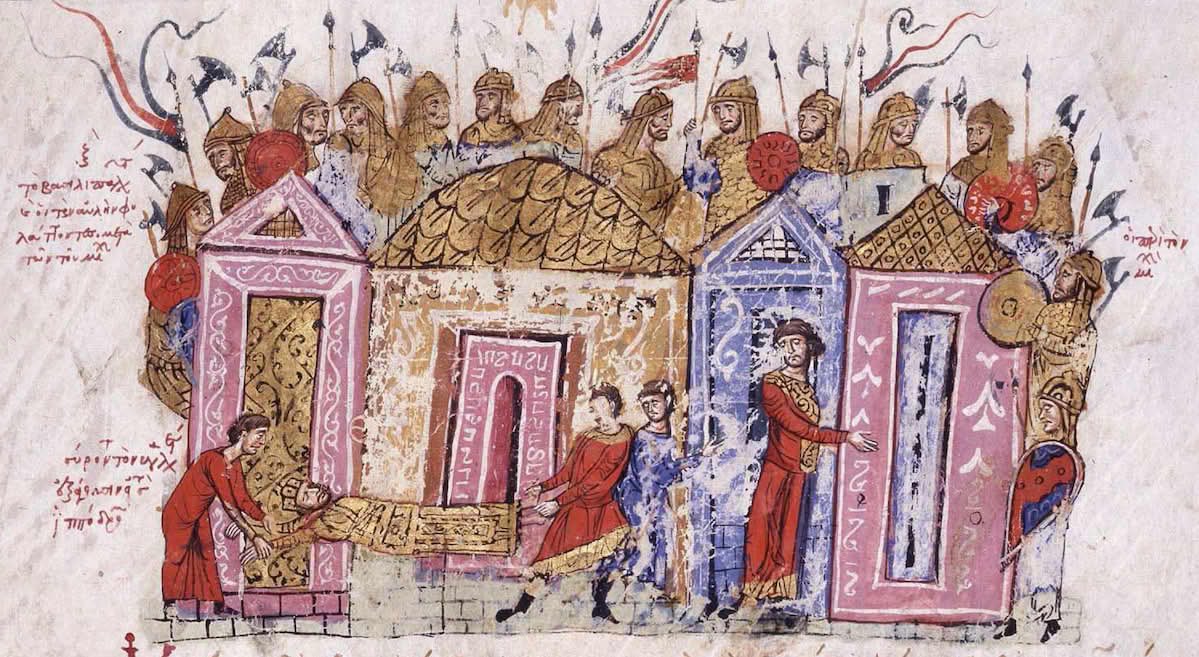
Harald Sigurdsson was wounded at Stiklestad in 1030, fighting for his half-brother King Olav. He was smuggled east: first to Kyiv, where he served prince Yaroslav, then to Constantinople, where he joined the Varangian Guard, the emperor’s Norse bodyguard.
This is not just saga material. A Byzantine general’s handbook from the 1070s names “Araltes”, son of the king of the Varangians, who fought for the empire in Sicily and Bulgaria and held court rank. The Greeks knew exactly who he was.
Around 1045 he came home so rich that King Magnus agreed to share Norway with him. In 1066 he invaded England and fell at Stamford Bridge. Three days later, William landed on the south coast.
From his years in the east there are verses listing his feats. Every stanza ends on the same line: Þó lætr Gerðr í Görðum gollhrings við mér skolla. And still the girl in Kyiv turns me down.
The girl was Elisaveta, daughter of Yaroslav. She married him in the end.
Erling, from Old Norse Erlingr: descendant of the jarl.
Haaland, from Hávaland: the high land.
A thousand years before he was born, the most powerful chieftain on that same Norwegian coast was another Erling. Skjalgsson, of Sola.
Brazil 1, the jarl’s son 2.
Photo: NTB