If you are a CIO or CISO, pay attention to what @nikesharora just said: "Deploy a second set of eyes to watch your deployments for drift, compliance and verifiability."
Human bandwidth cannot remain the last line of defense for enterprise IT and Security.
Hybrid patching and modern SOAR only work if the enterprise IT service management layer underneath can actually coordinate, verify and remediate at AI speed without creating new risk as new grants, approvals, requests and changes are deployed.
Most teams simply do not have the capacity to do this consistently. That’s the gap.
We need AI Workforce for Enterprise IT and Security.
3/4
Across Confido's customers:
2–3x more patient encounters
98% of pending tasks completed
20–30% monthly cost savings
Full conversation on Intelligent Indians: https://t.co/rlYMFt0hMh
@avnish_bajaj@VikramV23@Ashwinkannan
Privileged to be leading Confido Health's Series A. Having known Chetan, Vichar and the team for a while, we were impressed with their 15X growth in a year and their impressive word of mouth and win rates vs competition. Their AI agents (Sara, Ryan) now help 1 in 50 Americans, by providing front office staff to US healthcare, and a great example of labour workforce augmentation.
Great to see DeVC, @Together_Fund, Blume Ventures and Justin Saks double down alongside us.
@avnish , @RajatAgarwal167 , @rbalaraman, @assh2win, @RTinkslinger
We've raised $22.5M in total Series A funding for Confido Health, including a new $12.5M extension led by @z47_vc.
Medicine has added decades to our lives, yet patients still lose weeks to paperwork.
We're building AI agents to give healthcare teams more capacity to care.
Oolka will exceed 2 trillion monthly input token consumption this month. We see this getting north of 50 trillion monthly runrate by 2027. Don’t write off India AI story yet.
HTML might be the new Markdown, as @trq212 pointed out early this year. But collaborating on HTML is still painful.
At @Razorpay, as agents started generating interactive docs and decks, we needed a way for humans and agents to collaborate on them in real time. So one engineer built SlashDocs. The rest of the team (and our AI engineer Slash) kept making it better.
Today, it has replaces google docs for 50%+ of all new docs at Razorpay, changing how humans and AI agents collaborate.
And now we're open-sourcing it!
We've spent years building tools for humans to collaborate. Now we need tools for humans and AI agents to collaborate.
What a day it was for team @atomicworkhq .
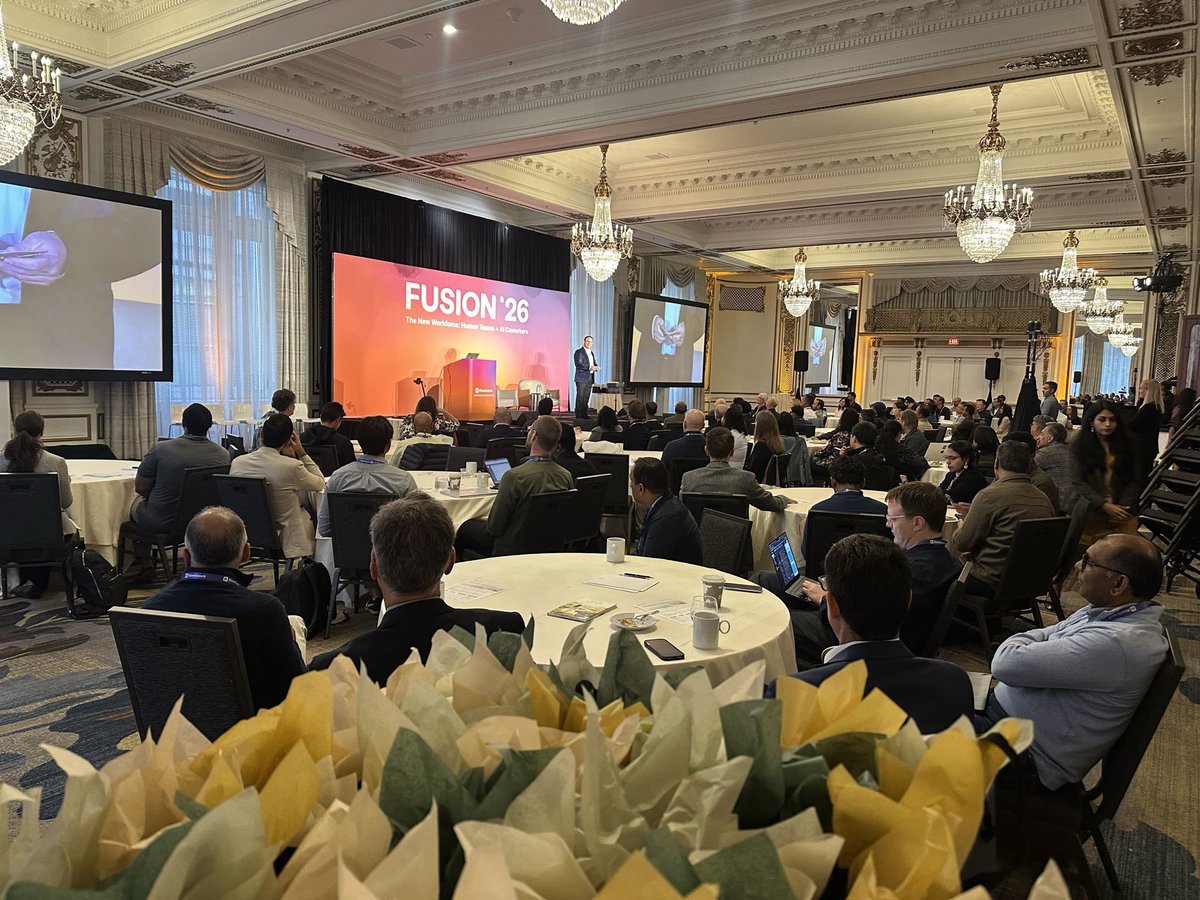
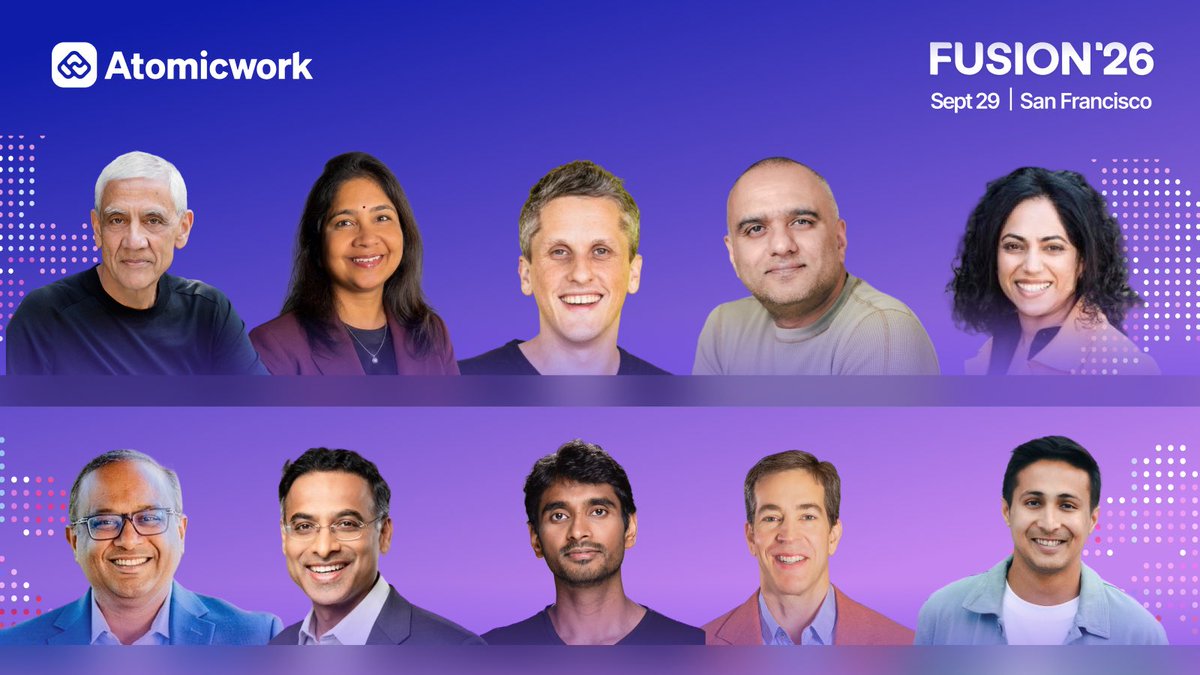
Yesterday, Atomicwork Fusion’26 raised the bar for CIO and CXO gatherings on Tuesday morning in SF. The excitement around AI Workforce and AI-Native Operating Model was unmatched.
Grateful to all the attendees, my stellar crew of Atoms and an amazing set of speakers 🫶💜🙏
A special moment for @Razorpay today. 🇮🇳
Our CPO @khilanharia presented Vulcan - Razorpay’s foundation model for payments to Hon’ble Prime Minister Shri Narendra Modi today.
A proud day for everyone who built it. And we’re just getting started.
Built in India. 🇮🇳
A lot more to come! 🔥
4/4
His advice for founders:
"Don't become an entrepreneur by mistake."
Full conversatuon on our YT channel - https://t.co/8mLYRqRceh
@avnish, @VikramV23, @_sameernigam, @PhonePe
@VikramV23@avnish@RajatAgarwal167@rbalaraman and I are back in the bay this week and hosting our (now almost annual) summer soirée in the city
Looking forward to hosting founder and investor friends on 31st August! 🥂
RSVP: https://t.co/UD4N5biV1P
4 billion payments. 3 trillion data points. One model trained on all of it.
Meet @Razorpay Vulcan - India’s first transformer-based AI foundation model for payments.
Built, trained and hosted in India, in partnership with @nvidia and @awscloud.
Until now, every payments problem was solved separately: routing, fraud, risk, personalisation and more.
We asked: What if one model could understand how money moves?
And like LLMs are trained on text to understand language, Vulcan is trained on payments to understand how money moves.
Already running in beta across 51,000+ businesses, Vulcan is delivering:
- 8–10% improvement in payment success rates - the ultimate measure of whether a payment simply works.
- 8x more international card fraud detected.
- 5x more fraudulent or disputed transactions identified.
- 1–2 lakh more purchases completed every month through better checkout personalisation.
And we’re just getting started. The best part? Every payment Vulcan sees makes the next one smarter.
We’ve spent years building the infrastructure that moves money for India. Now, we’re building the intelligence that understands and improves it. 🔥
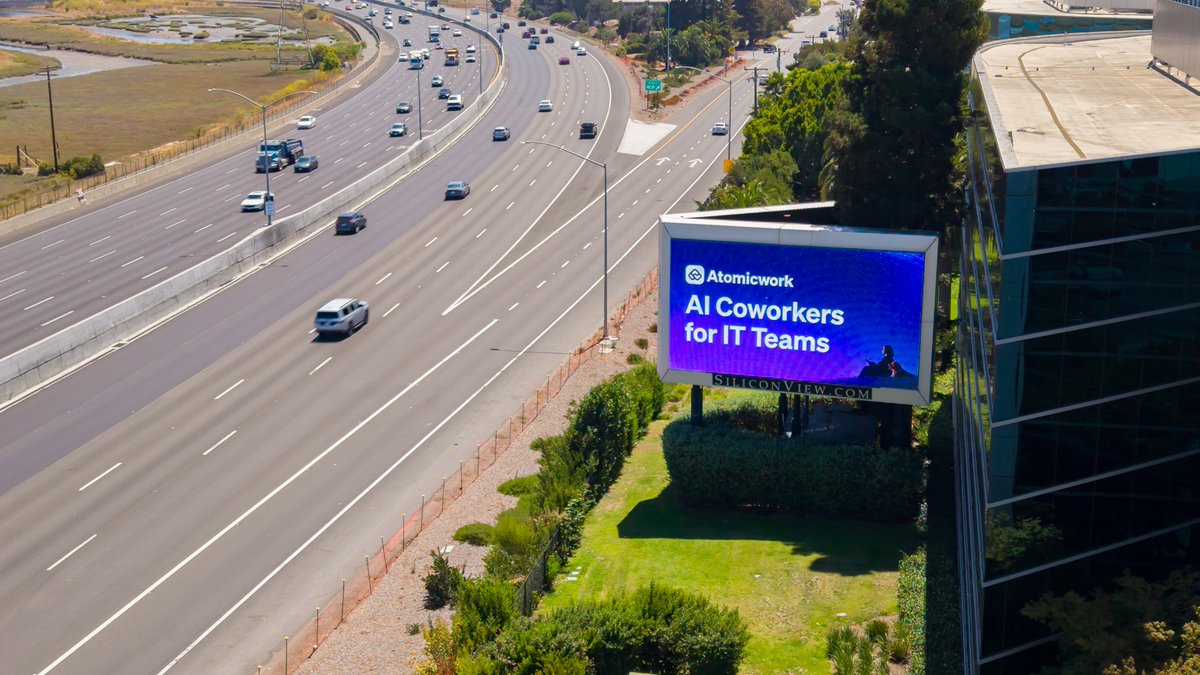
We're on the 101. 🛣️
One billboard for what we do. One for who we do it for.
AI coworkers for IT teams and @Zuora 's IT team moving faster because of them.
Look up on your way to work.
@amnigos@kirandarisi@parsurv
There’s something a lot of people have been asking us to do since the day we announced our first products 5 years ago! Taking that decision today. We’re opening our sales and service network to dealer partners across India today.
We started with our own stores to build EV awareness, establish the brand and created India’s largest EV 2W customer base of more than 10 lakh! Auto retail has a lot of local nuances and as the industry has matured and EV acceptance has risen, we are now evolving our approach. Now over next few months, we will evolve our company stores to focus on brand and product experience, while dealer partners will become the backbone of local sales, service and scale.
We have spent the last month engaging with dealers across the country and the feedback is unambiguous: Ola’s product leadership, combined with their local execution, can significantly accelerate both our sales and EV adoption. Their level of interest and energy to partner has been very exciting for us!
For partners, the opportunity is powerful - strong brand pull, a large recurring service opportunity from India’s largest EV 2W installed base, and a portfolio spanning scooters, motorcycles and our energy products like Shakti and other upcoming ones. Our model has been designed for strong dealer economics and returns. Given the level of interest, we expect meaningful on-ground scale in time for the Diwali rush!
BVR Subbu, former President of Hyundai India and earlier a member of our Board and someone who is a mentor to me, will rejoin as senior advisor and help our team execute this vision.
Learn more here and apply at https://t.co/Yg3qkenreq.
2/2
But we see gaps:
1. Structural: consumption has run well ahead of the infrastructure required to carry it, and adding GPUs alone does not close a gap of that shape.
2. Placement: edge and cloud are one system rather than two budgets, and India should be investing in the edge at the rate it invests in the cloud.
3. Physical AI window: the inferencing layer for physical AI is being built over the next few quarters rather. India can play uniquely here - we have the physical data the world needs across domains.
So, we have the potential to leapfrog in physical AI (like mobile before?)
Every wave so far, we entered late and still scaled the largest, because we've built unique, made in India, for India solutions, and the timing for that in the AI world maybe coming together.
Had a chat with Ravi Annavajjhala of NXP Semiconductors on some of these bits.
Adding the full conversation here: https://t.co/gIJyZxqBOt
@z47_vc, @avnish, @tarun_davda, @RajatAgarwal167, @rbalaraman
1/2
How can India play the next phase of AI better? What are our constraints and unique opportunities?
India now has 100 million plus weekly ChatGPT users, with coding queries at 3x the global median and data analysis at 4x, and yet we sit at roughly 76th on per-capita penetration, which means the constraint has never been demand.
1/2
Can you build a chip company from India and sell it to one of the largest semiconductor companies in the world?
Ravi Annavajjhala has done it. Kinara, built out of Hyderabad, was acquired by NXP Semiconductors for $307M.
And that story deserves a victory lap and huge learning for us as an ecosystem! People hear "AI chips" and picture one company in California and a GPU the size of a fridge.
But that's the training side building the brain. Ravi spent seven years on the other half, inference at the edge, where the model does its job on the device itself. His company Kinara designed those chips out of Hyderabad, and NXP Semiconductors bought it for $307M. He explained the whole concept wonderfully with one analogy.
2/2
Training is like a child working through multiplication tables with a teacher. Inference is the same child solving new problems on its own.
More than 90% of training happens in the cloud, and inference is now moving to the device: which is where I pushed him. The cloud gets cheaper every year and connectivity keeps getting faster, so who needs edge?
His answer runs on four things:
1. Cost: A chip is a one-time investment, against token caps and a bill on every inference call.
2. Latency: A self-driving car or an assembly line can't wait on a round trip to a data centre.
3. Privacy: Your data stays on your premise.
4. Reliability: The chip keeps working when the network goes down. Cost, latency, privacy, reliability.
India won't win the training war, and it doesn't need to. AI has a training half and a running half, and the running half, billions of inferences a day on devices, is the one I think India wins.
That's the layer this whole conversation turns on. Full video here: https://t.co/gIJyZxqBOt
Earlier this week my day was made looking at this chart on LinkedIn.
Great company to be in!
Also glad to see 5 customers in the list :).
@RocketlaneHQ is indeed killing it in mid market.
More to come!!